
You wake up, and before your feet even touch the floor, the commentary begins. It’s a quiet, familiar narration that interprets your life in real-time. “You slept too late,” it whispers. “You’re already behind.” By the time you pour your morning coffee, you might have already convinced yourself that you aren’t doing enough, that your partner is the problem, or that happiness is just one promotion away.
We often think of “lying” as something we do to others to cover our tracks or save face. But psychological research suggests the most impactful deception happens internally. According to a 2024 analysis of mental health trends, over 50 million American adults report near-daily experiences of anxiety or depression—states often fueled by repetitive, distorted thinking patterns known as cognitive distortions.
These aren’t just harmless quirks; they are psychological architects that build walls between you and your actual life. They convince you that safety lies in perfection, that control is possible if you just try harder, and that your worth is a variable dependent on today’s productivity. The good news? Because these lies are learned behaviors, they can be unlearned.
Here are the six most dangerous lies we tell ourselves, the psychological reality behind them, and concrete, research-backed ways to rewrite the script.

1. “I’ll Be Happy When…”
The Distortion: Destination Addiction / Conditional Living
This is perhaps the most seductive lie of the modern era. It convinces you that happiness is a destination you will arrive at once specific conditions are met: “I’ll be happy when I lose ten pounds,” “when I get married,” or “when I make six figures.”
Psychologists call this the “arrival fallacy.” The danger lies in how it devalues your present reality. By constantly deferring joy to a future moment, you train your brain to scan for what is missing rather than what is present. Once you achieve the goal, the goalpost inevitably moves, leaving you on a permanent treadmill of dissatisfaction.
“Happiness cannot be pursued; it must ensue.” — Viktor Frankl, Psychiatrist and Holocaust Survivor
Actionable Insight: The “Glimmer” Hunt
You don’t need to force fake positivity. Instead, shift your cognitive focus from deficit to presence using this simple daily practice:
- The Exercise: Set a mental goal to spot three “glimmers” today. A glimmer is the opposite of a trigger—it’s a micro-moment of safety or joy (e.g., the smell of rain, a dog wagging its tail, a perfect cup of tea).
- The Mechanism: This retrains your reticular activating system (RAS)—the part of your brain that filters information—to notice safety and satisfaction in the “now,” breaking the cycle of conditional happiness.
2. “I Can Change Them”
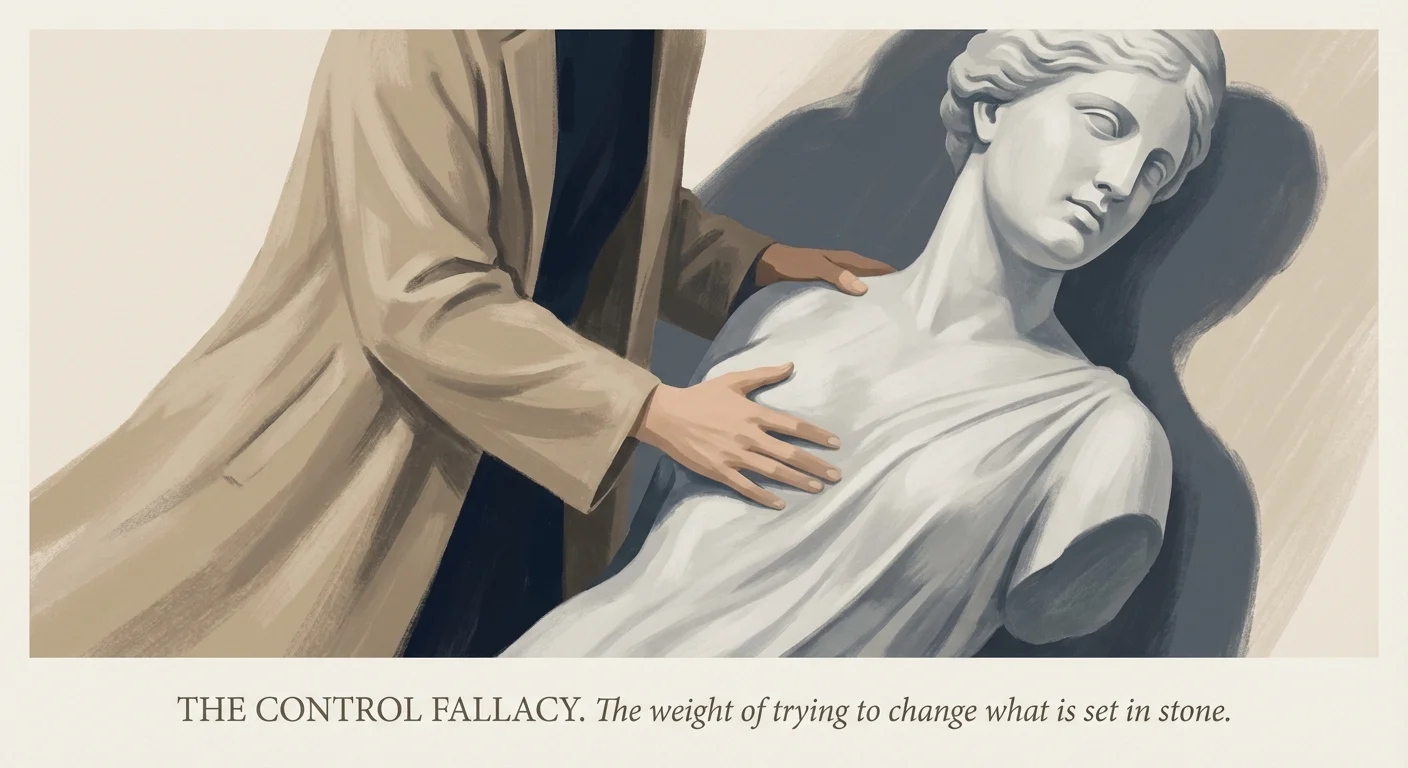
The Distortion: The Control Fallacy
In relationships, this lie masquerades as love or commitment. You tell yourself that if you just explain your point of view one more time, or if you love them hard enough, they will finally become the partner you need them to be. This belief is a recipe for resentment and burnout.
Dr. John Gottman, a leading relationship researcher, found that successful couples don’t try to change each other’s fundamental personalities. Instead, they master the art of “accepting influence.” The lie that you can change someone else is often a defense mechanism to avoid the grief of accepting that they may never be who you want them to be.
“You can change your expectations towards the future… But accepting them as they are [is key]. Do not try to change them according to your needs.” — Dr. John Gottman
Actionable Insight: The Circle of Control Inventory
When you feel the urge to “fix” or “manage” a partner’s behavior, stop and draw a literal circle on a piece of paper.
- Inside the circle: Write down what you can actually control (e.g., your boundaries, your tone of voice, whether you stay in the room, your requests).
- Outside the circle: Write down what belongs to them (e.g., their reactions, their mood, their habits, their past).
- The Rule: You are only allowed to spend energy on items inside the circle. If you are exhausted, check the list—you are likely working outside your circle.

3. “I Must Be Perfect to Be Worthy”
The Distortion: All-or-Nothing Thinking / Perfectionism
Perfectionism is not the same as striving for excellence. Excellence is internally focused; perfectionism is externally focused. It is a shield we carry, thinking, “If I look perfect and do everything perfectly, I can avoid or minimize judgment, blame, and shame.”
The lie here is that worthiness is something you earn through error-free performance. This distortion creates a brittle self-esteem that shatters the moment you make a mistake.
“Perfectionism is not about striving for excellence… It’s a way of thinking and feeling that says this: ‘If I look perfect, do it perfect, live perfect, or work perfect, I can avoid or minimize shame, blame, and judgment.'” — Brené Brown
Actionable Insight: The “Good Enough” Experiment
Challenge this cognitive distortion with behavioral exposure therapy (a fancy way of saying “face the fear on purpose”).
- Step 1: Identify a low-stakes task (e.g., sending an email to a colleague, folding laundry, making dinner).
- Step 2: Intentionally do it at 80% capacity. Leave a typo in a text to a friend. Leave the laundry in the basket for a day.
- Step 3: Observe the result. Did the world end? Did you lose your job? Your brain needs evidence that “imperfect” is safe. Give it that evidence.

4. “It’s All My Fault”
The Distortion: Personalization
If a friend creates a weird vibe at lunch, you assume you said something wrong. If your child struggles in school, you assume you failed as a parent. Personalization is the tendency to assume responsibility for external events that are largely out of your control.
While this feels like “taking responsibility,” it’s actually a form of self-centeredness (in a negative way). It assumes you have god-like power to cause everyone else’s moods and outcomes.
Actionable Insight: The “Pie Chart” Technique
Cognitive Behavioral Therapy (CBT) offers a visual tool to break this pattern.
- Draw a large circle (a pie).
- Think of the specific negative event (e.g., “My partner is in a bad mood”).
- List all possible contributing factors. (e.g., They had a long commute, they didn’t sleep well, they are stressed about money, and maybe I was a bit short with them).
- Assign a percentage to each slice.
- You will likely find that your “slice” of the blame is 10-20%, not the 100% your brain claimed.
5. “I’m The Only One Struggling”
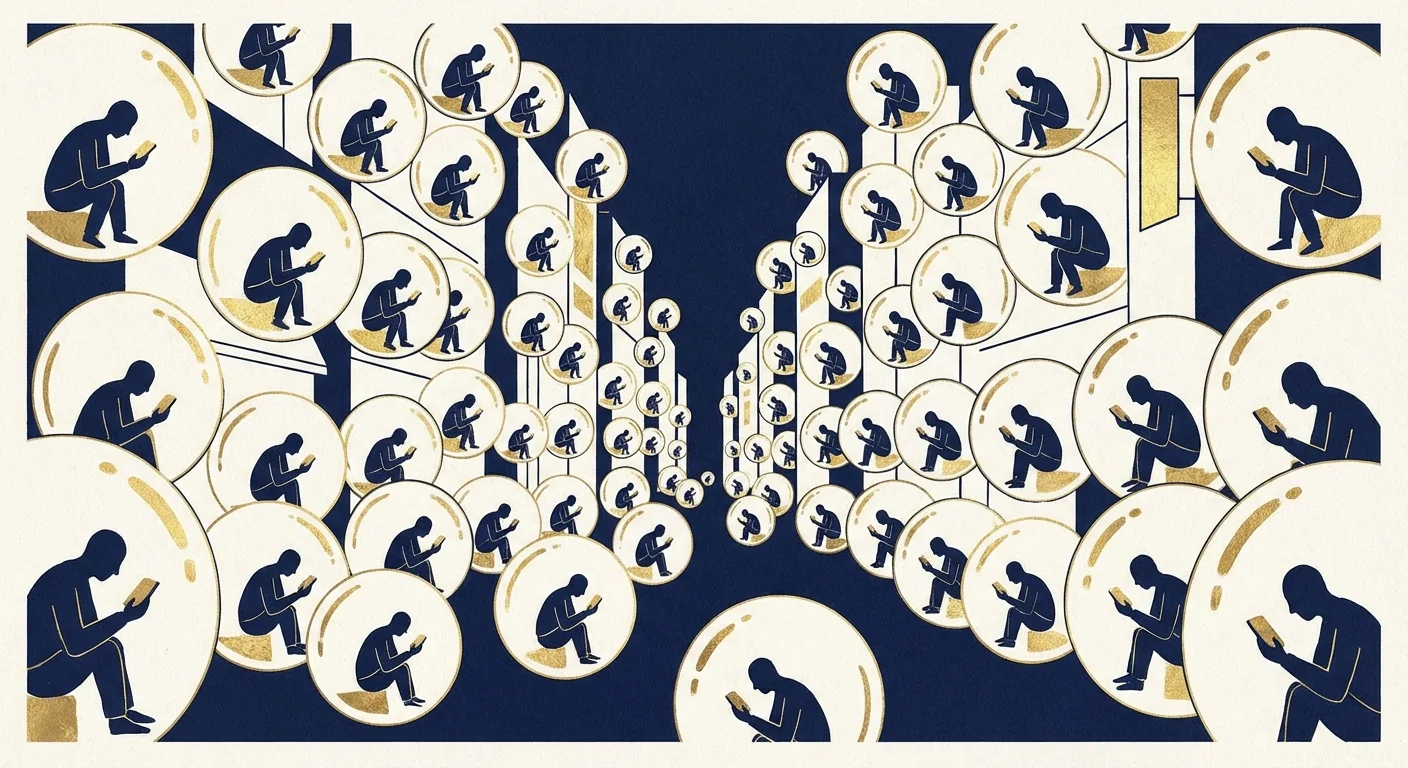
The Distortion: The Uniqueness Fallacy / Isolation
Shame thrives in secrecy. The lie that “everyone else has it figured out” is amplified by social media, where we compare our internal blooper reel to everyone else’s highlight reel. This belief leads to isolation, which is a primary driver of depression.
The psychological reality is that the human experience is remarkably shared. The specific details of your struggle may be unique, but the feeling—inadequacy, fear, loneliness—is universal.
“If I’m bad, then I don’t deserve anything… because they see the way that others get punished for making mistakes… I think those things are probably underpinning it.” — Esther Perel
Actionable Insight: The “Me Too” Reality Check
Combat isolation with vulnerability. The next time you are with a trusted friend, try the “10% rule.” Share just 10% more of your real struggle than you normally would.
- Instead of “I’m fine, just busy,” try “Honestly, I’m feeling a bit overwhelmed this week.”
- Watch what happens. Almost invariably, the other person will exhale and say, “Me too.” This moment of connection dissolves the lie of uniqueness instantly.

6. “I Don’t Deserve Love”
The Distortion: Core Belief of Unworthiness
This is the deepest and most dangerous lie. It often stems from early childhood experiences or past trauma, creating a “core belief” that you are fundamentally flawed or broken. This lie sabotages relationships because you will subconsciously push away love that you feel you haven’t “earned,” or you will tolerate mistreatment because it aligns with your view of yourself.
Carl Rogers, the founder of person-centered therapy, argued famously that we cannot change until we accept ourselves. You cannot hate yourself into a better version of yourself.
“The curious paradox is that when I accept myself just as I am, then I can change.” — Carl Rogers
Actionable Insight: Self-Compassion Break
When you catch yourself spiraling into self-hatred, use Dr. Kristin Neff’s “Self-Compassion Break.” It involves three steps you can do in 60 seconds:
- Mindfulness: Acknowledge the pain. Say, “This is a moment of suffering.” (Don’t ignore it).
- Common Humanity: Remind yourself, “Suffering is a part of life. I am not alone in this feeling.”
- Self-Kindness: Put a hand on your heart and say, “May I be kind to myself in this moment,” or “May I give myself the grace I would give a friend.”
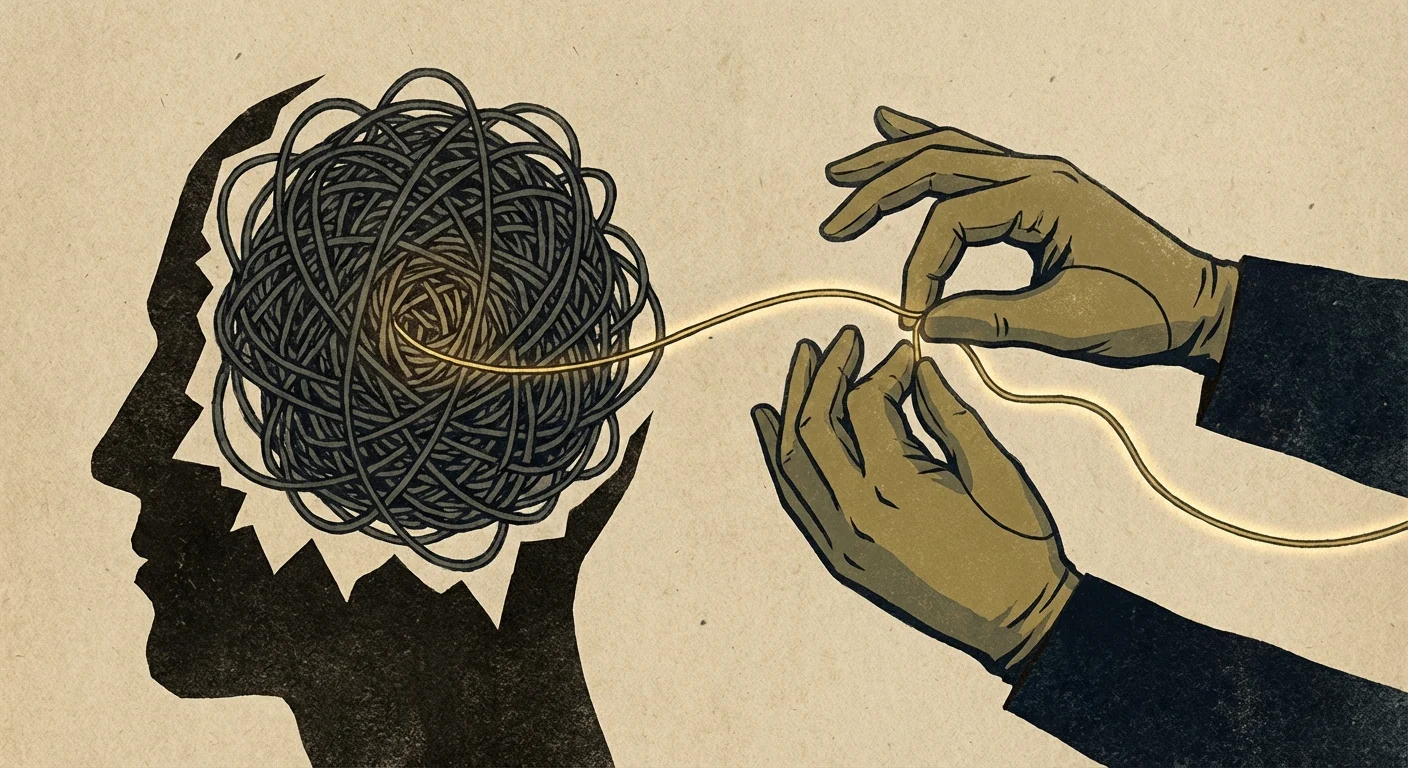
Common Misconceptions About Negative Self-Talk
Misconception 1: “I need my harsh inner critic to succeed.”
Many high achievers believe that if they stop beating themselves up, they will become lazy. Research shows the opposite: self-criticism triggers the body’s threat response (cortisol), which actually inhibits executive function and creativity. Self-compassion is a far more effective fuel for long-term motivation.
Misconception 2: “Positive affirmations will fix it.”
Standing in the mirror saying “I am perfect” when you feel terrible often backfires. Your brain rejects the lie. It is far more effective to aim for neutral or realistic thoughts (e.g., “I am learning”) than forced positivity.

Finding the Right Professional Help
While these reframing tools are powerful, they are not a substitute for professional therapy, especially if these “lies” are deeply rooted in trauma. Consider seeking a licensed therapist if:
- Your negative self-talk is interfering with your daily functioning (sleep, work, eating).
- You feel unable to control the intrusive thoughts despite trying these techniques.
- The “I don’t deserve love” belief is leading to abusive or toxic relationship patterns.
- You are experiencing persistent feelings of hopelessness.
Approaches like Cognitive Behavioral Therapy (CBT), Acceptance and Commitment Therapy (ACT), and EMDR are particularly effective for rewiring these deep-seated cognitive distortions.
Frequently Asked Questions
- Why do I lie to myself even when I know better?
- Self-deception is often a defense mechanism designed to protect us from pain or anxiety. Your brain prefers a familiar lie to an uncertain truth. It’s trying to keep you safe, not happy.
- How long does it take to change these thought patterns?
- Neuroplasticity (the brain’s ability to rewire itself) takes time. One study suggests it takes an average of 66 days to form a new habit, but cognitive restructuring is a lifelong practice. Consistency matters more than speed.
- Can cognitive distortions be a sign of a mental health disorder?
- Everyone experiences cognitive distortions occasionally. However, when they become frequent, rigid, and distressing, they can be a symptom of conditions like depression, anxiety disorders, or complex PTSD.
The stories we tell ourselves shape the life we live. By identifying these six lies and meeting them with evidence, compassion, and action, you begin to dismantle the cage you built for yourself. You don’t have to be perfect, you don’t have to control everything, and you certainly don’t have to wait to be happy. You just have to be honest.
This article provides general educational information about psychology and relationships. It is not a substitute for professional therapy or medical advice. Everyone’s situation is unique—if you’re struggling, please reach out to a licensed mental health professional.
Last updated: February 2026. Psychology research evolves continuously—verify current findings with professional sources.