Psychology Diary

The First Step Toward Change Is Awareness

  • Home
  • Relationships
  • Mental Health
  • Expert Tips
  • Life
  • Family
  • Marriage

Recognizing the Signs of a Nervous Breakdown in a Loved One

August 31, 2025 · Mental Health

Man meditating in living room.

Your Next Steps: Moving from Worry to Action

Reading this article is an important first step. You’ve moved from a place of worry to one of seeking information and understanding. Now, it’s time to take small, manageable actions. You don’t have to do everything at once. Pick one thing to focus on this week.

1. Plan a Gentle Conversation: Look at your calendar and find a low-stress time to talk to your loved one. Rehearse a gentle, “I”-statement opener so you feel prepared. The goal isn’t to solve everything, just to open the door.

2. Prioritize Your Own Calm: Choose one simple self-care act for yourself and commit to it daily for the next seven days. This could be five minutes of box breathing each morning, a short walk after dinner, or listening to one favorite song without distractions. Note in a journal how you feel before and after. This builds your own resilience.

3. Gather Your Resources: Bookmark the websites for reliable mental health information. Put the 988 Suicide & Crisis Lifeline number in your phone. Knowledge and preparation reduce fear and help you feel more in control.

Watching someone you love go through a `mental health crisis` is incredibly difficult, but your compassionate support can be a powerful anchor for them. By leading with empathy, listening without judgment, and gently guiding them toward professional help, you can be a vital part of their journey back to health and well-being.

Disclaimer: This article is for informational purposes only and does not constitute medical, psychological, or legal advice. It is not intended to be a substitute for professional evaluation, diagnosis, or treatment. Always seek the advice of a qualified health provider with any questions you may have regarding a medical or mental health condition. If you or someone you know is in immediate danger or considering self-harm, call your local emergency services (like 911 in the U.S.) or contact the 988 Suicide & Crisis Lifeline by calling or texting 988 in the U.S. and Canada.

Pages: 1 2 3 4 5 6 7 8 9

Share this article

Facebook Twitter Pinterest LinkedIn Email

Leave a Reply Cancel reply

Your email address will not be published. Required fields are marked *

Search

Latest Posts

  • Two people sitting on a sofa in a quiet, sunlit living room, showing a moment of supportive connection and listening. 9 Things You Should NEVER Say to Someone With Anxiety
  • A tense, high-contrast conversation between two people in a minimalist setting. 5 Body Language Secrets That Reveal Someone Is Lying to You
  • A woman sitting thoughtfully by a window in a soft-lit, modern living room. 8 Signs You Were Raised by an Emotionally Unavailable Parent
  • Surreal illustration of a person looking into a mirror that reflects a golden labyrinth, symbolizing internal complexity. The 6 Most Dangerous Lies We Tell Ourselves Every Day
  • A woman in a peaceful, sunlit room embodying emotional clarity and calm. 10 Things Emotionally Intelligent People NEVER Do
  • A sophisticated woman in her 60s looking out a window in a bright, modern home. 7 Habits That Secretly Destroy Your Mental Health After 60
  • A woman looking distressed and thoughtful during a difficult conversation with a partner in a modern kitchen. 9 Manipulative Phrases Toxic People Use Without You Realizing
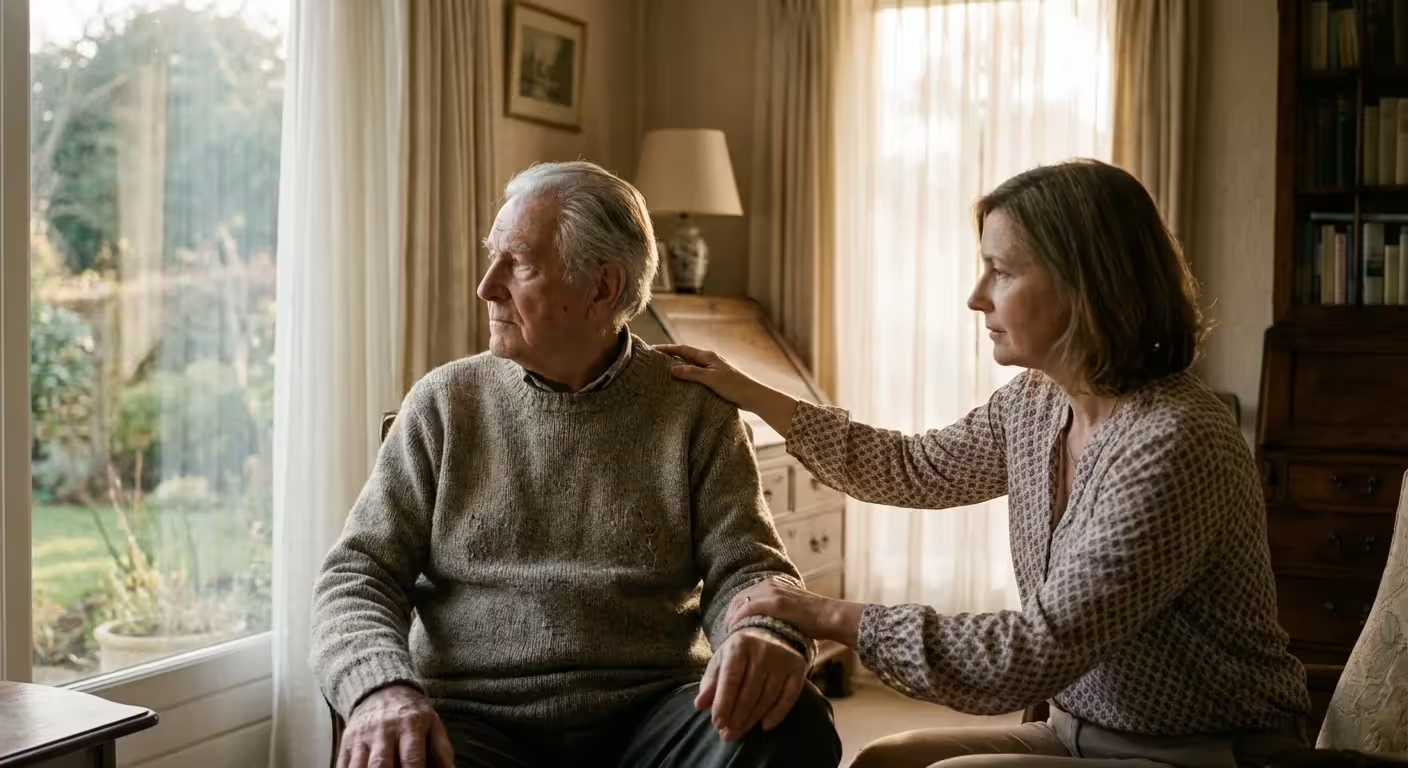
  • An adult daughter comforting her elderly father by a sunlit window. 5 Early Warning Signs of Alzheimer's Most People Ignore
  • A person balancing on a thin, fraying shadow thread over a dark blue background. 8 Things Narcissists Say to Keep You Under Control
  • A couple standing far apart in a dimly lit, modern living room, looking away from each other. 6 Silent Signs Your Marriage Is Slowly Falling Apart

Newsletter

Get the latest posts delivered to your inbox.

Related Articles

PTSD

Nightmares, Numbness, and 12 Other Shocking Signs of PTSD

What do you know about PTSD? To put it in simpler words, disorders of the…

Read More →
Lonely, frienship, feel

Feeling Lonely? Here Are 8 Genius Ways to Combat Isolation in Retirement

If you or an elderly person you love has been feeling lonely, this article’s for…

Read More →
Mood Swings

Mood Swings: Normal or Not?…and 4 Simple Ways to Dominate Them

Are those mood swings you’ve been having normal? The name may be simple enough, but…

Read More →
Bipolar Disorder

Bipolar Disorder and the 6 Vicious Myths Surrounding It

How Much Do You Know About Bipolar Disorder? When it comes to bipolar disorder, there…

Read More →
Narcissist psychopaths

Psychopaths Do These 9 Things

We can all agree that psychopathy is a widely debated topic as far as psychology…

Read More →
Parkinson's disease

Parkinson’s Disease: 9 Unusual Signs You Have It!

9. Constipation The last symptom on our list is constipation. People with Parkinson’s disease often…

Read More →
Dementia myth

Subtle Signs of Dementia: 6 Important Things You Need to Know

6. Losing Track Of Time Or Place Do you, or a person you care about,…

Read More →
An adult daughter comforting her elderly father by a sunlit window.

5 Early Warning Signs of Alzheimer’s Most People Ignore

Discover the 5 subtle early warning signs of Alzheimer's most people ignore, including apathy, visual-spatial…

Read More →
brain

10 Strategies To Fight Brain Aging and Boost Your Cognitive Health

So you’ve noticed some changes in your memory and thinking. Perhaps you often misplace your…

Read More →

Psychology Diary

The First Step Toward Change Is Awareness

Inedit Agency S.R.L.
Bucharest, Romania

contact@psychologydiary.com

Explore

  • About Us
  • Advertiser Disclosure
  • Contact Us
  • Disclaimer
  • Do not sell my personal information
  • Editorial Policy
  • Frequently Asked Questions
  • Privacy Policy
  • Terms and Conditions
  • Subscribe
  • Unsubscribe

Categories

  • Expert Tips
  • Family
  • Life
  • Marriage
  • Mental Health

© 2026 Psychology Diary. All rights reserved.