
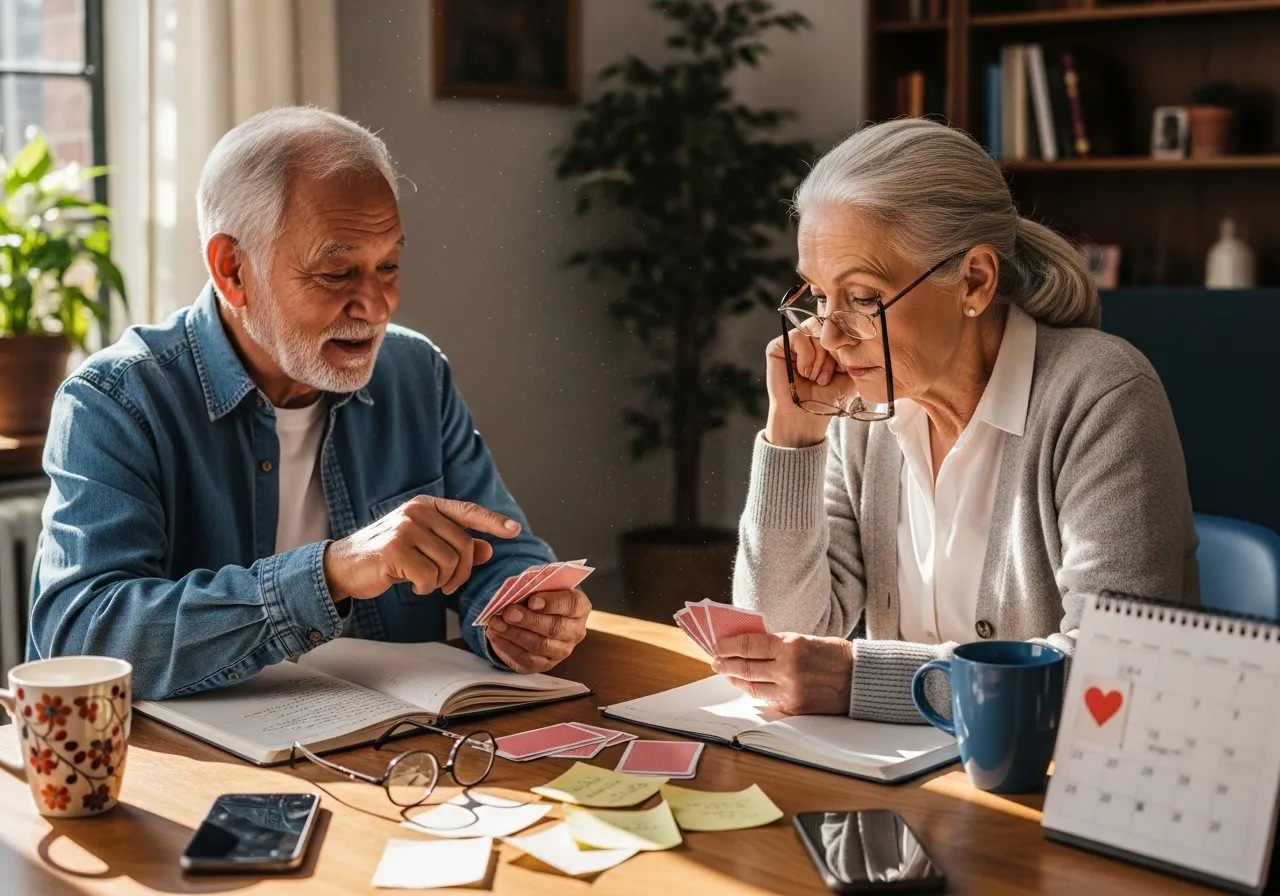
Active Cognitive Engagement: The “Use It or Lose It” Principle in Practice
Once the foundational pillars are in place, you can focus on directly challenging your mind. The best brain exercises for seniors are not about mindlessly tapping on an app; they are about engaging in activities that are novel, complex, and require effortful concentration. This is how you continue to build and strengthen neural pathways, enhancing your cognitive reserve—the brain’s ability to withstand age-related changes and disease.
Challenge Your Brain with Novelty
Routine is comfortable, but novelty is what forces your brain to grow. When you learn something new, you create entirely new connections between neurons. The key is to choose an activity that is just outside your comfort zone—challenging but not so difficult that it becomes frustrating. The goal is the process of learning, not necessarily achieving mastery.
Examples of novel challenges include:
Learning a New Language: This engages multiple cognitive systems, including memory, attention, and abstract reasoning.
Playing a Musical Instrument: This combines auditory processing, fine motor skills, and memory in a complex way.
Taking a Class: Enroll in a local community college course on a topic you’ve always been curious about, like history, astronomy, or digital photography.
Trying a New Hobby: Consider gardening, coding, woodworking, or painting.
Even small changes, like taking a different route on your daily walk or trying a new recipe, can introduce a bit of novelty and keep your brain flexible.
Practice Strategic Brain Exercises
Beyond broad learning, you can target specific cognitive skills. This involves practicing tasks that hone your executive functions—a set of mental skills that include working memory, flexible thinking, and self-control. These are the skills we use for planning, problem-solving, and navigating our daily lives.
Dual-Task Training: This involves doing two things at once, which forces your brain to divide its attention and manage information efficiently. Start simply. For example, while on a brisk walk, try counting backward from 100 by 7s. Or, while folding laundry, listen to a podcast and try to summarize the main points afterward. This is more challenging than it sounds and is a great workout for your executive functions.
Spaced Repetition: This is a powerful memory technique that involves reviewing information at increasing intervals over time. It’s far more effective than cramming. If you’re learning new vocabulary words for a language class, for example, you might review a new word 10 minutes after learning it, then a day later, then a few days later, and then a week later. This process helps cement the information in your long-term memory.
A note on brain-training apps: While many apps claim to improve brain function, the evidence for their real-world benefit is mixed. Research suggests that while you may get better at the specific game you’re playing, these skills often don’t transfer to everyday cognitive tasks. A more effective approach is to engage in complex, real-world activities that naturally challenge your brain.
A Sample Weekly Brain Fitness Plan
Putting it all together can feel overwhelming. Here is a mini-example of what a week focused on healthy aging and cognitive fitness might look like. The goal is a balanced routine, not a rigid schedule.
Monday: Go for a 30-minute brisk walk. In the evening, spend 20 minutes on a language-learning app or reviewing vocabulary flashcards.
Tuesday: Meet a friend for coffee (social engagement). Later, work on a challenging Sudoku or crossword puzzle for 20 minutes.
Wednesday: Attend a water aerobics class (physical and social). Plan and cook a new, healthy recipe for dinner, requiring you to follow complex steps.
Thursday: Do a 30-minute walk while practicing dual-tasking (e.g., naming all the states in alphabetical order). Read a chapter of a non-fiction book.
Friday: Attend a club meeting or volunteer (social and purposeful). Spend 15 minutes working on a jigsaw puzzle.
Saturday: Visit a museum or local garden (novelty and light physical activity). In the evening, play a strategy-based board game or card game with family or friends.
Sunday: Rest and gentle activity, like a stroll. Spend 30 minutes writing in a journal or summarizing an interesting article you read, which reinforces memory and critical thinking.









Leave a Reply