Psychology Diary

The First Step Toward Change Is Awareness

  • Home
  • Relationships
  • Mental Health
  • Expert Tips
  • Life
  • Family
  • Marriage

An Introduction to Mindfulness and Meditation for Seniors

August 31, 2025 · Expert Tips

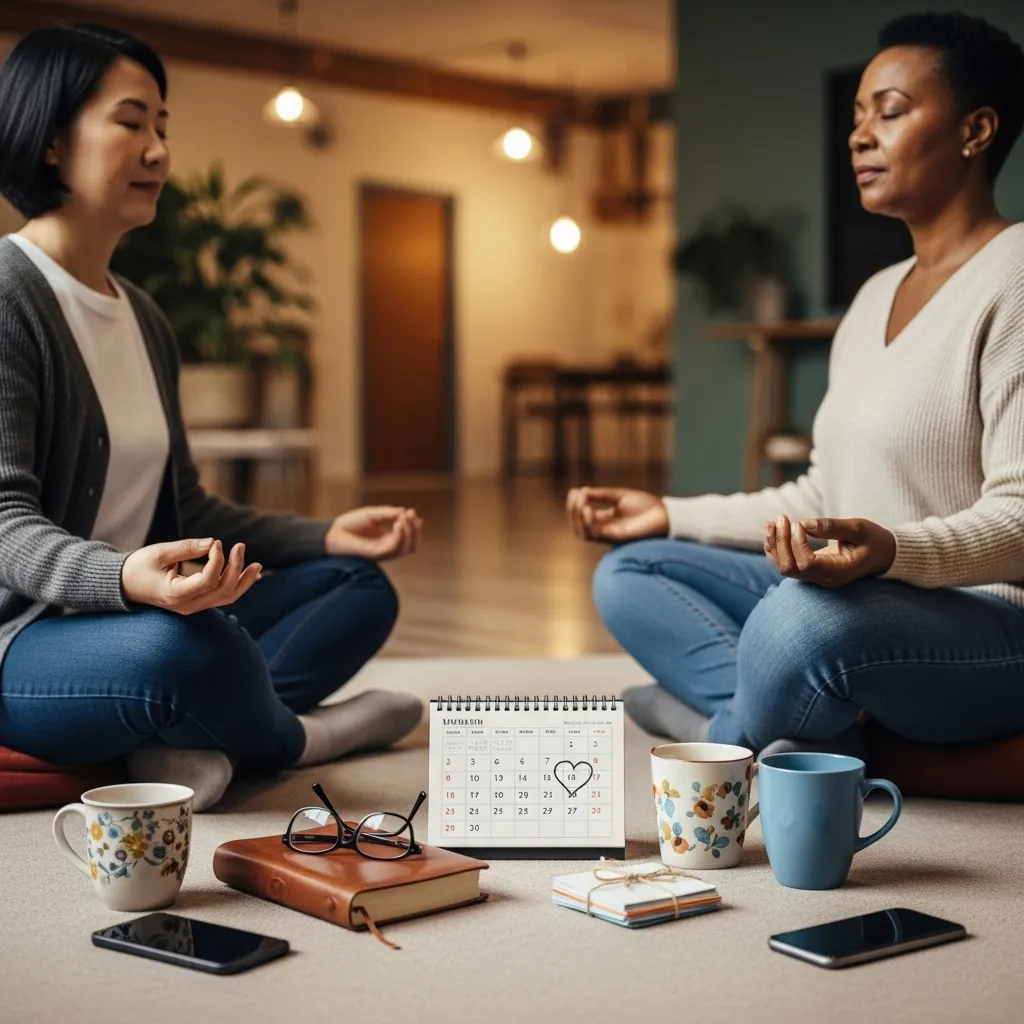
Friends meditating together.

How to Start a Mindfulness Practice: A Gentle, Step-by-Step Guide

Starting a new routine can feel daunting, but the beauty of mindfulness meditation is its simplicity. You don’t need special equipment, expensive classes, or a lot of time. The most important ingredients are a willingness to try and a dose of self-compassion. Here is how to start a mindfulness practice with just a few minutes a day.

Step 1: Choose Your Time and Place

The key to building any new habit is consistency. It is far more effective to practice for 5 minutes every day than for 30 minutes once a week. Look at your daily schedule and find a small pocket of time where you are unlikely to be interrupted. For many, this is first thing in the morning before the day’s demands begin, or in the evening as a way to wind down. Choose a location where you can be relatively quiet and undisturbed. This doesn’t need to be a special room; a comfortable chair in a quiet corner of your bedroom or living room is perfect.

Step 2: Find a Comfortable Posture

Forget the images you may have seen of people sitting cross-legged on the floor for hours. For most seniors, the best and most sustainable posture is sitting in a chair. Choose a sturdy chair that allows your feet to rest flat on the floor. Sit away from the back of the chair so that your spine can be upright but not rigid—imagine a string gently pulling the crown of your head toward the ceiling. This posture promotes alertness. Let your hands rest comfortably in your lap. You can gently close your eyes or, if that feels uncomfortable, simply lower your gaze to a spot on the floor a few feet in front of you.

Step 3: The Foundational Practice: Mindful Breathing

The breath is the most common anchor in mindfulness meditation because it is always with you. Once you are settled in your posture, begin by taking a few deeper, more intentional breaths to signal to your body that it’s time to relax. Inhale through your nose, and exhale slowly through your mouth.

Then, let your breath return to its natural rhythm. Your only job for the next few minutes is to rest your attention on the physical sensations of your breath. You might notice the feeling of the cool air entering your nostrils, the gentle rise and fall of your chest or belly, or the warmth of the air as you exhale. Choose one of these spots to focus on.

Inevitably, your mind will wander. It will drift to your to-do list, a conversation from yesterday, or a sound outside. This is not a mistake or a failure. It is simply what minds do. The moment you notice your mind has wandered is a moment of mindfulness! Acknowledge where your mind went with a gentle mental note, like “thinking” or “worrying.” Then, without any self-criticism, gently guide your attention back to the sensation of your breath. This process of wandering, noticing, and returning is the entire practice. You will do it over and over again. Each time you do, you are strengthening your attention and mindfulness.

Mini-Example of Inner Dialogue: “Okay, I’m focusing on my breath… in… out… My chest is rising… I wonder if I need to pick up milk today. Whoops, that’s a thought about the grocery store. That’s okay. Now, back to my breath. Feeling it in my belly this time… rise… fall…”

Step 4: Start Small and Build Slowly

The goal is to create a sustainable habit, not to achieve a perfect meditation session. Begin with a very manageable duration, such as 3 to 5 minutes. You can set a quiet timer so you don’t have to worry about the time. After a week of consistent 5-minute sessions, you might consider increasing to 7 minutes, then 10 minutes. The duration is less important than the regularity of the practice. Be patient and kind to yourself. Some days your mind will feel calm and focused; other days it will feel like a storm of thoughts. Both are completely normal. Just showing up for your practice is the success.


Pages: 1 2 3 4 5 6 7 8 9 10 11

Share this article

Facebook Twitter Pinterest LinkedIn Email

Leave a Reply Cancel reply

Your email address will not be published. Required fields are marked *

Search

Latest Posts

  • Two people sitting on a sofa in a quiet, sunlit living room, showing a moment of supportive connection and listening. 9 Things You Should NEVER Say to Someone With Anxiety
  • A tense, high-contrast conversation between two people in a minimalist setting. 5 Body Language Secrets That Reveal Someone Is Lying to You
  • A woman sitting thoughtfully by a window in a soft-lit, modern living room. 8 Signs You Were Raised by an Emotionally Unavailable Parent
  • Surreal illustration of a person looking into a mirror that reflects a golden labyrinth, symbolizing internal complexity. The 6 Most Dangerous Lies We Tell Ourselves Every Day
  • A woman in a peaceful, sunlit room embodying emotional clarity and calm. 10 Things Emotionally Intelligent People NEVER Do
  • A sophisticated woman in her 60s looking out a window in a bright, modern home. 7 Habits That Secretly Destroy Your Mental Health After 60
  • A woman looking distressed and thoughtful during a difficult conversation with a partner in a modern kitchen. 9 Manipulative Phrases Toxic People Use Without You Realizing
  • An adult daughter comforting her elderly father by a sunlit window. 5 Early Warning Signs of Alzheimer's Most People Ignore
  • A person balancing on a thin, fraying shadow thread over a dark blue background. 8 Things Narcissists Say to Keep You Under Control
  • A couple standing far apart in a dimly lit, modern living room, looking away from each other. 6 Silent Signs Your Marriage Is Slowly Falling Apart

Newsletter

Get the latest posts delivered to your inbox.

Related Articles

The 10 Best Motivational Books, According to Mental Health Experts

3. 7 Habits of Highly Effective People by Stephen R. Covey Mental health experts we’ve…

Read More →
advice

11 Common Pieces of Advice That Are Actually Bad

3. “Dream big or go home” But just make sure all of your dreams are…

Read More →
grandkids

9 Reasons Your Grandkids Avoid You Now

3. Kids are still kids! Of course, kids are still kids, and they haven’t fully…

Read More →
gaslighting, emotionally abusive relationship

6 Warning Signs of Gaslighting in Relationships

Have you ever heard of gaslighting? It’s one of the worst things that could happen…

Read More →
meet-people-1

9 Tips to Meet and Attract New People, According to Dating Experts

Are you looking for new friends, expand your social network, or meet a potential partner?…

Read More →
Psychology Tip

12 Incredible Psychology Tips to Get You Out of Sticky Situations

You Won’t Believe Some Of These Psychology Tips! It’s already known that most of what…

Read More →

60 Things Grandparents Should Never Do

Grandparents can be a lifesaver. They can improve discipline strategies, give wise advice to new…

Read More →
liar-2

10 Foolproof Ways To Catch A Liar

Liars everywhere! Beware! If you suspect that someone is lying, how can you tell for…

Read More →
types of happiness

The 5 Types of Happiness and How to Find Them in Retirement

Happiness is the one thing that all of us want to achieve. It is the…

Read More →

Psychology Diary

The First Step Toward Change Is Awareness

Inedit Agency S.R.L.
Bucharest, Romania

contact@psychologydiary.com

Explore

  • About Us
  • Advertiser Disclosure
  • Contact Us
  • Disclaimer
  • Do not sell my personal information
  • Editorial Policy
  • Frequently Asked Questions
  • Privacy Policy
  • Terms and Conditions
  • Subscribe
  • Unsubscribe

Categories

  • Expert Tips
  • Family
  • Life
  • Marriage
  • Mental Health

© 2026 Psychology Diary. All rights reserved.