

Sometimes, we all forget things. Maybe you need to find your keys or remember the name of someone you just met. Aging is generally associated with some memory issues and a mild reduction in other thinking abilities. However, there is a distinction between memory loss brought on by Alzheimer’s disease and other related conditions and changes in memory that are normal. Some memory problems are caused by diseases that can be treated.
Your daily life is not significantly disrupted by typical age-related memory loss. As an example, you may occasionally forget someone’s name yet remember it later in the day. Your glasses might occasionally vanish. Or perhaps you find that you need to write lists more frequently than in the past in order to recall appointments or tasks.
Your capacity to work, live independently, or maintain a social life is not significantly impacted by these changes in memory since they are typically manageable.
#1 Absentmindedness
You’ve misplaced your car keys once more, your glasses have vanished into thin air, and the other day you had to stroll around the mall’s parking lot for 30 minutes before you realized where you had parked your car. Are you headed toward Alzheimer’s disease? Or are you only a victim of the hectic culture in which we now live, where everyone has too much happening simultaneously and is prone to overlook the minute details that make up our everyday lives?
When you don’t focus your attention enough, this kind of forgetting happens. You can’t remember where you put the pen because you weren’t paying attention when you first placed it. Your mind wasn’t encoding the information securely because you were thinking about something else (or, possibly, nothing in particular).
Another manifestation of absentmindedness is failing to remember to do a task when it is due, such as remembering to take your medication or attend an appointment.
#2 Transience
Transience is the gradual deterioration of memory access. This is normal, yet certain factors can accelerate it. Transience may result from a traumatic brain injury or hippocampus damage. It may also be brought on by some diseases, such as Alzheimer’s or dementia.
In time, people have a tendency to forget details or experiences. Soon after learning anything, you are most likely to overlook it. The use-it-or-lose-it nature of memory means that it is least likely to forget things that are frequently recalled and used.
Transience, which may appear to be a symptom of memory deterioration, is actually seen favorably by brain scientists because it allows the brain to get rid of old, ineffective memories and make room for more recent, valuable ones.

#3 Blocking
You are asked a question and immediately know the answer; nevertheless, for whatever reason, you are unable to recall it. The momentary incapacity to access a memory is one of the blocking’s best-known examples. The barrier is frequently a memory that is identical to the one you’re searching for, and you extract the incorrect one. Your ability to think of the desired memory is interfered with by this competing memory.
Memory blocks, which are thought to be more frequent with aging and to be the cause of elderly individuals having problems remembering other people’s names, are thought to exist. According to studies, people may regain almost half of their repressed memories in under a minute.
#4 Misattribution
When you recall something partially properly but attribute it incorrectly to a particular time, location, or person, this is known as misattribution. Another instance of misattribution is when you assume a concept you had was entirely original, when in reality it was inspired by something you had read or heard before but had forgotten.
This kind of misattribution explains instances of unintentional plagiarism, where a writer provides details as original when they have actually read them elsewhere.
Misattributions increase in frequency as we age, just like a number of other types of memory lapses. Because you have a little more difficulty focusing and processing information quickly as you get older, you take in fewer details when learning new information. Additionally, your memories deteriorate as you age. Old memories are particularly prone to error.
#5 Persistence
The majority of people fear forgetting stuff. However, there are times when people are haunted by memories they’d rather forget but can’t. Another type of memory issue is the persistence of recollections of traumatic events, unpleasant sentiments, and lingering concerns. While some of these recollections vividly recall terrible incidents, others can be depressing reality distortions.
Persistent, unsettling recollections are particularly common among depressed individuals. PTSD sufferers also battle with this. Various types of stressful exposure, such as abuse or combat, can lead to PTSD. A key component of PTSD is flashbacks, which are recurring, bothersome thoughts of the traumatic incident.
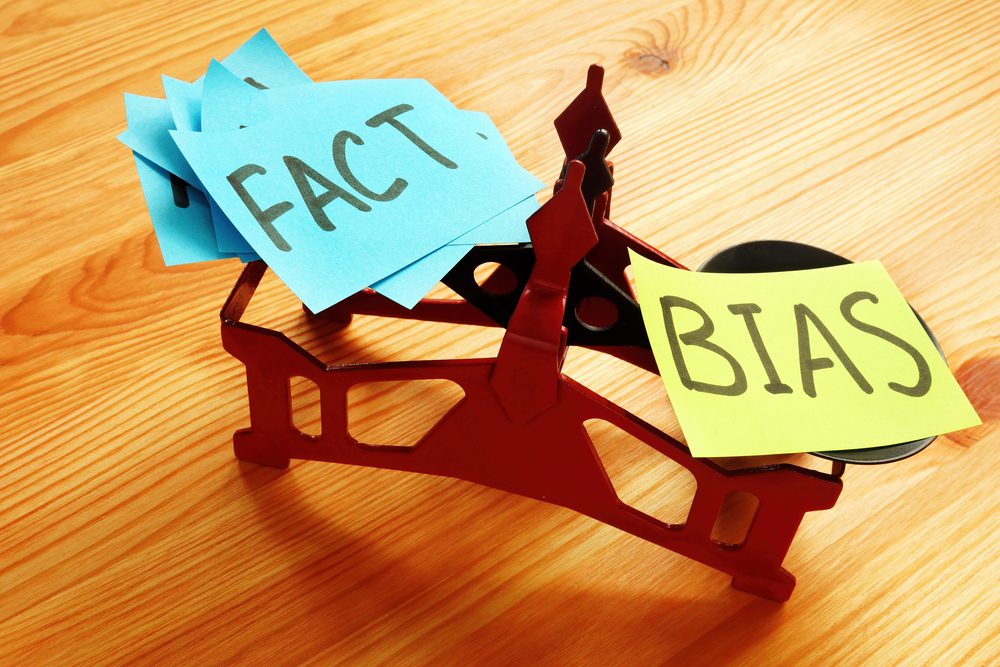
#6 Bias
Even the most acute memory is not a perfect representation of reality. Your own biases, including past experiences, current attitudes, beliefs, and knowledge, all affect how you remember things. When they are encoded in your brain, your biases have an impact on your perceptions and experiences. Additionally, the information you really recall when retrieving a memory may be influenced by your current state of mind and other biases.
A memory bias is a cognitive prejudice that modifies the contents of what we remember, which can either limit or facilitate memory recall. These memory distortions demonstrate that recollections aren’t always faithful representations of reality.
Technically speaking, there are numerous cognitive biases that make up the memory bias. While some types of memory bias can be helpful, like shielding us from painful memories, others can be harmful, such as when we make decisions based on the most recent information rather than the most important information.
#7 Suggestibility
When you hear facts about an event after it has happened, they are absorbed into your recollection of the episode even though you were not present when it happened, which is known as suggestibility. The suggestion deceives your mind into believing it to be a genuine memory, despite the fact that little is understood about how suggestibility functions in the brain.
One of Daniel Schacter’s memory sins, suggestibility, is related to misattribution in several ways. Similar to misattribution, suggestibility involves fabricating a memory. The difference between a suggestion and a misattribution is that a suggestion comes from another person who is, whether consciously or unconsciously, influencing us.
Although human suggestibility has various ramifications, the system of criminal justice has seen some of its most terrible effects.
The seven “sins” of memory are actually the results of effective mechanisms that support our memory processes rather than necessarily being perceived as failures. In essence, the same brain processes that cause memory’s flaws also cause it to be effective.
Sadly, it is impossible to fully eliminate memory biases, as is the case with most biases. But by using these straightforward methods, we can at least lessen some of their more negative effects. As you go through the list, consider writing down an incident from your personal observation for each of the seven sins of memory. By giving a specific example for each sin, you can better understand it and avoid it the next time you “commit” it.
If you want to be aware of the first signs of dementia and how to manage them, you should check out: Subtle Signs of Dementia: 6 Important Things You Need to Know









Leave a Reply