Psychology Diary

The First Step Toward Change Is Awareness

  • Home
  • Relationships
  • Mental Health
  • Expert Tips
  • Life
  • Family
  • Marriage

Understanding Seasonal Affective Disorder (SAD) in Older Adults

August 31, 2025 · Mental Health

Man looking at dim sunrise through window in winter.

What Is Seasonal Affective Disorder (SAD)?

Seasonal Affective Disorder is not a separate disorder but is recognized as a specific type of major depression with a seasonal pattern. This means that for a person with SAD, episodes of depression occur and then resolve around the same time each year. While it can happen in any season, the most common form is winter-pattern SAD, where symptoms begin in the late fall or early winter and fade away as the brighter days of spring and summer arrive.

Think of your body as having an internal clock, known as your circadian rhythm. This clock helps regulate your sleep-wake cycle, energy levels, and mood. It takes its cues from the environment, especially from sunlight. During the fall and winter, the decrease in natural sunlight can throw this sensitive clock off balance. Researchers believe this disruption is a key factor in SAD.

This reduction in light may affect two important chemicals in the brain. The first is serotonin, a neurotransmitter that helps regulate mood. Lower levels of sunlight can lead to a drop in serotonin, which may trigger feelings of depression. The second is melatonin, a hormone that plays a role in sleep patterns. The changing seasons can alter melatonin production, leading to feelings of sleepiness and fatigue that are characteristic of SAD.

It is crucial to understand that SAD is a clinical diagnosis, not a personal failing or a sign of weakness. It is a genuine biological and psychological response to the changing environment. Recognizing it as a health condition is the first and most important step toward finding effective ways to manage it.


Pages: 1 2 3 4 5 6 7 8 9

Share this article

Facebook Twitter Pinterest LinkedIn Email

Leave a Reply Cancel reply

Your email address will not be published. Required fields are marked *

Search

Latest Posts

  • An unposed photo of a man sitting at a kitchen table looking slightly guarded during a quiet, intimate conversation. 8 Body Language Clusters That Indicate Someone Is Holding Back the Truth
  • An ink and watercolor illustration of a morning coffee cup on a wooden table with a gentle ripple, symbolizing subtle early changes. 7 Subtle Signs of Parkinson's Disease in the Early Stages
  • An editorial illustration of a silhouette standing on a fractured path, with a hand gently unravelling a thread from its shoulder. 8 Hidden Signs of Emotional Manipulation in a Relationship
  • Gouache illustration of a couple walking hand-in-hand through a vibrant landscape of overlapping colorful plants and abstract shapes. The 5 Love Languages Revisited: What Really Keeps Couples Close
  • A watercolor illustration of two people on an uneven seesaw, symbolizing a lopsided, selfish relationship dynamic. 10 Signs Someone May Be More Selfish Than They Realize
  • An editorial ink and watercolor illustration of a lonely figure fading into soft gray washes, symbolizing emotional vulnerability. 10 Warning Signs You May Be in an Emotionally Abusive Relationship
  • A couple sits on opposite ends of a long sofa in a dimly lit living room, staring away from each other with a large physical gap between the 10 Signs You're No Longer Connected to Your Partner
  • Editorial ink and watercolor illustration of a person wearing a suit of mirrors as protective armor, symbolizing defensive ego preservation. 9 Signs You Struggle to Admit Mistakes
  • A conceptual mixed-media collage showing dark, chaotic textures emerging from a clean paper silhouette, symbolizing hidden guilt leaking out 7 Signs Someone May Feel Guilty About Something
  • An editorial illustration of a person sitting at a table with a root system growing from their chair into the floorboards. The Mental Symptoms Many People Ignore Until It's Too Late

Newsletter

Get the latest posts delivered to your inbox.

Related Articles

high-level thinker

Are You a High-Level Thinker? Read What Psychologists Say

How can you tell if you are a high-level thinker?  When you say “high-level thinker,”…

Read More →
Active Shooter

8 Shocking Traits All Active Shooters Have in Common

Let’s talk about the psychological profile of active shooters! The unfortunate reality is that mass…

Read More →
crying is good

10 Ways Crying Affects Your Mind and Body

When was the last time you cried? Crying is good because it helps us let…

Read More →
depression anxiety

Depression vs. Anxiety: Which One Do You Have?

How can you tell if you have depression or anxiety? Two examples of mood disorders…

Read More →
physical activity

8 Reasons Why Physical activity Is Good for Our Mental Health

Today, we will craft a guide meant to provide you with various tips on how…

Read More →
tips for de-stressing

8 Tips for De-Stressing After a Conflict

1. Don’t start judging After a big argument or a fight, we tend to be…

Read More →
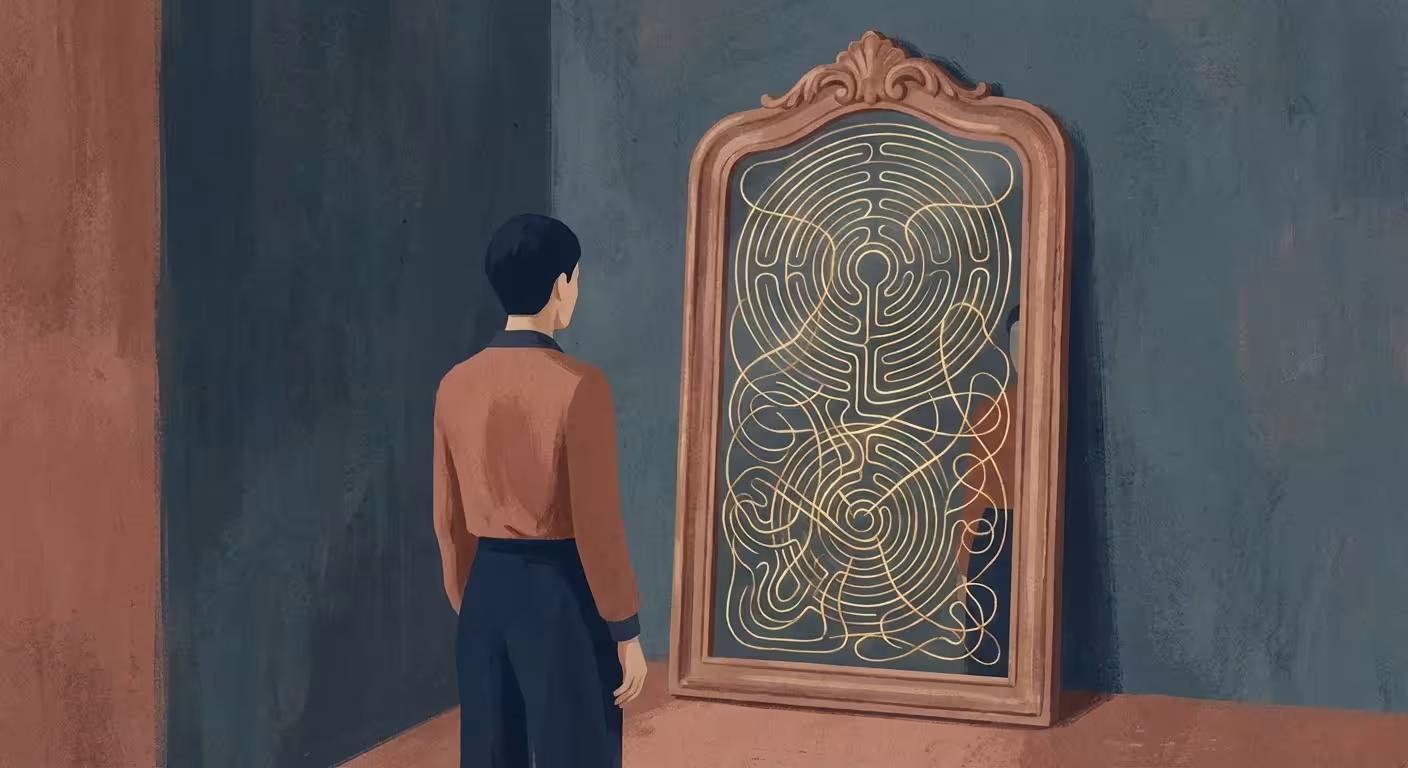
Surreal illustration of a person looking into a mirror that reflects a golden labyrinth, symbolizing internal complexity.

The 6 Most Dangerous Lies We Tell Ourselves Every Day

Uncover the 6 most dangerous lies we tell ourselves daily, from perfectionism to control fallacies,…

Read More →
phrases that may indicate depression

Identify Signs of Depression Through Words

Support those in need! These are phrases that may indicate depression:  A notable increase in…

Read More →
ptsd

These 6 Conditions Are Related to PTSD

Anyone who has been through or witnessed a shocking event, such as a vehicle accident,…

Read More →

Psychology Diary

The First Step Toward Change Is Awareness

Inedit Agency S.R.L.
Bucharest, Romania

contact@psychologydiary.com

Explore

  • About Us
  • Advertiser Disclosure
  • Contact Us
  • Disclaimer
  • Do not sell my personal information
  • Editorial Policy
  • Frequently Asked Questions
  • Privacy Policy
  • Terms and Conditions
  • Subscribe
  • Unsubscribe

Categories

  • Expert Tips
  • Family
  • Life
  • Marriage
  • Mental Health

© 2026 Psychology Diary. All rights reserved.