Psychology Diary

The First Step Toward Change Is Awareness

  • Home
  • Relationships
  • Mental Health
  • Expert Tips
  • Life
  • Family
  • Marriage

The Psychology of Human Connection: Why We Need It More as We Age

August 31, 2025 · Relationships

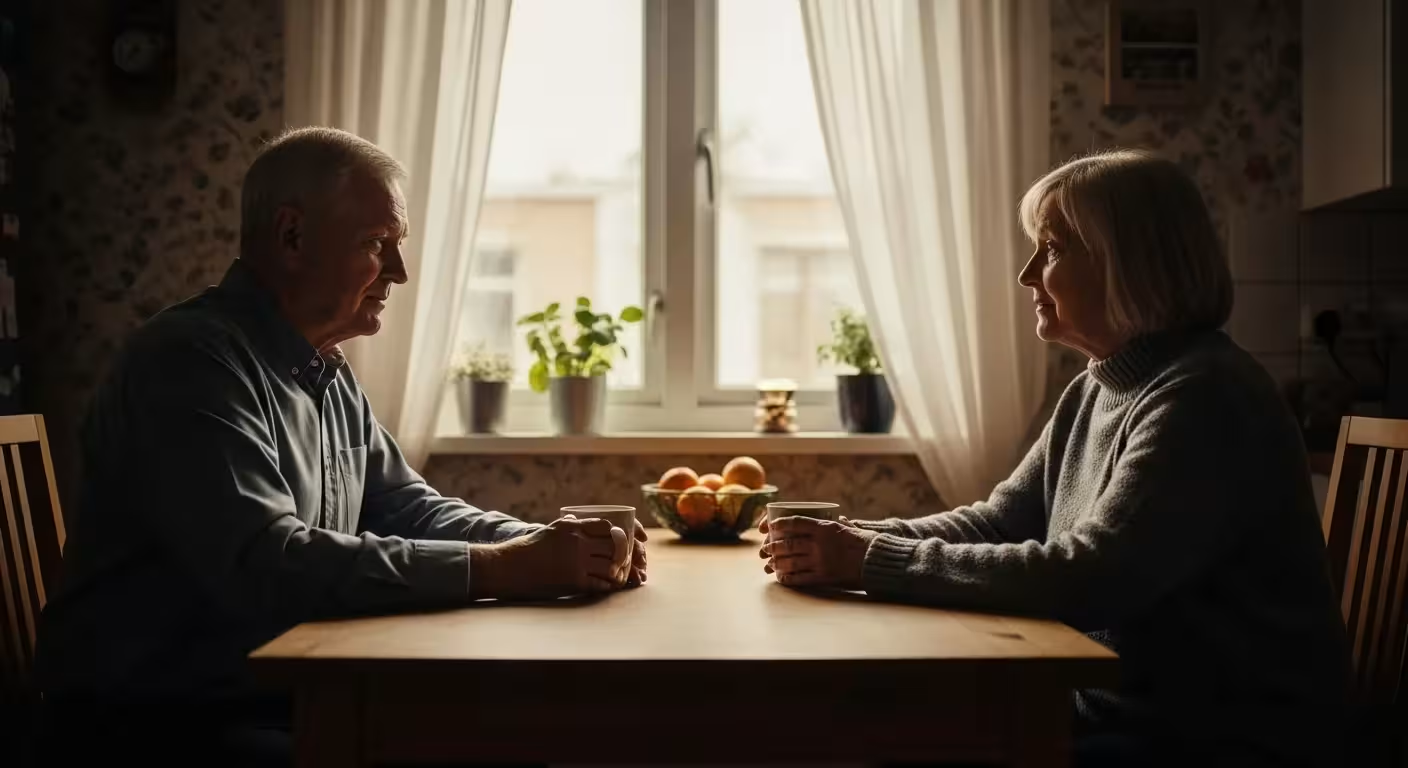
Older couple sits apart on porch at sunset.

We can spend decades sharing a home, a bed, and a life with someone, yet wake up one day feeling miles apart. It’s a quiet, creeping loneliness that can settle into the spaces left by grown children, retired careers, and the changing rhythms of life. For many of us in long-term partnerships, especially as we navigate our 50s, 60s, 70s, and beyond, this feeling can be both confusing and deeply painful. We are physically together, but the emotional bridge that once felt so sturdy now seems to be weathering. This experience is profoundly normal. It is not a sign of failure, but a signal that the very foundation of our connection needs attention, care, and a new set of tools suited for this unique chapter of life.

The truth is, our need for deep, secure social connection doesn’t diminish with age; it intensifies. It becomes a cornerstone of our mental, emotional, and even physical health. Relationship science and psychology offer us a clear map, not of quick fixes or pop-psychology promises, but of practical, evidence-aware strategies to strengthen that bond. This is not about erasing the past or demanding that your partner change overnight. It’s about learning to turn toward each other again, one small, intentional step at a time. It’s about rediscovering the person you chose and choosing them again, with the wisdom and perspective that only a shared history can bring.

Pages: 1 2 3 4 5 6 7 8

Share this article

Facebook Twitter Pinterest LinkedIn Email

Leave a Reply Cancel reply

Your email address will not be published. Required fields are marked *

Search

Latest Posts

  • A conceptual illustration showing a father and daughter separated by a deep chasm in the floor of their dining room. 10 Habits That Push People Away (Your Children Too)
  • A conceptual collage of a head silhouette filled with shattered mirrors and warped photos, symbolizing reality distortion. 8 Ways People Distort Reality
  • An elderly woman sits alone at a dining table in soft afternoon light, looking down at a tea cup in a quiet, nostalgic home setting. 9 Emotional Wounds Adult Children Simply Don’t Realize They’re Inflicting On Their Parents
  • A mixed-media collage of a fragmented silhouette head with an anchor being cut, symbolizing the loss of one's grip on reality. 10 Signs Someone Is Trying to Distort Your Reality
  • A mixed media collage of a beautiful white flower with hidden barbed wire roots and thorny stems on a textured vintage paper background. 8 Behaviors That Reveal Hidden Toxicity
  • A candid photo of a couple in a dim living room, showing a sense of emotional distance and unspoken tension. 10 Traits That May Reveal Covert Narcissism
  • A couple sits on a sofa in a dimly lit room, one person looking at a phone while the other looks away, capturing a moment of secrecy. 8 Signs Someone May Be Hiding More Than They Admit
  • An ink and watercolor illustration of a human head cracking like stone, with golden light leaking through the fissures. 11 Small Clues That Can Expose a Lie
  • An abstract editorial illustration of a silhouette with a tangled nest of lines inside its head, symbolizing mental confusion. 8 Warning Signs Someone May Be Playing Mind Games
  • A mixed media collage of a silhouette filled with torn paper and translucent layers, symbolizing the invisible nature of emotional neglect. 10 Traits of People Emotionally Neglected as Kids

Newsletter

Get the latest posts delivered to your inbox.

Related Articles

Narcissist psychopaths

Are YOU Married to a Narcissist? Here’s What to Do!

The Silent Pain of Narcissistic Marriage Do you believe in love stories? The kind where…

Read More →
A woman sits on a sofa with her head in her hands in a dimly lit room, appearing exhausted and emotionally depleted.

8 Signs Someone Is Emotionally Draining You

Learn to identify the eight psychological signs of an emotionally draining relationship and discover actionable…

Read More →
An elderly woman sits alone at a dining table in soft afternoon light, looking down at a tea cup in a quiet, nostalgic home setting.

9 Emotional Wounds Adult Children Simply Don’t Realize They’re Inflicting On Their Parents

Discover the nine unintentional emotional wounds adult children inflict on aging parents, and learn actionable…

Read More →
love languages

There Are 7 Love Languages: Which One Is Yours?

What are the seven love languages? Chances are you’ve heard of “love languages” and that…

Read More →
introverted grandchild

Understanding Your Introverted Grandchild: 6 Key Traits Explained

Do you have an introverted grandchild? Understand them better and learn how to communicate with…

Read More →

Can Jealousy Be Healthy In A Relationship?

Jealousy is often linked to negative emotions, but it doesn’t have to be like that.…

Read More →
dating a narcissist changes you

8 Terrible Ways That Dating a Narcissist Changes You (and How You can Cope With It)

See here how dating a narcissist changes you: According to research data, between 0.5% and…

Read More →
Interracial Relationship

Are You In An Interracial Relationship? Here Are Genius 5 Tips To Improve It

Being In An Interracial Relationship Can Be Tough…Let’s Improve It! Sheikha Steffen is a Middle…

Read More →

8 Charming and Seductive Traits That Have Nothing to Do With Looks

…Have you ever noticed that there are people who are absolutely charming, even though they…

Read More →

Psychology Diary

The First Step Toward Change Is Awareness

Inedit Agency S.R.L.
Bucharest, Romania

contact@psychologydiary.com

Explore

  • About Us
  • Advertiser Disclosure
  • Contact Us
  • Disclaimer
  • Do not sell my personal information
  • Editorial Policy
  • Frequently Asked Questions
  • Privacy Policy
  • Terms and Conditions
  • Subscribe
  • Unsubscribe

Categories

  • Expert Tips
  • Family
  • Life
  • Marriage
  • Mental Health

© 2026 Psychology Diary. All rights reserved.