
Do you feel more forgetful or confused lately? You may deal with Schizophrenia or Dementia!
If you are doing things that worry you and your family, you should rapidly identify the possible causes. The faster you identify the problem the better. Unfortunately, Schizophrenia and Dementia are some of the health issues that are very hard to diagnose, since their symptoms can also indicate minor or less serious problems. However, increased awareness about these dangerous health issues will help you identify the problem you or your loved ones are dealing with before it’s too late.
In general, dementia involves cognitive decline, while schizophrenia involves positive, negative, and mental symptoms. So, if you notice any of the signs found below, contact your doctor immediately for a checkup.

Dementia and cognitive decline
Forgetfulness is not the only symptom of dementia, even though it is probably the most known and common one. Dementia is called the change in the thinking system, making life more challenging. It’s true, that loss of memory and memory problems, in general, are the most obvious signs of dementia, but the cognitive decline can also seriously affect judgment, language, or spatial thinking. One of the most popular types of dementia is Alzheimer’s disease but, in reality, it is not the only one. There are several other types:
- Frontotemporal dementia: behavioral and personality changes caused by the brain’s frontal and temporal lobes damage
- Vascular dementia: the result of small strokes and impaired blood flow to the brain
- Lewy body dementia: visual hallucinations and fluctuations in mental state, caused by abnormal protein deposits in the brain
The damage to our brains can seriously affect how we think and function. In order to develop dementia, brain cells are usually damaged and changes in cognitive abilities occur. These changes can make daily tasks seem hard to accomplish. While the symptoms of dementia can be kept under control, there is no cure for dementia.
The most important thing is to identify dementia as soon as possible. This way, you’ll be able to have better control of what is going on with your mind and body.
Schizophrenia and the perception of reality
The psychotic disorder called Schizophrenia affects a person’s perception of reality, their thoughts, and their emotional responses. Even though schizophrenia is known for hallucinations and delusions. It’s much more than that. Schizophrenia can significantly impact behavior, thinking, and everyday function. Most of the time it is diagnosed in early adulthood, but can be present at varying life stages and usually falls into three categories:
- positive symptoms: additions to typical behaviors and experiences, including hallucinations and delusions. Usually, people with this kind of symptoms experience something that isn’t real and hold beliefs despite contradicting evidence.
- negative symptoms: reduction or absence of typical behaviors and experiences, like diminished emotional expression, a decrease in motivated behavior, and significantly reduced speech.
- cognitive symptoms: difficulties with memory, attention, problem-solving, and decision-making. Keep in mind that cognitive decline can be also very subtle, which is why you need to pay attention to what your body is trying to tell you.
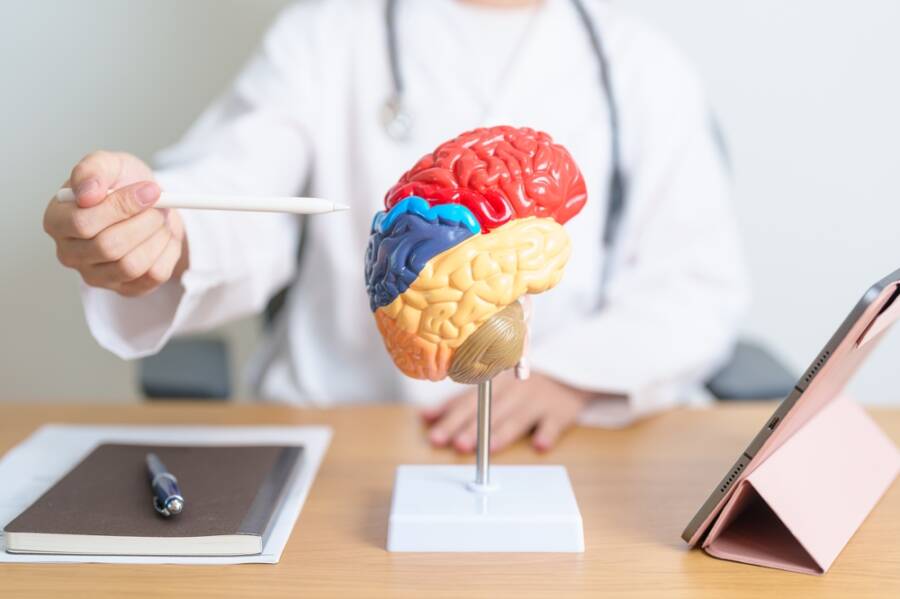
Significant differences between these two mental disorders
Even though both of these serious illnesses can be classified as mental disorders there are some significant distinctions between them.
The mixed symptoms of schizophrenia, that blur reality are usually first experienced by young adults. On the other hand, dementia is characterized mostly by memory deterioration and begins to show signs later in life. While schizophrenia leads to delusion and disorganized thinking, people with dementia remain connected to reality, but just in the early stages. This is one of the most important differences we should know about.
Schizophrenia’s symptoms can be kept under control over time, even though there isn’t a cure for it. In contrast, symptoms of dementia tend to worsen over time, even though treatment is strictly followed.
What are the causes of developing schizophrenia?
The causes of schizophrenia are still unclear. However, researchers have found a bunch of factors that contribute to its development. These are:
- brain chemistry and function: a risk of developing this disorder is a family history of schizophrenia
- genetics: subtle changes in brain structure and imbalances of brain chemicals play a huge role
- environmental factors: Stress is worse than you can imagine! Having a stressful lifestyle can contribute to developing multiple mental health issues. That is why we must work with ourselves and maintain a balanced way of living. Learning how to enjoy the little things would be a great first step in achieving a peaceful living.
What are the causes of developing dementia?
Depending on dementia’s type, there are several known causes:
- Vascular dementia: it’s caused by hindering blood flow to the brain
- Alzheimer’s disease: it affects brain cells
- Other causes: Parkinson’s disease, Huntington’s disease, traumatic brain injury, and some dangerous infections
Mental instability and conditions can make everything feel really confusing and if you suspect developing such a disease the first thing you need to do is see a professional. A doctor will tell you exactly what are the steps you need to follow in order to remain in control of your brain and body. Distinguishing between schizophrenia and dementia can be though, which is why is better to do a checkup and not put yourself through a possible false diagnosis.
5 Signs You Might Deal with Schizophrenia or Dementia
1. Confused Thinking:
- you might have trouble organizing your thoughts and may jump from one idea to another
- you might forget common words or how to do everyday tasks
2. Memory Problems
- memory problems may include forgetting important details about daily tasks or recent events
- memory loss is a major sign when you start completely forgetting important information you should immediately see a specialist
3. Changes in Behavior
- if you become easily upset or anxious with noticeable changes in personality, it’s another sign that shouldn’t be ignored
- if you find it hard to express your emotions can significantly contribute to your everyday behavior
4. Lack of Motivation
- are you feeling uninterested in life? if your favorite activities are not enjoyable for you anymore you should start talking about them with your friends and family. If it doesn’t work, make sure you see your doctor as soon as possible to make sure that everything is all right and you are just having a bad period.
- also, if you are feeling sad and depressed, you shouldn’t ignore it!
5. Trouble Understanding Reality
- are you seeing things that aren’t real? if this, you may deal with hallucinations. It’s an important sign that you should focus on. It can get worse very rapidly, so the faster you acknowledge it, the better.
- even the repeated moments of confusion can also be dangerous. So, pay attention to them too.

The role of family, caregivers, and advocates
When we are going through overwhelming periods in our lives, probably the most important thing that helps us heal and remain positive is representing our beloved family members. Without them, the reasons why we should fight are hard to be seen. Being encouraged, understood, and taken care of is essential when dealing with serious health issues. Family members, caregivers, and advocates are our angels in this kind of situation.
Having someone to talk to about how you feel is probably the first step of the healing process. So, if you are going through a tough time, don’t hesitate to share your feelings with others. Trust us, it helps a lot, and you’ll immediately feel better.
If you want to better understand dementia, we recommend you read this guide found on Amazon: The Dementia Caregiver’s Survival Guide: An 11-Step Plan To Understand The Disease And How To Cope With Financial Challenges, Patient Aggression, Depression Without Guilt, Overwhelm, or Burnout. The book’s author Janet G. Cruz will help you understand the importance of caregivers and family. The information found can be really useful not only for ourselves, but for the others around us, and last but not least for our general culture. Knowing how to deal with a mental disorder is important, considering the increasing number of patients who are facing it.
Check out another related article: 5 Clear Indicators of Toxic-Self Relationship









Leave a Reply