

Emotional exhaustion in a relationship doesn’t always start with an explosive argument or a massive betrayal; it often creeps in quietly through everyday interactions that leave your nervous system completely depleted. Whether it involves a partner, friend, or family member, an emotionally draining connection creates a lingering heaviness that follows you long after a conversation ends. Recognizing the difference between normal relational friction and a consistently depleting dynamic is the first step toward protecting your mental health. Identifying these specific psychological patterns empowers you to stop questioning your own reactions. Once you spot these behaviors, you can confidently implement boundaries that preserve your physical energy and emotional well-being.
The Psychological Impact of Relationship Burnout
When a relationship constantly drains your emotional reserves, the impact extends far beyond temporary fatigue. Psychological research indicates that prolonged exposure to draining interactions actively harms your mental and physical health. In a 2025 study examining adult relationships, researchers found that emotional abuse and chronic emotional depletion significantly predicted a decrease in overall mental well-being, even more so than distinct gaslighting behaviors. If you consistently feel depleted, your body is bearing the brunt of the dysfunction.
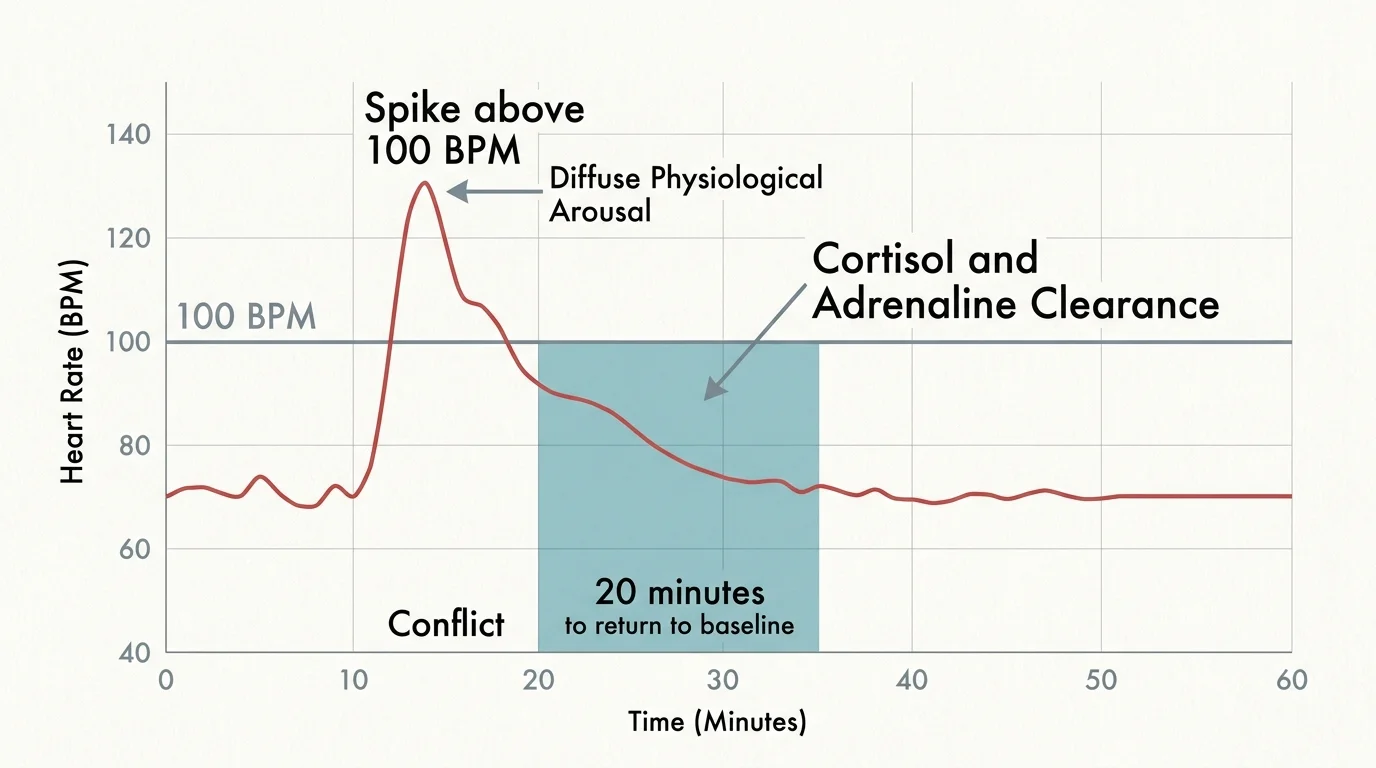
This exhaustion happens on a deeply physiological level. According to research from The Gottman Institute, emotionally draining interactions frequently trigger a state of diffuse physiological arousal, commonly known as emotional flooding. When someone chronically taxes your patience, your heart rate can quickly spike above 100 beats per minute. At this threshold, your body enters a fight-or-flight state, effectively shutting down the prefrontal cortex—the part of your brain responsible for rational thought, communication, and empathy. It takes a minimum of 20 minutes for your nervous system to clear the cortisol and adrenaline from your bloodstream and return to a baseline state. If you find yourself in this flooded state frequently with the same person, your body is signaling that the relationship is extracting too much energetic currency.
“When you’re in conflict with somebody and you become flooded with fear or anger, all your best intentions can go out the window.” — Dr. John Gottman, Relationship Researcher

8 Behavioral Signs Someone Is Emotionally Draining You
A depleting relationship often masquerades as a deeply connected one until you examine the mechanics of how you actually interact. Look for these specific behavioral patterns to determine if someone is draining your emotional reserves.
- 1. The conversation feels entirely one-sided. A healthy dynamic involves mutual sharing and active listening. In a draining relationship, the other person monopolizes the dialogue. You might find yourself acting as a perpetual sounding board, offering empathy and solutions, while your own life updates or struggles are quickly brushed aside or ignored completely.
- 2. Your body enters “fight or flight” before you interact. Your nervous system often recognizes an emotional drain before your conscious mind does. If you experience anticipatory anxiety—such as a tightened chest, clenched jaw, or shallow breathing—just seeing their name appear on your phone, your body is bracing for an emotionally expensive interaction.
- 3. You edit yourself constantly to avoid triggering them. Walking on eggshells is a primary indicator of emotional exhaustion. If you continuously filter your words, suppress your opinions, or hide your personal success to prevent an outburst or a guilt trip, you are carrying the emotional weight of two people.
- 4. They demand constant validation but dismiss your needs. Emotionally draining individuals often require an endless supply of reassurance. They rely on you to regulate their self-esteem and soothe their anxieties, but they remain utterly unavailable when you need a confidence boost or a shoulder to lean on.
- 5. You feel responsible for managing their mood. If their bad day automatically ruins your day, the boundaries in the relationship have collapsed. Depleting individuals project their negative emotions onto others, making you feel responsible for fixing their anger, sadness, or frustration.
- 6. They vent without processing or seeking resolution. While everyone needs to vent occasionally, an emotionally draining person uses venting as their primary mode of communication. They rehearse the exact same problems repeatedly without taking actionable steps toward a solution, effectively using you as an emotional dumping ground rather than seeking true support.
- 7. You experience a severe post-interaction crash. Pay attention to how you feel after spending time together. If you routinely need to take a nap, sit in complete silence, or isolate yourself to recover from a simple coffee date or phone call, the relationship is extracting more energy than you can afford to give.
- 8. Your boundaries are treated as personal attacks. When you finally say “no” or attempt to protect your time, an emotionally draining person rarely responds with understanding. Instead, they weaponize your boundaries, accusing you of being selfish, unsupportive, or distant.

Patterns to Watch For
Many people misinterpret the signs of an emotionally draining relationship, confusing toxic patterns with intense loyalty or unconditional love. One common misconception is that emotional exhaustion requires overt, shouting abuse. In reality, subtle, chronic boundary-crossing drains your energy just as effectively as loud arguments. You might convince yourself that you are simply being a “good listener” or a “supportive partner,” failing to recognize that healthy support never demands the total sacrifice of your own mental stability.
Another dangerous pattern is the belief that you can love someone into changing. If you stay in a draining dynamic because you see their potential or understand their childhood trauma, you are intellectualizing their behavior rather than protecting your peace. Empathy is a powerful tool, but applying it without boundaries enables poor behavior to continue unchecked.
“Daring to set boundaries is about having the courage to love ourselves, even when we risk disappointing others.” — Dr. Brené Brown, Research Professor
The Anatomy of an Emotionally Draining Conversation
To better recognize when an interaction is actively depleting you, it helps to see the contrast clearly. Here is how a healthy exchange differs from a draining one.
| Interaction Feature | Healthy Relationship | Emotionally Draining Relationship |
|---|---|---|
| Focus of Conversation | Balanced sharing; both people take turns speaking and listening. | Hyper-focused on one person’s ongoing crisis or complaints. |
| Empathy and Support | Freely given and reciprocated when needed. | Demanded constantly but rarely offered in return. |
| Boundary Setting | Respected and negotiated without triggering guilt. | Challenged, criticized, or treated as a deep personal betrayal. |
| Conflict Resolution | The shared goal is mutual understanding and repair. | The goal is winning, deflecting blame, or inflicting guilt. |
| Post-Interaction Energy | Leaves you feeling grounded, understood, and emotionally stable. | Leaves you feeling physically depleted, anxious, and second-guessing yourself. |

When Self-Help Isn’t Enough
Professional support becomes necessary when an emotionally draining relationship begins to compromise your daily functioning. Consider speaking with a licensed therapist if you experience severe anxiety, panic attacks, or uncontrollable dread at the thought of interacting with this specific person. Additionally, if the emotional toll leads to depressive symptoms, a complete loss of self-identity, or physical health issues like chronic insomnia or stress-induced illness, therapeutic intervention is critical. Resources like the American Psychological Association can help you locate qualified professionals in your area. A therapist can help you safely untangle codependent dynamics and establish rigid boundaries that self-help strategies alone cannot enforce.
Frequently Asked Questions
Can someone be emotionally draining without realizing it?
Yes. Many people who drain others lack emotional regulation skills and are completely unaware of the impact they have on your nervous system. They may rely on you to soothe their anxiety out of habit rather than a malicious desire to exhaust you. However, a lack of malicious intent does not negate the damage the relationship causes to your mental health.
How do I set boundaries with a family member who drains me?
Start with small, manageable limits. Control the duration of your phone calls by stating upfront, “I only have ten minutes to chat today.” Choose neutral environments for visits, and drive your own car so you can leave when your energy dips. Communicate your limits clearly and calmly, without over-explaining or apologizing for your needs. For further boundary-setting strategies, Psychology Today offers excellent guidance on navigating complex family dynamics.
Is it time to end the relationship?
If you have consistently communicated your boundaries and the other person repeatedly refuses to respect them, you have a critical decision to make. If the relationship actively damages your mental health, isolates you from others, or prevents you from thriving, stepping away or severely limiting contact may be the healthiest, albeit most difficult, choice.
Moving Forward and Protecting Your Energy
Protecting your emotional energy requires consistent practice and profound self-awareness. You cannot control how another person behaves, but you retain full authority over how much access they have to your internal world. Begin by observing your physiological reactions during conversations. If your heart races or you feel the urge to shut down, give yourself permission to step back and end the interaction. Reclaiming your energy is not an act of hostility; it is a vital act of self-preservation that allows you to show up fully for the relationships that actually nurture you.
The information in this article is meant for educational purposes and general guidance. It does not replace individual therapy, counseling, or medical treatment. If you or someone you know is in crisis, contact the 988 Suicide & Crisis Lifeline by calling or texting 988.
Last updated: May 2026. Psychology research evolves continuously—verify current findings with professional sources.







Leave a Reply