Psychology Diary

The First Step Toward Change Is Awareness

  • Home
  • Relationships
  • Mental Health
  • Expert Tips
  • Life
  • Family
  • Marriage

Understanding Common Mental Health Challenges in Older Adults

August 31, 2025 · Mental Health

Caregiver offers tea to loved one in a kitchen.

A Guide for Caregivers: Supporting a Loved One

Watching a parent, spouse, or friend struggle with their mental health is incredibly difficult. You may feel helpless, frustrated, or even guilty. Your role is not to be their therapist, but to be a source of compassionate support. This requires patience, understanding, and strong boundaries to protect your own well-being.

What Helps: Validation and Practical Support

Listen Without Judgment: The most powerful thing you can do is offer a safe space for them to talk. You don’t need to have the answers. Simply listening and saying things like, “That sounds really hard,” or “I’m so sorry you’re feeling this way,” can make a world of difference. This validates their experience.

Focus on Small, Concrete Actions: Instead of saying “Let me know if you need anything,” offer specific help. “I’m going to the grocery store, what can I pick up for you?” or “Would you like to take a short walk with me around the block?” This removes the burden of them having to ask.

Encourage Professional Help Gently: Avoid demands or ultimatums. Frame it with “I” statements. “I’m worried about you because I’ve noticed you haven’t been eating much. I think it would be a good idea to talk to Dr. Smith about it. I can help you make the appointment and go with you if you’d like.”

What to Avoid: Fixing and Minimizing

Don’t Try to “Fix” Them: Resist the urge to offer simplistic solutions like “You just need to think positive” or “Snap out of it.” These phrases, though well-intentioned, can feel dismissive and increase feelings of shame. Mental health conditions are not a matter of willpower.

Don’t Take It Personally: Depression and anxiety can make a person irritable, withdrawn, or apathetic. It’s easy to feel that their behavior is a reflection on you. Try to remember that these are symptoms of their condition, not a personal attack.

Caring for the Caregiver

You cannot pour from an empty cup. Caregiver burnout is real and serious. You must prioritize your own health. Find someone you can talk to, whether it’s a friend, a support group, or a therapist. Seek out mental health resources for older adults and their families; organizations like the Area Agency on Aging can often connect caregivers with respite care (temporary relief) and other support services. Setting boundaries is not selfish—it’s essential for sustainable care.


Pages: 1 2 3 4 5 6 7 8 9 10

Share this article

Facebook Twitter Pinterest LinkedIn Email

Leave a Reply Cancel reply

Your email address will not be published. Required fields are marked *

Search

Latest Posts

  • A mixed media collage of a figure made of layered paper and watercolor, symbolizing emotional flexibility and resilience. 12 Signs You're Mentally Stronger Than You Realize
  • A mixed media collage of a person's face with shifting, layered textures and torn paper edges symbolizing a mental break. 10 Signs of a Psychotic Break
  • A conceptual illustration showing a father and daughter separated by a deep chasm in the floor of their dining room. 10 Habits That Push People Away (Your Children Too)
  • A conceptual collage of a head silhouette filled with shattered mirrors and warped photos, symbolizing reality distortion. 8 Ways People Distort Reality
  • An elderly woman sits alone at a dining table in soft afternoon light, looking down at a tea cup in a quiet, nostalgic home setting. 9 Emotional Wounds Adult Children Simply Don’t Realize They’re Inflicting On Their Parents
  • A mixed-media collage of a fragmented silhouette head with an anchor being cut, symbolizing the loss of one's grip on reality. 10 Signs Someone Is Trying to Distort Your Reality
  • A mixed media collage of a beautiful white flower with hidden barbed wire roots and thorny stems on a textured vintage paper background. 8 Behaviors That Reveal Hidden Toxicity
  • A candid photo of a couple in a dim living room, showing a sense of emotional distance and unspoken tension. 10 Traits That May Reveal Covert Narcissism
  • A couple sits on a sofa in a dimly lit room, one person looking at a phone while the other looks away, capturing a moment of secrecy. 8 Signs Someone May Be Hiding More Than They Admit
  • An ink and watercolor illustration of a human head cracking like stone, with golden light leaking through the fissures. 11 Small Clues That Can Expose a Lie

Newsletter

Get the latest posts delivered to your inbox.

Related Articles

morning depression

Do You Have Morning Depression? Here Are 8 Effective Ways to Combat It

Are you dealing with morning depression? While everybody is different, depression is something very serious…

Read More →
Aging

5 Negative Ways Aging Seriously Impacts a Senior’s Mental Health

How Can You Help A Senior You Care About With Their Mental Health Issues? We’ve…

Read More →
affect

7 Negative Ways in Which Stress Affects the Body

Reproductive system You may have no thought that stress will end up affecting your reproductive…

Read More →
self-soothing,

9 Self-Soothing Methods to Help You Regain Balance

Some of The Best Self-Soothing Tactics out There! Let’s face it: We all have moments…

Read More →
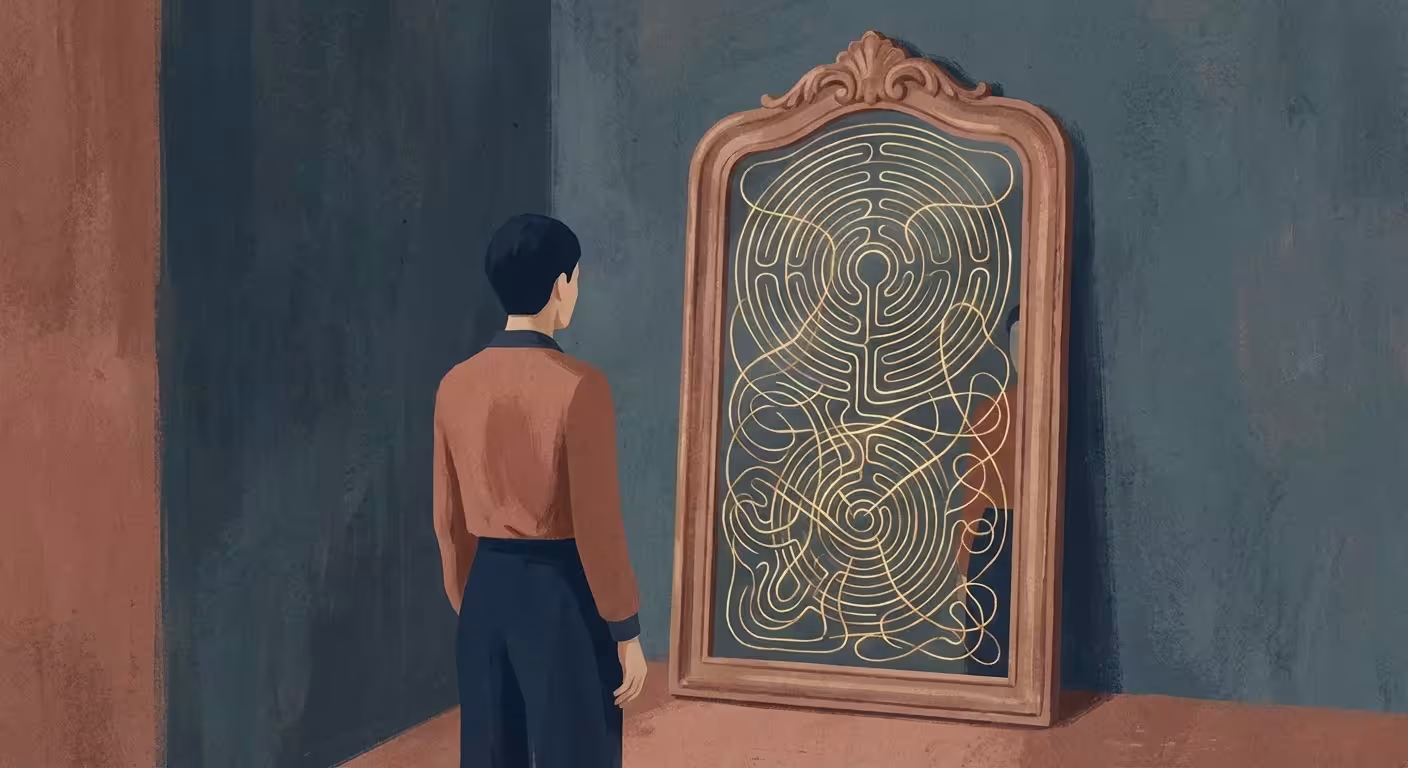
Surreal illustration of a person looking into a mirror that reflects a golden labyrinth, symbolizing internal complexity.

The 6 Most Dangerous Lies We Tell Ourselves Every Day

Uncover the 6 most dangerous lies we tell ourselves daily, from perfectionism to control fallacies,…

Read More →
A woman in her 60s sits thoughtfully in a sunlit living room with a mug of tea, reflecting on connection and solitude.

Why Loneliness Hits Harder After 60—and How to Fix It

Discover why loneliness intensifies after 60, learn the difference between solitude and isolation, and explore…

Read More →
Parkinson's disease

Parkinson’s Disease: 9 Unusual Signs You Have It!

8. Dystonia Dystonia refers to a group of symptoms characterized by involuntary muscular twisting, spasm,…

Read More →

10 Times You Should NOT Forgive Anyone

Have you ever wondered if it’s okay not to forgive someone? Is it acceptable to…

Read More →
paranoia after 60

5 Subtle Signs of Paranoia After 60, According to Psychiatrists

Someone is always threatening their lives Paranoia after 60 also implies playing the victim role.…

Read More →

Psychology Diary

The First Step Toward Change Is Awareness

Inedit Agency S.R.L.
Bucharest, Romania

contact@psychologydiary.com

Explore

  • About Us
  • Advertiser Disclosure
  • Contact Us
  • Disclaimer
  • Do not sell my personal information
  • Editorial Policy
  • Frequently Asked Questions
  • Privacy Policy
  • Terms and Conditions
  • Subscribe
  • Unsubscribe

Categories

  • Expert Tips
  • Family
  • Life
  • Marriage
  • Mental Health

© 2026 Psychology Diary. All rights reserved.