Psychology Diary

The First Step Toward Change Is Awareness

  • Home
  • Relationships
  • Mental Health
  • Expert Tips
  • Life
  • Family
  • Marriage

An Introduction to Mindfulness and Meditation for Seniors

August 31, 2025 · Expert Tips

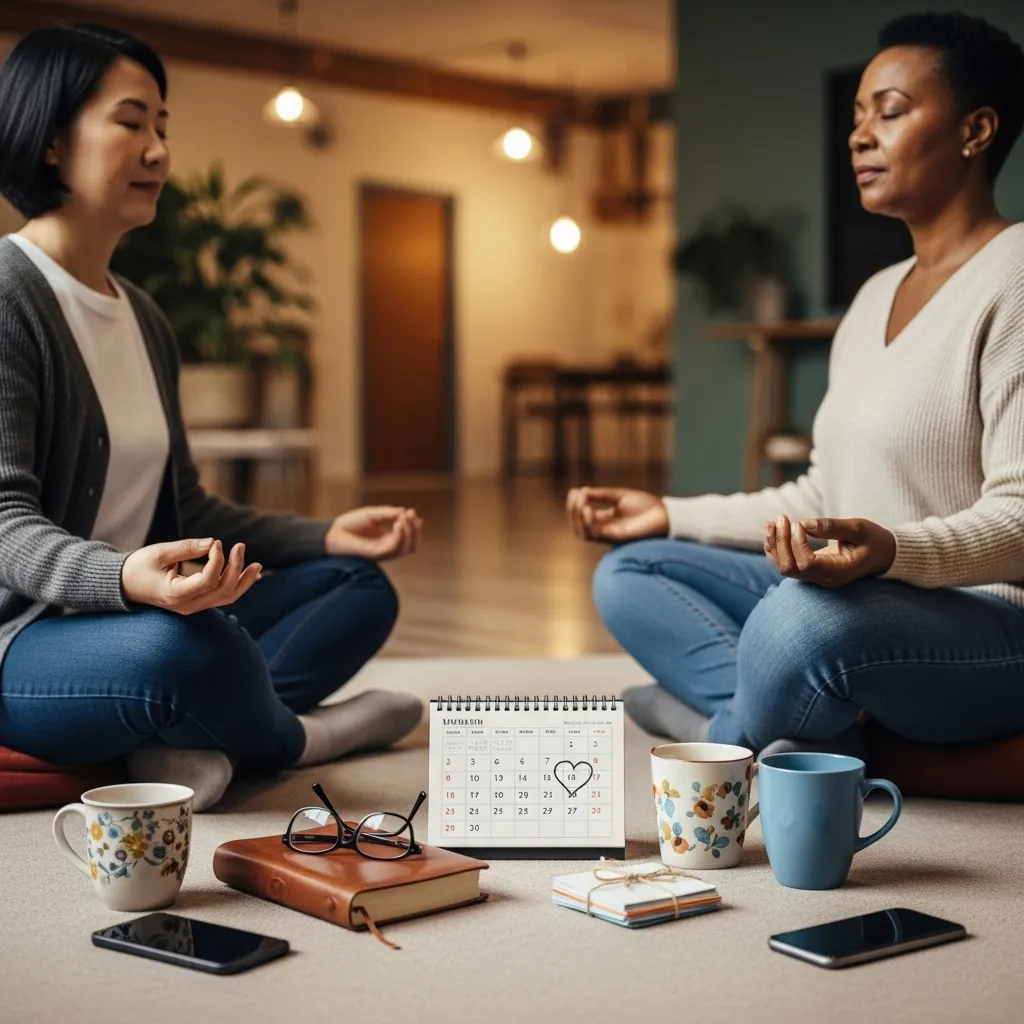
Friends meditating together.

How to Start a Mindfulness Practice: A Gentle, Step-by-Step Guide

Starting a new routine can feel daunting, but the beauty of mindfulness meditation is its simplicity. You don’t need special equipment, expensive classes, or a lot of time. The most important ingredients are a willingness to try and a dose of self-compassion. Here is how to start a mindfulness practice with just a few minutes a day.

Step 1: Choose Your Time and Place

The key to building any new habit is consistency. It is far more effective to practice for 5 minutes every day than for 30 minutes once a week. Look at your daily schedule and find a small pocket of time where you are unlikely to be interrupted. For many, this is first thing in the morning before the day’s demands begin, or in the evening as a way to wind down. Choose a location where you can be relatively quiet and undisturbed. This doesn’t need to be a special room; a comfortable chair in a quiet corner of your bedroom or living room is perfect.

Step 2: Find a Comfortable Posture

Forget the images you may have seen of people sitting cross-legged on the floor for hours. For most seniors, the best and most sustainable posture is sitting in a chair. Choose a sturdy chair that allows your feet to rest flat on the floor. Sit away from the back of the chair so that your spine can be upright but not rigid—imagine a string gently pulling the crown of your head toward the ceiling. This posture promotes alertness. Let your hands rest comfortably in your lap. You can gently close your eyes or, if that feels uncomfortable, simply lower your gaze to a spot on the floor a few feet in front of you.

Step 3: The Foundational Practice: Mindful Breathing

The breath is the most common anchor in mindfulness meditation because it is always with you. Once you are settled in your posture, begin by taking a few deeper, more intentional breaths to signal to your body that it’s time to relax. Inhale through your nose, and exhale slowly through your mouth.

Then, let your breath return to its natural rhythm. Your only job for the next few minutes is to rest your attention on the physical sensations of your breath. You might notice the feeling of the cool air entering your nostrils, the gentle rise and fall of your chest or belly, or the warmth of the air as you exhale. Choose one of these spots to focus on.

Inevitably, your mind will wander. It will drift to your to-do list, a conversation from yesterday, or a sound outside. This is not a mistake or a failure. It is simply what minds do. The moment you notice your mind has wandered is a moment of mindfulness! Acknowledge where your mind went with a gentle mental note, like “thinking” or “worrying.” Then, without any self-criticism, gently guide your attention back to the sensation of your breath. This process of wandering, noticing, and returning is the entire practice. You will do it over and over again. Each time you do, you are strengthening your attention and mindfulness.

Mini-Example of Inner Dialogue: “Okay, I’m focusing on my breath… in… out… My chest is rising… I wonder if I need to pick up milk today. Whoops, that’s a thought about the grocery store. That’s okay. Now, back to my breath. Feeling it in my belly this time… rise… fall…”

Step 4: Start Small and Build Slowly

The goal is to create a sustainable habit, not to achieve a perfect meditation session. Begin with a very manageable duration, such as 3 to 5 minutes. You can set a quiet timer so you don’t have to worry about the time. After a week of consistent 5-minute sessions, you might consider increasing to 7 minutes, then 10 minutes. The duration is less important than the regularity of the practice. Be patient and kind to yourself. Some days your mind will feel calm and focused; other days it will feel like a storm of thoughts. Both are completely normal. Just showing up for your practice is the success.


Pages: 1 2 3 4 5 6 7 8 9 10 11

Share this article

Facebook Twitter Pinterest LinkedIn Email

Leave a Reply Cancel reply

Your email address will not be published. Required fields are marked *

Search

Latest Posts

  • A grandfather and granddaughter sitting on a wooden dock at sunset, sharing a quiet moment looking into the water. The Unexpected Health Benefits of Spending Time With Grandchildren
  • An editorial gouache illustration of an anonymous leader's profile silhouette filled with abstract patterns, representing public perception. The Psychology of Donald Trump: Traits, Behaviors, and Public Perception
  • An artistic mixed-media collage silhouette of a person filled with tangled threads, a clock dial, and watercolor shapes on textured paper. 9 Everyday Symptoms That May Be Linked to Anxiety
  • Lonely1, feel depression 10 Therapist-Approved Tips for When You're Feeling Lonely
  • A conceptual mixed media collage with a compass, geometric shapes, and watercolor washes symbolizing structure and flow. 8 Signs You’re a Self-Disciplined Person
  • A mixed media collage of a figure made of layered paper and watercolor, symbolizing emotional flexibility and resilience. 12 Signs You're Mentally Stronger Than You Realize
  • A mixed media collage of a person's face with shifting, layered textures and torn paper edges symbolizing a mental break. 10 Signs of a Psychotic Break
  • A conceptual illustration showing a father and daughter separated by a deep chasm in the floor of their dining room. 10 Habits That Push People Away (Your Children Too)
  • A conceptual collage of a head silhouette filled with shattered mirrors and warped photos, symbolizing reality distortion. 8 Ways People Distort Reality
  • An elderly woman sits alone at a dining table in soft afternoon light, looking down at a tea cup in a quiet, nostalgic home setting. 9 Emotional Wounds Adult Children Simply Don’t Realize They’re Inflicting On Their Parents

Newsletter

Get the latest posts delivered to your inbox.

Related Articles

pills

Never Ignore These 8 Silent Pills Addiction Signs, Experts Say

Increasing tolerance It seems that pain management doesn’t have any effect on the level of…

Read More →
resolutions

4 Psychology-Based Reasons New Year’s Resolutions Fail

Are these resolutions a bad thing? New Year’s resolutions have always been a big thing,…

Read More →
assisted living

10 Reasons Why Assisted Living Facilities Are a Great Decision

You probably know your loved one better than anyone else, so deciding when’s the right…

Read More →

15 Unmistakable Signs You’re Falling In Love

You give them your full attention When something is real, you can’t deny it. According…

Read More →
work

5 Ways to Work From Home and Stop Kids From Interrupting You

Have you ever wondered if there’s a way to do work more efficiently? One of…

Read More →

60 Things Grandparents Should Never Do

Grandparents can be a lifesaver. They can improve discipline strategies, give wise advice to new…

Read More →
Narcissist, falling out of love

6 Subtle Signs You Might Be Falling Out of Love, According to Experts

Do you ever feel like you’re falling out of love with your partner? Many relationships…

Read More →
grandkids

9 Reasons Your Grandkids Avoid You Now

3. Kids are still kids! Of course, kids are still kids, and they haven’t fully…

Read More →
Older man and doctor discuss symptoms during a check-up.

Early-Stage Dementia vs. Normal Aging: A Detailed Symptom Checklist

What to Do with Your Concerns: A Step-by-Step Guide Noticing one or more of these…

Read More →

Psychology Diary

The First Step Toward Change Is Awareness

Inedit Agency S.R.L.
Bucharest, Romania

contact@psychologydiary.com

Explore

  • About Us
  • Advertiser Disclosure
  • Contact Us
  • Disclaimer
  • Do not sell my personal information
  • Editorial Policy
  • Frequently Asked Questions
  • Privacy Policy
  • Terms and Conditions
  • Subscribe
  • Unsubscribe

Categories

  • Expert Tips
  • Family
  • Life
  • Marriage
  • Mental Health

© 2026 Psychology Diary. All rights reserved.