Psychology Diary

The First Step Toward Change Is Awareness

  • Home
  • Relationships
  • Mental Health
  • Expert Tips
  • Life
  • Family
  • Marriage

An Introduction to Mindfulness and Meditation for Seniors

August 31, 2025 · Expert Tips

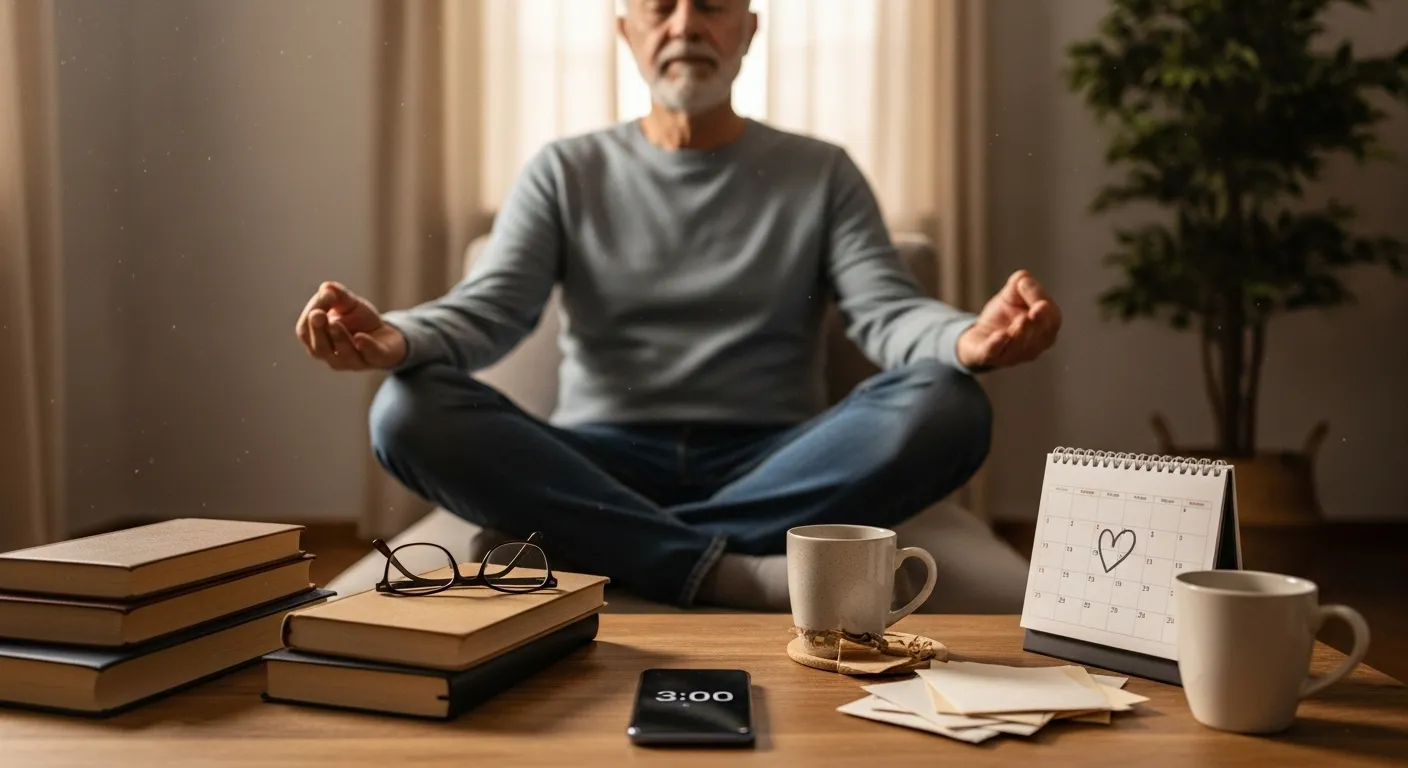
Senior man meditating with timer on phone in living room.

Frequently Asked Questions (FAQs)

How long should a senior meditate each day?

The most important factor is consistency, not duration. It is much better to start with a short, manageable session that you can do every day. We recommend beginning with just 3 to 5 minutes daily. Once that feels like a comfortable and established habit, you can gradually increase the time to 10, 15, or even 20 minutes if you wish. But even a consistent 5-minute practice can yield significant benefits.

Do I need any special equipment?

No, you do not need any special equipment to begin. One of the greatest advantages of mindfulness meditation is its accessibility. All you truly need is a quiet place where you won’t be disturbed for a few minutes and a comfortable place to sit. A simple, straight-backed chair is ideal for most people. There is no need to buy special cushions, clothing, or apps to get started.

Is it okay to use a guided meditation app?

Yes, guided meditation apps or online recordings can be an excellent resource, especially for beginners. They provide structure and can make the practice feel more approachable. When exploring these resources, try to find instructors with credible qualifications in mindfulness or mental health. Be cautious of any app or program that makes unrealistic promises or guarantees specific health outcomes. A good guided meditation should feel like a gentle invitation, not a demanding command.

What if I have mobility issues and can’t sit on the floor?

This is a very common and important question. It is a myth that you must sit on the floor in a cross-legged position to meditate. For most adults, and particularly for seniors with mobility challenges, sitting upright in a supportive chair is the recommended and most effective posture. You can also practice meditation while lying down, though you should be mindful of the tendency to fall asleep. The key is to find a posture that allows you to be both alert and comfortable.


Pages: 1 2 3 4 5 6 7 8 9 10 11

Share this article

Facebook Twitter Pinterest LinkedIn Email

Leave a Reply Cancel reply

Your email address will not be published. Required fields are marked *

Search

Latest Posts

  • An ink and watercolor illustration of a person holding a large ceramic vase with glowing gold cracks, symbolizing hidden internal pressure. The Psychology of the Person Who Is Always Fine Until They Absolutely Aren't
  • A woman sits in a sunlit home library, looking thoughtfully out a window with an open book on her lap. 12 Signs of a High IQ
  • A candid photograph of a tense moment between a couple in a sunlit kitchen, one partner looking exhausted while the other looks away. 8 Traits of Someone Who Always Has to Be Right
  • A conceptual paper collage portrait made of torn fragments representing a fragmented digital identity with blue screen patterns. 10 Clues Someone Has a False Online Identity
  • A conceptual mixed media collage showing a silhouette with a peeling mask, revealing a deep indigo inner layer. 8 Trauma Responses That Get Mistaken for Personality Traits
  • A conceptual watercolor illustration of a senior's silhouette in soft blue, with a glowing gold ink pathway symbolizing an awakening virus. 6 Early Signs of Shingles Seniors Should Never Ignore
  • An illustration of a person on a ledge reaching for a fragile golden thread emerging from a glowing smartphone screen. 10 Clear Signs Your Partner Is Only Feeding You Breadcrumbs
  • An editorial illustration of a senior man in an armchair while his partner speaks from a distance, with her voice fading as watercolor mist. 7 Early Warning Signs of Hearing Loss That Seniors Often Dismiss as Normal Aging
  • An unposed photo of a man sitting at a kitchen table looking slightly guarded during a quiet, intimate conversation. 8 Body Language Clusters That Indicate Someone Is Holding Back the Truth
  • An ink and watercolor illustration of a morning coffee cup on a wooden table with a gentle ripple, symbolizing subtle early changes. 7 Subtle Signs of Parkinson's Disease in the Early Stages

Newsletter

Get the latest posts delivered to your inbox.

Related Articles

talking to a narcissist

7 Ways to Keep Your Cool When Talking to a Narcissist

Talking to a narcissist isn’t easy, but you can make it through! Here’s how: Have…

Read More →
Untrustworthy Behavior Trait

12 Untrustworthy Behavior Traits You Should Look Out For

The user Do you notice that this person only comes around when they need something?…

Read More →

15 Signs You’re In A One-Sided Friendship

Maybe not all your friendships are as good as they seem to be… Friendships are…

Read More →
resilient2

6 Easy Ways to Be More Resilient and Manage Stress

Resilience is typically associated with one’s capacity to overcome obstacles and difficult circumstances. In actuality,…

Read More →
anxiety, relationship, stress

These Are the 6 Types of Anxiety Disorders

#6 Substance or Medication-Induced Anxiety Disorder The medical term for anxiety or panic attacks brought…

Read More →
gaslighting, emotionally abusive relationship

6 Warning Signs of Gaslighting in Relationships

Have you ever heard of gaslighting? It’s one of the worst things that could happen…

Read More →
attract good people

5 Best Ways to Attract Good People in Your Life

There are ways to have good people in your life! Start attracting them today! A…

Read More →
Post-Divorce

20+ Post-Divorce Mistakes You Should Avoid No Matter What

Have YOU been making any of these post-divorce mistakes? Getting a divorce is not the…

Read More →
passive-aggressive person

11 Huge Red Flags of a Passive-Aggressive Person

Can you recognize a passive-aggressive person?  Have you ever had the feeling that during a…

Read More →

Psychology Diary

The First Step Toward Change Is Awareness

Inedit Agency S.R.L.
Bucharest, Romania

contact@psychologydiary.com

Explore

  • About Us
  • Advertiser Disclosure
  • Contact Us
  • Disclaimer
  • Do not sell my personal information
  • Editorial Policy
  • Frequently Asked Questions
  • Privacy Policy
  • Terms and Conditions
  • Subscribe
  • Unsubscribe

Categories

  • Expert Tips
  • Family
  • Life
  • Marriage
  • Mental Health

© 2026 Psychology Diary. All rights reserved.