Psychology Diary

The First Step Toward Change Is Awareness

  • Home
  • Relationships
  • Mental Health
  • Expert Tips
  • Life
  • Family
  • Marriage

The 5 Love Languages: How to Understand Your Partner Better After Decades Together

August 31, 2025 · Marriage

Older woman reading to her partner who's knitting in living room

Frequently Asked Questions about Love Languages

It’s natural to have questions as you begin to apply this framework to your own life. Here are answers to a few common queries.

What if my partner and I have completely different love languages?

This is very common and not a problem at all! In fact, it’s the entire point of learning the framework. The goal isn’t to have matching languages; it’s to become bilingual in love. If your language is Words of Affirmation and your partner’s is Acts of Service, it means you must make a conscious effort to praise them, and they must make a conscious effort to help you with tasks. It feels more intentional and can be even more meaningful because it requires stepping outside your comfort zone for the sake of your partner.

Can a person’s love language change over time?

Absolutely. As discussed earlier, major life events—retirement, illness, grief, a new chapter in life—can shift our priorities and emotional needs. That’s why it’s so important to see this as an ongoing conversation, not a one-time diagnosis. The partner who once needed Acts of Service above all else might, after retiring, crave Quality Time more than anything. Checking in periodically is a sign of a healthy, evolving relationship.

Is this concept scientifically proven?

The 5 Love Languages is a framework that emerged from Dr. Chapman’s decades of clinical observation in marriage counseling. It is best understood as a helpful model for communication rather than a rigorously tested scientific theory. There is not a large body of peer-reviewed research validating it as a psychological construct. However, its enduring popularity speaks to its practical usefulness. Many couples find it provides a simple, accessible vocabulary to talk about complex emotional needs. For more on the broader science of connection, you can find overviews on relationship psychology from the American Psychological Association (APA).


Pages: 1 2 3 4 5 6 7 8

Share this article

Facebook Twitter Pinterest LinkedIn Email

Leave a Reply Cancel reply

Your email address will not be published. Required fields are marked *

Search

Latest Posts

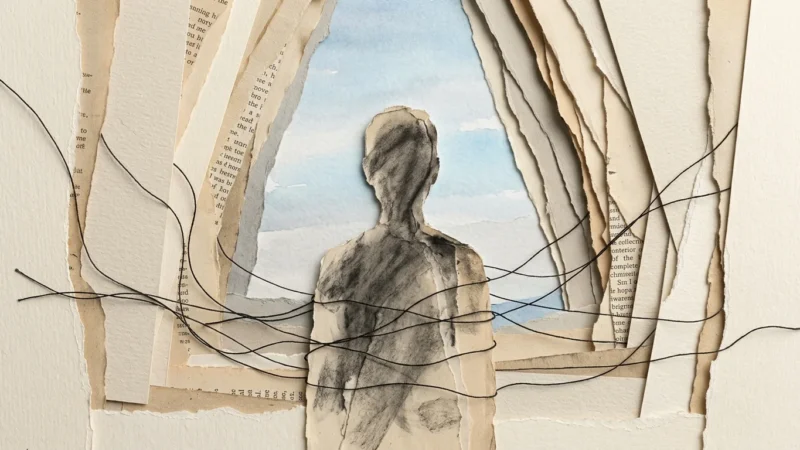
  • A conceptual paper collage showing a silhouette framed by overlapping paper layers, symbolizing a shrinking world. 10 Signs Your Spouse Is Controlling You
  • An adult in a knit sweater sits on a window sill on a gray day, looking out over a misty city with a steaming mug. 10 Subtle Signs You're Just Existing, Not Truly Living
  • Editorial illustration of a person surrounded by a protective warm watercolor aura, deflecting dark droplets on textured paper. 10 Common Psychological Defense Mechanisms - Which One Do You Use?
  • A mixed-media collage silhouette of a person made from torn paper, charcoal sketches, and ink washes, representing fragmented self-trust. 9 Signs of an Emotionally Abusive Relationship
  • A mixed media collage of a human silhouette with layered torn paper in indigo and gold, symbolizing trapped physical energy and healing. 10 Signs Your Body is Holding Trauma
  • An illustration of an adult walking forward, casting a shadow that reveals a towering parental figure behind them. 10 Signs You Were Raised by a Narcissist
  • An editorial gouache illustration of a woman's profile transitioning from concrete architecture to elegant fashion lines. Who Was Melania Before She Met Donald Trump? (A Psychological Portrait)
  • An ink and watercolor illustration of a person holding a large ceramic vase with glowing gold cracks, symbolizing hidden internal pressure. The Psychology of the Person Who Is Always Fine Until They Absolutely Aren't
  • A woman sits in a sunlit home library, looking thoughtfully out a window with an open book on her lap. 12 Signs of a High IQ
  • A candid photograph of a tense moment between a couple in a sunlit kitchen, one partner looking exhausted while the other looks away. 8 Traits of Someone Who Always Has to Be Right

Newsletter

Get the latest posts delivered to your inbox.

Related Articles

senior woman

Life as a Widow: 7 Hard Things I Learned in My First Year

These are the things I learned in my first year of being a widow. One…

Read More →
Divorcing

25 Strong Reasons Divorcing in Your 40s Isn’t the End of the World

Divorcing your partner wasn’t on your mind when you get married. But it’s not the…

Read More →
Successful Couple

14 Phrases Successful Couples Use Daily

“Let’s have some fun!” If you can playfully tease each other or find some kind…

Read More →

10 BIG Telltale Signs That Your Partner Wants a Divorce

Are you looking out for signs or have you started to see some and you’re…

Read More →

26 Seemingly Harmless Things That Drive Your Husband Mad

Criticizing his driving It’s no secret that men drive better than women. This scientifically proven…

Read More →
marriage

13 Myths About Marriage That No One Should Believe

Saying ‘I do’ is not a beautiful end, like you see in movies where they…

Read More →
holiday

17 Disagreements Even Happy Couples Have During The Holidays

During the holidays, everyone wants to spend time with their families and loved ones, exchange…

Read More →
A conceptual paper collage showing a silhouette framed by overlapping paper layers, symbolizing a shrinking world.

10 Signs Your Spouse Is Controlling You

Learn how to identify the 10 hidden signs of a controlling spouse, understand coercive control,…

Read More →

10 Financial Mistakes Newlyweds Should Avoid At All Costs

Marriage means merging your life completely with someone else’s, including your finances. Believe it or…

Read More →

Psychology Diary

The First Step Toward Change Is Awareness

Inedit Agency S.R.L.
Bucharest, Romania

contact@psychologydiary.com

Explore

  • About Us
  • Advertiser Disclosure
  • Contact Us
  • Disclaimer
  • Do not sell my personal information
  • Editorial Policy
  • Frequently Asked Questions
  • Privacy Policy
  • Terms and Conditions
  • Subscribe
  • Unsubscribe

Categories

  • Expert Tips
  • Family
  • Life
  • Marriage
  • Mental Health

© 2026 Psychology Diary. All rights reserved.