Psychology Diary

The First Step Toward Change Is Awareness

  • Home
  • Relationships
  • Mental Health
  • Expert Tips
  • Life
  • Family
  • Marriage

The Complete Guide to Understanding and Managing Anxiety After 50

August 31, 2025 · Mental Health

Group practicing breathing exercise in community center.

Practical, At-Home Skills to Manage Anxiety Today

While professional support is invaluable, there are also powerful and immediate skills you can use to manage moments of high anxiety. These techniques work by interrupting the body’s stress response and bringing your attention back to the present moment. They are not a “cure,” but they are tools you can use anytime, anywhere, to regain a sense of control. Think of them as first aid for your nervous system. These natural remedies for anxiety in seniors are safe, effective, and easy to learn.

Skill 1: The Power of the Breath – Box Breathing

When you feel anxious, your breathing often becomes shallow and rapid. This signals danger to your brain, keeping the cycle of panic going. By intentionally slowing down your breath, you send a powerful message back to your brain that you are safe. Box breathing is a simple, rhythmic technique used by everyone from Navy SEALs to yoga practitioners to calm the nervous system.

Here’s how to do it:

1. Find a comfortable place to sit, with your feet flat on the floor and your back straight but relaxed.

2. Gently exhale all the air from your lungs.

3. Inhale slowly through your nose for a count of 4. Feel your belly expand.

4. Hold your breath gently for a count of 4.

5. Exhale slowly through your mouth for a count of 4.

6. Hold at the bottom of the exhale for a count of 4.

7. Repeat this cycle 5 to 10 times, focusing only on the rhythm of your breath and the counting.

Mini-Example: Imagine you are in a crowded grocery store and start to feel overwhelmed. You can step to the side of an aisle, look at a box of cereal, and practice this breathing pattern. Inhale 1-2-3-4. Hold 1-2-3-4. Exhale 1-2-3-4. Hold 1-2-3-4. No one will even notice you’re doing it, but within a minute, you may feel your heart rate begin to slow down.

Skill 2: Grounding with Your Senses – The 5-4-3-2-1 Technique

Anxiety often pulls you into future worries or past regrets. Grounding is the practice of pulling your attention out of your head and back into the present moment using your five senses. This technique is incredibly effective for stopping a spiral of catastrophic thoughts.

Here’s how to do it:

Wherever you are, pause and gently notice…

5: Five things you can SEE. Look around and name them silently to yourself. The blue pen on my desk. The crack in the ceiling. The dust on the windowsill. The green leaves outside. The pattern on my rug.

4: Four things you can FEEL. Notice the physical sensations. The firm chair beneath me. The soft fabric of my sweater. The cool surface of the table. The weight of my feet on the floor.

3: Three things you can HEAR. Listen carefully for sounds you might have been tuning out. The hum of the refrigerator. A bird chirping outside. The distant sound of traffic.

2: Two things you can SMELL. Take a gentle sniff of the air. The faint scent of coffee. The smell of soap on my hands.

1: One thing you can TASTE. Notice any taste in your mouth, or take a sip of water. The lingering taste of toothpaste.

Skill 3: Scheduling “Worry Time”

This may sound counterintuitive, but giving your worries a designated time and place can keep them from taking over your entire day. The goal isn’t to eliminate worry, but to contain it. This practice helps you learn that you have control over when and how you engage with your anxious thoughts.

Here’s how to do it:

1. Set aside a specific 15-minute period each day. For example, from 4:30 PM to 4:45 PM. This is your official “Worry Time.”

2. Throughout the day, when an anxious thought pops into your head, acknowledge it and then consciously postpone it. You might tell yourself, “That’s a valid concern. I will think about that during my Worry Time at 4:30.” You can even jot it down on a piece of paper to address later.

3. When your Worry Time arrives, sit down and allow yourself to think about everything on your list. Don’t judge the worries, just let them be there.

4. When the 15-minute timer goes off, stop. Stand up, stretch, and move on to a different, more pleasant activity. You may find that by the time you get to your scheduled slot, some of the worries have lost their emotional charge.


Pages: 1 2 3 4 5 6 7 8 9 10 11

Share this article

Facebook Twitter Pinterest LinkedIn Email

Leave a Reply Cancel reply

Your email address will not be published. Required fields are marked *

Search

Latest Posts

  • An adult in a knit sweater sits on a window sill on a gray day, looking out over a misty city with a steaming mug. 10 Subtle Signs You're Just Existing, Not Truly Living
  • Editorial illustration of a person surrounded by a protective warm watercolor aura, deflecting dark droplets on textured paper. 10 Common Psychological Defense Mechanisms - Which One Do You Use?
  • A mixed-media collage silhouette of a person made from torn paper, charcoal sketches, and ink washes, representing fragmented self-trust. 9 Signs of an Emotionally Abusive Relationship
  • A mixed media collage of a human silhouette with layered torn paper in indigo and gold, symbolizing trapped physical energy and healing. 10 Signs Your Body is Holding Trauma
  • An illustration of an adult walking forward, casting a shadow that reveals a towering parental figure behind them. 10 Signs You Were Raised by a Narcissist
  • An editorial gouache illustration of a woman's profile transitioning from concrete architecture to elegant fashion lines. Who Was Melania Before She Met Donald Trump? (A Psychological Portrait)
  • An ink and watercolor illustration of a person holding a large ceramic vase with glowing gold cracks, symbolizing hidden internal pressure. The Psychology of the Person Who Is Always Fine Until They Absolutely Aren't
  • A woman sits in a sunlit home library, looking thoughtfully out a window with an open book on her lap. 12 Signs of a High IQ
  • A candid photograph of a tense moment between a couple in a sunlit kitchen, one partner looking exhausted while the other looks away. 8 Traits of Someone Who Always Has to Be Right
  • A conceptual paper collage portrait made of torn fragments representing a fragmented digital identity with blue screen patterns. 10 Clues Someone Has a False Online Identity

Newsletter

Get the latest posts delivered to your inbox.

Related Articles

Watch Out: 5 Bipolar Disorder Signs

How to Spot Bipolar Disorder — 5 Subtle Signs You Should Look Out For! Did…

Read More →
signs of anxiety war

Top 6 Earliest Signs of Anxiety Disorder in Seniors

4. Panic attacks This might be one of the most evident signs of anxiety and…

Read More →
smartphones affect our brains

Smartphones Seriously Affect Seniors’ Brains, Research Says

We use them every day, but the truth is that smartphones affect our brains! According…

Read More →
Sudden Retirement Syndrome

4 Signs of Sudden Retirement Syndrome and How to Deal With It

You and your spouse suddenly have to spend 24/7 with each other As we’ve mentioned,…

Read More →
Conceptual paper-craft illustration of a brain with glowing neural pathways and botanical growth representing cognitive health.

The Link Between Physical Activity and Mental Sharpness After 60

Discover how combining aerobic and resistance training can actively rewire your brain, increase BDNF levels,…

Read More →

10 Times You Should NOT Forgive Anyone

Have you ever wondered if it’s okay not to forgive someone? Is it acceptable to…

Read More →
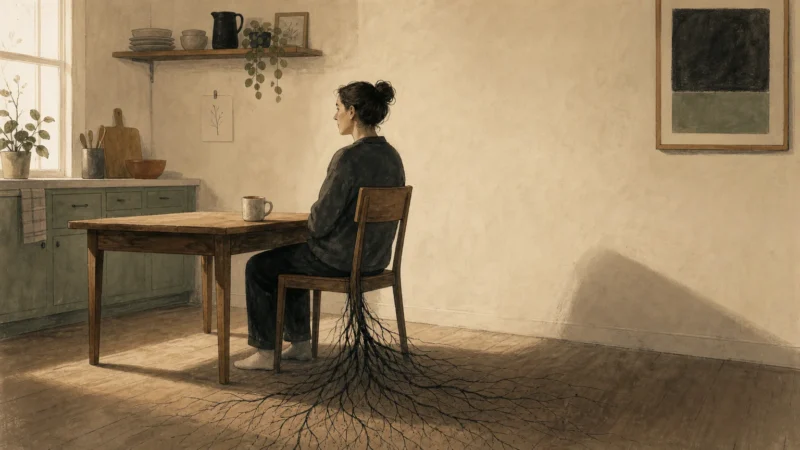
An editorial illustration of a person sitting at a table with a root system growing from their chair into the floorboards.

The Mental Symptoms Many People Ignore Until It’s Too Late

Discover the hidden physical, cognitive, and emotional warning signs of mental exhaustion and learn practical…

Read More →
An adult in a knit sweater sits on a window sill on a gray day, looking out over a misty city with a steaming mug.

10 Subtle Signs You’re Just Existing, Not Truly Living

Discover the subtle psychological signs you are just existing and learn evidence-based ways to move…

Read More →
anxiety

7 Effective Ways to Reduce Anxiety

#4 Go for a Walk One of the greatest anxiety remedies, both short-term and long-term,…

Read More →

Psychology Diary

The First Step Toward Change Is Awareness

Inedit Agency S.R.L.
Bucharest, Romania

contact@psychologydiary.com

Explore

  • About Us
  • Advertiser Disclosure
  • Contact Us
  • Disclaimer
  • Do not sell my personal information
  • Editorial Policy
  • Frequently Asked Questions
  • Privacy Policy
  • Terms and Conditions
  • Subscribe
  • Unsubscribe

Categories

  • Expert Tips
  • Family
  • Life
  • Marriage
  • Mental Health

© 2026 Psychology Diary. All rights reserved.