

Telling the difference between genuine compassion and a strategic performance saves you from emotional manipulation and relationship burnout. Performative kindness operates as a social currency, where the giver treats favors, compliments, or public displays of charity as an investment requiring an immediate, visible return. While true altruism centers on the recipient’s well-being, fake kindness focuses entirely on the applause. You might feel a lingering sense of guilt or confusion when interacting with these individuals, sensing a hidden agenda beneath their grand gestures. By recognizing the subtle behavioral cues—from conditional generosity to shifting public personas—you can protect your boundaries and invest your energy in authentic connections that do not demand an audience to prove their worth.
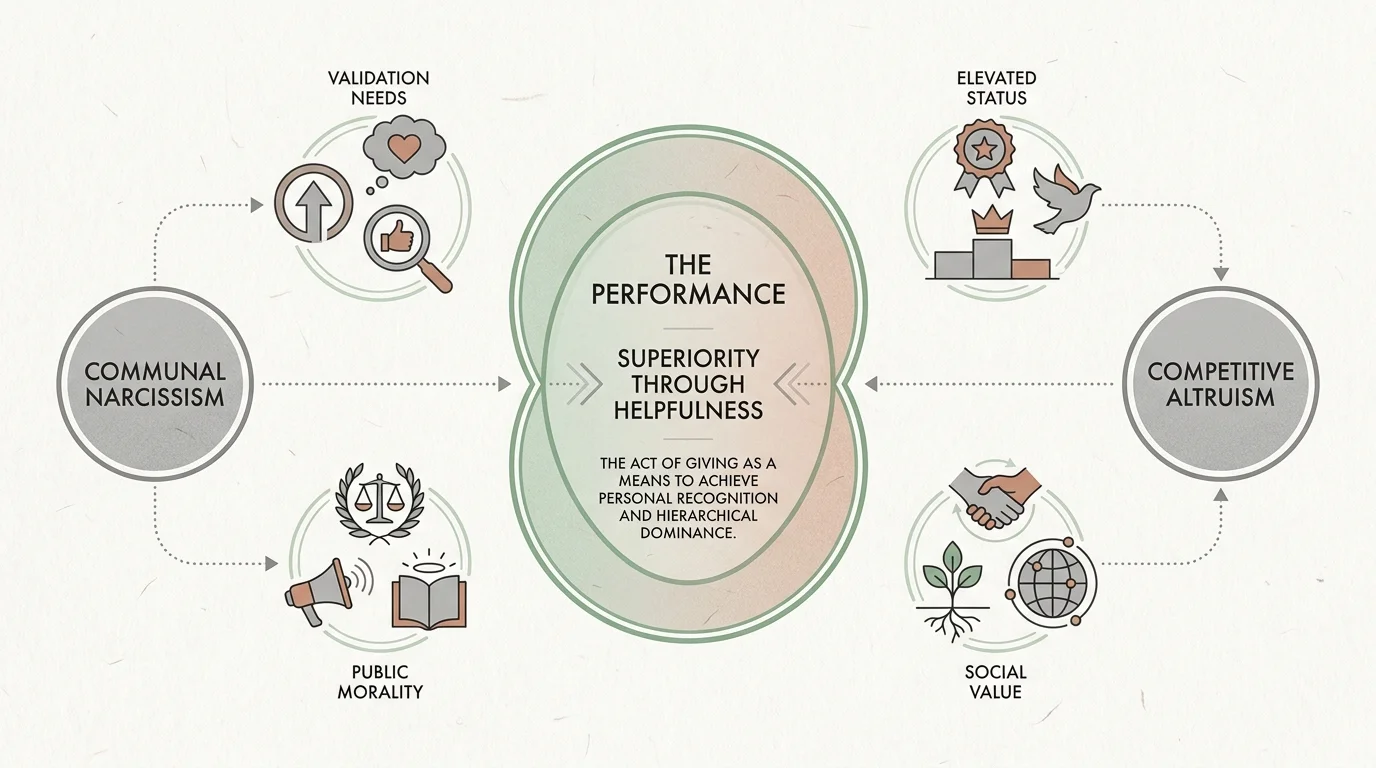
The Psychology Behind Performative Kindness
To understand why people fake kindness, you have to look at the psychological drivers beneath the behavior. Researchers in the field of personality psychology identify this phenomenon as “communal narcissism” or “competitive altruism.” While grandiose narcissists boast about their wealth, attractiveness, or intelligence, communal narcissists fulfill their need for superiority by believing they are the most helpful, saintly, or generous person in the room.
According to research published in the Journal of Research in Personality, communal narcissists possess the same underlying grandiosity and sense of entitlement as traditional narcissists. However, they use communal means—such as volunteering, offering unsolicited advice, or highly publicized charity—to secure the validation they crave. Their self-esteem is inextricably tied to how others perceive their morality.
In evolutionary psychology, this behavior is sometimes explained through the lens of competitive altruism. In certain group dynamics, individuals compete to appear the most generous because it signals high social value, thereby earning them better alliances and elevated status. The problem arises when this performative generosity infiltrates intimate relationships. Instead of fostering emotional safety, the behavior becomes a tool for control, leaving you feeling indebted, confused, and unseen. Understanding this underlying psychology allows you to depersonalize their behavior; their actions are not about your needs, but about maintaining their meticulously crafted public image.
7 Subtle Signs of Fake Kindness
Performative kindness often disguises itself as extreme generosity. It takes a discerning eye to separate a genuinely supportive partner or friend from someone who is using you as a prop in their own heroism narrative. Watch for these seven behavioral patterns.

1. The Act Requires an Audience
Genuine altruism happens regardless of who is watching. Performative kindness, by definition, requires spectators. If someone is operating from a place of communal narcissism, their helpfulness dramatically spikes when an audience is present. They might volunteer for highly visible tasks in a group setting but disappear when the unglamorous, behind-the-scenes work needs to be done.
In the digital age, this often manifests as documenting every good deed on social media. The focus shifts from the impact of the action to the engagement it generates online. If a friend buys a meal for someone in need but spends twenty minutes perfectly framing a photo of the interaction to post online, the action is compromised. A 2019 psychological study on communal narcissism revealed a stark contrast between subjective and objective prosociality; these individuals reported being highly altruistic, but their actual behavior showed they were primarily generous only when an opportunity for recognition was guaranteed.

2. Their Generosity Comes With a Hidden Invoice
Authentic kindness is freely given. Performative kindness operates as a transactional ledger. When someone performs kindness for attention, they keep a meticulous mental tally of every favor they execute, fully expecting you to match or exceed their investment on demand.
According to relationship researchers at the Gottman Institute, keeping score in a relationship turns partners into competitors and breeds toxic resentment. If a friend or partner does you a favor—like helping you move or lending you money—and immediately leverages it to demand your compliance on unrelated matters, their generosity was a down payment on your autonomy. You will often hear phrases like, “After everything I’ve done for you,” used as a bludgeon to shut down your boundaries or force you to agree with them.
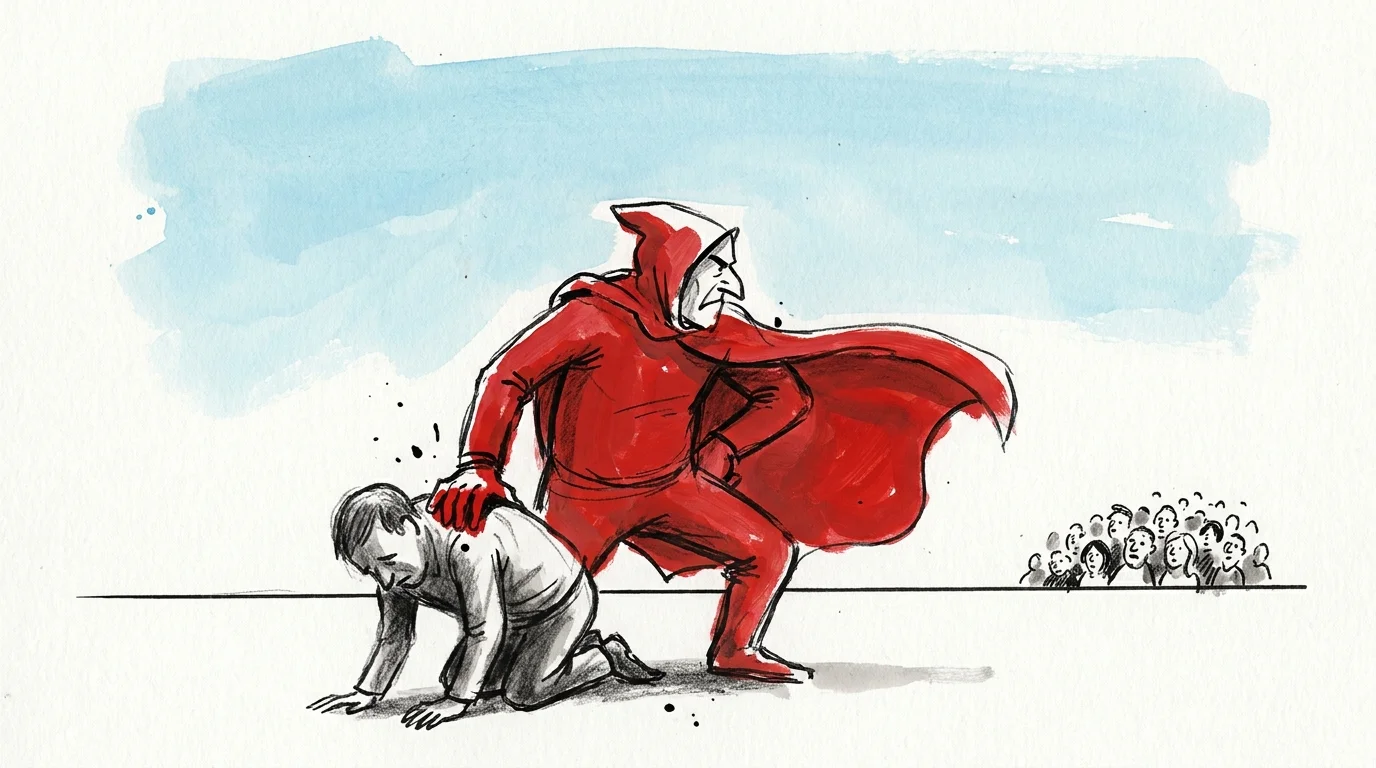
3. The “Savior” Complex Overrides True Empathy
When someone is truly compassionate, they ask what you need and respect your answer. When someone is performing kindness, they bypass your actual needs in favor of what makes them look like a savior. They will swoop into your life with grand solutions to your problems, aggressively dismissing your input.
This dynamic strips you of your agency. If you are grieving, a performative friend will not sit quietly with you; they will orchestrate an elaborate, highly visible intervention that forces you to publicly express gratitude for their effort. They are not acting out of empathy; they are acting out of a script they wrote for themselves.
“Empathy is a strange and powerful thing. There is no script. There is no right way or wrong way to do it. It’s simply listening, holding space, withholding judgment, emotionally connecting, and communicating that incredibly healing message of ‘You’re not alone.'” — Brené Brown, Ph.D.
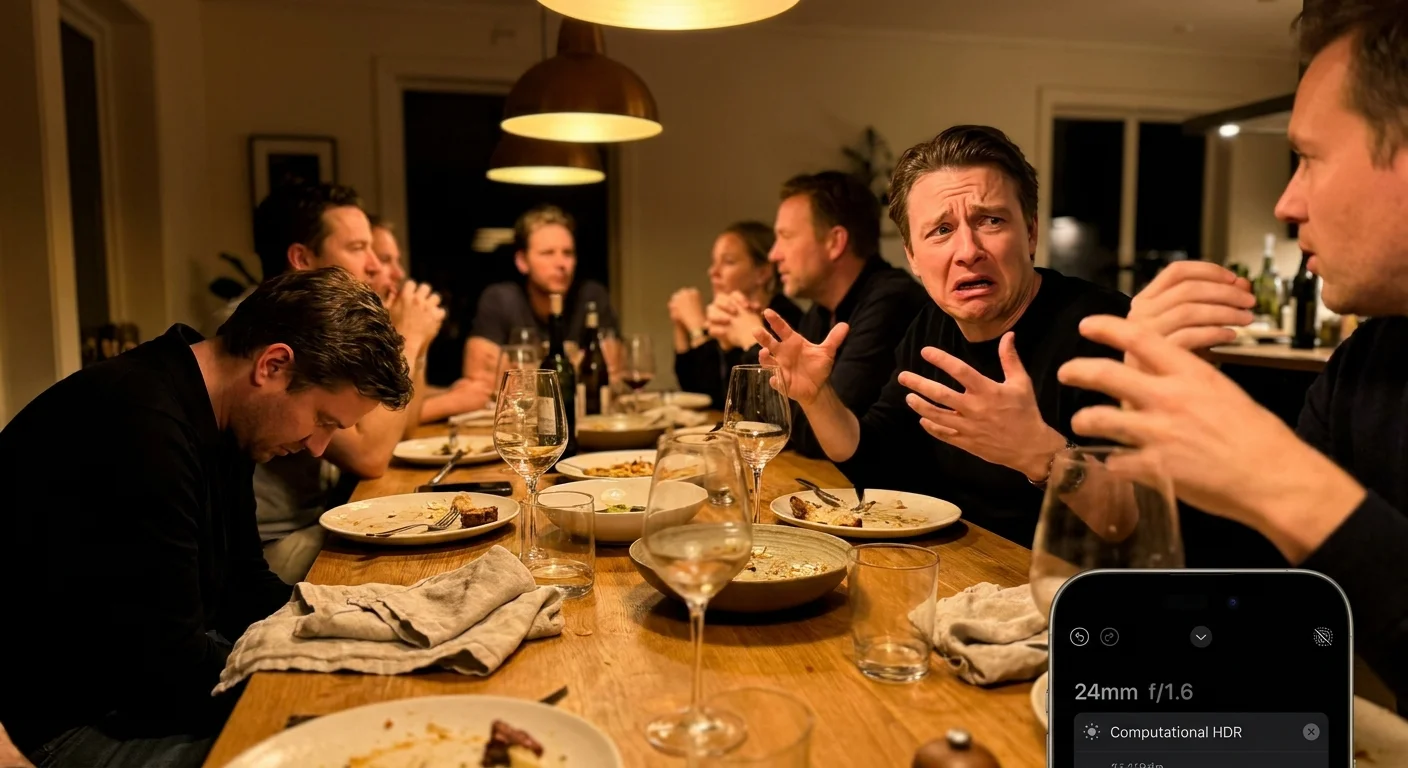
4. They Center-Stage Your Struggle
One of the most insidious signs of performative kindness is how quickly a manipulator can hijack your vulnerability. If you share a painful experience, they somehow manage to make your crisis about their emotional stamina or their heroic support. They might complain to mutual friends about how exhausted they are from “carrying” you through your hard time, effectively stealing the sympathy that should have been directed toward you.
You may find yourself comforting them about your own crisis. By shifting the spotlight, they extract narcissistic supply from your pain. The narrative in their social circle becomes less about your recovery and entirely about their self-sacrifice as a devoted friend or partner.
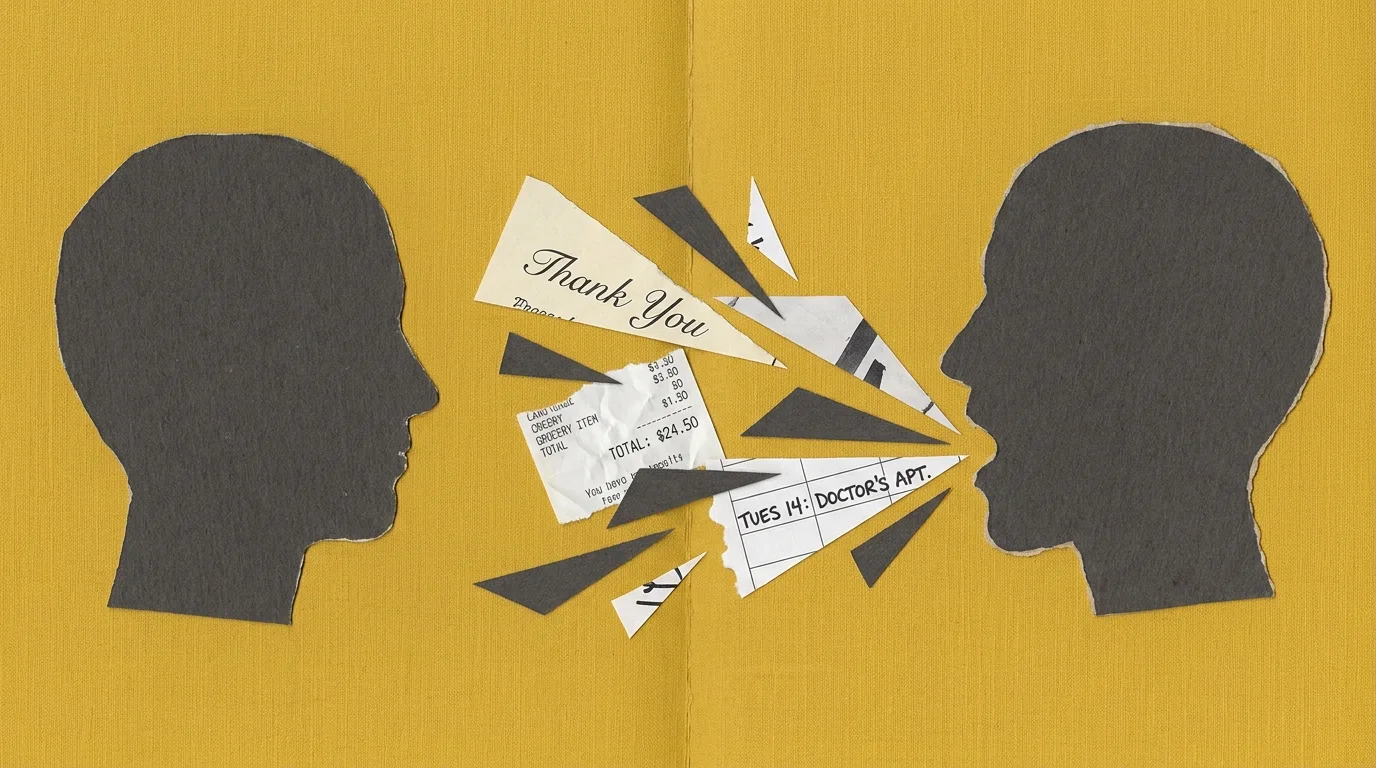
5. They Weaponize Past Favors During Conflicts
Pay close attention to how a person argues. During a disagreement, a person operating from genuine love will focus on resolving the issue at hand. A person performing kindness will immediately drag their past good deeds into the arena to invalidate your feelings.
If you express hurt over an insensitive comment they made, they will counter with, “I literally dropped everything to help you last week, and this is how you repay me?” By weaponizing their past generosity, they create a power imbalance. Their kindness serves as a shield against accountability. Research on communal narcissism indicates that while these individuals portray themselves as deeply committed, they are highly likely to resort to destructive conflict behaviors—such as yelling or stonewalling—the moment their power in the relationship is challenged.

6. Sudden Persona Shifts Behind Closed Doors
The discrepancy between their public persona and private behavior is often jarring. In front of coworkers, extended family, or a church group, they are warm, endlessly patient, and overwhelmingly generous. The moment the audience leaves and the front door closes, the mask slips.
Behind closed doors, they become cold, dismissive, or irritable. They view maintaining emotional connection with you in private as a waste of energy because it yields no public applause. This Jekyll-and-Hyde dynamic creates severe cognitive dissonance for their partners and children, who often wonder why they are denied the warmth that the rest of the world receives effortlessly.

7. Intense Defensiveness When Unrecognized
True altruism carries an internal reward. Data from the World Happiness Report demonstrates a bidirectional relationship between well-being and altruism: doing good genuinely makes people feel better, regardless of external validation. However, if someone is performing kindness solely for attention, the absence of an external reward triggers a severe emotional reaction.
If they throw you a party, buy you a gift, or perform a favor and do not receive the exact level of effusive, public praise they anticipated, they will punish you. This punishment might manifest as a temper tantrum, passive-aggressive silent treatment, or a guilt trip about how ungrateful you are. The kindness was entirely contingent on the payment of your visible, continuous admiration.
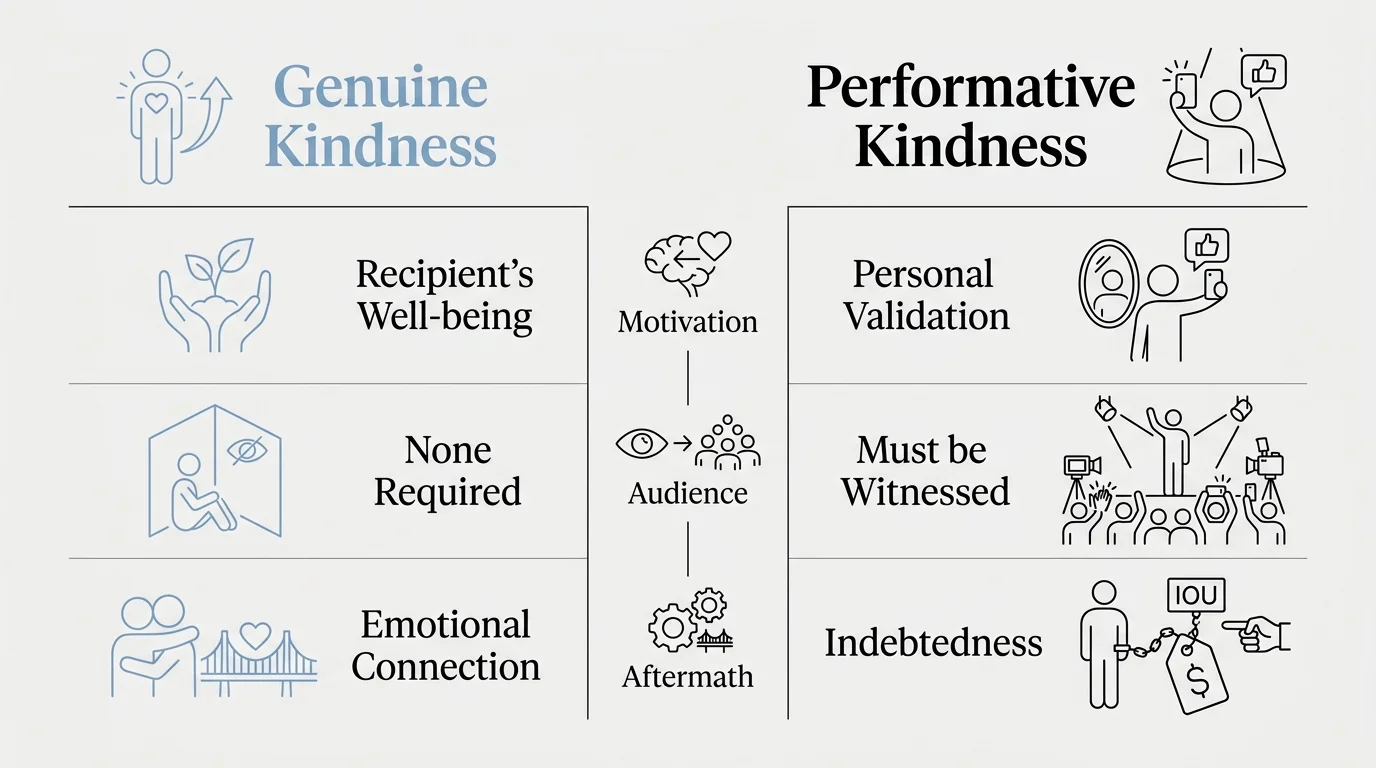
Genuine vs. Performative Kindness
To help clarify the differences between authentic support and attention-seeking behavior, review this comparison of standard relationship dynamics.
| Behavioral Trait | Genuine Kindness | Performative Kindness (Communal Narcissism) |
|---|---|---|
| Motivation | Alleviating the recipient’s distress or improving their day. | Securing validation, praise, or social leverage. |
| Visibility | Operates identically in private and in public. | Heavily relies on an audience or digital documentation. |
| Empathy Style | Asks what you need; listens without judgment. | Dictates what you need; centers their own “savior” solutions. |
| Conflict Navigation | Addresses the current issue without bringing up past favors. | Weaponizes past generosity to avoid accountability. |
| Reaction to Silence | Content with a simple “thank you” or internal satisfaction. | Becomes angry, resentful, or withdrawn if not heavily praised. |

What Can Go Wrong: The Hidden Toll on Relationships
Engaging with someone who performs kindness for attention takes a profound psychological toll. The most immediate danger is cognitive dissonance. Because society universally praises generosity, you may feel incredibly guilty for feeling uncomfortable around this person. Your intuition tells you their behavior is manipulative, but their actions look pristine on paper. This dissonance makes you doubt your own perception of reality, which is a hallmark of emotional abuse.
Furthermore, performative kindness creates a dynamic of permanent emotional debt. You become trapped in an endless cycle of needing to express disproportionate gratitude. Over time, you learn to suppress your authentic needs and feelings just to keep the peace. You stop bringing up legitimate grievances because you know they will be met with a barrage of their past “sacrifices.”
Ultimately, this leads to relationship burnout and isolation. The performative individual often cultivates a flawless public image, meaning that if you attempt to explain your frustration to mutual friends, you risk looking ungrateful or petty. They isolate you not through overt aggression, but by monopolizing the moral high ground.

When to Seek Professional Support
Navigating a relationship with someone who manipulates through kindness is deeply confusing. You do not have to untangle this dynamic alone. Consider reaching out to a licensed therapist or counselor if you experience the following scenarios:
- You feel a chronic sense of obligation: You remain in a relationship, friendship, or job entirely out of guilt or a feeling of unpaid debt due to their past “favors.”
- You question your own sanity: The stark difference between their saintly public persona and their private hostility makes you doubt your own memory and judgment.
- Your boundaries are consistently violated: They use their generosity as a free pass to ignore your stated limits, showing up unannounced or making decisions on your behalf under the guise of “helping.”
- You experience emotional exhaustion: The sheer effort of constantly validating their ego and providing the praise they demand has depleted your mental health.
To find qualified support, consult resources provided by the American Psychological Association or explore therapist directories through Psychology Today.
Frequently Asked Questions
How do you respond to fake kindness?
The most effective response is firm, neutral boundary-setting. Do not over-explain or fall into a trap of excessive gratitude. Acknowledge the act briefly—”Thank you for doing that”—and move on. If they attempt to use the favor as leverage later, calmly separate the two issues: “I appreciated your help last week, but right now we are discussing my boundary regarding weekend communication.” Refuse to accept favors if you know they come with a heavy emotional invoice.
Can someone change if they realize they are performing kindness?
Behavioral change is possible, but it requires the individual to develop genuine self-awareness and a willingness to confront their deep-seated need for external validation. Because communal narcissism relies on the delusion of absolute moral superiority, gaining this insight is notoriously difficult. Without professional intervention, such as cognitive behavioral therapy, the pattern rarely resolves on its own.
Is performative kindness a recognized personality disorder?
While “communal narcissism” and “performative kindness” are not standalone diagnostic categories in the DSM-5, they are heavily researched traits that fall under the broader umbrella of narcissistic personality characteristics. These behaviors share the core narcissistic mechanisms of grandiosity, entitlement, and the need for excessive admiration, simply masked behind a prosocial disguise.
Protecting your emotional energy requires looking past the surface of grand gestures to examine the intent underneath. Authentic relationships are built on mutual respect, quiet support, and empathy that centers the recipient, not the giver. You have the right to decline favors that cost you your peace of mind. By recognizing the mechanics of performative kindness, you empower yourself to step off the stage and cultivate relationships rooted in genuine, unscripted connection.
This is educational content based on psychological research and general principles. Individual experiences vary significantly. For personalized guidance, consult a licensed therapist, psychologist, or counselor.
Last updated: May 2026. Psychology research evolves continuously—verify current findings with professional sources.







Leave a Reply