
Psychology Diary

The First Step Toward Change Is Awareness

  • Home
  • Relationships
  • Mental Health
  • Expert Tips
  • Life
  • Family
  • Marriage

The Complete Guide to Understanding and Managing Anxiety After 50

August 31, 2025 · Mental Health

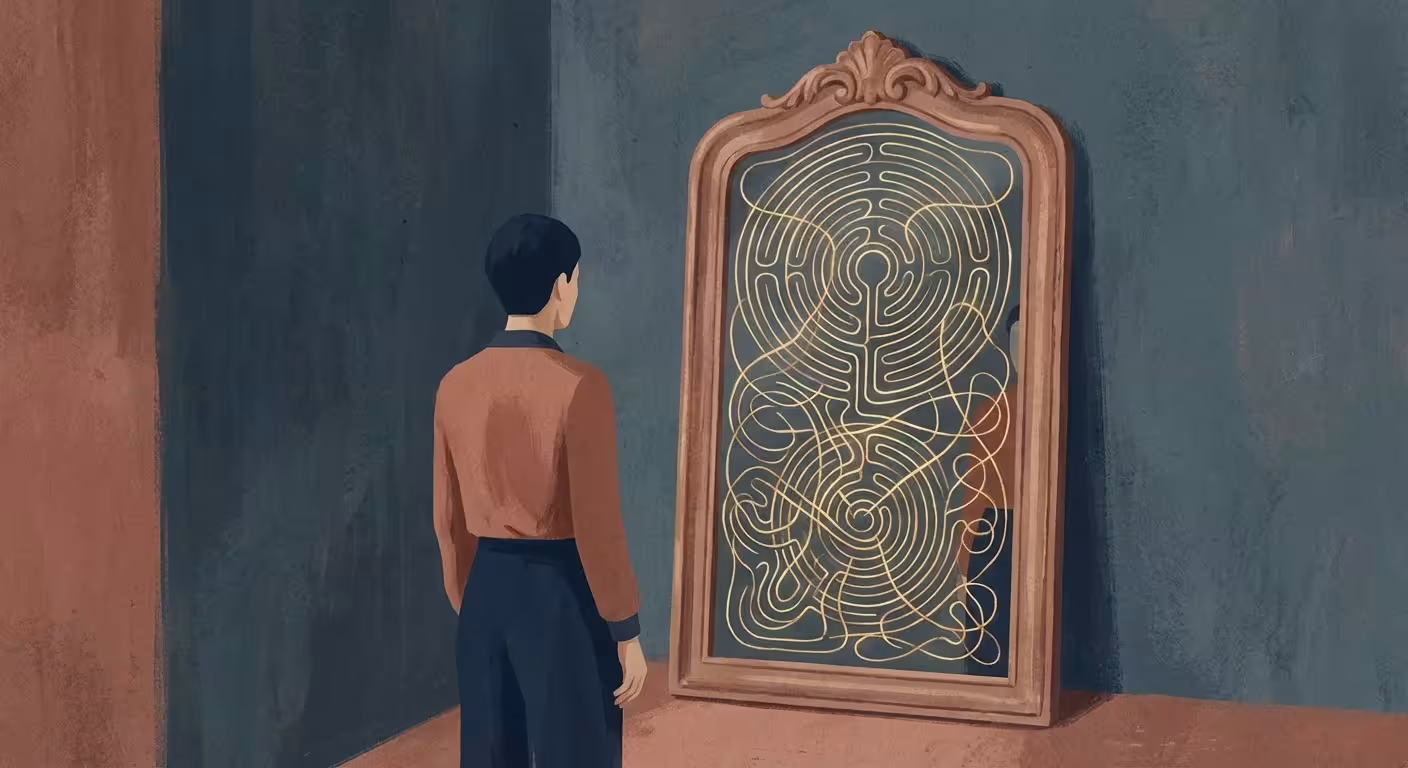
Woman deep in thought in quiet room.

What Is Anxiety and Why Does It Feel Different After 50?

At its core, anxiety is your body’s natural alarm system. It’s a response to stress or perceived danger that releases hormones like adrenaline to prepare you to face a threat—the “fight-or-flight” response. This is helpful if you need to slam on the brakes to avoid a car accident. However, for many people, this alarm system can become overly sensitive. It can start going off when there is no immediate, real danger, leaving you in a prolonged state of high alert. That persistent feeling of dread, worry, and physical tension is what we often refer to as an anxiety disorder.

It’s important to distinguish between occasional worry, which is a normal part of life, and a more persistent anxiety condition. Worry is often tied to a specific problem and can lead to solutions. Anxiety, on the other hand, tends to be more diffuse and persistent. It can feel like a free-floating sense of unease that latches onto one concern after another, making it hard to relax or feel safe.

For adults over 50, the triggers and expression of anxiety can be unique. The significant life transitions that often occur during these years can create a perfect storm for worry to take hold. Common contributing factors for late-life anxiety include:

Health Concerns: A new medical diagnosis, managing a chronic illness, or the fear of falling can create constant background stress. The physical symptoms of anxiety—like a racing heart or shortness of breath—can also be mistaken for serious medical problems, creating a vicious cycle of fear.

Grief and Loss: Losing a spouse, close friends, or siblings is a profound and painful reality. Grief itself can manifest with anxiety-like symptoms, and the loss of a key support person can leave you feeling vulnerable and alone.

Changes in Roles and Identity: Retirement can be a wonderful new chapter, but it can also involve the loss of a professional identity, a daily routine, and a social network. This can lead to questions like, “Who am I now?” and “What is my purpose?”

Financial Worries: Moving onto a fixed income, managing retirement savings, and worrying about unexpected healthcare costs are significant stressors that can fuel persistent anxiety about the future.

Social Isolation: As mobility changes or friends and family move away, loneliness can become a major issue. A lack of regular social connection is a significant risk factor for both anxiety and depression.

Caregiving Stress: Acting as the primary caregiver for a spouse or parent is a demanding role that can take a heavy toll on one’s own mental and physical health. The constant worry about another person’s well-being can easily trigger an anxiety response.

Understanding these unique triggers is not about dwelling on the negative. It’s about validating your experience. Naming the source of your stress can reduce its power and is the first step toward finding targeted, effective solutions that fit your life right now.

Pages: 1 2 3 4 5 6 7 8 9 10 11

Share this article

Facebook Twitter Pinterest LinkedIn Email

Leave a Reply Cancel reply

Your email address will not be published. Required fields are marked *

Search

Latest Posts

  • A mixed media collage of a silhouette filled with torn paper and translucent layers, symbolizing the invisible nature of emotional neglect. 10 Traits of People Emotionally Neglected as Kids
  • A mixed-media collage showing a rigid, golden silhouette with cracks revealing a soft, watercolor interior, representing performative armor. 7 Behaviors People Mistake For Confidence But Aren’t
  • A woman sits alone at a kitchen table in dim evening light while her partner stands in the background, illustrating emotional distance. 9 Psychological Reasons Why People Stay in Unhappy Relationships
  • An illustration of a person using a prism to turn a chaotic blue wave into a clear spectrum of distinct colors. 10 Signs You Have Exceptionally High Emotional Intelligence
  • A mixed-media collage of an older person's profile filled with childhood drawings and school reports, representing deep-seated habits. 8 Childhood Habits That Still Secretly Shape Your Personality After 60
  • An abstract mixed-media piece showing bright yellow and orange splashes like a laugh, covering a dark, dense gray background. 7 Signs Someone Uses Humor To Avoid Serious Conversations
  • Two friends sitting at a kitchen table, unconsciously mirroring each other's posture by resting their chins on their hands. 7 Signs Someone Mirrors Your Personality Without Realizing It
  • A woman laughs at her phone while her friend sits beside her on a sofa with a forced, thin smile and envious eyes. 7 Friendship Behaviors That Reveal Hidden Jealousy
  • A mixed media collage showing a glowing smartphone screen inside a mirror frame, casting a shadow of a staged performance on a curtain. 7 Signs Someone Is Performing Kindness For Attention
  • A mixed media collage of a person in a theatrical spotlight while their partner sits in the shadows of a theater audience. 7 Signs Someone Loves Attention More Than They Love You

Newsletter

Get the latest posts delivered to your inbox.

Related Articles

men become cranky as they age

Why Do Men Become Cranky as They Age? 9 Psychological Reasons

The psychological explanation behind “Why do men become cranky as they age”  The phrase “grumpy…

Read More →
mental health

9 Ways to Improve Your Mental Health NOW

How important is mental health for you? Whether we watch TV, scroll through social media,…

Read More →
Active Shooter

8 Shocking Traits All Active Shooters Have in Common

Let’s talk about the psychological profile of active shooters! The unfortunate reality is that mass…

Read More →
emotional

Why Am I So Emotional? 5 Common Triggers You Might Not Recognize

Are you feeling emotional? This happened again; the smallest inconvenience threw you into a spiral…

Read More →
pet

6 Amazing Mental Health Benefits of Having a Pet

Reducing anxiety One thing I learned from my dog is that he lives in the…

Read More →
memory

Forgot Something? Don’t Worry – These 7 Memory Problems Are Normal

Sometimes, we all forget things. Maybe you need to find your keys or remember the…

Read More →
sound therapy

Sound Therapy: What Is It and Why Does It Have Colors?

Have you wondered what sound therapy is and if it is just a new fad?…

Read More →
anxiety, relationship, stress

These Are the 6 Types of Anxiety Disorders

#1 Generalized Anxiety Disorder A continuous sense of dread or anxiety that interferes with daily…

Read More →
things anxiety does to your body paranoia after 60

7 Most Worrying Things Anxiety Does to Your Body

There’s generalized anxiety disorder, or GAD, which is when you tend to get anxious about most…

Read More →

Psychology Diary

The First Step Toward Change Is Awareness

Inedit Agency S.R.L.
Bucharest, Romania

contact@psychologydiary.com

Explore

  • About Us
  • Advertiser Disclosure
  • Contact Us
  • Disclaimer
  • Do not sell my personal information
  • Editorial Policy
  • Frequently Asked Questions
  • Privacy Policy
  • Terms and Conditions
  • Subscribe
  • Unsubscribe

Categories

  • Expert Tips
  • Family
  • Life
  • Marriage
  • Mental Health

© 2026 Psychology Diary. All rights reserved.