
Emotional abuse often hides in plain sight, disguised as intense passion, protective concern, or harmless jokes, leaving you questioning your own memory rather than your partner’s behavior. Recognizing these subtle psychological manipulations is the crucial first step toward reclaiming your emotional safety. According to the Centers for Disease Control and Prevention (CDC), nearly half of all adults in the United States will experience psychological aggression by an intimate partner in their lifetime. You do not have to wait for physical violence to validate your pain. Understanding the concrete differences between normal relationship conflict and toxic control allows you to make informed, protective decisions about your future.
1. They Distort Your Reality Through Gaslighting
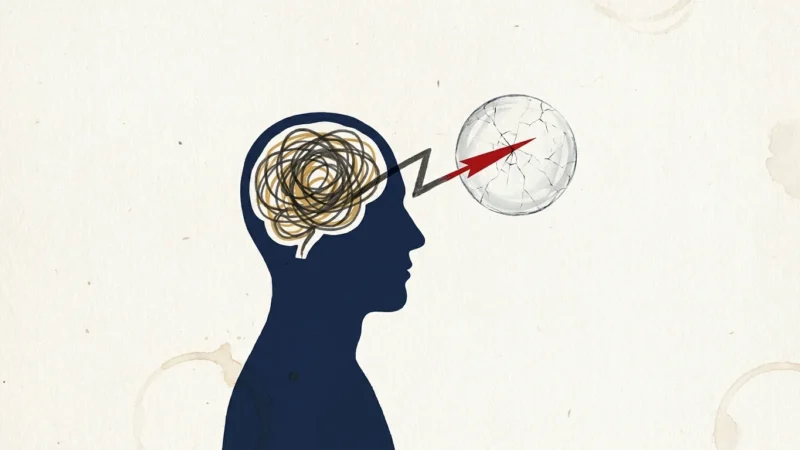
Gaslighting is a highly destructive form of psychological manipulation where your partner systematically breaks down your trust in your own perception, memory, and sanity. If you confront an emotionally abusive partner about a hurtful comment they made the night before, they will not just deny it; they will actively rewrite history. You will hear phrases like, “You are imagining things,” “I never said that,” or “Your memory is terrible.” Over time, this steady drip of denial forces you to rely entirely on their version of reality. You may find yourself secretly recording conversations or saving screenshots of text messages just to prove to yourself that an event actually occurred—a clear indicator that your mental autonomy is under attack.
2. Constant Criticism and Contempt Undermine Your Self-Worth
While constructive feedback and occasional annoyance are normal in any long-term partnership, an abusive individual weaponizes criticism to dismantle your self-esteem. They target your core character, physical appearance, or intelligence rather than addressing specific behaviors. According to extensive research from The Gottman Institute, contempt is the single greatest predictor of relationship failure. Contempt goes beyond mere criticism; it communicates a deep-seated sense of superiority and disgust. It manifests through eye-rolling, mean-spirited sarcasm, cruel mocking, and public humiliation disguised as “just a joke.” If you express hurt over these jabs, you are swiftly labeled as overly sensitive or lacking a sense of humor.
3. They Use Stonewalling as a Punitive Weapon
In a healthy dynamic, a partner who feels overwhelmed during an argument might request a temporary break, stating clearly when they will return to resolve the issue. An abusive partner, however, employs stonewalling—the complete withdrawal of communication and the application of the silent treatment—as a tool for punishment. They will ignore your physical presence, refuse to answer your calls, and act as though you do not exist for days at a time. This tactic is incredibly cruel; it forces your nervous system into a state of panic, compelling you to apologize and grovel just to restore basic peace in the household, even when you did nothing wrong.
4. Your Support System Is Systematically Dismantled
Abusers thrive in a vacuum; they need you to rely entirely on them for emotional support and perspective. They achieve this by slowly and methodically severing your ties to family, friends, and colleagues. The isolation rarely begins with a direct command to stop seeing people. Instead, it starts subtly: your partner might manufacture conflicts right before a social event, complain that your best friend is “disrespectful” to your relationship, or make gatherings so uncomfortable that you simply stop inviting people over. Eventually, you stop reaching out to your loved ones entirely to avoid the inevitable backlash at home.
5. They Restrict Your Financial Independence
Financial abuse is an invisible chain that traps individuals in toxic dynamics; in fact, economic control occurs in a staggering 99% of domestic violence cases. This form of emotional abuse ensures you lack the resources necessary to leave the relationship. Financial control looks different in every relationship, but common signs include heavily monitoring your bank accounts, demanding receipts for minor purchases, putting you on a strict “allowance,” or actively sabotaging your career by causing intense emotional drama right before an important job interview or work presentation.
6. Unpredictable Explosions Keep You on Edge
Living with an emotional abuser feels like perpetually walking on a floor completely covered in eggshells. An abusive partner shifts moods with whiplash-inducing speed, leaving you in a constant state of hypervigilance. You never know if a minor inconvenience—like a spilled cup of coffee or a slightly delayed dinner—will be ignored or will trigger a disproportionate, three-hour screaming match. This unpredictability is a core component of the cycle of abuse. It keeps your body flooded with stress hormones, destroying your peace of mind and making it impossible to relax in your own home.
7. Intense Love Bombing Precedes Devaluation
Abusive relationships rarely begin with screaming or control; if they did, you would have walked away immediately. They typically begin with a phase of intense, overwhelming affection known as love bombing. During the first few months, your partner may sweep you off your feet, offering grandiose declarations of love, extravagant gifts, and constant communication to fast-track intimacy. Once they feel you are deeply emotionally invested and securely attached, the pedestal inevitably crumbles. The devaluation phase begins, and the intense affection you once received is abruptly replaced by cold disdain, leaving you desperately trying to win back the person you thought you met.
8. Blame Is Constantly Shifted Onto You
Accountability is virtually non-existent in an emotionally abusive dynamic. Whenever you attempt to address your partner’s harmful behavior, they will expertly execute a maneuver known as blame-shifting. If your partner screams at you, they will claim, “I wouldn’t have yelled if you had just listened to me the first time.” If they betray your trust, they will argue that your lack of attention drove them to do it. They make you entirely responsible for their emotional regulation, convincing you over time that their abusive behavior is a direct, logical response to your perceived inadequacies.
9. They Invade Your Privacy and Demand Unreasonable Access
Genuine trust does not require a GPS tracker or absolute digital surveillance. An abusive partner often demands unfettered access to your phone, email accounts, and social media passwords under the guise of “total honesty” and “openness.” They will interrogate you relentlessly about harmless interactions with coworkers, accusing you of infidelity or betrayal without a shred of evidence. By treating your basic autonomy and right to privacy as suspicious behavior, they establish a panopticon-like environment where you feel constantly watched and evaluated.
10. Affection Is Weaponized as a Tool for Control
In a loving partnership, affection, physical touch, and verbal affirmation are given freely as expressions of mutual care. In an emotionally abusive relationship, affection is a transaction. Abusers weaponize intimacy, withdrawing love or physical connection whenever you fail to meet their arbitrary standards or whenever they want to assert dominance. This behavioral conditioning trains you to prioritize their comfort and desires over your own fundamental human needs, reinforcing the false narrative that you are only worthy of love when you are entirely compliant.
“Shame, blame, disrespect, betrayal, and the withholding of affection damage the roots from which love grows.” — Brené Brown, PhD
Normal Conflict vs. Emotional Abuse
It can be difficult to distinguish between a bad argument and a pattern of psychological abuse, especially if your boundaries have been slowly eroded over time. Every couple argues, but the underlying motivation behind the conflict makes all the difference.
| Relationship Feature | Healthy Conflict | Emotional Abuse |
|---|---|---|
| Core Goal | Reaching mutual understanding and finding a compromise. | Gaining power, asserting dominance, and strictly controlling the narrative. |
| Accountability | Both partners own their part in the disagreement and offer genuine apologies. | The abuser deflects responsibility and consistently blames the partner. |
| De-escalation | Taking a brief, agreed-upon timeout to cool down before reconnecting. | Deploying the silent treatment (stonewalling) for days to punish the partner. |
| Boundaries | Personal boundaries are communicated clearly, negotiated, and respected. | Boundaries are deliberately ignored, mocked, or treated as a personal attack. |
| Aftermath | Both partners feel heard, secure, and closer to one another. | The victim feels confused, exhausted, and solely responsible for the conflict. |
Myths Worth Debunking
Society holds deeply ingrained misconceptions about what domestic violence looks like, which often keeps victims trapped in emotionally abusive dynamics long after they should have left.
- Myth: It is not real abuse if there is no physical violence.
Fact: Psychological abuse creates complex trauma that alters nervous system function, leading to physical symptoms like insomnia, chronic pain, and severe anxiety. The psychological scars of emotional manipulation often take significantly longer to heal than physical injuries. - Myth: You can fix them if you just love them enough.
Fact: Abuse is a conscious choice rooted in a deep desire for power and control; it is not caused by a lack of love or an unhealed inner child. Your compassion, no matter how vast, cannot cure a partner’s need to dominate you. - Myth: Couples counseling will fix an abusive relationship.
Fact: Traditional couples therapy is generally contraindicated when coercive control is present. Abusers are adept at manipulating the therapeutic environment, and they frequently weaponize the vulnerabilities you share in session against you once you are back home. Individual therapy is the medically appropriate recommendation.
Signs It’s Time to Talk to a Therapist
Healing from emotional abuse rarely happens in isolation. The insidious nature of gaslighting and manipulation requires an objective, professionally trained perspective to help you untangle reality from fiction. You should strongly consider speaking to a mental health professional if:
- Your internal dialogue is entirely dominated by your partner’s critical voice, leaving you feeling worthless.
- You experience physical symptoms of panic—like a racing heart or shortness of breath—at the mere thought of your partner coming home.
- You have completely disconnected from the activities, hobbies, and friends that once brought you joy.
- You constantly obsess over how to phrase your sentences to avoid triggering an explosion.
Individual modalities like Cognitive Behavioral Therapy (CBT) and Trauma-Focused CBT are highly effective at helping survivors identify cognitive distortions, process trauma narratives, and rebuild shattered self-esteem. If you are in immediate distress, you can reach out to the National Domestic Violence Hotline at 1-800-799-SAFE (7233) or text “START” to 88788 for confidential, 24/7 crisis support.
Frequently Asked Questions
- Can an emotional abuser truly change?
While behavioral change is theoretically possible, it is incredibly rare. Genuine change requires the abuser to take full, unmitigated accountability for their actions and commit to long-term, intensive psychological intervention specifically designed for perpetrators of abuse. Apologies that are not accompanied by sustained, permanent behavioral shifts are simply another manipulation tactic. - What is a trauma bond?
A trauma bond is a powerful biological and emotional attachment created by a repetitive cycle of abuse and positive reinforcement. The alternating periods of intense emotional punishment followed by sudden affection create a neurochemical addiction in the brain, making it extraordinarily difficult for the victim to simply walk away. - How do I safely exit an emotionally abusive relationship?
Leaving an abusive relationship requires meticulous safety planning. Start by securing your vital documents (passports, birth certificates), setting aside emergency funds in a private account your partner cannot access, and confiding in a trusted friend or a domestic violence advocate. Remember that you do not owe your abuser a lengthy explanation or closure when you choose to leave.
Taking the Next Step Toward Safety
Recognizing that you are in an emotionally abusive relationship is a profoundly painful realization, but it is also a moment of immense courage. Naming the manipulation for what it is breaks the spell of confusion and allows you to start prioritizing your own psychological survival. You deserve a relationship built on mutual respect, unwavering trust, and genuine kindness—not fear and control.
As you navigate this difficult transition, be gentle with yourself. Healing from coercive control is not a linear process; it requires time, patience, and professional guidance. This article provides general educational information about psychology and relationships. It is not a substitute for professional therapy or medical advice. Everyone’s situation is unique—if you’re struggling, please reach out to a licensed mental health professional or a dedicated domestic violence advocate who can help you formulate a safe, personalized exit strategy.
Last updated: June 2026. Psychology research evolves continuously—verify current findings with professional sources.







Leave a Reply