Psychology Diary

The First Step Toward Change Is Awareness

  • Home
  • Relationships
  • Mental Health
  • Expert Tips
  • Life
  • Family
  • Marriage

Understanding Common Mental Health Challenges in Older Adults

August 31, 2025 · Mental Health

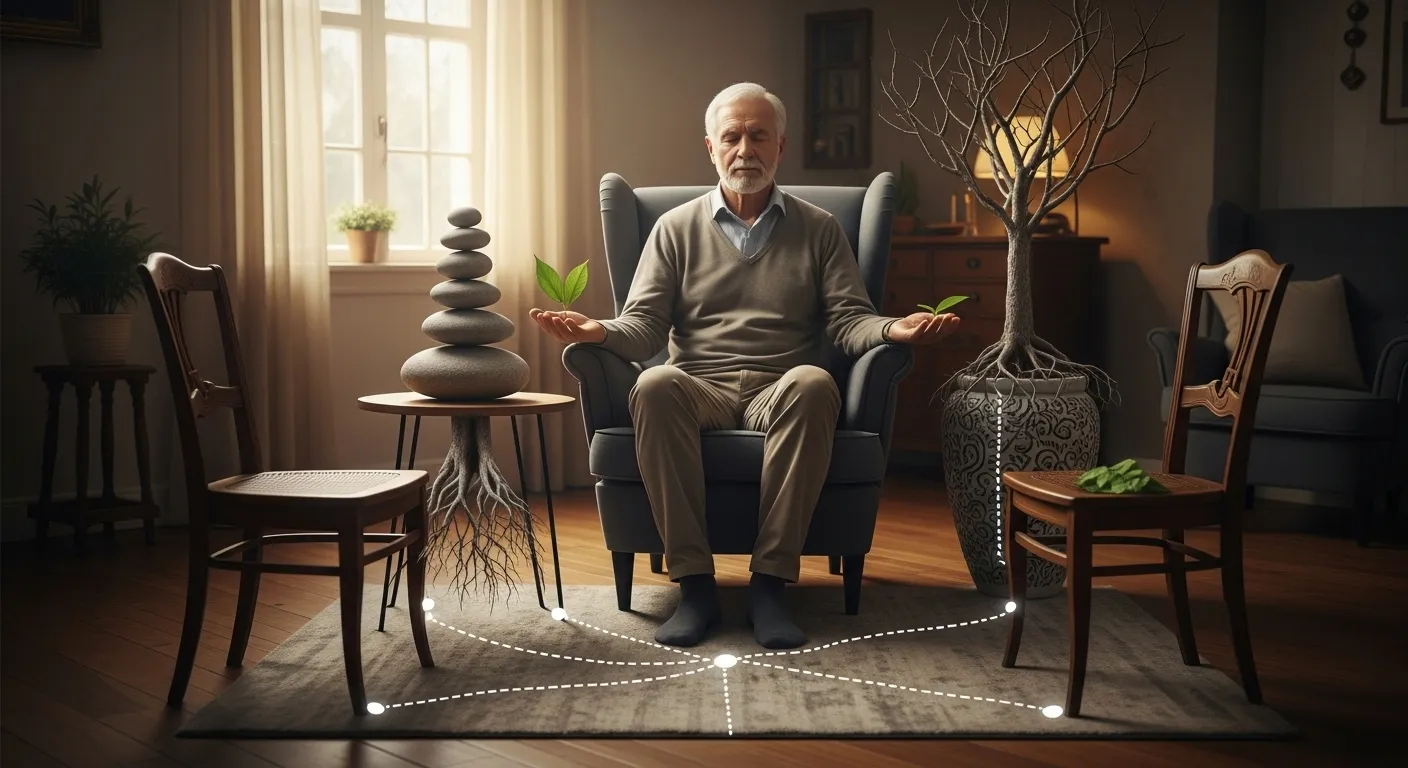
Man practicing grounding technique.

Taking the Next Step: Building a Path to Well-Being

Understanding the landscape of mental health in later life is the first, most crucial step. Recognizing that these challenges are real, common, and treatable can lift a significant weight. The journey to feeling better is not about a single grand gesture but about a series of small, compassionate steps taken consistently over time.

Your path forward is uniquely yours. It may begin with a conversation with your doctor. It may start with a simple self-care skill. The most important thing is to begin.

Here is a gentle challenge for the next seven days: Choose one strategy from this article that feels doable. Not easy, just doable. Maybe it’s the 5-4-3-2-1 grounding technique. Maybe it’s scheduling a 10-minute walk. Maybe it’s writing down your worries during a set “Worry Time.” Commit to trying it each day. At the end of the day, write down one sentence in a notebook about the experience. For example: “I did my 10-minute walk. It was hard to start, but I noticed the sunshine.” The goal is not instant happiness, but a growing awareness and a gentle shift toward action and hope.

Remember, you do not have to walk this path alone. Reach out to your doctor, a trusted family member, or a mental health professional. Support is a sign of strength.

This article is for informational purposes only and does not constitute medical, psychological, or legal advice. It is not a substitute for professional consultation. If you or someone you know is in immediate danger or considering self-harm, please call your local emergency services (like 911 in the U.S.) or contact a crisis hotline. In the U.S., you can connect with the 988 Suicide & Crisis Lifeline by calling or texting 988 anytime. You can also find additional information and resources at government sites like NIMH and SAMHSA.


Pages: 1 2 3 4 5 6 7 8 9 10

Share this article

Facebook Twitter Pinterest LinkedIn Email

Leave a Reply Cancel reply

Your email address will not be published. Required fields are marked *

Search

Latest Posts

  • A conceptual illustration showing a father and daughter separated by a deep chasm in the floor of their dining room. 10 Habits That Push People Away (Your Children Too)
  • A conceptual collage of a head silhouette filled with shattered mirrors and warped photos, symbolizing reality distortion. 8 Ways People Distort Reality
  • An elderly woman sits alone at a dining table in soft afternoon light, looking down at a tea cup in a quiet, nostalgic home setting. 9 Emotional Wounds Adult Children Simply Don’t Realize They’re Inflicting On Their Parents
  • A mixed-media collage of a fragmented silhouette head with an anchor being cut, symbolizing the loss of one's grip on reality. 10 Signs Someone Is Trying to Distort Your Reality
  • A mixed media collage of a beautiful white flower with hidden barbed wire roots and thorny stems on a textured vintage paper background. 8 Behaviors That Reveal Hidden Toxicity
  • A candid photo of a couple in a dim living room, showing a sense of emotional distance and unspoken tension. 10 Traits That May Reveal Covert Narcissism
  • A couple sits on a sofa in a dimly lit room, one person looking at a phone while the other looks away, capturing a moment of secrecy. 8 Signs Someone May Be Hiding More Than They Admit
  • An ink and watercolor illustration of a human head cracking like stone, with golden light leaking through the fissures. 11 Small Clues That Can Expose a Lie
  • An abstract editorial illustration of a silhouette with a tangled nest of lines inside its head, symbolizing mental confusion. 8 Warning Signs Someone May Be Playing Mind Games
  • A mixed media collage of a silhouette filled with torn paper and translucent layers, symbolizing the invisible nature of emotional neglect. 10 Traits of People Emotionally Neglected as Kids

Newsletter

Get the latest posts delivered to your inbox.

Related Articles

Anxious Introvert

Are You an Anxious Introvert? Here Are 10 Telltale Signs

These hidden signs might indicate that you’re an anxious introvert… Anxiety is the voice in…

Read More →
Alzheimer's and Parkinson's

Alzheimer’s vs. Parkinson’s: 7 Differences and Symptoms You Must Know

Alzheimer’s and Parkinson’s: both of them are serious medical conditions. Let us clarify the main…

Read More →
therapist

10 Warning Signs You Should Talk to a Therapist

9. Your relationships are impacted by your emotional state When you’re not feeling well, your…

Read More →
narcissistic personality disorder

What Causes Narcissistic Personality Disorder? 

Sociocultural background The emphasis on achievement, celebrity, and outside approval in contemporary culture can encourage…

Read More →
PTSD, mental health depression

PTSD: How To Navigate Fireworks Season

How to Tackle Your Ptsd-Symptoms This Season Summer brings along with it bright and booming…

Read More →
A senior woman in a sunlit room excitedly examines a green leaf through a magnifying glass, surrounded by plants and gardening tools.

Why Seniors Who Stay Curious Live Longer—And How to Cultivate It

Discover the psychological and neurological reasons why staying curious helps older adults live longer, along…

Read More →
mental health

Mental Health Struggles: 7 Usual (and True) Things People Go Through

…Is mental health a priority for you? If not, it should be. According to experts,…

Read More →
Paranoid Disorder

10 Silent Signs of Paranoid Personality Disorder

Paranoid Personality Disorder, or PPD, is one of those mental health conditions that often flies…

Read More →
A senior woman sits alone on her sofa in warm afternoon light, looking out the window with a pensive and slightly anxious expression.

Why Anxiety in Seniors Is Often Overlooked—and How to Get Help

Discover why anxiety in older adults is frequently overlooked, learn to recognize the physical signs,…

Read More →

Psychology Diary

The First Step Toward Change Is Awareness

Inedit Agency S.R.L.
Bucharest, Romania

contact@psychologydiary.com

Explore

  • About Us
  • Advertiser Disclosure
  • Contact Us
  • Disclaimer
  • Do not sell my personal information
  • Editorial Policy
  • Frequently Asked Questions
  • Privacy Policy
  • Terms and Conditions
  • Subscribe
  • Unsubscribe

Categories

  • Expert Tips
  • Family
  • Life
  • Marriage
  • Mental Health

© 2026 Psychology Diary. All rights reserved.