Psychology Diary

The First Step Toward Change Is Awareness

  • Home
  • Relationships
  • Mental Health
  • Expert Tips
  • Life
  • Family
  • Marriage

Recognizing the Signs of a Nervous Breakdown in a Loved One

August 31, 2025 · Mental Health

Woman reading in peaceful home setting.

Caring for the Caregiver: Preventing Your Own Burnout

Supporting someone through a mental health crisis is emotionally and physically draining. It is a marathon, not a sprint. If you don’t take care of yourself, you risk `burnout`, which will make you less effective at helping your loved one. Your well-being is not a luxury; it is a necessity.

Set Healthy Boundaries

You cannot be available 24/7, and it is not healthy to try. It is okay—and essential—to set limits. You are not their therapist. You can be supportive without taking on responsibility for their feelings or their recovery. It’s okay to say, “I love you, and I am here for you, but I need to take an hour for myself right now.” Or, “I can listen for the next 20 minutes, but then I need to focus on my work.” Boundaries protect your relationship and your own mental health.

Maintain Your Own Routines

When you’re focused on someone else’s crisis, it’s easy to let your own self-care slide. Make a conscious effort to protect the pillars of your own health. Prioritize getting enough sleep. Eat regular, nourishing meals. Get some form of physical movement each day, even if it’s just a 15-minute walk. These are not selfish acts; they are what will give you the strength to continue providing support.

Find Your Own Support

You need a place to vent, to process your own feelings of fear, frustration, and sadness. You cannot do this alone. Reach out to a trusted friend, another family member, or a professional therapist for yourself. Caregiver support groups can also be invaluable. Organizations like the National Alliance on Mental Illness (NAMI) offer free support groups for family members, providing a community of people who understand exactly what you’re going through. You can find general U.S. resources at MentalHealth.gov and SAMHSA.


Pages: 1 2 3 4 5 6 7 8 9

Share this article

Facebook Twitter Pinterest LinkedIn Email

Leave a Reply Cancel reply

Your email address will not be published. Required fields are marked *

Search

Latest Posts

  • 10 Habits That Push People Away (Your Children Too)
  • 8 Ways People Distort Reality
  • 9 Emotional Wounds Adult Children Simply Don’t Realize They’re Inflicting On Their Parents
  • A mixed-media collage of a fragmented silhouette head with an anchor being cut, symbolizing the loss of one's grip on reality. 10 Signs Someone Is Trying to Distort Your Reality
  • A mixed media collage of a beautiful white flower with hidden barbed wire roots and thorny stems on a textured vintage paper background. 8 Behaviors That Reveal Hidden Toxicity
  • A candid photo of a couple in a dim living room, showing a sense of emotional distance and unspoken tension. 10 Traits That May Reveal Covert Narcissism
  • A couple sits on a sofa in a dimly lit room, one person looking at a phone while the other looks away, capturing a moment of secrecy. 8 Signs Someone May Be Hiding More Than They Admit
  • An ink and watercolor illustration of a human head cracking like stone, with golden light leaking through the fissures. 11 Small Clues That Can Expose a Lie
  • An abstract editorial illustration of a silhouette with a tangled nest of lines inside its head, symbolizing mental confusion. 8 Warning Signs Someone May Be Playing Mind Games
  • A mixed media collage of a silhouette filled with torn paper and translucent layers, symbolizing the invisible nature of emotional neglect. 10 Traits of People Emotionally Neglected as Kids

Newsletter

Get the latest posts delivered to your inbox.

Related Articles

dementia

7 Subtle Signs Your Spouse Has Dementia

6. Short-term memory changes You probably already know that one of the main symptoms of…

Read More →
depression

5 “Normal” Things That Are Actually Depression

Are you doing these things? It might be depression! The World Health Organization (WHO) estimates…

Read More →
A senior woman sits alone on her sofa in warm afternoon light, looking out the window with a pensive and slightly anxious expression.

Why Anxiety in Seniors Is Often Overlooked—and How to Get Help

Discover why anxiety in older adults is frequently overlooked, learn to recognize the physical signs,…

Read More →
adhd burnout

ADHD Burnout: What Is It and Do You Have It?

Have you ever heard of ADHD burnout? While we have all heard about ADHD and…

Read More →
dementia myth

10 Dangerous Dementia Myths That Give You the WRONG Diagnosis

Dementia is preventable Unfortunately, this is completely untrue. However, it’s worth mentioning that some factors…

Read More →
anxiety

7 Effective Ways to Reduce Anxiety

#6 Spend Some Time in Nature The majority of us instinctively feel calmer and less…

Read More →
things anxiety does to your body paranoia after 60

7 Most Worrying Things Anxiety Does to Your Body

5. Memory loss If you suffer from a generalized anxiety disorder or are a constant…

Read More →
types of trauma emotional unavailable

10 Most Common Types of Trauma Explained

Let’s talk about the most common types of trauma! While nearly everyone experiences traumatic or…

Read More →
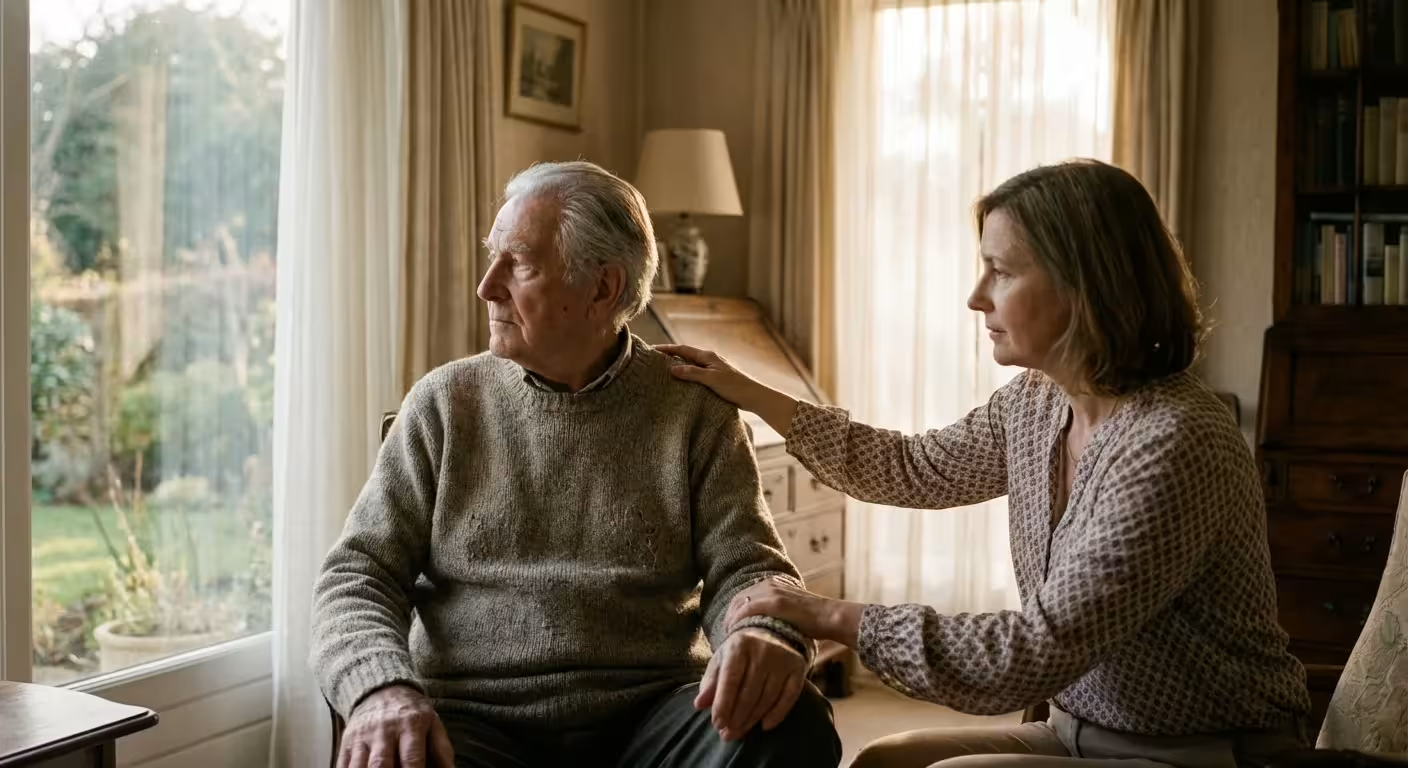
An adult daughter comforting her elderly father by a sunlit window.

5 Early Warning Signs of Alzheimer’s Most People Ignore

Discover the 5 subtle early warning signs of Alzheimer's most people ignore, including apathy, visual-spatial…

Read More →

Psychology Diary

The First Step Toward Change Is Awareness

Inedit Agency S.R.L.
Bucharest, Romania

contact@psychologydiary.com

Explore

  • About Us
  • Advertiser Disclosure
  • Contact Us
  • Disclaimer
  • Do not sell my personal information
  • Editorial Policy
  • Frequently Asked Questions
  • Privacy Policy
  • Terms and Conditions
  • Subscribe
  • Unsubscribe

Categories

  • Expert Tips
  • Family
  • Life
  • Marriage
  • Mental Health

© 2026 Psychology Diary. All rights reserved.