

Practical, At-Home Skills to Manage Anxiety Today
While professional support is invaluable, there are also powerful and immediate skills you can use to manage moments of high anxiety. These techniques work by interrupting the body’s stress response and bringing your attention back to the present moment. They are not a “cure,” but they are tools you can use anytime, anywhere, to regain a sense of control. Think of them as first aid for your nervous system. These natural remedies for anxiety in seniors are safe, effective, and easy to learn.
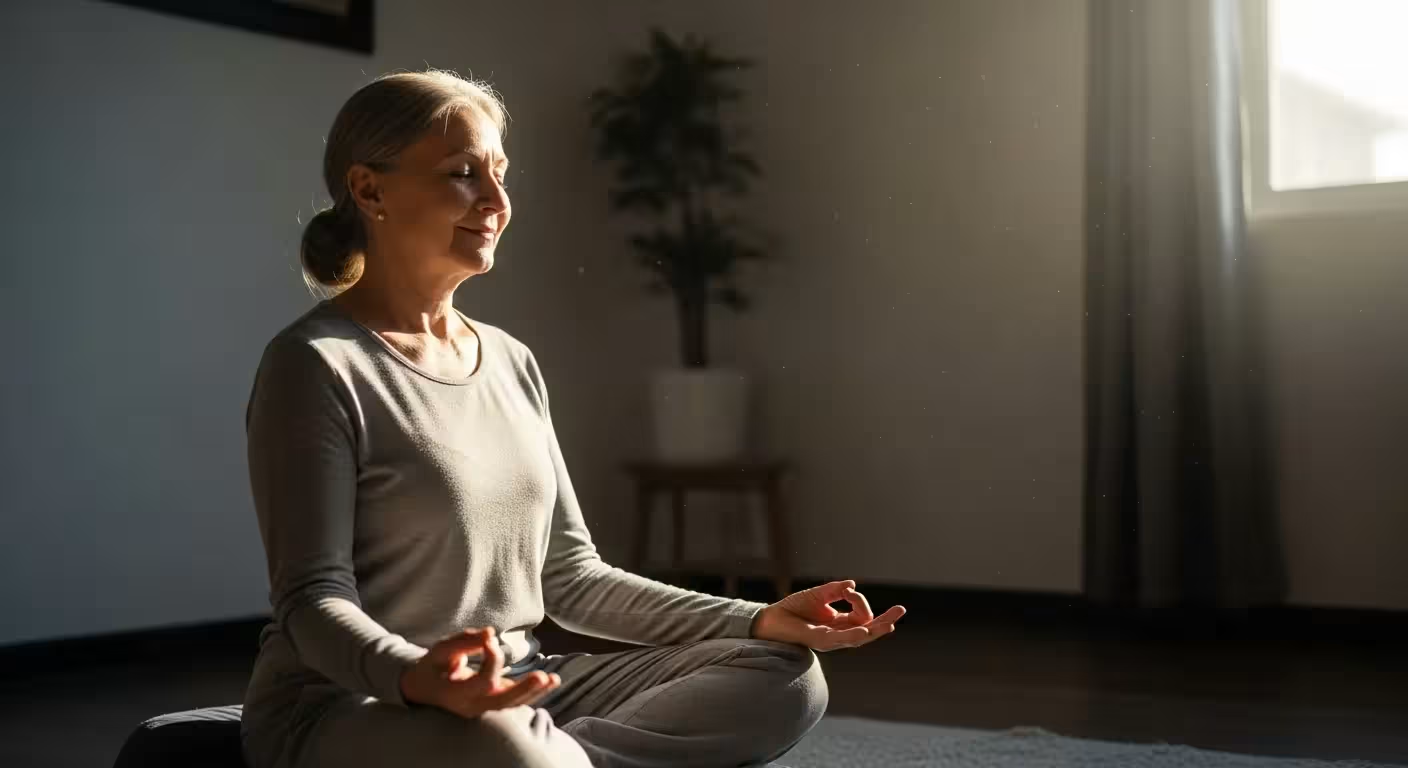
Skill 1: The Power of the Breath – Box Breathing
When you feel anxious, your breathing often becomes shallow and rapid. This signals danger to your brain, keeping the cycle of panic going. By intentionally slowing down your breath, you send a powerful message back to your brain that you are safe. Box breathing is a simple, rhythmic technique used by everyone from Navy SEALs to yoga practitioners to calm the nervous system.
Here’s how to do it:
1. Find a comfortable place to sit, with your feet flat on the floor and your back straight but relaxed.
2. Gently exhale all the air from your lungs.
3. Inhale slowly through your nose for a count of 4. Feel your belly expand.
4. Hold your breath gently for a count of 4.
5. Exhale slowly through your mouth for a count of 4.
6. Hold at the bottom of the exhale for a count of 4.
7. Repeat this cycle 5 to 10 times, focusing only on the rhythm of your breath and the counting.
Mini-Example: Imagine you are in a crowded grocery store and start to feel overwhelmed. You can step to the side of an aisle, look at a box of cereal, and practice this breathing pattern. Inhale 1-2-3-4. Hold 1-2-3-4. Exhale 1-2-3-4. Hold 1-2-3-4. No one will even notice you’re doing it, but within a minute, you may feel your heart rate begin to slow down.
Skill 2: Grounding with Your Senses – The 5-4-3-2-1 Technique
Anxiety often pulls you into future worries or past regrets. Grounding is the practice of pulling your attention out of your head and back into the present moment using your five senses. This technique is incredibly effective for stopping a spiral of catastrophic thoughts.
Here’s how to do it:
Wherever you are, pause and gently notice…
5: Five things you can SEE. Look around and name them silently to yourself. The blue pen on my desk. The crack in the ceiling. The dust on the windowsill. The green leaves outside. The pattern on my rug.
4: Four things you can FEEL. Notice the physical sensations. The firm chair beneath me. The soft fabric of my sweater. The cool surface of the table. The weight of my feet on the floor.
3: Three things you can HEAR. Listen carefully for sounds you might have been tuning out. The hum of the refrigerator. A bird chirping outside. The distant sound of traffic.
2: Two things you can SMELL. Take a gentle sniff of the air. The faint scent of coffee. The smell of soap on my hands.
1: One thing you can TASTE. Notice any taste in your mouth, or take a sip of water. The lingering taste of toothpaste.
Skill 3: Scheduling “Worry Time”
This may sound counterintuitive, but giving your worries a designated time and place can keep them from taking over your entire day. The goal isn’t to eliminate worry, but to contain it. This practice helps you learn that you have control over when and how you engage with your anxious thoughts.
Here’s how to do it:
1. Set aside a specific 15-minute period each day. For example, from 4:30 PM to 4:45 PM. This is your official “Worry Time.”
2. Throughout the day, when an anxious thought pops into your head, acknowledge it and then consciously postpone it. You might tell yourself, “That’s a valid concern. I will think about that during my Worry Time at 4:30.” You can even jot it down on a piece of paper to address later.
3. When your Worry Time arrives, sit down and allow yourself to think about everything on your list. Don’t judge the worries, just let them be there.
4. When the 15-minute timer goes off, stop. Stand up, stretch, and move on to a different, more pleasant activity. You may find that by the time you get to your scheduled slot, some of the worries have lost their emotional charge.








Leave a Reply