
Do you have negative body language?
Have you ever walked into a room and instantly sensed someone was upset, even though they hadn’t said a word? That’s the power of body language, and it’s hard at work. It speaks volumes without having to utter a single sound.
Body language includes posture, gestures, and facial expressions that transmit messages to those around us. And while positive body language can boost the energy of a conversation, negative body language is just as powerful but in a damaging way.
Negative body language can manifest itself in different forms. These subconscious cues can significantly impact how others perceive us. It can create barriers in communication, lead to misunderstandings, and even hurt relationships.
Not to mention the toll it can take on our self-confidence. So, let’s see if YOU display negative body language and what you can do about it. Here are 8 negative body language signals that could mess up your self-esteem.

Having a weak handshake
A handshake is the first connection you create with a person regarding touch. Touching is a fantastic way of having a trustworthy human connection. But how can you tell whether your handshake is good or weak? And what does a firm handshake entail?
When you greet someone, you should feel their hand, not their fingertips. The handshake must be firm because your hand is interlocked with the other individual’s. Don’t squeeze their hand too much.
After all, you aren’t trying to break it! Shake a person’s hand, but don’t do it like you’re trying to rip their arm out of their socket. You’ll come off as too aggressive. If done right, your self-confidence will soar, and people will perceive you as both charming and sociable.
Bad posture
Do you slouch? If the answer is yes, you need to change your posture because it’s causing you negative body language. Most people have developed bad posture while standing, walking, and sitting. You should have your shoulders back and your chest forward.
This indicates a confident person who’s easygoing and comfortable in their skin.
Taking a power pose, merely by pushing your shoulders back and lifting your head a bit, boosts testosterone, which helps with confidence while lowering cortisol, the hormone linked to stress, says Aligned Modern Health.
Changing your bad posture isn’t always easy because most people have become used to it. But trust us… Putting in the effort is well worth it!
Poor eye contact
Do you always seem to look down or away when your eyes meet with another person’s eyes? If yes, you have weak or poor eye contact, giving you negative body language. This is probably the easiest and first step to take to improve yourself.
But let’s talk about what good eye contact actually is. Looking at someone straight in the eyes and maintaining the look for a few minutes is uncomfortable for most of us. But avoiding eye contact altogether is a much larger issue.
You don’t want to appear inattentive, unreliable, and unworthy of what’s presented to you, like a relationship, task, or responsibility. Remember…don’t overdo it. Don’t stare. That’ll likely be creepy to the other person.
Staring is looking at someone emotionless. The correct facial expressions accompany good eye contact.

Crossing your arms
Don’t cross your arms all the time because this signifies that you’re a closed-off person or trying to hide something. This is a defensive stance that is a perfect example of rather negative body language. You won’t win over any new friends when your arms are crossed.
You may be saying one thing, but your body says something else. For instance, if you tell your friends that you loved their barbeque party or sporting event you attended, yet your arms are crossed, you come across as uncomfortable and nervous.
Your body language is communicating something different than your remarks. You’ll try to hide your true feelings, but you’ll contradict yourself. For self-confidence to be developed and nurtured, being true to yourself is necessary.
If that party was boring, don’t be afraid to say it. Display the proper body language, and confidence will manifest itself.
Failing to smile
Smiling is an essential but oftentimes forgotten way of communicating, and failing to do so can contribute to your negative body language. It takes little to no effort and energy for you to crack a smile. It’s so integral to how people perceive you.
Do you want to appear to be an open and friendly person? Just remember to smile. Your wonderful smile can change an uncomfortable and nerve-wracking situation into a memorable experience.
Smiling has such an infectious and surprising effect that a Scandinavian study discovered that people had difficulty frowning when looking at other smiling people.
When you smile, you’re conveying that you’re an easygoing individual. For instance, if you start a conversation with a stranger, the likelihood of them being receptive to you will be improved by your smile.
Stop touching your face
Constantly rubbing your nose, eyes, and face at every opportunity you find is considered negative body language. The nervousness and tension are destroying you inside. If you’re in the middle of a conversation with someone, this becomes distracting to the other person.
You won’t be able to clearly lay out your message to your audience. Remember that if you have an itch, scratch it quickly and be done with it. What’s important to note is that excessive face touching indicates discomfort and nervousness.
You should obviously take care of an itch, but we’re pretty sure an itch doesn’t occur on your face every second or minute of the day.
Fidgeting
If you’re nervous in a social situation, it might be that stressful situation you’ve found yourself in. You must learn to be comfortable with it if confidence will be nurtured in you. You might frequently bite your fingernails, count your fingers, or rub your hands together.
You can also take some of the items within your reach, like a pen, and play with them. For instance, you’ll take the pen and start biting it or rolling it in your hands.
Being comfortable with yourself can handle this boredom and nervousness, ultimately eliminating negative body language. There are also ways of moving your hands in a manner that signifies you’re nervous or bored.
If you’re used to engaging in this habit, discarding it won’t be a breeze, and you won’t change it overnight. It’s probably one of the surest signs that you’re really nervous and uncomfortable in a new environment like a crowded place. Fidgeting less is the first goal to aspire to.
If you’re in an anxious situation five times a day, try not to fidget in three of them. This will gradually help you cope with uncomfortable circumstances.
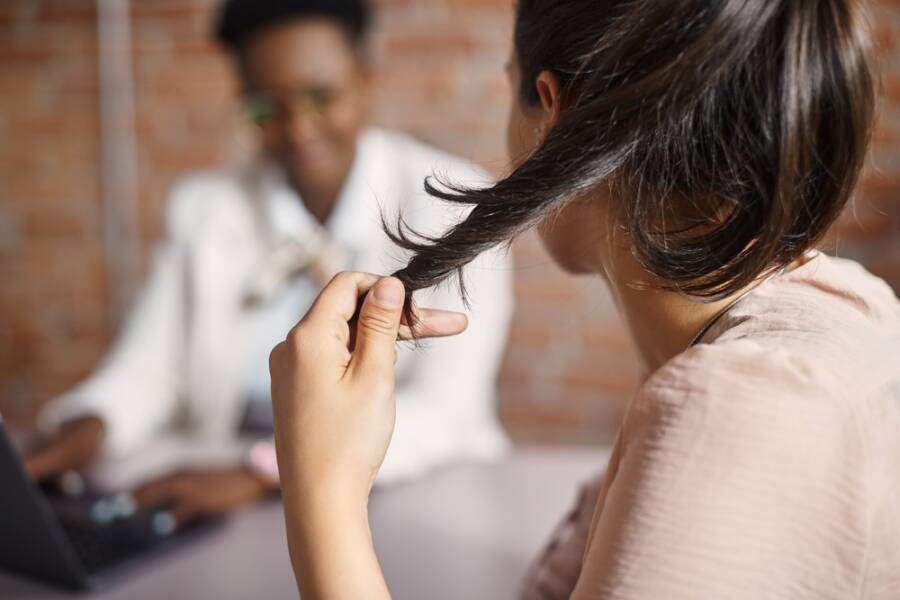
Nervously playing with hair
Constantly playing with your hair shows you’re anxious and nervous. You’re flicking and rubbing your hair every second. We get it! Your hair stylist did a fantastic job. But that doesn’t mean you have to touch it at every opportunity.
We’re not saying that every time you feel your hair, you’re essentially nervous. But it can be evident if too much hair flicking, touching, or rubbing becomes distracting. You can feel the tension, and the discomfort is overwhelming.
You can’t ace that exchange if your hair becomes part of the conversation in a negative way. For more on the matter, check out The Dictionary of Body Language
Are YOU guilty of any of these negative body language signals? Please feel free to share your thoughts with us in the comment section. And if you liked this article, you may also enjoy: 9 Introvert-Friendly Life Lessons You Can Learn for Personal Growth








Leave a Reply