Psychology Diary

The First Step Toward Change Is Awareness

  • Home
  • Relationships
  • Mental Health
  • Expert Tips
  • Life
  • Family
  • Marriage

Understanding Seasonal Affective Disorder (SAD) in Older Adults

August 31, 2025 · Mental Health

Two seniors enjoying a warm drink together indoors.

Frequently Asked Questions (FAQ)

Is SAD just the ‘winter blues’?

While the terms are often used interchangeably, they are not the same. The “winter blues” refers to a milder feeling of lethargy or sadness that many people experience during the winter. It’s generally short-lived and doesn’t significantly impair a person’s ability to function. SAD, on the other hand, is a clinical diagnosis of major depression with a seasonal pattern. Its symptoms are more severe, last for several months, and have a significant negative impact on a person’s daily life, relationships, and well-being.

Can you develop SAD later in life?

Yes. While SAD often first appears in young adulthood, it is entirely possible for it to develop for the first time in older adults. Sometimes, its onset can be triggered or unmasked by major life changes common in later years, such as retirement, a change in health status, or the loss of a spouse. The physiological changes of aging might also make some individuals more vulnerable to the effects of reduced sunlight.

Does moving to a sunnier climate cure SAD?

For some individuals, moving to a location with more sun year-round can significantly reduce or even eliminate symptoms of SAD. However, this is not a guaranteed cure, nor is it a practical solution for most people. SAD is a complex condition, and factors beyond just sunlight—such as genetics and brain chemistry—also play a role. Furthermore, moving can introduce its own set of stressors, such as leaving behind a social support network, which could potentially worsen feelings of depression and isolation.


Pages: 1 2 3 4 5 6 7 8 9

Share this article

Facebook Twitter Pinterest LinkedIn Email

Leave a Reply Cancel reply

Your email address will not be published. Required fields are marked *

Search

Latest Posts

  • A conceptual illustration showing a father and daughter separated by a deep chasm in the floor of their dining room. 10 Habits That Push People Away (Your Children Too)
  • A conceptual collage of a head silhouette filled with shattered mirrors and warped photos, symbolizing reality distortion. 8 Ways People Distort Reality
  • An elderly woman sits alone at a dining table in soft afternoon light, looking down at a tea cup in a quiet, nostalgic home setting. 9 Emotional Wounds Adult Children Simply Don’t Realize They’re Inflicting On Their Parents
  • A mixed-media collage of a fragmented silhouette head with an anchor being cut, symbolizing the loss of one's grip on reality. 10 Signs Someone Is Trying to Distort Your Reality
  • A mixed media collage of a beautiful white flower with hidden barbed wire roots and thorny stems on a textured vintage paper background. 8 Behaviors That Reveal Hidden Toxicity
  • A candid photo of a couple in a dim living room, showing a sense of emotional distance and unspoken tension. 10 Traits That May Reveal Covert Narcissism
  • A couple sits on a sofa in a dimly lit room, one person looking at a phone while the other looks away, capturing a moment of secrecy. 8 Signs Someone May Be Hiding More Than They Admit
  • An ink and watercolor illustration of a human head cracking like stone, with golden light leaking through the fissures. 11 Small Clues That Can Expose a Lie
  • An abstract editorial illustration of a silhouette with a tangled nest of lines inside its head, symbolizing mental confusion. 8 Warning Signs Someone May Be Playing Mind Games
  • A mixed media collage of a silhouette filled with torn paper and translucent layers, symbolizing the invisible nature of emotional neglect. 10 Traits of People Emotionally Neglected as Kids

Newsletter

Get the latest posts delivered to your inbox.

Related Articles

Woman meditating peacefully in a sunlit room.

The Power of Forgiveness: How Letting Go Can Improve Your Mental Health

When to Seek Professional Support While the self-help strategies in this article can be very…

Read More →
PTSD, mental health depression

9 Mental Health Issues You Can Inherit

There are many reasons why a mental health disorder can develop. If you’re struggling with…

Read More →
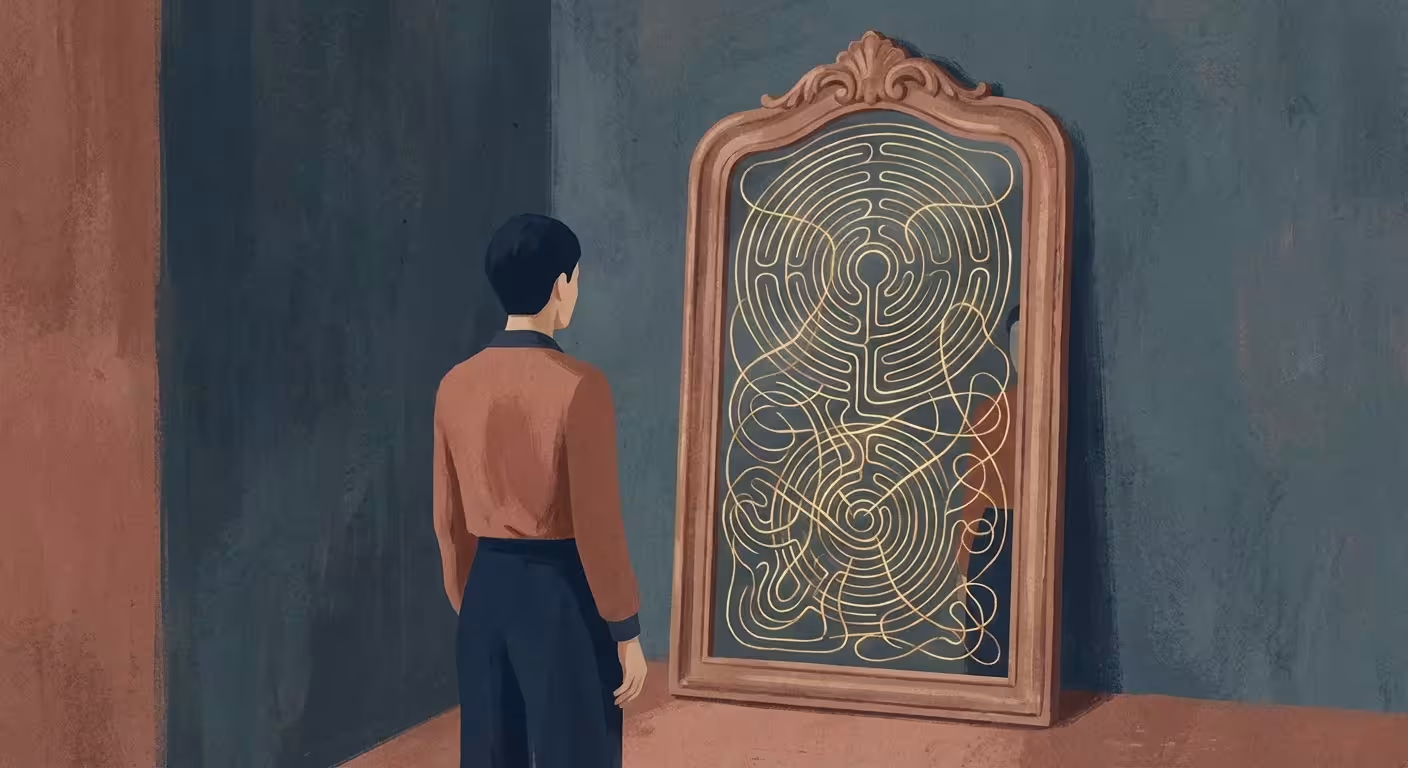
Surreal illustration of a person looking into a mirror that reflects a golden labyrinth, symbolizing internal complexity.

The 6 Most Dangerous Lies We Tell Ourselves Every Day

Uncover the 6 most dangerous lies we tell ourselves daily, from perfectionism to control fallacies,…

Read More →
high-level thinker

Are You a High-Level Thinker? Read What Psychologists Say

How can you tell if you are a high-level thinker?  When you say “high-level thinker,”…

Read More →
OCD, mental health

People with OCD Usually Share These 8 Strange Traits

8. Excessively seeking reassurance Even if there is nothing wrong with reassurance, we do need…

Read More →
triggers

13 Dangerous Psychological Triggers and How to Overcome Them

Triggers are natural sensory reminders that might cause painful memories or some symptoms to resurface.…

Read More →
A senior woman in a sunlit room excitedly examines a green leaf through a magnifying glass, surrounded by plants and gardening tools.

Why Seniors Who Stay Curious Live Longer—And How to Cultivate It

Discover the psychological and neurological reasons why staying curious helps older adults live longer, along…

Read More →

Watch Out: 5 Bipolar Disorder Signs

How to Spot Bipolar Disorder — 5 Subtle Signs You Should Look Out For! Did…

Read More →
Active Shooter

8 Shocking Traits All Active Shooters Have in Common

Let’s talk about the psychological profile of active shooters! The unfortunate reality is that mass…

Read More →

Psychology Diary

The First Step Toward Change Is Awareness

Inedit Agency S.R.L.
Bucharest, Romania

contact@psychologydiary.com

Explore

  • About Us
  • Advertiser Disclosure
  • Contact Us
  • Disclaimer
  • Do not sell my personal information
  • Editorial Policy
  • Frequently Asked Questions
  • Privacy Policy
  • Terms and Conditions
  • Subscribe
  • Unsubscribe

Categories

  • Expert Tips
  • Family
  • Life
  • Marriage
  • Mental Health

© 2026 Psychology Diary. All rights reserved.