

You know the feeling when a conversation leaves you entirely off balance, wondering if your memory is fundamentally flawed. When someone attempts to distort your reality, a psychological manipulation commonly known as gaslighting, they systematically dismantle your trust in your own mind. The American Psychological Association defines this behavior as coercing a person into doubting their accurate observations and experiences. It is not simply a disagreement; it is a calculated erosion of your confidence. Recognizing these subtle emotional tactics is your first line of defense. By understanding the specific behaviors manipulators use to rewrite history and shift blame, you can step out of the confusion, reclaim your cognitive anchor, and protect your psychological well-being.
The Psychology Behind Reality Distortion
Psychological manipulation does not announce itself with a warning label. It creeps into relationships quietly, often disguised as concern, miscommunication, or harmless teasing. Over time, the subtle invalidation of your experiences creates a profound sense of cognitive dissonance—a mental state where your brain struggles to hold onto two conflicting truths. To relieve this internal tension, you may eventually surrender your own perceptions and adopt the manipulator’s version of reality.
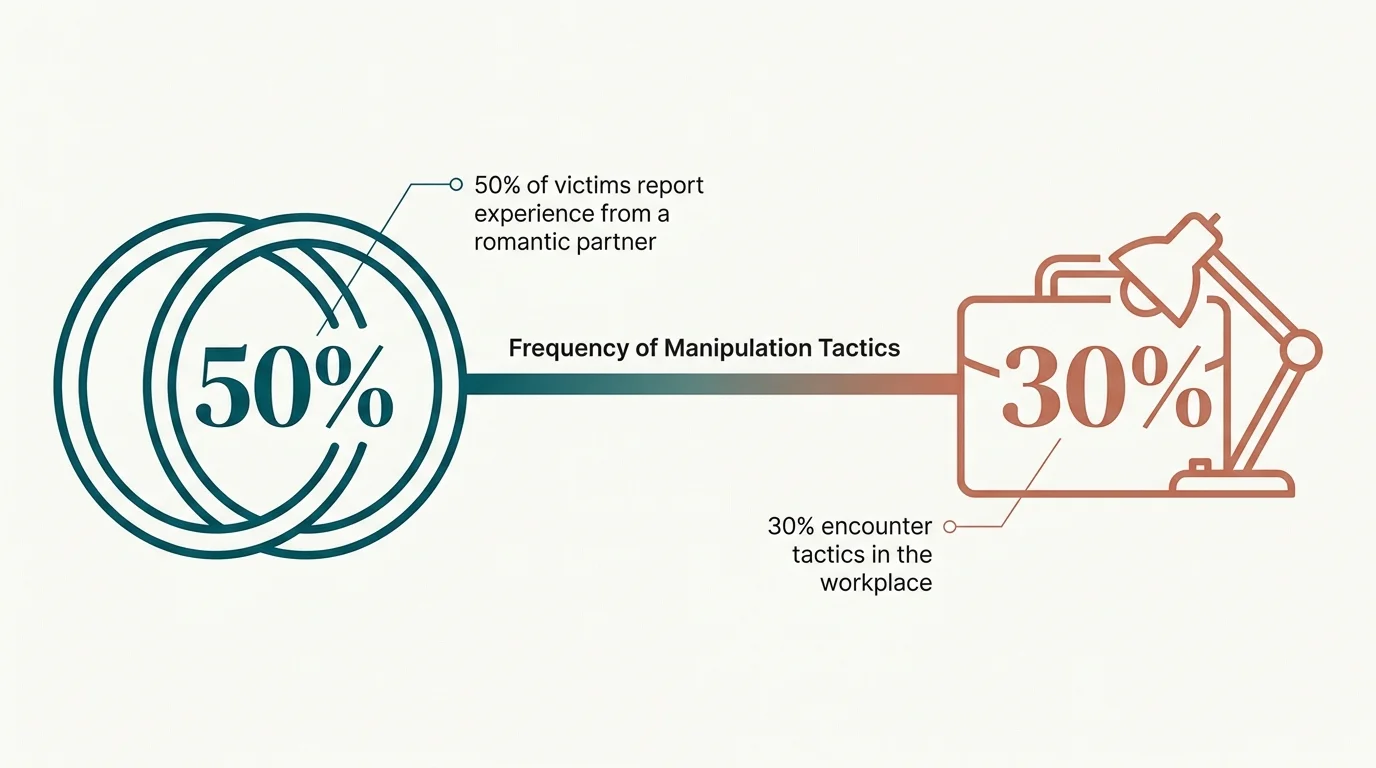
This form of control is alarmingly widespread. Data gathered across different relational contexts shows that 50% of victims report experiencing this type of emotional manipulation from a romantic partner, while 30% encounter similar tactics in the workplace. Whether the behavior stems from deeply ingrained defense mechanisms, a personality disorder, or a conscious desire for dominance, the impact on your mental health remains equally destructive.
To combat this erosion of your self-trust, you must learn to identify the mechanics of the manipulation. By shining a light on the specific tactics used to destabilize your mind, you neutralize their power. You begin the vital process of trusting your own internal compass again.

10 Warning Signs of Psychological Manipulation
Manipulators rarely begin their campaigns with massive, easily disprovable lies. Instead, they introduce minor inconsistencies that slowly chip away at your sense of reality. If you consistently interact with someone who exhibits the following behaviors, you are likely dealing with a concerted effort to undermine your perception.

1. They Flatly Deny Events That Actually Happened
The cornerstone of reality distortion is the outright denial of verifiable facts. You might clearly remember a hurtful comment they made, only to be met with a steadfast, “I never said that; you are making things up.” This tactic is incredibly disorienting. When someone forcefully denies reality, your brain naturally hesitates. You wonder if you misheard them or misunderstood the context. Repeated over months or years, this denial conditions you to doubt your memory by default, granting the manipulator total control over the relationship’s narrative.

2. They Weaponize Your Emotional Reactions
Whenever you express hurt or frustration, a manipulator will swiftly shift the focus from their behavior to your reaction. Phrases like, “You are way too sensitive,” or “You are overreacting to nothing,” serve a dual purpose. First, they invalidate your legitimate feelings, making you feel foolish for being upset. Second, they grant the manipulator a free pass to continue the toxic behavior without facing any accountability. Soon, you find yourself suppressing your emotions entirely to avoid being labeled as dramatic.

3. They Shift the Blame to Avoid Accountability
A hallmark of psychological control is the complete inability to take responsibility. If you confront someone about an issue, they will expertly twist the conversation until you are the one apologizing. For instance, if they lash out in anger, they might claim, “If you weren’t so difficult to deal with, I wouldn’t have to yell.” This manipulation exploits your natural empathy and willingness to self-reflect. While you are busy analyzing your own alleged flaws, they completely evade the consequences of their actions.

4. They Isolate You From Outside Perspectives
To maintain control over your reality, a manipulator must eliminate competing voices. They will subtly, or overtly, drive a wedge between you and your support system. They might claim your friends do not have your best interests at heart, or suggest your family is actively trying to ruin your relationship. By isolating you from objective third parties, they ensure you have no one to validate your experiences. You become entirely dependent on their warped version of the truth.

5. They Use “Tone Policing” to Deflect Your Concerns
Tone policing is a highly effective deflection tactic, particularly prevalent in professional environments and intimate disputes. When you raise a valid concern, the manipulator will entirely ignore the substance of your argument and attack your delivery instead. They might say, “I am not going to listen to you when you have that attitude,” or “Keep your voice down, you sound hysterical.” By setting arbitrary rules for how you must communicate, they ensure your actual concerns are never addressed.
6. They Feign Confusion or Pretend Not to Understand
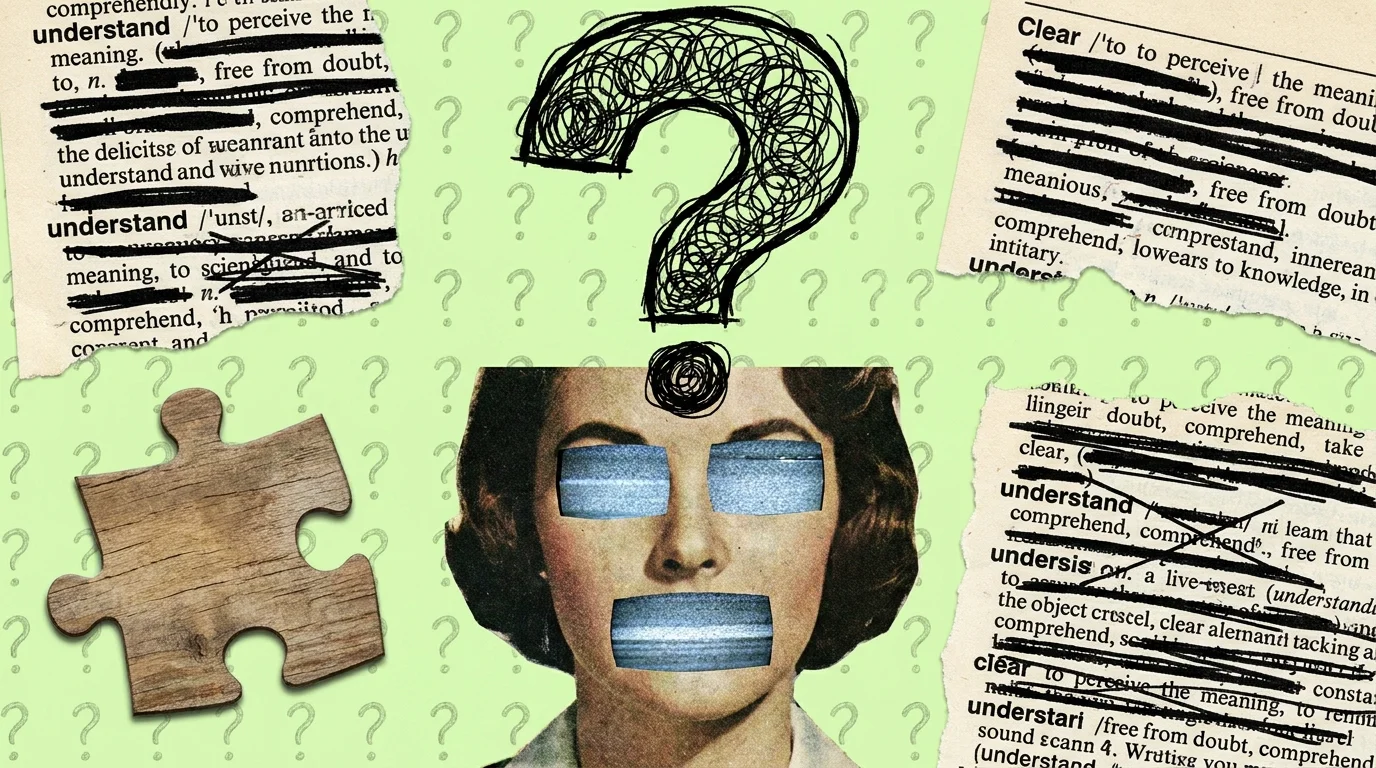
Sometimes, the most exhausting form of manipulation is the refusal to engage. When you try to discuss a boundary violation, the manipulator might stare blankly, pretend they have no idea what you mean, or claim the conversation is too confusing. This deliberate stonewalling—a destructive relationship habit heavily researched by the The Gottman Institute—forces you to expend massive amounts of energy over-explaining basic concepts. Eventually, you drop the issue out of sheer emotional exhaustion.

7. They Project Their Own Behaviors Onto You
Projection occurs when someone takes their own unacceptable traits or actions and attributes them to you. A partner who is secretly unfaithful may constantly accuse you of flirting with others. A colleague who routinely drops the ball on projects might accuse you of being disorganized. This reality distortion keeps you perpetually on the defensive. Instead of addressing their wrongdoings, you waste your energy trying to prove your innocence.

8. They Slowly Chip Away at Your Self-Esteem
Reality distortion requires a foundation of self-doubt. Manipulators lay this groundwork through subtle, continuous criticisms of your intelligence, competence, or worth. They might disguise these insults as jokes or “helpful advice.” Over time, the constant belittling takes a toll. A person who feels fundamentally flawed is far less likely to trust their own judgment, making them an ideal target for ongoing emotional control.

* *Draft 17:* Stamped medical files and a stethoscope illustrate how others can create a false narrative about your mental health.
* *Word count check:*
9. They Create a False Narrative About Your Mental Health
To preemptively discredit you, a manipulator will often weave a narrative that you are mentally unstable. They may use terms like “crazy,” “paranoid,” or “unhinged,” both directly to you and behind your back to mutual acquaintances. This tactic is devastatingly effective. If they can convince you—and others—that your perception is permanently flawed due to poor mental health, any legitimate grievances you bring up are immediately dismissed as symptoms of your “instability.”

10. They Offer Warmth Only When You Accept Their Reality
Emotional manipulation is rarely a constant stream of abuse; if it were, victims would leave immediately. Instead, manipulators use intermittent reinforcement. They offer intense affection, praise, and warmth—but strictly on the condition that you conform to their version of reality. The moment you challenge them, the warmth vanishes, replaced by coldness or rage. This psychological hook keeps you continually striving for their approval, even at the cost of your own truth.

What Can Go Wrong: Misinterpreting the Signs
While understanding these manipulative tactics is essential for your emotional safety, misdiagnosing normal human flaws as deliberate manipulation can also damage healthy relationships. The term has become heavily colloquialized, but it does not apply to every disagreement or memory lapse. Here is where lines often get blurred:
- Differing Memories: Human memory is inherently flawed. If you and your partner remember a conversation differently, it does not automatically mean one of you is manipulating the other. Reality distortion involves a persistent, intentional refusal to acknowledge facts to maintain dominance.
- Poor Communication: Someone lacking emotional intelligence might say, “You’re overreacting,” because they genuinely lack the vocabulary to navigate intense feelings. While invalidating, this clumsiness differs from a calculated attempt to make you doubt your sanity.
- Healthy Boundaries: If someone walks away from an abusive or highly escalated shouting match, they are protecting their peace, not “stonewalling” or feigning confusion to manipulate you.
“As no one else can know how we perceive, we are the best experts on ourselves.” — Carl Rogers, Psychologist
The core differentiator is intent and pattern. True reality distortion is a systematic campaign of emotional control, not an isolated incident of defensiveness. If you feel fundamentally unsafe, chronically confused, and constantly diminished, trust that internal alarm bell.
Comparing Healthy Conflict vs. Reality Distortion
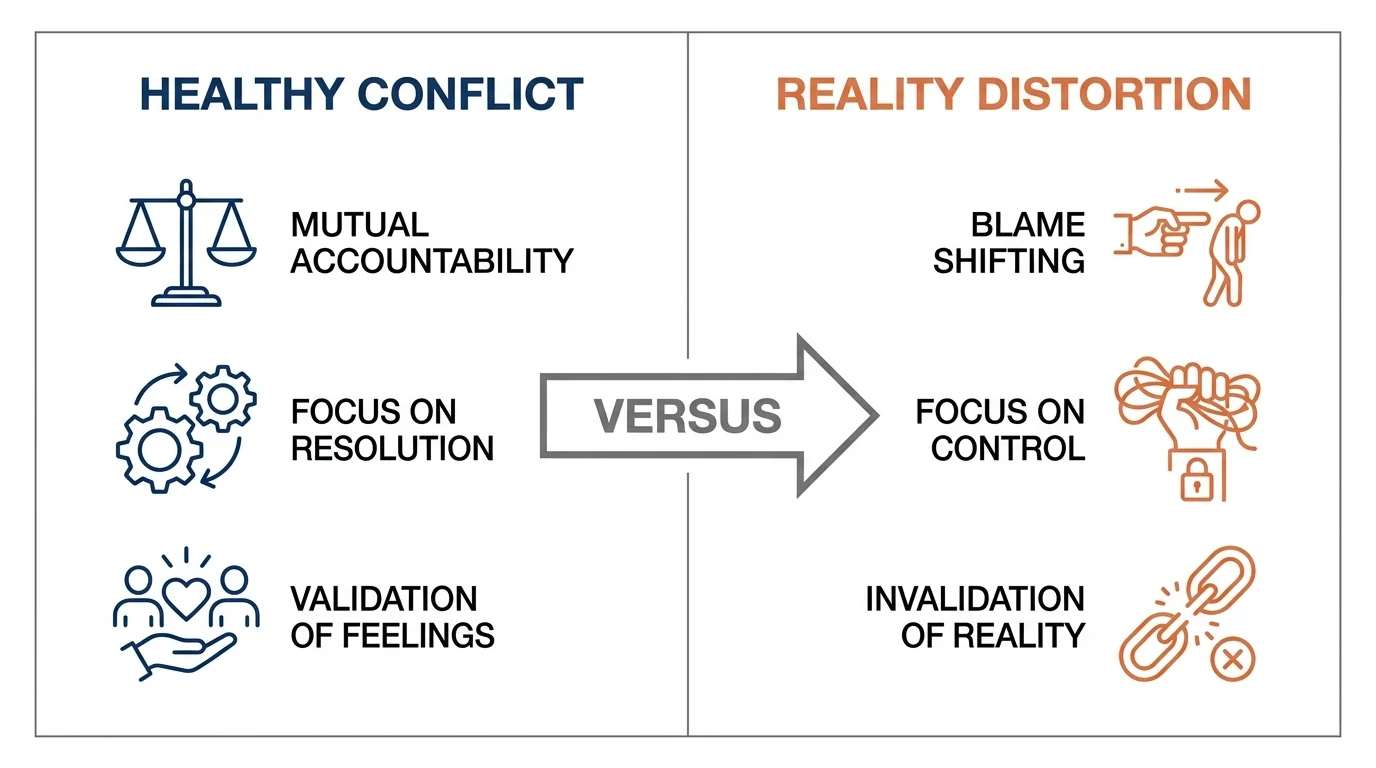
To further clarify the boundary between normal relationship friction and emotional manipulation, consider how both scenarios handle identical triggers. Healthy conflict seeks resolution; reality distortion seeks control.
| Conflict Element | Healthy Disagreement | Reality Distortion |
|---|---|---|
| Addressing Memory | “I remember that situation differently, let’s figure out where we crossed wires.” | “That never happened. You are completely making things up again.” |
| Handling Emotions | “I didn’t intend to hurt you, but I can see why my actions made you feel that way.” | “You are way too sensitive. Nobody else would be upset by this.” |
| Accountability | Takes ownership of their part in the conflict, even if they disagree on the nuances. | Deflects entirely. Shifts the blame so that you apologize for their bad behavior. |
| Ultimate Goal | To find mutual understanding, rebuild connection, and prevent future hurt. | To establish dominance, win the argument, and make you doubt your perspective. |

When to Seek Professional Support
Attempting to out-logic someone who actively distorts reality is a losing battle. The confusion and self-doubt engineered by these dynamics can severely compromise your mental health, leading to anxiety, depression, and profound isolation. You do not have to untangle this psychological knot alone. Consider reaching out to a licensed mental health professional if you experience any of the following scenarios:
- You constantly doubt your own sanity, memory, and perception, finding yourself apologizing for things you know you did not do.
- You feel chronically anxious and “on edge,” walking on eggshells to avoid triggering a disproportionate or confusing response.
- You have stopped making basic daily decisions because you no longer trust your own judgment or cognitive abilities.
- You feel entirely isolated from friends and family, leaving you without an objective sounding board to validate your experiences.
Therapists can help you rebuild your cognitive anchor and develop strategies to safely distance yourself from manipulative environments. If you are in immediate distress, the 988 Suicide & Crisis Lifeline provides free, confidential support from trained counselors.
Frequently Asked Questions
What should I do if I recognize these manipulative behaviors?
Your first step is to stop arguing about the facts. You cannot convince someone to see a reality they are actively trying to dismantle. Begin documenting your experiences—write down conversations and events as they happen so you have a private, objective record to refer to when you start doubting yourself. Establish firm boundaries, seek validation from trusted friends outside the relationship, and consult a mental health professional to help you plan your next steps safely.
Can reality distortion happen in the workplace?
Absolutely. While we often associate these tactics with romantic partnerships, workplace manipulation is incredibly common. It frequently manifests as a boss or colleague denying promises they made, stealing credit for your work while convincing you that you contributed nothing, or using tone policing to shut down your valid professional concerns. This environment can lead to severe professional burnout and imposter syndrome.
How long does it take to recover from psychological manipulation?
Recovery timelines vary wildly depending on the length of the relationship, the severity of the manipulation, and your access to support. Healing requires actively rebuilding neural pathways associated with self-trust. While the initial distance from the manipulator brings immediate relief, unlearning the habit of second-guessing your every thought can take months or years of dedicated therapeutic work. Be exceptionally gentle with yourself during this process.
Reclaiming your reality begins with a single, courageous act of self-trust. You are allowed to hold onto your truth, even when someone else refuses to acknowledge it. If a relationship consistently leaves you feeling confused, diminished, and unsure of your own mind, you have the right to step back and seek clarity. Rebuilding your confidence takes time, but your inner compass is still intact—you simply need to practice listening to it again.
This article provides general educational information about psychology and relationships. It is not a substitute for professional therapy or medical advice. Everyone’s situation is unique—if you’re struggling, please reach out to a licensed mental health professional.
Last updated: February 2026. Psychology research evolves continuously—verify current findings with professional sources.









Leave a Reply