

Hidden toxic behaviors rarely look like dramatic movie villains screaming across a room; instead, they operate as quiet, everyday patterns that slowly dismantle your self-esteem. Recognizing these covert emotional red flags allows you to protect your mental health and establish non-negotiable boundaries before deep psychological damage occurs. Covert toxicity often masquerades as care, humor, or helplessness, making it notoriously difficult to identify when you are in the thick of it. Over time, these subtle manipulations drain your energy and make you question your own reality. By learning to decode these specific unhealthy personality traits, you empower yourself to stop the cycle, validate your emotional experiences, and foster relationships built on genuine mutual respect.

1. Weaponized Incompetence
When a partner consistently performs shared responsibilities poorly—shrinking your favorite sweaters in the wash, forgetting critical grocery items, or mishandling basic scheduling—it is easy to write it off as simple clumsiness. However, modern psychological research defines weaponized incompetence as the intentional performance of incompetence to avoid accountability, shift labor onto others, and maintain personal comfort. This behavior relies on a powerful social mechanism: your reluctance to accuse someone of a strategic failure when they claim to be trying their best.
The danger of weaponized incompetence lies in the immense cognitive load it forces onto the capable partner. Over time, you learn that it is simply easier to do the task yourself rather than manage the fallout of an intentionally botched job. Psychologists highlight that this dynamic inevitably leads to severe decision fatigue, resentment, and profound burnout. To break this cycle, you must stop stepping in to rescue them; allow the natural consequences of half-finished tasks to unfold, and firmly hand the responsibility back to where it belongs.
2. Toxic Positivity
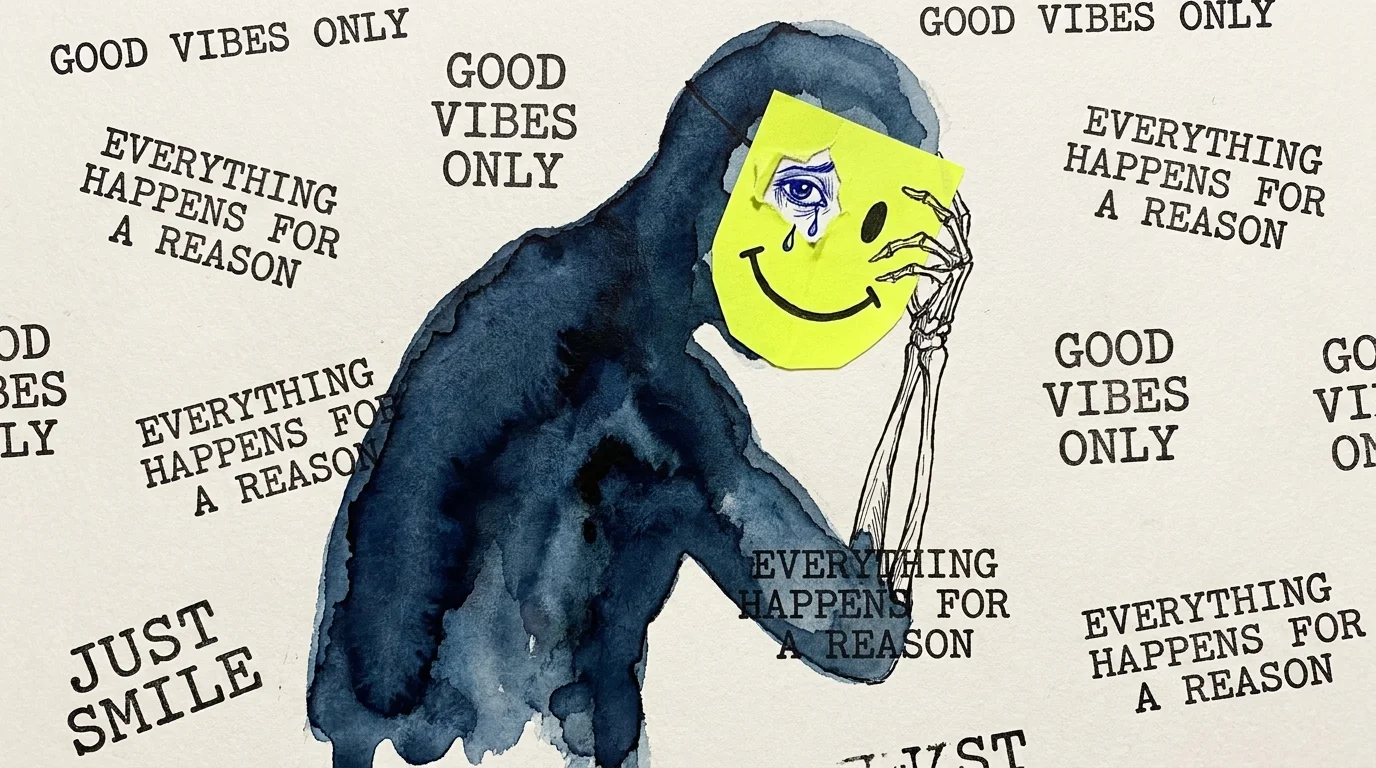
Optimism is generally a valuable trait, but when it is used to silence genuine distress, it transforms into toxic positivity. This behavior involves an excessive emphasis on maintaining a positive mindset, even in challenging circumstances, which ultimately invalidates your emotional reality. When you bring a valid concern to someone and they immediately respond with “good vibes only” or “everything happens for a reason,” they are not offering comfort—they are actively shutting down emotional intimacy.
Clinical resources from the American Psychological Association (APA) emphasize that honoring a full spectrum of emotions is critical for mental well-being. Studies observe that repressing valid negative emotions like fear, disappointment, or anger can cause stress and hinder appropriate emotional coping during significant hardships. A truly supportive partner or friend will hold space for your pain without rushing to paint a silver lining over it.

3. Stonewalling (The Silent Treatment)
Conflict is inevitable in any relationship, but how you handle the aftermath dictates the health of the connection. Researchers at The Gottman Institute identify stonewalling as one of the “Four Horsemen” that predict relationship failure. Stonewalling occurs when someone emotionally shuts down, withdraws from the interaction, and completely closes themselves off from the speaker because they feel overwhelmed or physiologically flooded.
While stonewalling often begins as a subconscious fight-or-flight response, chronic reliance on the silent treatment operates as a deeply manipulative punishment. It leaves you grasping for resolution, feeling isolated, and entirely at the mercy of their timeline for re-engagement. If a partner needs space, healthy communication dictates that they announce a brief time-out and specify when they will return to the conversation; weaponized silence simply leaves you in the dark.
4. The DARVO Defense
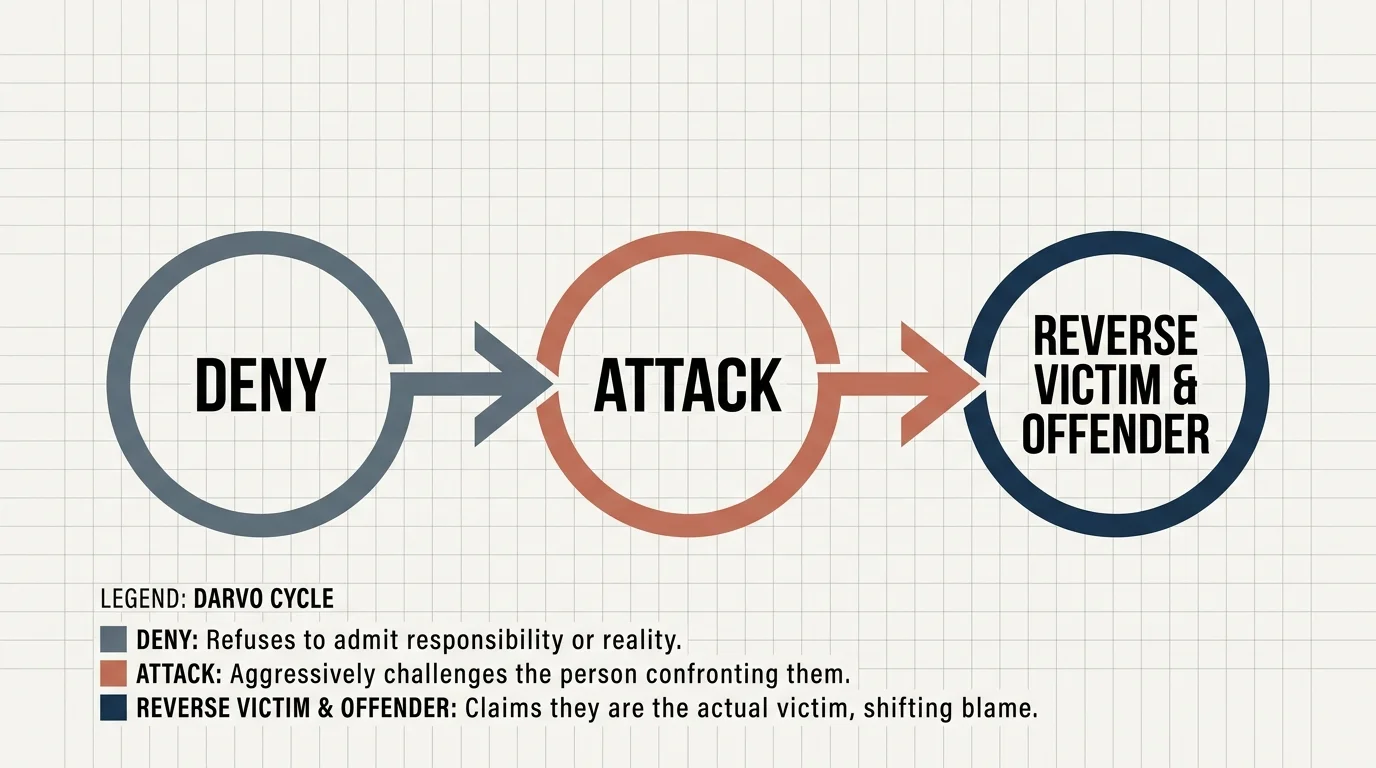
If you have ever confronted someone about a specific hurt only to find yourself apologizing to them by the end of the conversation, you have likely experienced DARVO. Coined by psychologist Dr. Jennifer J. Freyd, DARVO stands for Deny, Attack, and Reverse Victim and Offender. This disorienting tactic is a primary defense mechanism used by individuals trying to evade accountability for interpersonal harm.
A recent study found that nearly 72% of individuals reported encountering these specific DARVO tactics when confronting someone over a wrongdoing. Furthermore, current research links the frequent use of DARVO to a higher likelihood of perpetrating interpersonal harassment. When confronted, the offending party denies the event happened, attacks your credibility or memory, and finally shifts the narrative so that they become the wounded party. Recognizing this acronym is your strongest defense; when you see the pattern unfolding, you can disengage rather than falling into the trap of defending your own sanity.
5. Covert Gaslighting (The “Just Joking” Defense)
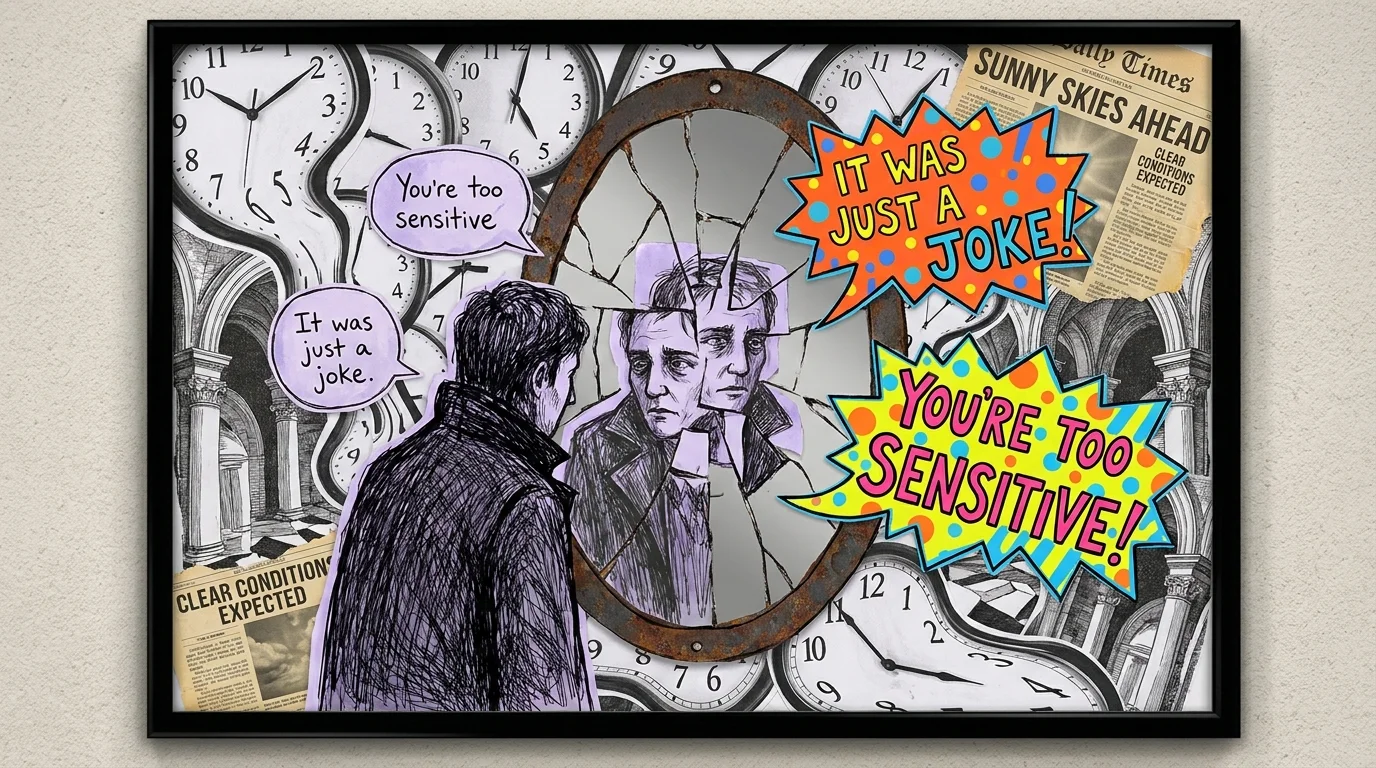
Gaslighting is a widely recognized term, but its most insidious form hides behind the shield of humor. Covert gaslighting often looks like a pointed insult followed rapidly by, “I’m just joking, you’re entirely too sensitive.” As frequently discussed in clinical insights on Psychology Today, this allows the perpetrator to deliver hostility without facing the consequences of their words.
This behavior places you in an impossible double bind. If you get upset, you validate their claim that you lack a sense of humor and are overly dramatic; if you stay silent, you absorb the emotional blow and normalize their disrespect. Over time, this erosion of your reality makes you question your own emotional compass. An effective countermeasure is to neutrally ask them to explain the joke. Forcing them to dissect the mechanics of a cruel comment quickly strips away the humorous facade.

6. Boundary Testing Disguised as Care
Toxic behavior often wears a mask of profound concern. Boundary testing disguised as care occurs when someone continuously pushes past your stated limits while claiming they are only doing it out of love. This might look like a parent who shows up unannounced to “help clean” after you specifically asked for weekend privacy, or a new partner who demands your location data because they “worry so much about your safety.”
True care respects autonomy; control requires submission. When you attempt to enforce a limit and the other person immediately guilt-trips you for rejecting their “love,” they are signaling that their desire for access supersedes your need for safety.
“Daring to set boundaries is about having the courage to love ourselves, even when we risk disappointing others.” — Brené Brown, PhD
Leaning into that courage means recognizing that a boundary is not a negotiation. If someone routinely frames your need for space as a personal attack against them, you are dealing with a deeply unhealthy dynamic.
7. Transactional Scorekeeping
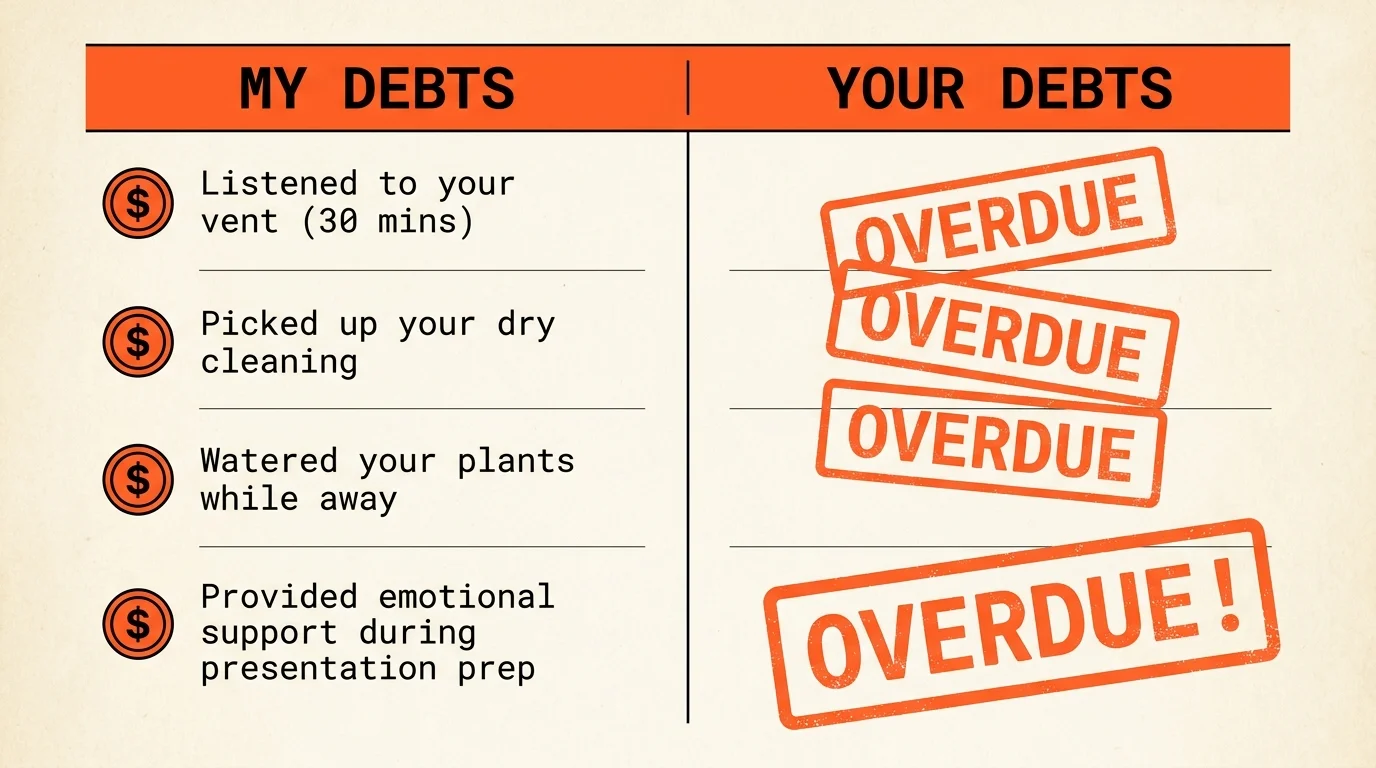
A healthy relationship operates on a foundation of mutual generosity; a toxic relationship operates like a ledger. Transactional scorekeeping happens when an individual tracks every favor, gift, and compromise they have ever made, weaponizing that list whenever they want to secure compliance. They may say, “I skipped my gym class for you last month, so you owe it to me to cancel your plans tonight.”
This behavior transforms emotional support into a high-interest loan. You hesitate to accept their help or affection because you know a bill will inevitably arrive. Over time, transactional dynamics breed profound resentment and destroy trust, as you can never be certain if an act of kindness is genuine or just a deposit made for future leverage.

8. Chronic Triangulation
Triangulation is a manipulative tactic where a person brings a third party into a two-person dynamic to dilute your valid concerns, manufacture jealousy, or create an artificial consensus. Instead of addressing a conflict directly with you, they might say, “Even your sister thinks you’re being unreasonable about this,” or “My ex never complained when I worked these kinds of hours.”
By recruiting an outside opinion—real or fabricated—the toxic individual shifts the balance of power. You are suddenly no longer arguing just with them; you are arguing against an invisible jury. This behavior is designed to isolate you and make your perspective feel entirely invalid. Healthy communicators keep private conflicts private and address issues one-on-one.
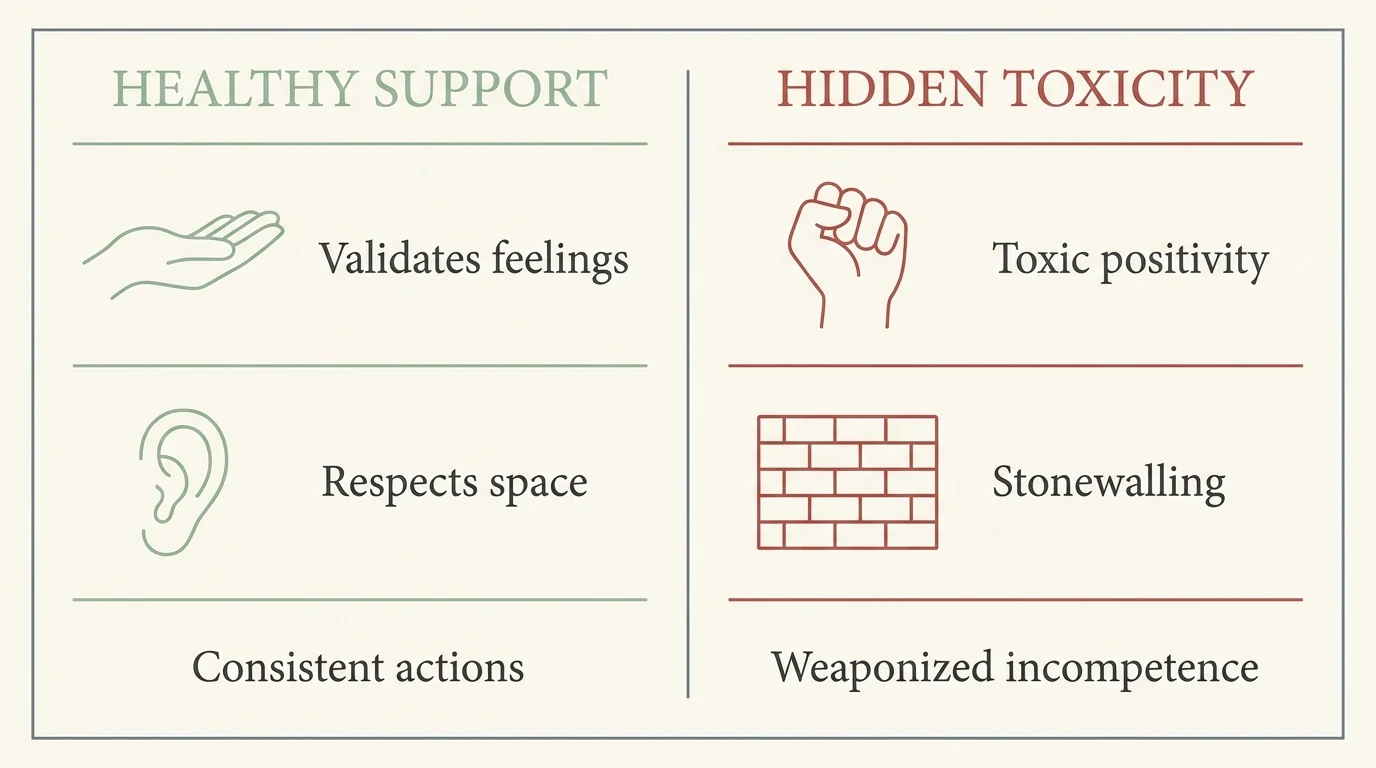
Healthy Support vs. Hidden Toxicity
Understanding the difference between a minor relationship flaw and a toxic pattern requires looking closely at intention and outcome. The table below illustrates the stark contrast between healthy emotional support and covert toxicity.
| Behavioral Context | Healthy Support | Hidden Toxicity |
|---|---|---|
| Handling Conflict | Requests a temporary time-out to cool down, committing to a time to revisit the issue. | Deploys the silent treatment (stonewalling) indefinitely to punish you and force compliance. |
| Offering Comfort | Validates your pain and sits with your discomfort before gently exploring solutions. | Uses toxic positivity to immediately shut down your negative feelings because they find them inconvenient. |
| Addressing Mistakes | Takes genuine accountability, apologizes without caveats, and changes the behavior. | Utilizes DARVO to deny the event, attack your memory, and play the victim of an unfair accusation. |
| Performing Tasks | Asks for guidance if unsure, but ultimately takes ownership of shared domestic or emotional labor. | Engages in weaponized incompetence, performing tasks so poorly that you simply take over the burden. |
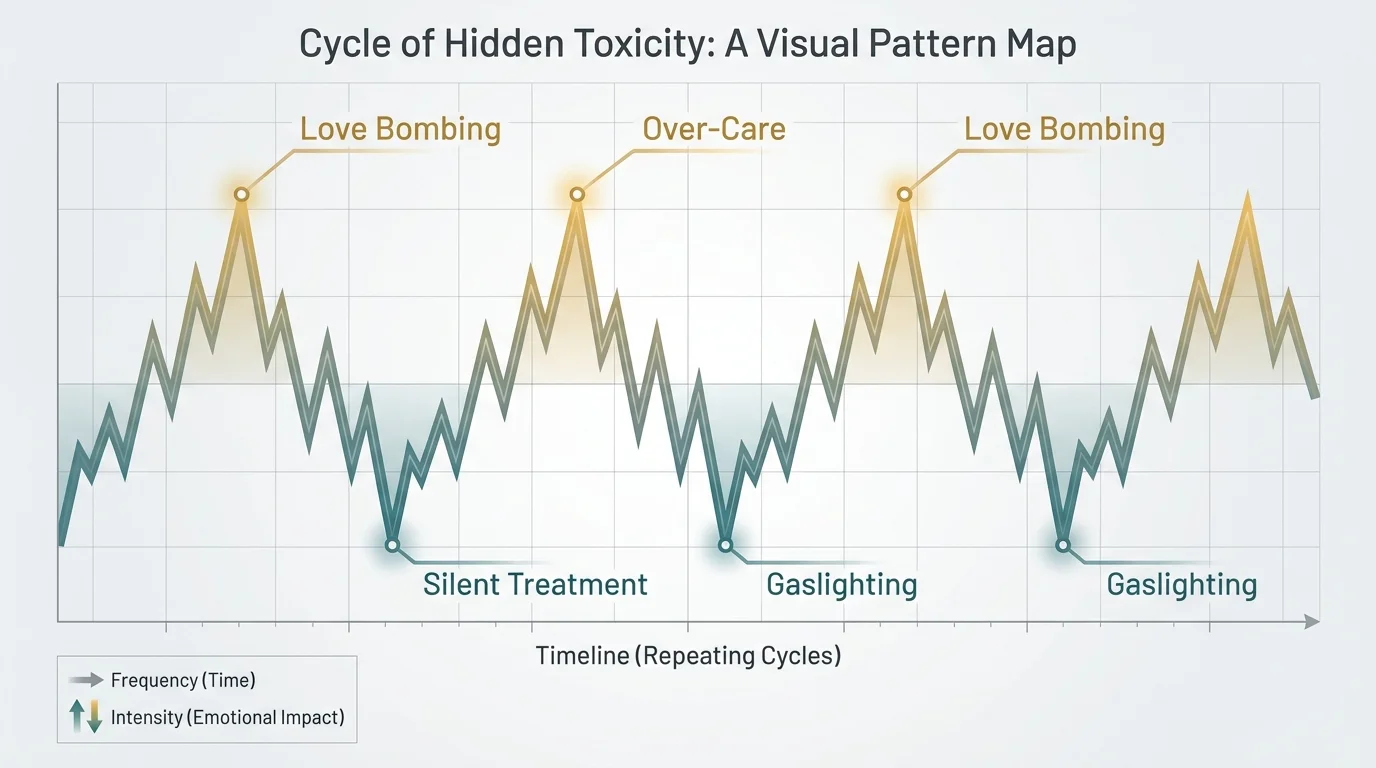
Patterns to Watch For
One of the most dangerous misconceptions about toxic behavior is the belief that it must be driven by conscious malice. Often, individuals exhibit these unhealthy traits not because they are inherently evil masterminds, but because they are operating out of deeply unhealed trauma, profound insecurity, or poor emotional regulation. They may genuinely believe their excessive check-ins are acts of love, or that their stonewalling is necessary to keep the peace.
However, intent does not negate impact. You can hold immense empathy for someone’s difficult past without volunteering to be their emotional punching bag in the present. Recognizing that a partner’s covert gaslighting stems from their own fragile ego may help you depersonalize their words, but it should never be used as an excuse to tolerate the abuse. Growth requires accountability; if they refuse to acknowledge their patterns, your empathy cannot fix the relationship on its own.

When Self-Help Isn’t Enough
While establishing boundaries and improving communication can resolve many interpersonal issues, some dynamics require immediate professional intervention. You cannot self-help your way out of psychological abuse. It is vital to recognize when the environment has become too damaging to navigate alone. Consider seeking professional guidance if you experience any of the following:
- You fear your partner’s reactions: If you find yourself constantly walking on eggshells or altering your fundamental personality to avoid triggering an explosive outburst or a prolonged silent treatment.
- You experience chronic physical symptoms: Prolonged exposure to toxic stress often manifests physically as panic attacks, severe insomnia, chronic digestive issues, or unexplained hair loss.
- You feel entirely isolated: If the other person has successfully used triangulation or manipulation to cut you off from friends, family, and independent support networks.
- You lose your grip on reality: If severe DARVO and gaslighting have left you genuinely questioning your memory, your sanity, or your basic worth as a human being.
If you recognize these severe signs, explore resources available through the National Institute of Mental Health (NIMH), or immediately reach out to the 988 Suicide & Crisis Lifeline if you are in profound distress and need immediate support.
Frequently Asked Questions
Can a person exhibit toxic behavior without realizing it?
Yes. Many toxic behaviors, such as toxic positivity or weaponized incompetence, are learned defense mechanisms picked up during childhood or previous relationships. Individuals may employ them automatically to avoid vulnerability or discomfort. However, lack of awareness does not make the behavior acceptable; true change requires bringing these unconscious habits into conscious awareness.
How do I respond to the DARVO tactic in the moment?
The most effective response to DARVO is strict disengagement. Do not fall into the trap of JADE (Justify, Argue, Defend, Explain). When you notice them reversing the victim and offender roles, calmly state your original boundary or observation once, and then step away from the conversation. You cannot reason with a defense mechanism designed entirely to confuse you.
Is a relationship salvageable if these behaviors are present?
A relationship can survive and even thrive after toxic behaviors are identified, but only under very specific conditions. Both parties must be willing to take radical accountability. The offending partner must acknowledge the harm without defensiveness and actively participate in professional couples counseling to restructure their communication habits. If the toxic behavior is denied or blamed entirely on you, the dynamic will not change.
Recognizing the quiet, insidious nature of toxic behavior is an act of profound self-advocacy. You do not have to accept a relationship that constantly leaves you drained, confused, or doubting your own worth. Begin by setting small, firm boundaries around the behaviors that drain you the most, and watch how the other person reacts. Their response to your newly asserted limits will give you all the clarity you need regarding the future of the connection. This article provides general educational information about psychology and relationships. It is not a substitute for professional therapy or medical advice. Everyone’s situation is unique—if you’re struggling, please reach out to a licensed mental health professional.
Last updated: February 2026. Psychology research evolves continuously—verify current findings with professional sources.









Leave a Reply