Psychology Diary

The First Step Toward Change Is Awareness

  • Home
  • Relationships
  • Mental Health
  • Expert Tips
  • Life
  • Family
  • Marriage

An Introduction to Mindfulness and Meditation for Seniors

August 31, 2025 · Expert Tips

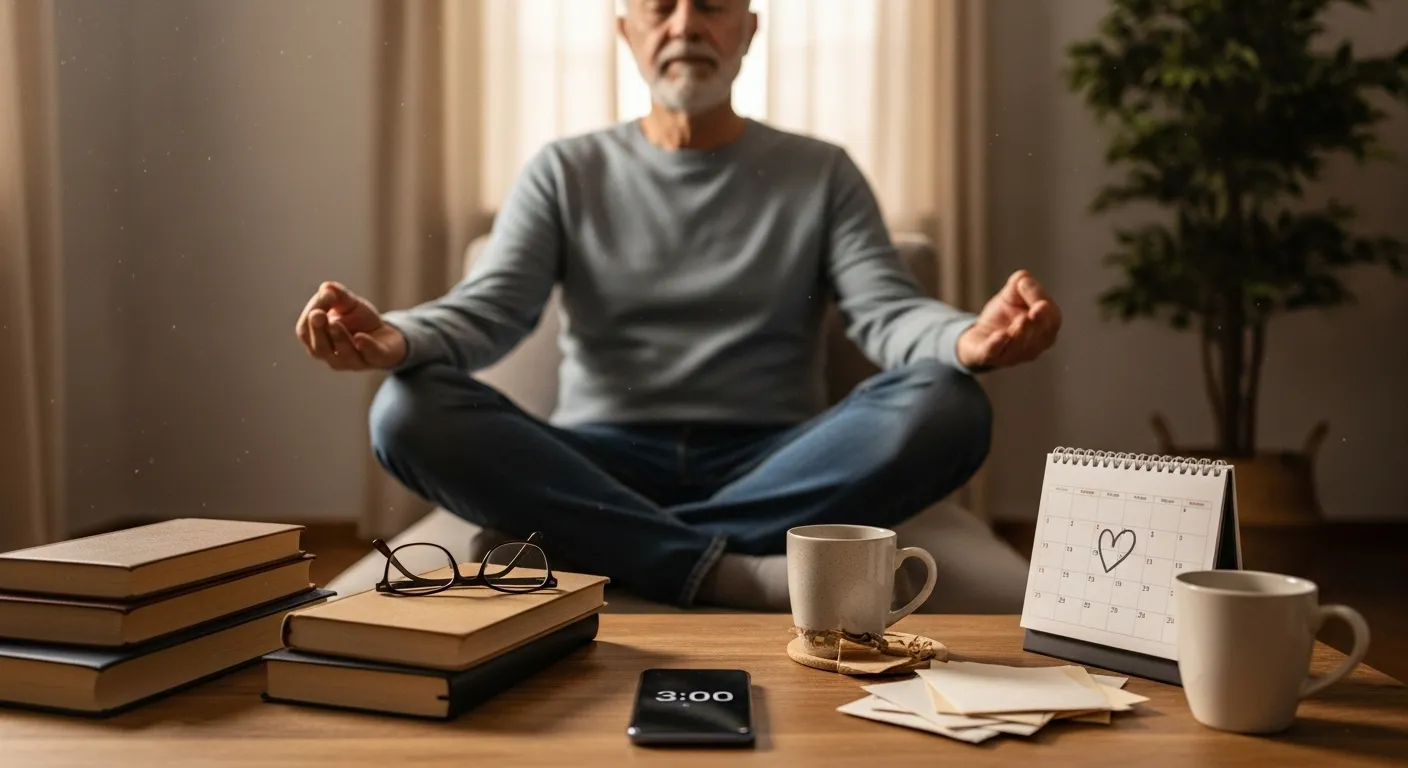
Senior man meditating with timer on phone in living room.

Frequently Asked Questions (FAQs)

How long should a senior meditate each day?

The most important factor is consistency, not duration. It is much better to start with a short, manageable session that you can do every day. We recommend beginning with just 3 to 5 minutes daily. Once that feels like a comfortable and established habit, you can gradually increase the time to 10, 15, or even 20 minutes if you wish. But even a consistent 5-minute practice can yield significant benefits.

Do I need any special equipment?

No, you do not need any special equipment to begin. One of the greatest advantages of mindfulness meditation is its accessibility. All you truly need is a quiet place where you won’t be disturbed for a few minutes and a comfortable place to sit. A simple, straight-backed chair is ideal for most people. There is no need to buy special cushions, clothing, or apps to get started.

Is it okay to use a guided meditation app?

Yes, guided meditation apps or online recordings can be an excellent resource, especially for beginners. They provide structure and can make the practice feel more approachable. When exploring these resources, try to find instructors with credible qualifications in mindfulness or mental health. Be cautious of any app or program that makes unrealistic promises or guarantees specific health outcomes. A good guided meditation should feel like a gentle invitation, not a demanding command.

What if I have mobility issues and can’t sit on the floor?

This is a very common and important question. It is a myth that you must sit on the floor in a cross-legged position to meditate. For most adults, and particularly for seniors with mobility challenges, sitting upright in a supportive chair is the recommended and most effective posture. You can also practice meditation while lying down, though you should be mindful of the tendency to fall asleep. The key is to find a posture that allows you to be both alert and comfortable.


Pages: 1 2 3 4 5 6 7 8 9 10 11

Share this article

Facebook Twitter Pinterest LinkedIn Email

Leave a Reply Cancel reply

Your email address will not be published. Required fields are marked *

Search

Latest Posts

  • A mixed-media collage of a fragmented silhouette head with an anchor being cut, symbolizing the loss of one's grip on reality. 10 Signs Someone Is Trying to Distort Your Reality
  • A mixed media collage of a beautiful white flower with hidden barbed wire roots and thorny stems on a textured vintage paper background. 8 Behaviors That Reveal Hidden Toxicity
  • A candid photo of a couple in a dim living room, showing a sense of emotional distance and unspoken tension. 10 Traits That May Reveal Covert Narcissism
  • A couple sits on a sofa in a dimly lit room, one person looking at a phone while the other looks away, capturing a moment of secrecy. 8 Signs Someone May Be Hiding More Than They Admit
  • An ink and watercolor illustration of a human head cracking like stone, with golden light leaking through the fissures. 11 Small Clues That Can Expose a Lie
  • An abstract editorial illustration of a silhouette with a tangled nest of lines inside its head, symbolizing mental confusion. 8 Warning Signs Someone May Be Playing Mind Games
  • A mixed media collage of a silhouette filled with torn paper and translucent layers, symbolizing the invisible nature of emotional neglect. 10 Traits of People Emotionally Neglected as Kids
  • A mixed-media collage showing a rigid, golden silhouette with cracks revealing a soft, watercolor interior, representing performative armor. 7 Behaviors People Mistake For Confidence But Aren’t
  • A woman sits alone at a kitchen table in dim evening light while her partner stands in the background, illustrating emotional distance. 9 Psychological Reasons Why People Stay in Unhappy Relationships
  • An illustration of a person using a prism to turn a chaotic blue wave into a clear spectrum of distinct colors. 10 Signs You Have Exceptionally High Emotional Intelligence

Newsletter

Get the latest posts delivered to your inbox.

Related Articles

focus

6 Ways to Focus Better Regardless of Age

Easily distracted? Learn how to focus with these science-backed ways! Let’s be candid for a…

Read More →
lies

The 5 Worst Lies You Can Tell Your Therapist (And Why They Matter)

The most common lies people tell their therapist. To set things straight from the beginning,…

Read More →
grandkids

9 Reasons Your Grandkids Avoid You Now

8. You speak poorly of their parents One of the biggest mistakes grandparents make regarding…

Read More →

20 Efficient Ways to Improve Your Bedroom Life After 40

Life after 40 can be difficult…but your bedroom life doesn’t have to be! For most…

Read More →
aging alone

Aging Alone: 8 Tips for a Happy Ever After on Your Own

Figuring out how aging alone works should be a priority for anyone. No matter if…

Read More →
Toxic

Toxic People: 4 Ways to Deal With Them

4. Never Normalize Behavior That’s Abusive This is especially vital if you’ve ever been in…

Read More →

19 Efficient Ways to Make Your Divorce As Painless as Possible

The truth is, no one gets married thinking they will end up in a divorce…

Read More →
8 Simple Ways to Boost Your Mood Every Day After 60

8 Simple Ways to Boost Your Mood Every Day After 60

Discover 8 research-backed, simple ways to boost your mood and protect your mental health every…

Read More →
married life ready

Big Life Lessons: 10 Red Flags You’re Not Ready to Get Married Just Yet

Are you ready to make this important step in your life and be married or…

Read More →

Psychology Diary

The First Step Toward Change Is Awareness

Inedit Agency S.R.L.
Bucharest, Romania

contact@psychologydiary.com

Explore

  • About Us
  • Advertiser Disclosure
  • Contact Us
  • Disclaimer
  • Do not sell my personal information
  • Editorial Policy
  • Frequently Asked Questions
  • Privacy Policy
  • Terms and Conditions
  • Subscribe
  • Unsubscribe

Categories

  • Expert Tips
  • Family
  • Life
  • Marriage
  • Mental Health

© 2026 Psychology Diary. All rights reserved.