
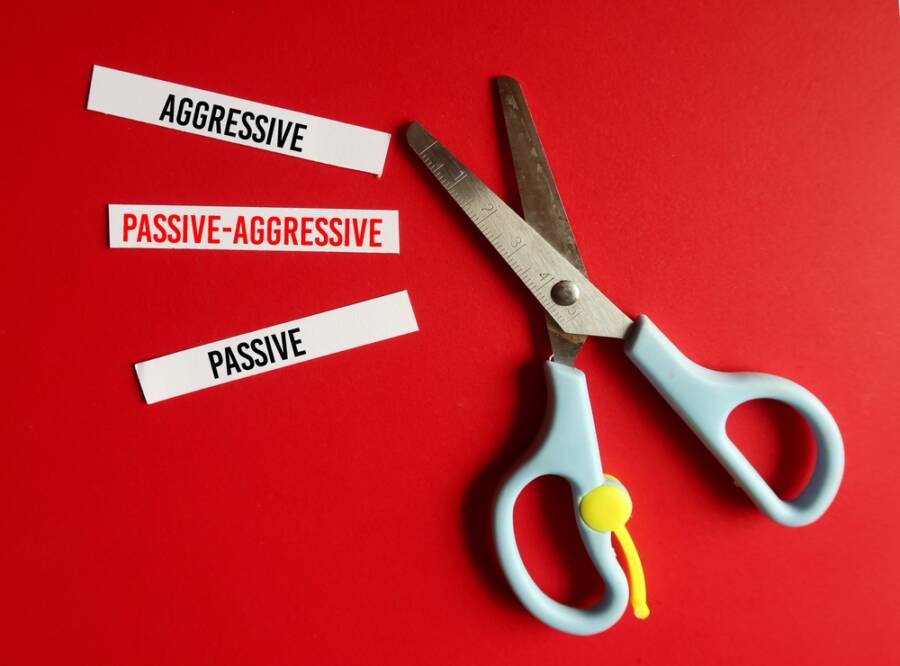
Can you recognize a passive-aggressive person?
Have you ever had the feeling that during a conversation in which you were trying to explain what bothered you, the opponent was not only irritated by this but was also giving you short answers like “I was just kidding” or “You’re way too sensitive?”
Passive aggression is a way of expressing negative feelings more indirectly. A passive-aggressive person will always try to look unapproachable, be avoidant, and use hints instead of putting the cards on the table and discussing the issue openly.
Psychologists are divided on whether it meets the specifications for a personality disorder such as paranoia or narcissism. Still, they agree on the symptoms: conscious inefficiency, an absence of taking responsibility, and an inability to express needs or worries out loud. Now, without further ado, based on their research, we’ve compiled a list of all the character traits of a passive-aggressive person:

1. Silent treatment
In most arguments, the disputing party is communicating and attempting to resolve the issue. For a passive-aggressive person, this isn’t the case! They always turn to silence, and it’s easy to understand why. It conveys a lot while saying absolutely nothing. It appears to prevent confrontation but rather fuels it—the silence acting as an insult.
This kind of person will undoubtedly keep track of everything that goes on, and you never know when they could say something hurtful in a passive-aggressive manner.
2. Hints rather than outright expressing a desire or an issue
Someone who is passive-aggressive is an expert at insinuating their emotions without saying them out loud. They could bring up a past occurrence without sharing their thoughts on it, or they might talk about a similar circumstance and their sentiments around it.
This is because a passive-aggressive individual isn’t used to communicating their emotions honestly and openly. They either didn’t grow up with this or, at some point, when they actually made an effort and tried to speak out someone made them feel uncomfortable.
3. Sarcasm
Using sarcasm is one of the favorite things of passive-aggressive people, which can be interpreted as a joke most of the time. For example, you say something that makes you upset, and while you’re complaining about a certain situation, a passive-aggressive person will come and say, “You’re never happy anyway.”
When questioned, they will probably use sarcasm to express unpleasant sentiments toward others, and the justification will be simply: “I was just kidding.”
4. Complaining because they feel underappreciated
Somebody who is passive-aggressive and struggling to express their feelings openly may complain that they’re underappreciated or wronged at times. And if you sense that they’re bothered by something and you will try to discuss with them they’ll probably come up with various excuses to avoid having the discussion.
5. The use of procrastination
Another character trait of a passive-aggressive person is procrastination. They will do whatever it takes to postpone their tasks, even those that they will do for themselves. This also applies if they promise to help someone else, but then leave before completing the work and come up with a reason why they can’t.
6. Patronizing language
A passive-aggressive person will always be arrogant and will try to diminish other people, especially if they feel threatened by them. That’s why passive aggressiveness can occasionally be shown in speech, including patronizing remarks. For instance, asking, “Do you know what I mean by that?” or offering excessive guidelines might be used to minimize the intellect of another person.
7. Sabotaging others
Have you ever been through a situation in which a person wanted to throw a party and, when they asked you to come over, you said you couldn’t make it because you already had other plans? A passive-aggressive individual may act out by actively undermining you if you refuse the invitation and “throw” mean comments because of this. In the end, they will also imply that you don’t care about them and that you’re selfish too.
8. Backhanded compliments
These are the kinds of remarks that softly undermine the subject of the speech without coming off as cruel. Even if the individual seems to be being kind in their words and tone, there is a subtle offense in there.
“You look so much nicer when you smile,” which suggests that you don’t look attractive until you’re smiling, or “Good for you for trying your best,” which can imply that even if you’re trying hard, your efforts aren’t good enough, are two examples of statements you may hear from a passive-aggressive person.
9. Insulting in disguise
“I don’t want to sound mean, but…” “I hope you don’t think I’m insensitive, but…” “Not to be judgmental, but…” are just some of the most common phrases a passive-aggressive person will often say to others right after they say something mean.
If this happens to you, feel free to express that you’re feeling bothered by their comments or end the conversation politely by saying that you’re not interested in continuing the talk and moving forward.
10. Avoiding facing the issues
This is a very common character trait for many passive-aggressive individuals. They usually pretend and say that “I am fine” or everything is going smoothly when the situation is exactly the opposite.
The main reason why they act like this is because they don’t know how to talk openly about their feelings, and they protect themselves from others by simply saying everything is OK.

11. Ghosting
You’ve probably heard about the term “ghosting,” especially in today’s world. This is something a passive-aggressive person would do. When someone ghosts someone, they unexpectedly stop communicating with them without notice, especially if there was an indication in the previous contract that they were interested in and valued the connection.
The act of ghosting might be classified as passive-aggressive since it frequently conveys an unspoken harmful feeling, such as the desire to stop talking to someone.
We have listed several character traits of a passive-aggressive person, and if you identify with any of these traits, don’t worry! We’re all humans; we can make mistakes, but it’s important to identify them so we can heal and become a better version of ourselves.
While therapy is the best way to help ourselves, not everybody can afford a therapist. How to Stop Being Passive Aggressive: A Step-by-Step Comprehensive Blueprint on How to Stop Being Overly Aggressive, Stop Being Toxic, and More To Have Healthy Relationships is a book that can help you understand why you’re acting like that and what you can do to overcome these emotions and have better relationships with yourself and others. It’s available on Amazon for only $14.14 for the paperback edition.
Bottom line:
Experiencing passive aggression from someone might leave you feeling confused, unnoticed, or guilty. Having individuals like this around you is not only extremely toxic, but you can also begin reacting to them in a passive-aggressive manner, which creates a vicious cycle of avoiding confronting unpleasant feelings head-on.
Whenever this happens to you, try to establish some boundaries. I know it may not be that easy, especially if it’s about a close person, but remember that your mental health is important, and you should protect it to avoid being caught in a trauma that will take years to heal from.
You may also be interested in reading about 6 Terrible Ways You Sabotage Yourself (and How to Stop It).







Leave a Reply