

Self-discipline is rarely about raw willpower; instead, it stems from deliberate systems and emotional regulation. Psychological research consistently shows that individuals with high self-control do not constantly fight urges—they design their lives to minimize temptation. When you master self-discipline, you stop relying on fleeting motivation and start trusting your established routines. This fundamental shift reduces decision fatigue and creates sustainable momentum toward personal goals. Recognizing your own self-disciplined behaviors can help you leverage these strengths during challenging periods. Whether you naturally lean toward structure or have spent years carefully cultivating your habits, identifying these eight specific psychological and behavioral markers reveals exactly how your capacity for delayed gratification operates in everyday life.
Myths Worth Debunking
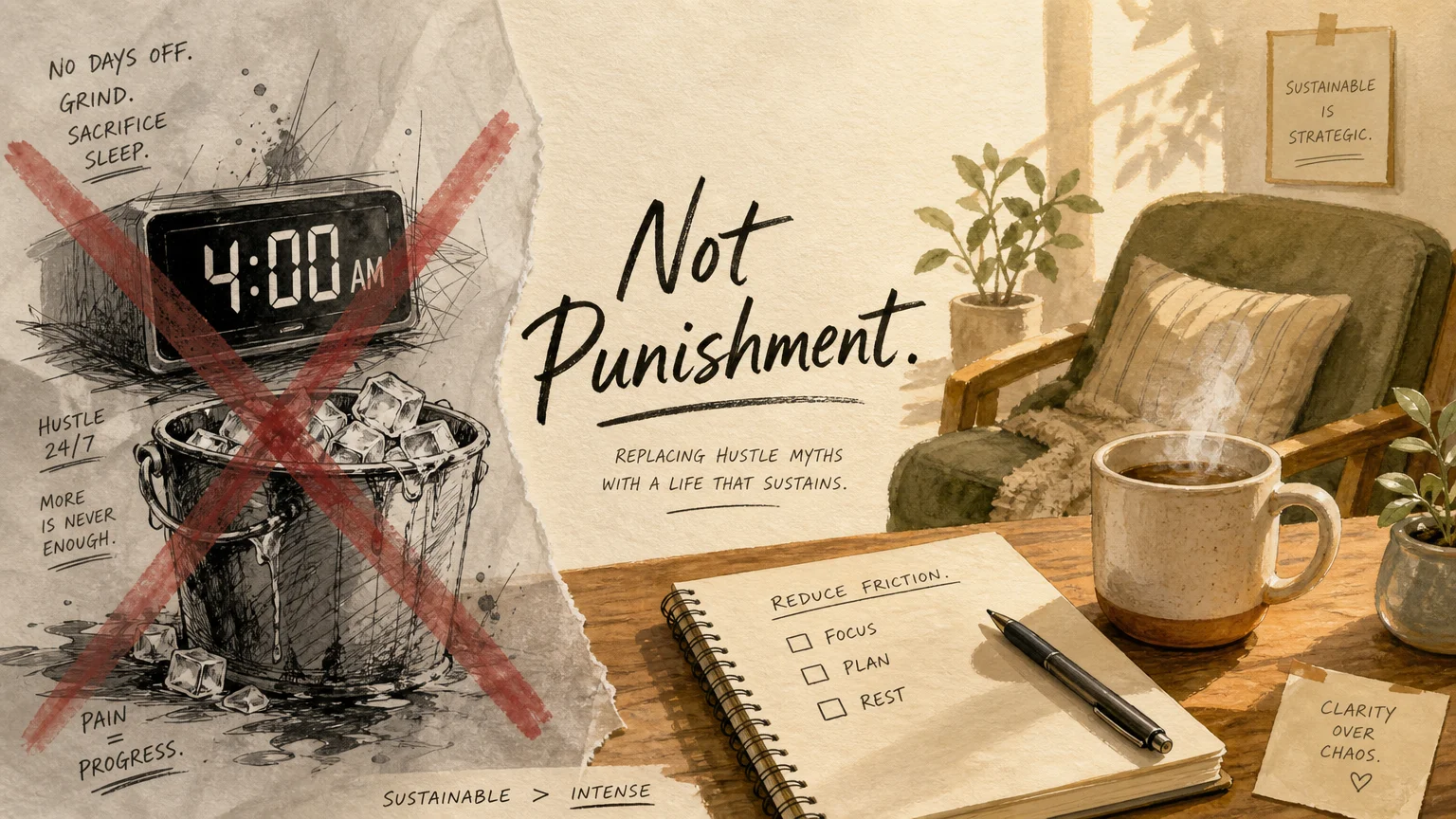
Self-discipline often gets tangled up in modern hustle culture and toxic productivity. You might imagine a highly disciplined person waking up at 4:00 a.m., taking a freezing ice bath, and white-knuckling their way through a miserable but highly optimized schedule. That is a punishing way to live—and psychologically unsustainable. Before identifying the true signs of self-discipline, we need to strip away the cultural misconceptions that make goal-setting feel like a punishment.
- Myth: Discipline requires constant suffering. Fact: Sustainable discipline relies on reducing friction, not increasing pain. If your routine makes you miserable, it is poorly designed, not highly disciplined.
- Myth: You just need to muster more willpower. Fact: Willpower is a heavily taxed emotional resource. Relying solely on brute-force willpower to get through the day is a rapid recipe for cognitive fatigue and burnout.
- Myth: Disciplined people never fail or lose focus. Fact: Highly self-regulated individuals fail often. Their secret is that they recover quickly through systemic adjustments and self-compassion rather than self-punishment.
The 8 Signs of True Self-Discipline
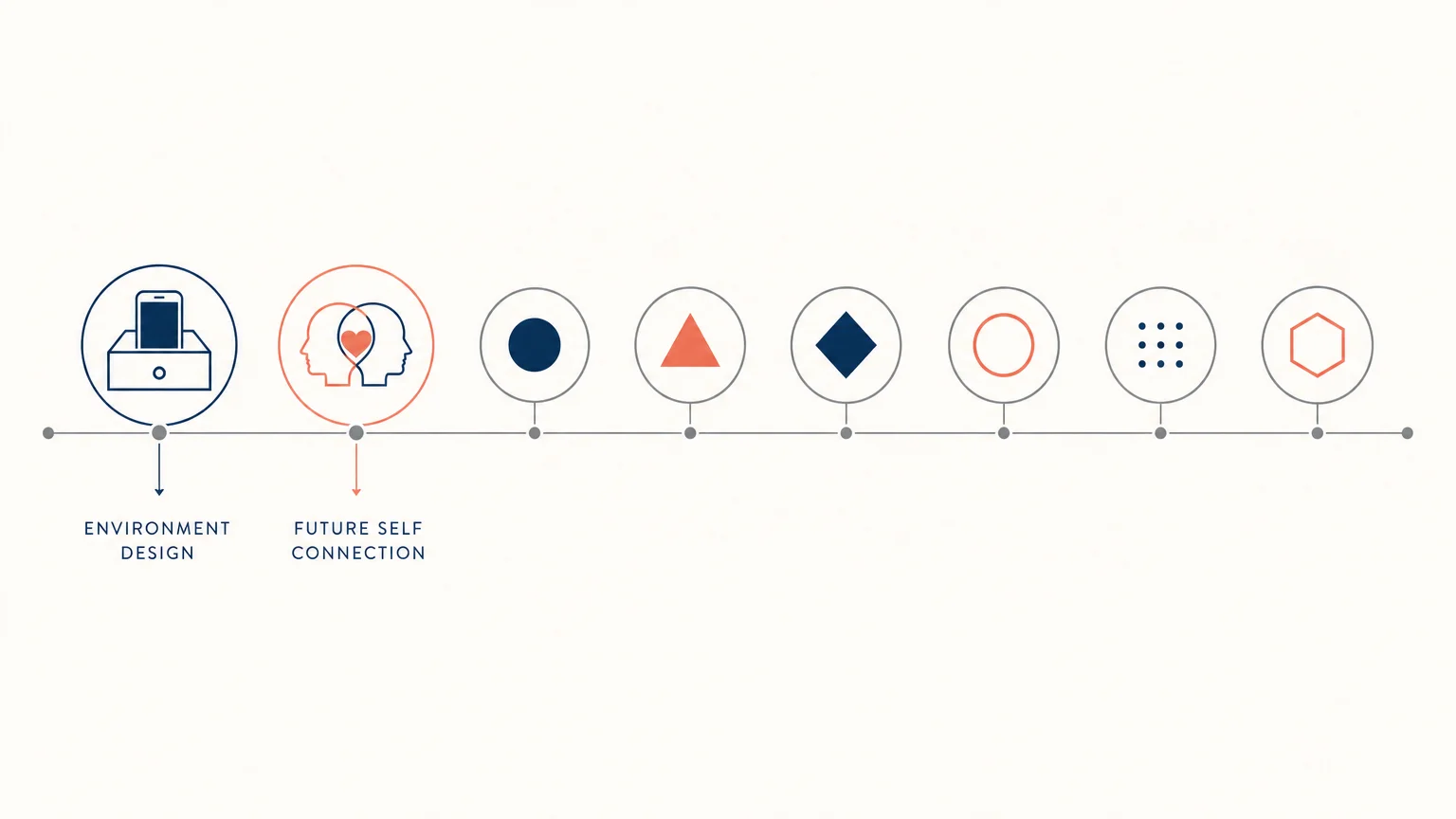
1. You Design Your Environment Proactively
Highly disciplined people do not possess supernatural resistance to temptation; they simply encounter fewer temptations. In a revealing experience-sampling study led by psychologist Dr. Wilhelm Hofmann, researchers tracked the daily desires of over 200 adults. The findings were deeply illuminating: those who reported the highest levels of self-control actually spent significantly less time actively resisting their desires. Why? Because they restructure their environments to avoid the psychological battle altogether.
You exhibit this sign when you put your phone in another room to focus on a difficult work task, prep your meals on Sunday afternoon, or set up automatic transfers to your savings account. You understand that your environment dictates your behavior far more efficiently than your fleeting intentions do. By removing the immediate option to make a poor choice, you conserve your mental energy for the tasks that actually require critical thinking.
2. You Connect Emotionally With Your Future Self
When faced with a choice between instant gratification and a long-term goal, self-disciplined people advocate fiercely for their future selves. Research by psychologist Dr. Hal Hershfield utilizing functional magnetic resonance imaging (fMRI) found that for many individuals, the brain processes thinking about their “future self” using the exact same neural pathways it uses when thinking about a complete stranger. This neural disconnect explains why it is so remarkably easy to procrastinate—we unconsciously feel like we are pushing the burden onto someone else.
If you routinely make choices that benefit your future well-being—like stretching after a run, going to sleep at a reasonable hour, or contributing to retirement accounts—you have successfully bridged this psychological gap. You treat your future self like a beloved friend who deserves care and preparation, not a stranger left to handle your messes.
3. You Practice Radical Self-Compassion After Setbacks
Contrary to the pervasive belief that a harsh inner critic keeps you in line, brutal self-judgment actually derails long-term progress. If you are truly self-disciplined, you do not spiral into deep shame after skipping a workout or overspending your budget. Instead, you utilize self-compassion. Dr. Kristin Neff’s pioneering psychological research demonstrates that self-compassion significantly enhances emotional resilience; responding to your own failures with kindness rather than judgment prevents emotional spirals and gets you back on track much faster.
“Shame corrodes the very part of us that believes we are capable of change.” — Brené Brown, PhD, MSW
When you encounter a setback, you analyze the breakdown in your system rather than attacking your character. You recognize that one imperfect day does not erase months of consistency.
4. You Rely on Systems Over Raw Motivation
Motivation is an emotion—and human emotions are notoriously fickle. According to the American Psychological Association’s recurring Stress in America surveys, a lack of willpower is frequently cited by a significant portion of adults as their primary barrier to making positive life changes. Self-disciplined people know this psychological trap well. Instead of waking up and hoping to feel motivated, you build robust systems.
You establish a specific time, place, and routine for your habits. If you plan to go to the gym, your bag is packed by the door the night before. If you need to have a difficult conversation with your partner, you schedule a dedicated time rather than waiting for the “perfect moment” to strike. You trust your systems to carry you through the days when your motivation inevitably flatlines.
5. You Embrace Short-Term Discomfort for Long-Term Gain
You recognize that meaningful growth requires psychological and emotional friction. Whether it is navigating the awkward beginner phase of learning a new language, pushing through the final set of an exercise, or sitting with the visceral urge to check social media without acting on it, you can tolerate discomfort.
Crucially, you do not view this discomfort as a red flag signaling you to stop. You view it as the mandatory price of admission for a fulfilling life. You have cultivated the psychological endurance to stay in the room—both literally and metaphorically—when things get challenging.
6. You Distinguish Between Quitting and Pivoting
Self-discipline is not blind stubbornness. There is absolutely no virtue in clinging to a career path, a relationship, or a personal goal that actively harms your well-being just to prove you can finish it. A highly disciplined person continually assesses their trajectory.
You know how to pivot gracefully when a strategy is no longer viable, and you never confuse this strategic shift with “giving up.” Walking away from an unfulfilling dynamic requires immense self-control because it forces you to face the uncertainty of starting over. The ability to cut your losses and redirect your energy is a hallmark of mature self-regulation.
7. You Regulate Your Emotions Before Reacting
At its core, self-discipline is a masterclass in emotion regulation. When you feel overwhelmed, angry, or intensely anxious, you have developed the ability to hit the “pause” button before responding. This is particularly vital in interpersonal relationships. By managing your internal state, you prevent the impulsive reactions that sabotage trust and communication.
“When you are flooded, you are incapable of taking in new information or listening to what your partner is saying.” — John Gottman, PhD
Following the principles outlined by The Gottman Institute, a disciplined partner recognizes when their heart rate is spiking during an argument. Instead of lashing out, you take a deep breath, call for a temporary timeout, and self-soothe before returning to the conversation. Your emotional discipline protects the people you love.
8. You Say “No” Without Experiencing Crushing Guilt
You fundamentally understand that every time you say “yes” to something, you are inadvertently saying “no” to something else. Self-disciplined people operate with incredibly clear boundaries. If you can decline social invitations, refuse extra projects at work that exceed your bandwidth, or turn down unreasonable requests without falling into an anxiety-induced guilt spiral, you are exercising profound self-discipline.
You protect your time and emotional energy because you recognize them as finite resources. Saying “no” is not selfish; it is a mechanism of self-preservation that allows you to show up fully for the commitments you genuinely care about.

Willpower vs. True Self-Discipline
To further clarify how sustainable self-discipline operates in daily life, consider how it differs from the traditional, brute-force concept of willpower.
| Psychological Trait | Willpower (The Brute-Force Approach) | Self-Discipline (The Systems Approach) |
|---|---|---|
| Energy Source | High emotional and cognitive effort; fighting urges | Established habits, routines, and environmental design |
| Sustainability | Exhaustible; depletes rapidly as the day goes on | Renewable; strengthens as routines become automatic |
| Response to Failure | Self-punishment, shame, and abandoning the goal | Curiosity, systemic adjustment, and self-compassion |
| Emotional State | Constant tension and internal conflict | Regulated, grounded, and focused on the future self |

Signs It’s Time to Talk to a Therapist
While self-discipline is a healthy psychological skill, struggles with habit formation or excessive rigidity can sometimes point to underlying clinical issues. It is crucial to recognize when a structural approach to life stops serving you and starts harming you. According to resources from the National Institute of Mental Health, consider seeking professional support if you experience any of the following:
- Your “discipline” turns into rigid perfectionism. If deviating from your routine causes severe panic, or if your strict rules begin mimicking obsessive-compulsive tendencies, your discipline may be a mask for underlying anxiety.
- You experience chronic executive dysfunction. If you continuously try to build habits but find yourself paralyzed, this is not a character flaw. It is a common symptom of ADHD, depression, or severe burnout. A therapist can provide neurodivergent-friendly strategies that do not rely on neurotypical models of discipline.
- You punish yourself for resting. If your pursuit of productivity makes it psychologically impossible to relax without overwhelming guilt, you may be tethering your entire self-worth to your output.
- You are experiencing burnout. Pushing through exhaustion in the name of “discipline” will eventually break your physical and mental health. A professional can help you rebuild a sustainable relationship with work and rest.
Frequently Asked Questions
Is self-discipline a genetic trait or a learned skill?
While temperament and genetics play a minor role in impulse control, self-discipline is primarily a learned behavioral skill. It functions more like a muscle that strengthens with consistent, manageable practice rather than a fixed personality trait you are simply born with.
Can past trauma affect my ability to be self-disciplined?
Absolutely. Trauma profoundly impacts the nervous system, often keeping the brain in a state of hypervigilance or survival mode. When your brain is prioritizing basic emotional and physical safety, higher-order functions like long-term planning and delayed gratification become significantly more difficult to access. Healing the nervous system is often the first step toward building sustainable routines.
Why do I have excellent discipline at work but absolutely none at home?
This is a common phenomenon known as domain-specific self-control. Work environments provide external structure, clear deadlines, and immediate social accountability. At home, those external guardrails disappear, forcing you to rely entirely on internal regulation. Additionally, if your job drains all your cognitive energy during the day, you simply have no emotional bandwidth left to make disciplined choices in the evening.
Nurturing Your Self-Discipline System
Building a self-disciplined life is not an overnight transformation; it is a gradual shift in how you navigate your daily environment and your internal emotional landscape. If you recognized only a few of these signs within yourself, view that as an invitation rather than a deficit. Start incredibly small. Choose one specific area of your life—perhaps the way you manage your morning routine or how you respond to frustration during an argument—and focus entirely on designing a better system to support that single goal.
Remember that the ultimate goal of self-discipline is not to turn yourself into a highly optimized machine. The goal is to build a life of intention, where your daily actions naturally align with your deepest values. Trust the systems you build, speak to yourself with profound kindness when you stumble, and allow your capacity for growth to surprise you.
This article provides general educational information about psychology and relationships. It is not a substitute for professional therapy or medical advice. Everyone’s situation is unique—if you’re struggling, please reach out to a licensed mental health professional.
Last updated: June 2026. Psychology research evolves continuously—verify current findings with professional sources.






Leave a Reply