Psychology Diary

The First Step Toward Change Is Awareness

  • Home
  • Relationships
  • Mental Health
  • Expert Tips
  • Life
  • Family
  • Marriage

5 Subtle Signs of Paranoia After 60, According to Psychiatrists

July 14, 2023 · Mental Health
neighbor is hiding from you paranoia after 60
Photo by Nicoleta Ionescu from Shutterstock

They have deep trust issues and will test the sh*t out of you

Paranoid people can’t fully trust you. Their paranoia is solely based on the fact that other people are DEFINITELY out to get them. Hence, they find it awfully hard to trust people, which doesn’t really strike as a surprise, especially since they see the world as full of threats.

That’s how paranoia after 60 works, and it only gets worse. They put people through tests to see if they’re really telling the truth or just to confirm if one of their suspicions is accurate. Those texts are extremely problematic for two main reasons. First, they make a relationship feel unsafe and unhealthy.

Truth be told, nobody likes the prospect of being tested and mistrusted, so while their intentions are somehow understandable, the means by which they act are completely exaggerated. It’s simple: if my friend doesn’t trust me and is always testing me, I won’t feel good about the friendship.

Secondly, the tests are endless. You think they might stop somewhere once they realize the threats are just in their minds. But generally, that never happens. They never manage to feel safe. A test simply leads to another one and then to another one. Their minds are constantly telling them a threat is just around the corner and that they must be prepared at all times.

Pages: 1 2 3 4 5 6

Share this article

Facebook Twitter Pinterest LinkedIn Email

Leave a Reply Cancel reply

Your email address will not be published. Required fields are marked *

Search

Latest Posts

  • An unposed photo of a man sitting at a kitchen table looking slightly guarded during a quiet, intimate conversation. 8 Body Language Clusters That Indicate Someone Is Holding Back the Truth
  • An ink and watercolor illustration of a morning coffee cup on a wooden table with a gentle ripple, symbolizing subtle early changes. 7 Subtle Signs of Parkinson's Disease in the Early Stages
  • An editorial illustration of a silhouette standing on a fractured path, with a hand gently unravelling a thread from its shoulder. 8 Hidden Signs of Emotional Manipulation in a Relationship
  • Gouache illustration of a couple walking hand-in-hand through a vibrant landscape of overlapping colorful plants and abstract shapes. The 5 Love Languages Revisited: What Really Keeps Couples Close
  • A watercolor illustration of two people on an uneven seesaw, symbolizing a lopsided, selfish relationship dynamic. 10 Signs Someone May Be More Selfish Than They Realize
  • An editorial ink and watercolor illustration of a lonely figure fading into soft gray washes, symbolizing emotional vulnerability. 10 Warning Signs You May Be in an Emotionally Abusive Relationship
  • A couple sits on opposite ends of a long sofa in a dimly lit living room, staring away from each other with a large physical gap between the 10 Signs You're No Longer Connected to Your Partner
  • Editorial ink and watercolor illustration of a person wearing a suit of mirrors as protective armor, symbolizing defensive ego preservation. 9 Signs You Struggle to Admit Mistakes
  • A conceptual mixed-media collage showing dark, chaotic textures emerging from a clean paper silhouette, symbolizing hidden guilt leaking out 7 Signs Someone May Feel Guilty About Something
  • An editorial illustration of a person sitting at a table with a root system growing from their chair into the floorboards. The Mental Symptoms Many People Ignore Until It's Too Late

Newsletter

Get the latest posts delivered to your inbox.

Related Articles

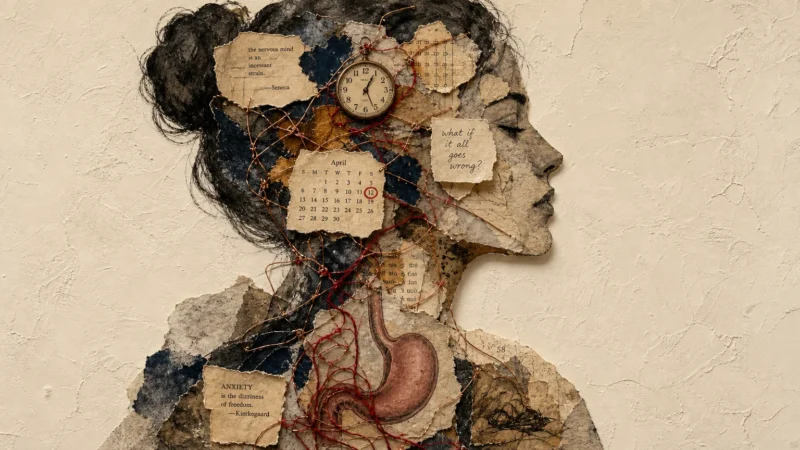
An artistic mixed-media collage silhouette of a person filled with tangled threads, a clock dial, and watercolor shapes on textured paper.

9 Everyday Symptoms That May Be Linked to Anxiety

Discover the hidden, everyday signs of an anxiety disorder—from chronic procrastination to digestive distress—and learn…

Read More →
burnout, causes and symptoms

Burnout: Causes and Symptoms explained by Psychologists

What is burnout? Causes and symptoms are presented and explained by psychologists in the following…

Read More →
men become cranky as they age

Why Do Men Become Cranky as They Age? 9 Psychological Reasons

The psychological explanation behind “Why do men become cranky as they age”  The phrase “grumpy…

Read More →
reasons you are not sleeping well

5 Shocking Reasons You Might Be Struggling with Sleep

These are the most common reasons you are not sleeping well Not getting enough sleep…

Read More →
True Crime

9 Reasons Why We Like True Crime

Isn’t it crazy that we love true crime? Why do life-threatening situations entertain us? We…

Read More →
A sophisticated woman in her 60s looking out a window in a bright, modern home.

7 Habits That Secretly Destroy Your Mental Health After 60

Are your daily habits silently harming your mental health? Discover 7 hidden behaviors, from dehydration…

Read More →
Mood Swings

Mood Swings: Normal or Not?…and 4 Simple Ways to Dominate Them

Are those mood swings you’ve been having normal? The name may be simple enough, but…

Read More →
mental health

5 Common Causes of PTSD You Should Know

#2 Birth Trauma Postnatal post-traumatic stress disorder (PTSD) is a form of anxiety disorder. It…

Read More →
midlife crisis

7 Alarming Signs You’re Going Through a Midlife Crisis

What is a midlife crisis, and how can you manage it?  You get to “that…

Read More →

Psychology Diary

The First Step Toward Change Is Awareness

Inedit Agency S.R.L.
Bucharest, Romania

contact@psychologydiary.com

Explore

  • About Us
  • Advertiser Disclosure
  • Contact Us
  • Disclaimer
  • Do not sell my personal information
  • Editorial Policy
  • Frequently Asked Questions
  • Privacy Policy
  • Terms and Conditions
  • Subscribe
  • Unsubscribe

Categories

  • Expert Tips
  • Family
  • Life
  • Marriage
  • Mental Health

© 2026 Psychology Diary. All rights reserved.