

Spotting the difference between a supportive friend and a secretly jealous one saves you from emotional burnout and misplaced trust. When a close friend harbors hidden envy, their resentment rarely manifests as an outright confrontation; instead, it bleeds into your dynamic through subtle, confusing microaggressions that leave you questioning reality. Psychological research on adult friendships suggests covert jealousy often masks profound personal insecurities rather than genuine malice toward you. By learning to decode these quiet behaviors—such as backhanded compliments, sudden distancing during your successes, or hyperfixation on your setbacks—you gain the clarity needed to protect your peace. Recognizing these seven specific behavioral patterns empowers you to address toxic dynamics before they permanently damage your emotional health.
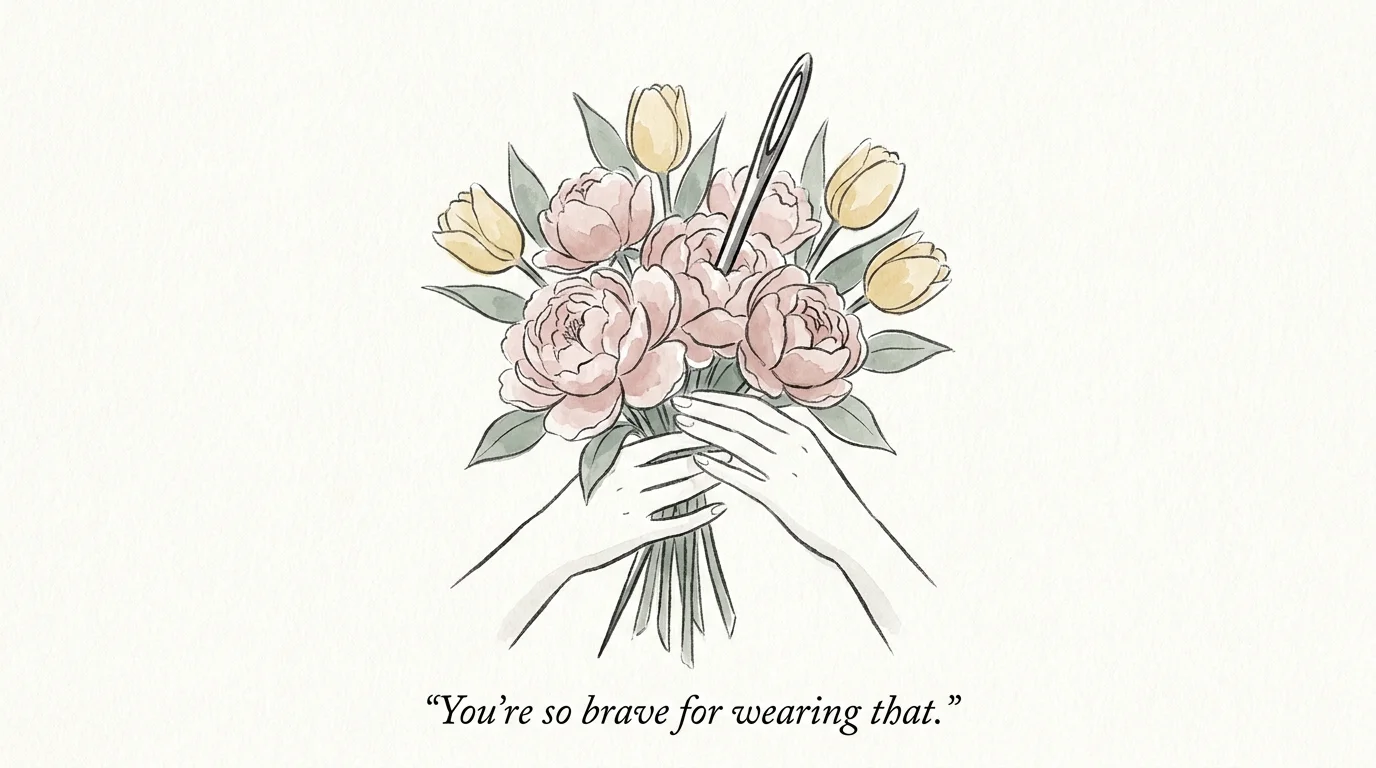
1. The Backhanded Compliment Disguised as Support
Jealousy thrives in the gray area between kindness and critique. A friend harboring hidden envy will rarely insult you directly; instead, they deliver praise with a subtle sting designed to undercut your confidence. Psychologists refer to this behavior as passive-aggressive communication, an unconscious defense mechanism that allows someone to express hostility while maintaining plausible deniability.
You might recognize this pattern when you share exciting news and receive a response that feels strangely deflating. If you buy a new outfit, they might say, “You are so brave for wearing something so loud.” If you secure a new job, they might remark, “It is amazing you got hired there considering your lack of experience.” These statements are carefully constructed to resemble support while simultaneously reminding you of a perceived flaw.
Actionable Insight: When confronted with a backhanded compliment, politely strip away the disguise. Ask a clarifying question such as, “What exactly did you mean by that?” This forces the person to either explain their subtle insult or retreat into genuine support, disrupting the passive-aggressive cycle.

2. Downplaying Your Achievements
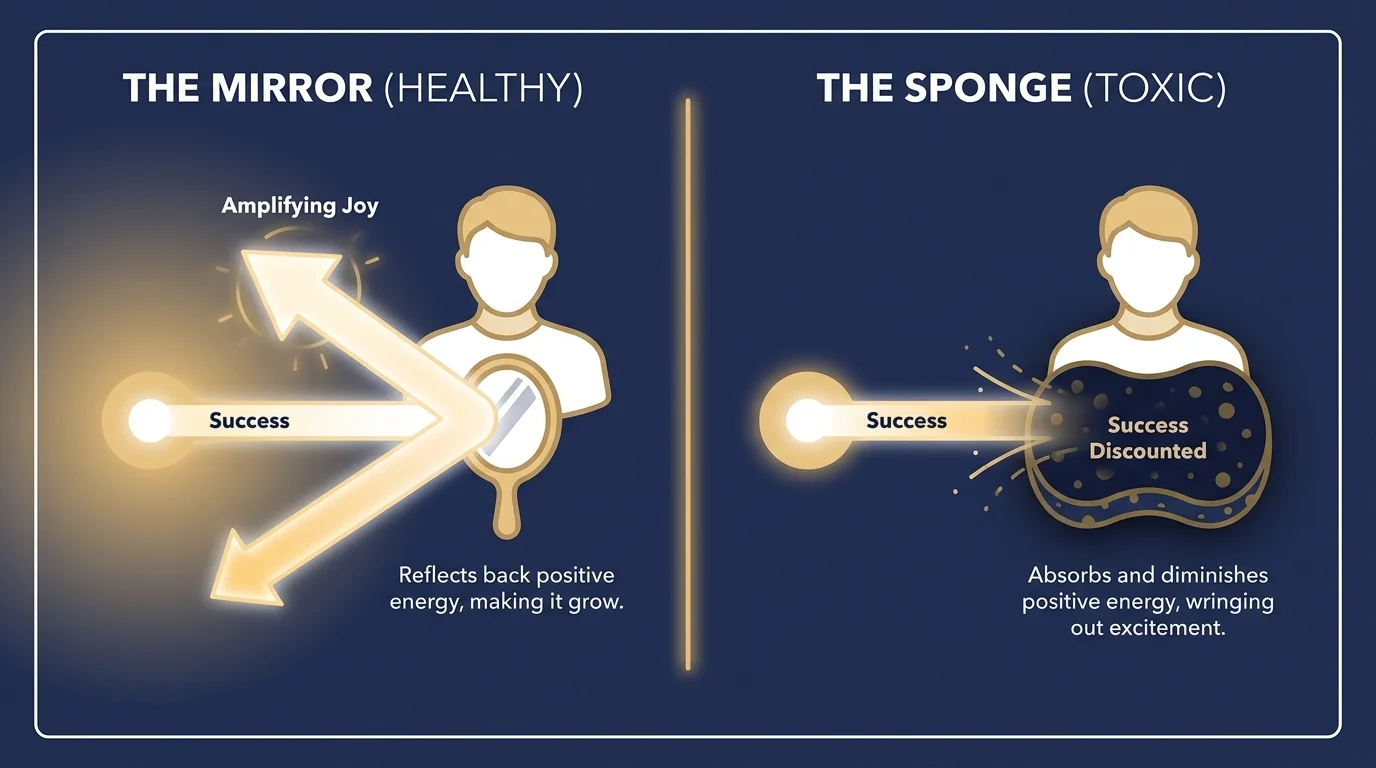
When you share good news, a healthy friend acts as a mirror, amplifying your joy and validating your hard work. A secretly jealous friend acts as a sponge, absorbing your excitement and wringing it out until your accomplishment feels insignificant. They utilize discounting tactics to level the playing field, making your success easier for their ego to digest.
If you finally earn a degree or certification, they might casually mention how easy the coursework is known to be. If you buy a new car, they will immediately bring up a mutual acquaintance who just purchased a more expensive model. By attributing your success to luck, timing, or external circumstances, they shield themselves from the uncomfortable feeling of upward social comparison.
Actionable Insight: Refuse to shrink your success to accommodate someone else’s insecurity. When a friend minimizes your achievement, firmly anchor yourself in your reality. Respond with, “I worked incredibly hard for this, and I am proud of the outcome,” establishing a boundary that your joy is not up for debate.

3. The Unspoken Competition
A true friendship offers a safe harbor from the pressures of the outside world, not a covert racetrack. Hidden jealousy frequently manifests as an endless, exhausting game of one-upmanship. Every interaction begins to feel like a subtle transaction of status, where your milestones trigger an immediate need for them to prove their own worth.
A 2024 study published in the journal Evolutionary Psychology by Vaillancourt and colleagues highlighted how social media significantly exacerbates this competitive dynamic. The research indicates that individuals prone to friendship jealousy frequently monitor their peers online, leading to heightened internalizing symptoms like anxiety when they feel outpaced. If you mention starting a new fitness routine, the jealous friend suddenly announces they are training for a marathon. Their competitive reflex is an attempt to restore their self-worth by ensuring they never fall behind you.
Actionable Insight: Step off the track entirely. When they attempt to one-up your news, offer genuine validation without escalating the conversation. Say, “That sounds like a wonderful goal for you,” and intentionally change the subject. Refusing to engage in the silent race starves the jealousy of the momentum it needs to survive.

4. Sudden Distance During Your Highs
Pay close attention to who claps when you win. One of the most painful realizations in a friendship is noticing that a close confidant completely vanishes during your moments of triumph. While the “fair-weather friend” is known for disappearing during your struggles, the secretly envious friend does the exact opposite—they ghost you during your peaks.
They may take days to reply to a text about your recent engagement, or suddenly claim they are entirely “swamped with work” right when you want to celebrate a major promotion. This withdrawal occurs because your success forces them to confront their own perceived stagnation. Being near your joy is emotionally taxing for them, so they distance themselves to soothe their own inadequacy.
Actionable Insight: Allow them to take the space they need, but do not internalize their absence. Avoid apologizing for your happiness or minimizing your life events to coax them back into the relationship. Notice if this distancing happens repeatedly; a pattern of absence during your highs is a clear indicator of deep-rooted envy.
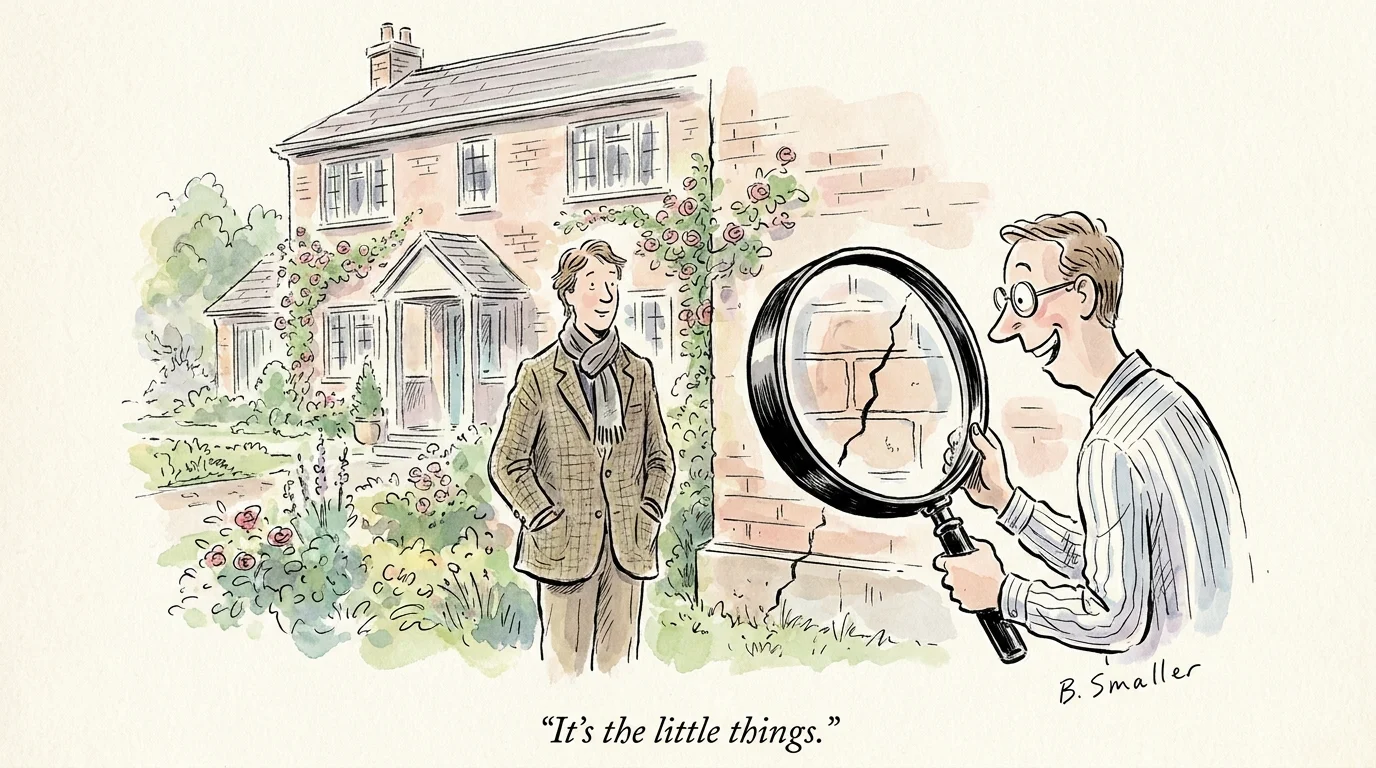
5. Focusing Exclusively on Your Failures
Conversely, a secretly jealous friend will often rush to your side the moment you experience a crisis. While their immediate presence mimics genuine empathy, their comfort often carries a quiet undertone of relief. They become fixated on the negative details of your breakup, your financial struggles, or your career setbacks, prolonging conversations about your misery.
In psychology, this is linked to downward social comparison. Seeing you struggle temporarily elevates their own self-esteem, making them feel superior or desperately needed. They offer an attentive ear, but their advice often subtly encourages you to stay stuck or dwell on your victimization rather than helping you find actionable solutions.
Actionable Insight: Set strict boundaries around the emotional energy you share. If you notice a friend only lights up when you are discussing your hardships, deliberately pivot the conversation to something neutral or positive. Their reaction to your emotional recovery will tell you everything you need to know about their underlying motives.

6. Mimicking Your Life Choices
While imitation is famously called the sincerest form of flattery, compulsive mimicking often serves as a red flag for hidden jealousy. Envy is not merely about resenting what you have; it often involves a deep, unspoken desire to adopt your identity. A friend struggling with low self-worth might begin bridging the gap between your life and theirs by slowly absorbing your traits.
You may notice them buying the exact same furniture, adopting your highly specific hobbies, mimicking your professional aspirations, or even subtly altering their vocabulary to match yours. This behavior stems from identity diffusion—a lack of a solid sense of self. Because they admire your life but feel incapable of forging their own unique path, they attempt to borrow yours.
Actionable Insight: Differentiate between normal mutual influence and boundary-crossing imitation. If their mimicking feels intrusive, gently protect your individuality. Avoid over-explaining your specific plans or aesthetic choices, and encourage them to explore passions that align with their own distinct personality.
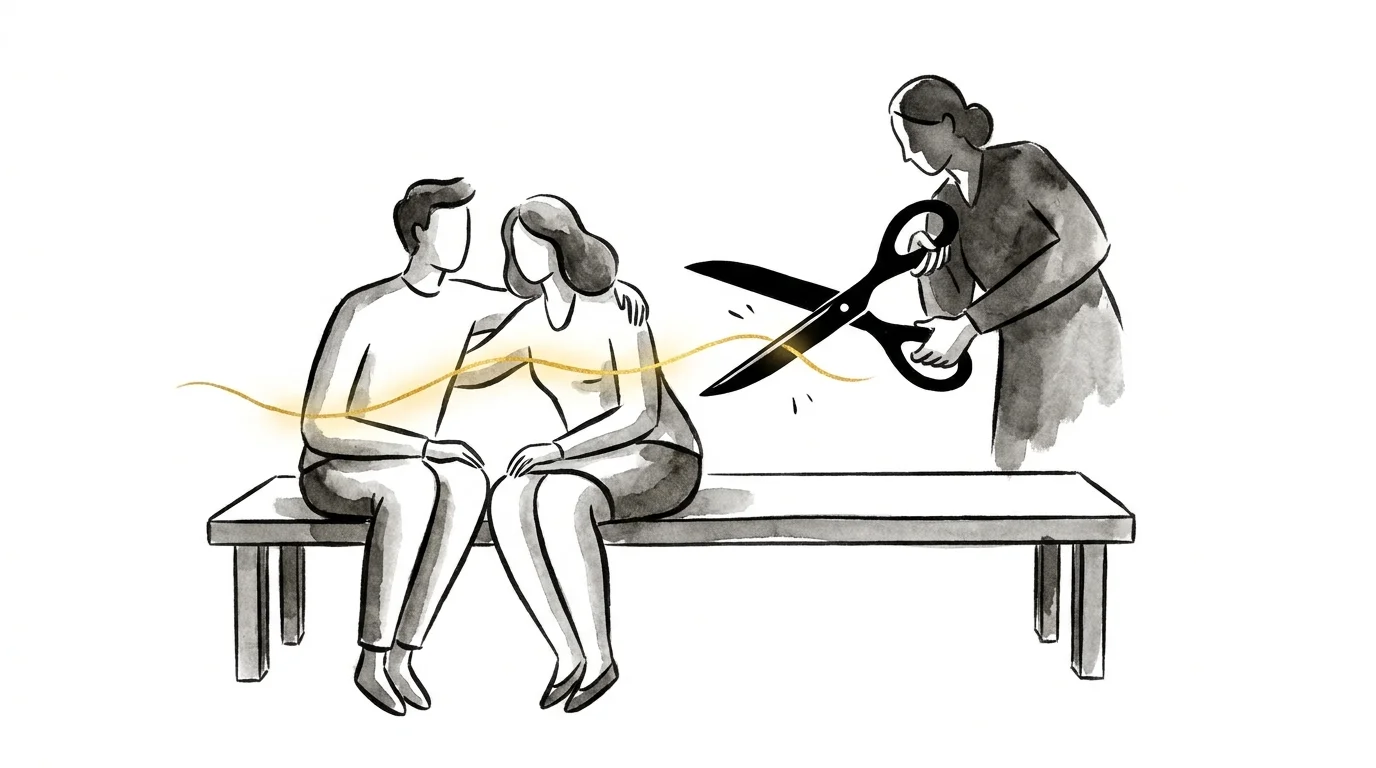
7. Undermining Your Other Relationships
Jealousy is fundamentally rooted in the fear of replacement. According to a 2021 study published in the Journal of Personality and Social Psychology, researchers found that friendship jealousy actually evolved as a psychological tool to protect valuable relationships against third-party threats. However, when this natural instinct becomes maladaptive, a friend will systematically attempt to isolate you.
This friend might plant seeds of doubt about a new romantic partner you are excited about, or make snide, dismissive comments regarding your other social circles. They utilize emotional manipulation—such as guilt-tripping you for spending time with others—to ensure they remain the primary focus of your attention. By undermining your external support system, they secure their own position in your life.
Actionable Insight: Reassure the friend of their importance in your life, but firmly shut down baseless gossip about your other connections. State clearly, “I value our friendship immensely, but I also enjoy my time with others, and I need you to respect that.”
“The quality of your life ultimately depends on the quality of your relationships.” — Esther Perel, Psychotherapist and Author
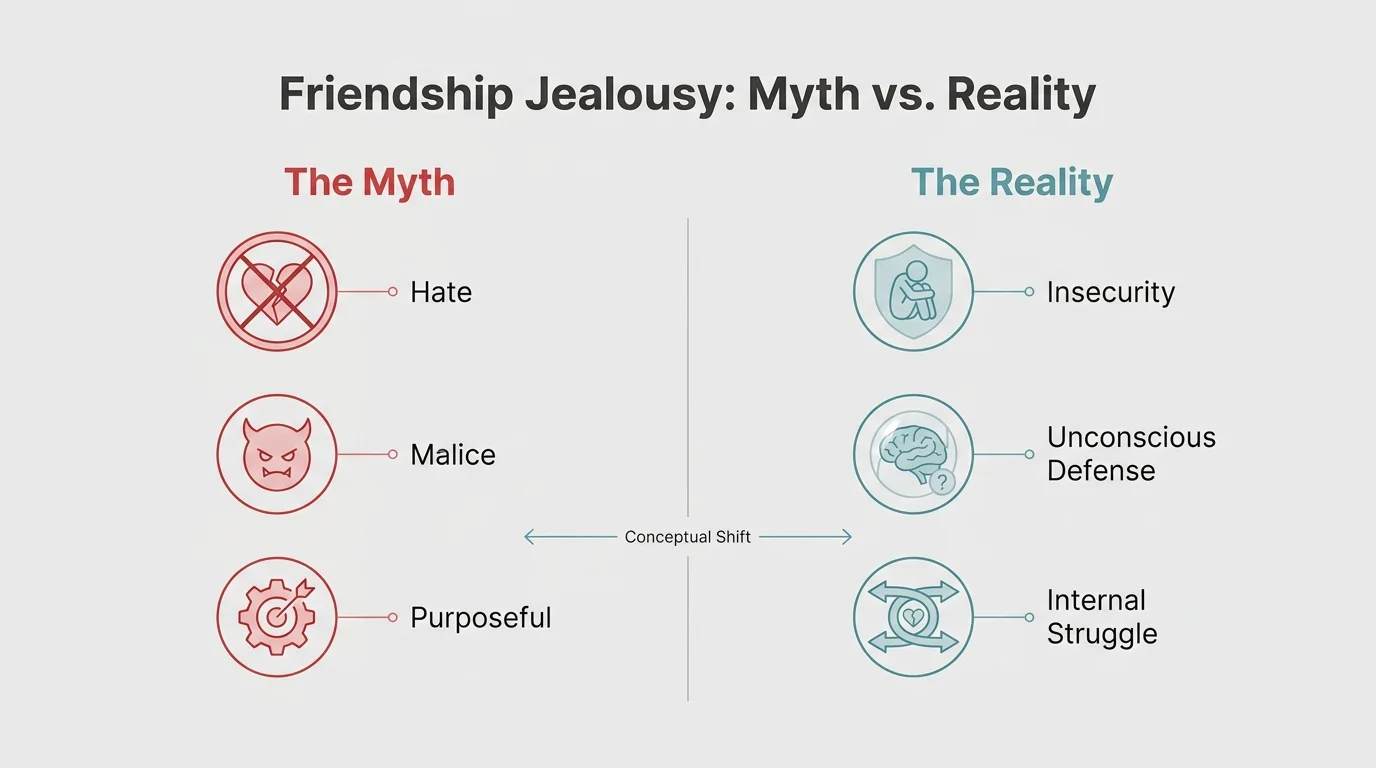
Myths Worth Debunking About Friendship Jealousy
To navigate these complex dynamics, it is crucial to separate psychological realities from common cultural myths regarding friendship jealousy.
- Myth: Jealousy and envy are the exact same emotion.
Truth: While used interchangeably, they are psychologically distinct. Jealousy is the fear of losing a connection you already possess (e.g., fearing your friend will replace you). Envy is wanting what someone else has (e.g., desiring your friend’s career or relationship). Covertly toxic behaviors usually stem from unaddressed envy. - Myth: Experiencing jealousy makes someone a bad friend.
Truth: Jealousy is a normal human emotion. Healthy friends acknowledge their feelings, process them independently, and communicate without punishing the other person. It only becomes toxic when the feeling translates into sabotage or manipulation. - Myth: Toxic friendships are a rare anomaly.
Truth: Difficult social dynamics are incredibly common. According to a comprehensive survey featured by TODAY and SELF magazine, 84% of women and 74% of men report having had a toxic friend at some point in their lives. You are not overreacting by addressing these uncomfortable patterns.
Comparing Healthy Support vs. Toxic Envy
Understanding the difference between a secure bond and an envious dynamic helps you evaluate the safety of your friendships. Use this comparison to assess the reality of your social circle.
| Behavioral Trait | Healthy Support | Toxic Envy |
|---|---|---|
| Response to Success | Amplifies your joy and celebrates your wins enthusiastically. | Minimizes your achievements, changes the subject, or pulls away. |
| Social Boundaries | Encourages your growth and respects your new relationships. | Undermines your other friendships and acts highly possessive. |
| Communication Style | Offers constructive, compassionate feedback when asked. | Delivers backhanded compliments designed to quietly sting. |
| Reliability | Provides consistent support during both your highs and lows. | Only shows up when you are struggling or experiencing failure. |

Signs It’s Time to Talk to a Therapist
Tolerating covert jealousy takes a profound toll on your nervous system. A 2022 health psychology survey revealed that adults reporting toxic friendships were 30% more likely to experience symptoms of anxiety and 25% more likely to report chronic fatigue. If a friendship is damaging your mental health, professional guidance from an American Psychological Association (APA) certified therapist can provide essential tools for boundary-setting. Consider seeking support if:
- You constantly walk on eggshells to avoid triggering your friend’s insecurities.
- You find yourself actively hiding your successes, milestones, or happiness to keep the peace.
- You experience physical anxiety symptoms—such as a racing heart or stomach pain—before meeting this friend.
- You feel emotionally depleted, doubting your own reality and self-worth after interacting with them.
If you are struggling with the emotional fallout of a toxic relationship, exploring resources from the National Institute of Mental Health (NIMH) or utilizing Psychology Today’s therapist directory can be a powerful first step toward healing.
Frequently Asked Questions
What causes someone to be jealous of their friend?
Friendship jealousy typically stems from deep-seated personal insecurities rather than genuine malice. It usually arises when a friend’s success triggers feelings of inadequacy, prompts upward social comparison, or activates an anxious attachment style characterized by a fear of being abandoned or replaced.
How do I gently confront a jealous friend?
Approach the situation with empathy rather than accusation. Use “I” statements to express how their specific behaviors impact you. For example, say, “I felt hurt when my promotion was minimized yesterday,” rather than, “You are always jealous of me.” Focus on the health of the relationship and observe whether they are willing to take accountability.
Can a deeply jealous friendship be saved?
Yes, but survival requires mutual effort. The friendship can only be repaired if the jealous friend is willing to acknowledge their insecurities without projecting them onto you. Both parties must establish clear, respectful boundaries moving forward, prioritizing open communication over passive aggression.
Moving Forward
Releasing the weight of a secretly jealous friendship is an act of profound self-care. It is entirely natural to grieve the realization that someone you trust is unable to support your growth. However, recognizing these seven covert behaviors allows you to stop internalizing their subtle critiques. You have the right to curate a social circle that celebrates your light rather than trying to dim it. As you practice setting boundaries, you create space for authentic connections rooted in mutual respect and genuine joy.
“True belonging doesn’t require you to change who you are; it requires you to be who you are.” — Brené Brown, PhD, MSW
This is educational content based on psychological research and general principles. Individual experiences vary significantly. For personalized guidance, consult a licensed therapist, psychologist, or counselor.
Last updated: May 2026. Psychology research evolves continuously—verify current findings with professional sources.








Leave a Reply