Psychology Diary

The First Step Toward Change Is Awareness

  • Home
  • Relationships
  • Mental Health
  • Expert Tips
  • Life
  • Family
  • Marriage

The Power of Forgiveness: How Letting Go Can Improve Your Mental Health

August 31, 2025 · Mental Health

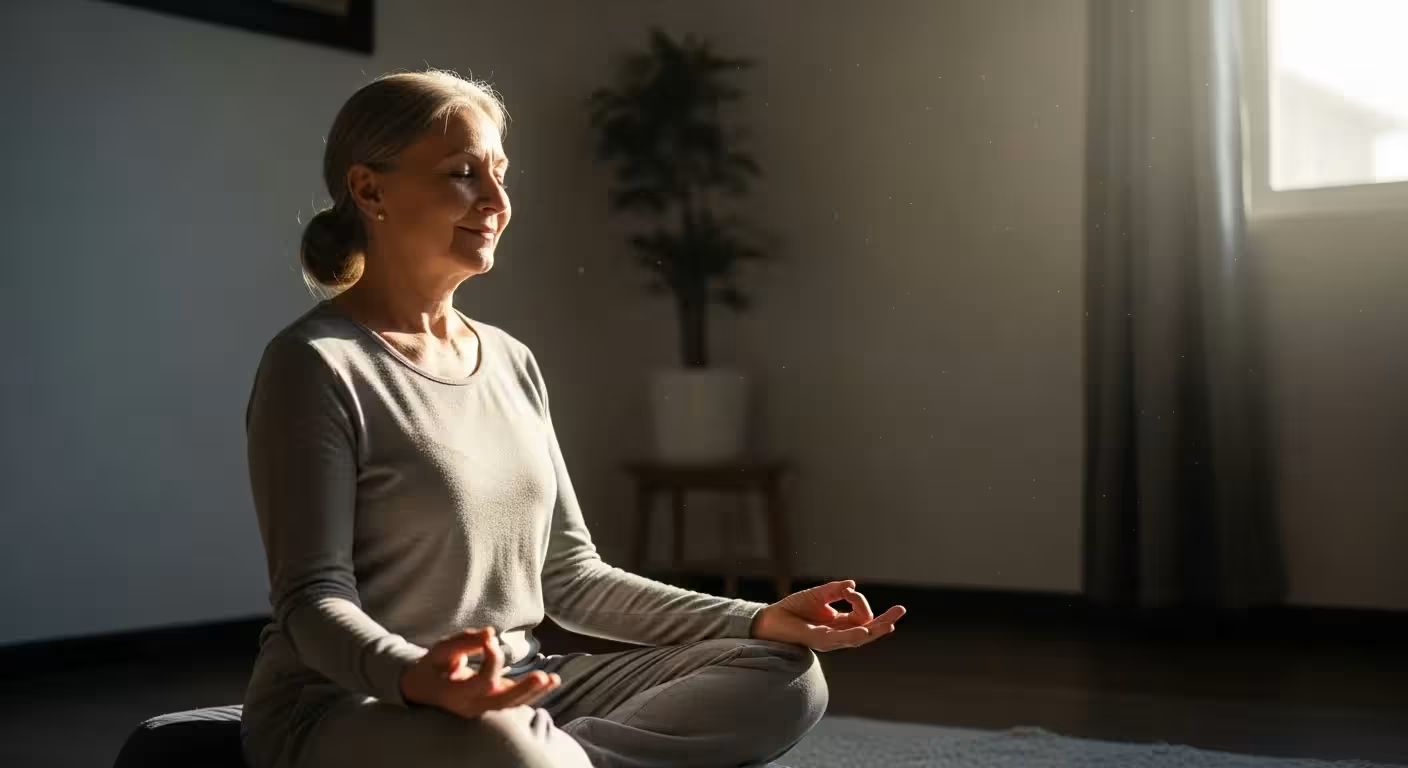
Woman meditating peacefully in a sunlit room.

Life is a journey filled with complex relationships and experiences. Along the way, it is nearly inevitable that we will be hurt by the actions or words of others. Holding onto that pain, anger, and resentment can feel like carrying a heavy weight, one that colors our days and clouds our thoughts. This burden can impact our emotional health, strain our relationships, and even take a toll on our physical well-being. The idea of forgiveness can seem difficult, perhaps even impossible, depending on the depth of the wound. But what if letting go was not about the other person, but about freeing yourself?

Forgiveness is one of the most misunderstood concepts in mental wellness. It is not a simple, one-time decision but a gradual, internal process. It is an active choice to release the grip that resentment has on your life, allowing you to move forward with greater peace and purpose. The psychological benefits of forgiving someone are significant, offering a path toward improved mental health and a more resilient spirit.

This article is a guide to understanding the power of forgiveness. We will explore what it truly means, how it can improve your mental wellness, and provide practical, evidence-aware steps you can take to begin the process. This is a journey of self-compassion and healing, and it is one you can start today. Please remember, this information is for educational purposes and is not a substitute for professional medical advice. If you are struggling, speaking with a therapist or your primary care doctor is a courageous first step.

Pages: 1 2 3 4 5 6 7 8 9 10

Share this article

Facebook Twitter Pinterest LinkedIn Email

Leave a Reply Cancel reply

Your email address will not be published. Required fields are marked *

Search

Latest Posts

  • A mixed media collage of a silhouette filled with torn paper and translucent layers, symbolizing the invisible nature of emotional neglect. 10 Traits of People Emotionally Neglected as Kids
  • A mixed-media collage showing a rigid, golden silhouette with cracks revealing a soft, watercolor interior, representing performative armor. 7 Behaviors People Mistake For Confidence But Aren’t
  • A woman sits alone at a kitchen table in dim evening light while her partner stands in the background, illustrating emotional distance. 9 Psychological Reasons Why People Stay in Unhappy Relationships
  • An illustration of a person using a prism to turn a chaotic blue wave into a clear spectrum of distinct colors. 10 Signs You Have Exceptionally High Emotional Intelligence
  • A mixed-media collage of an older person's profile filled with childhood drawings and school reports, representing deep-seated habits. 8 Childhood Habits That Still Secretly Shape Your Personality After 60
  • An abstract mixed-media piece showing bright yellow and orange splashes like a laugh, covering a dark, dense gray background. 7 Signs Someone Uses Humor To Avoid Serious Conversations
  • Two friends sitting at a kitchen table, unconsciously mirroring each other's posture by resting their chins on their hands. 7 Signs Someone Mirrors Your Personality Without Realizing It
  • A woman laughs at her phone while her friend sits beside her on a sofa with a forced, thin smile and envious eyes. 7 Friendship Behaviors That Reveal Hidden Jealousy
  • A mixed media collage showing a glowing smartphone screen inside a mirror frame, casting a shadow of a staged performance on a curtain. 7 Signs Someone Is Performing Kindness For Attention
  • A mixed media collage of a person in a theatrical spotlight while their partner sits in the shadows of a theater audience. 7 Signs Someone Loves Attention More Than They Love You

Newsletter

Get the latest posts delivered to your inbox.

Related Articles

Alzheimer's and Parkinson's

Alzheimer’s vs. Parkinson’s: 7 Differences and Symptoms You Must Know

Alzheimer’s and Parkinson’s: both of them are serious medical conditions. Let us clarify the main…

Read More →
mental illness

7 Early Signs of Mental Illness Only Seniors May Feel

What are the alarming signs of mental illness in seniors? Statistics show that more than…

Read More →
anger management

4 Anger Management Techniques Everyone Needs to Know

Have you been thinking about implementing some anger management in your life recently? When it…

Read More →
Narcissist psychopaths

Psychopaths Do These 9 Things

We can all agree that psychopathy is a widely debated topic as far as psychology…

Read More →
Alzheimer's

6 Surprising Truths About Alzheimer’s. Why Is Nobody Talking About Them?

This year in the U.S., it’s anticipated that there will be close to 500,000 new…

Read More →
antidepressants

6 Natural Antidepressants That Might Help With Depression

Did you know that there are a lot of natural antidepressants that could improve your…

Read More →

Misdiagnosed Mental Illnesses: 4 Shocking Ones Commonly Overlooked

Did you know about the most common misdiagnosed mental illnesses in our country? It is…

Read More →
Parkinson's

Parkinson’s Disease: 8 Early Warning Signs to Look For

Knowing the early signs of Parkinson’s disease is beneficial, so you know what to look…

Read More →
men become cranky as they age

Why Do Men Become Cranky as They Age? 9 Psychological Reasons

The psychological explanation behind “Why do men become cranky as they age”  The phrase “grumpy…

Read More →

Psychology Diary

The First Step Toward Change Is Awareness

Inedit Agency S.R.L.
Bucharest, Romania

contact@psychologydiary.com

Explore

  • About Us
  • Advertiser Disclosure
  • Contact Us
  • Disclaimer
  • Do not sell my personal information
  • Editorial Policy
  • Frequently Asked Questions
  • Privacy Policy
  • Terms and Conditions
  • Subscribe
  • Unsubscribe

Categories

  • Expert Tips
  • Family
  • Life
  • Marriage
  • Mental Health

© 2026 Psychology Diary. All rights reserved.