Psychology Diary

The First Step Toward Change Is Awareness

  • Home
  • Relationships
  • Mental Health
  • Expert Tips
  • Life
  • Family
  • Marriage

Grandparenting from a Psychologist’s Perspective: How to Build a Strong Bond

August 31, 2025 · Family

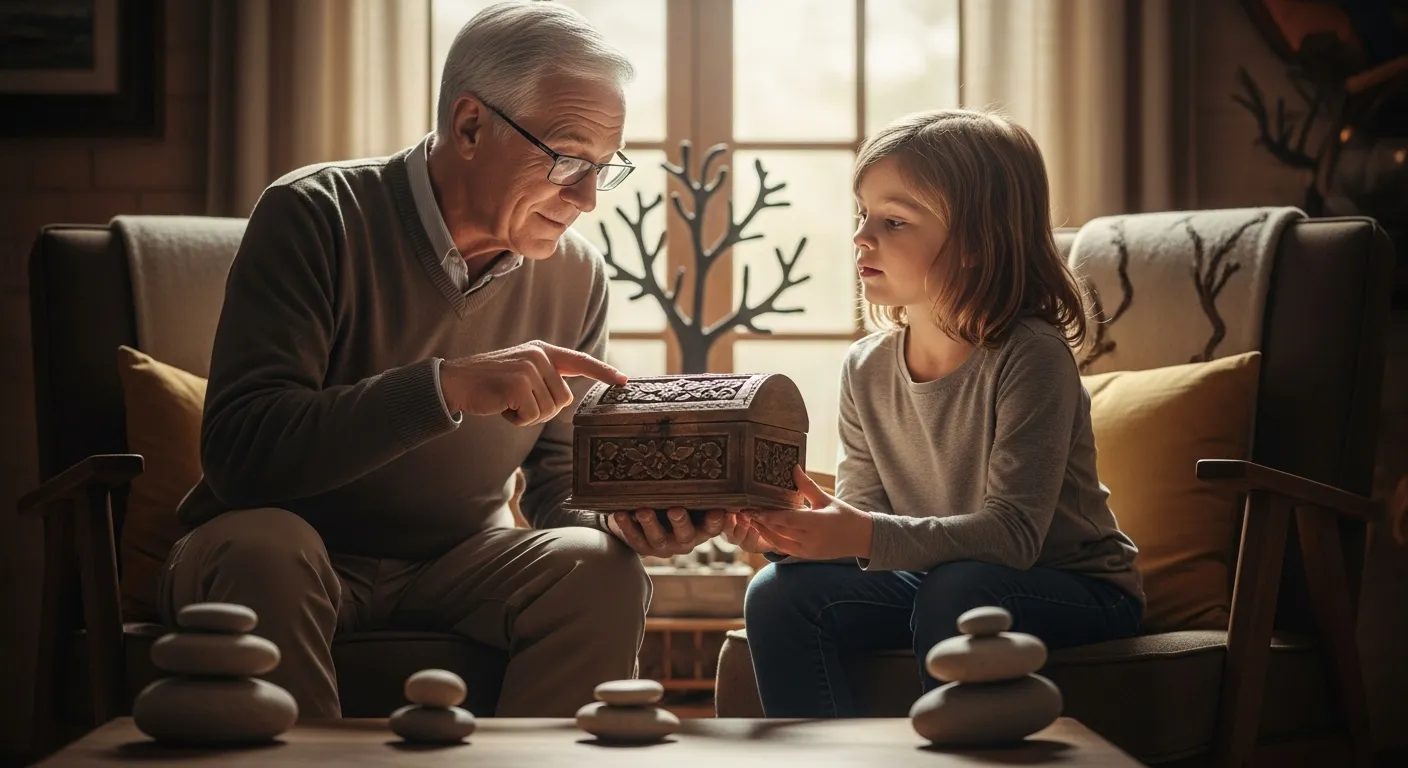
Grandfather showing grandchild a family heirloom.

Fostering a Lasting Legacy: The Grandparent’s Unique Contribution

Beyond the daily interactions, you have a singular and powerful role to play in your grandchild’s life: you are the keeper of the family’s story. You connect them to their roots, their heritage, and a world that existed before they did. This contribution is a profound gift that no one else can give in quite the same way.

Sharing your family’s history helps a child build a strong sense of identity. It answers the fundamental question, “Where do I come from?” This doesn’t need to be a formal history lesson. It happens organically through storytelling. Share anecdotes about their parents as children, about your own upbringing, or about great-grandparents they never had the chance to meet. Pull out old photo albums and tell the stories behind the pictures. These narratives weave a rich tapestry of belonging.

This is also your opportunity to pass on core family values without lecturing. Instead of saying, “It’s important to be resilient,” you can tell a story about a time you faced a challenge and overcame it. Instead of saying, “Family is everything,” you can create traditions that bring everyone together. Rituals are the glue that holds families together across generations. These can be simple things that become sacred over time:

  • A special “Grandma’s recipe” for birthday cakes.
  • An annual apple-picking trip in the fall.
  • A weekly video call where you read a story.
  • A silly handshake that only you and your grandchild share.

It’s also vital to acknowledge that families are beautifully diverse. Your family’s traditions may be shaped by culture, faith, geography, or unique circumstances. The key is to co-create traditions that feel meaningful and inclusive for everyone. Have a conversation with your adult children: “I’d love to start a new tradition with the grandkids. What are some things you think they’d enjoy that would also honor our family’s heritage?” This collaborative spirit ensures that the legacy you build is one that will be cherished and carried forward.


Pages: 1 2 3 4 5 6 7 8 9

Share this article

Facebook Twitter Pinterest LinkedIn Email

Leave a Reply Cancel reply

Your email address will not be published. Required fields are marked *

Search

Latest Posts

  • 6 Early Signs of Shingles Seniors Should Never Ignore
  • 10 Clear Signs Your Partner Is Only Feeding You Breadcrumbs
  • An editorial illustration of a senior man in an armchair while his partner speaks from a distance, with her voice fading as watercolor mist. 7 Early Warning Signs of Hearing Loss That Seniors Often Dismiss as Normal Aging
  • An unposed photo of a man sitting at a kitchen table looking slightly guarded during a quiet, intimate conversation. 8 Body Language Clusters That Indicate Someone Is Holding Back the Truth
  • An ink and watercolor illustration of a morning coffee cup on a wooden table with a gentle ripple, symbolizing subtle early changes. 7 Subtle Signs of Parkinson's Disease in the Early Stages
  • An editorial illustration of a silhouette standing on a fractured path, with a hand gently unravelling a thread from its shoulder. 8 Hidden Signs of Emotional Manipulation in a Relationship
  • Gouache illustration of a couple walking hand-in-hand through a vibrant landscape of overlapping colorful plants and abstract shapes. The 5 Love Languages Revisited: What Really Keeps Couples Close
  • A watercolor illustration of two people on an uneven seesaw, symbolizing a lopsided, selfish relationship dynamic. 10 Signs Someone May Be More Selfish Than They Realize
  • An editorial ink and watercolor illustration of a lonely figure fading into soft gray washes, symbolizing emotional vulnerability. 10 Warning Signs You May Be in an Emotionally Abusive Relationship
  • A couple sits on opposite ends of a long sofa in a dimly lit living room, staring away from each other with a large physical gap between the 10 Signs You're No Longer Connected to Your Partner

Newsletter

Get the latest posts delivered to your inbox.

Related Articles

23 Things American Parents Usually Do and the Rest of the World Doesn’t

Growing up in the United States definitely comes with a lot of fun, but we…

Read More →
grandparents

Top 9 Worst Mistakes Grandparents Make Without Realizing

4. Try not to make promises that you cannot keep This is a general rule…

Read More →
Overcoming Parent-Child Conflict

Overcoming Parent-Child Conflict: 5 Easy Steps to Navigate

Psychology Diary Presents: Overcoming parent-child conflict In the complex world of family dynamics, the delicate…

Read More →
stay connected with your grandkids

The 6 Best Activities to Stay Connected with Your Grandkids

4. Try visiting children’s museums If you want an educational and, at the same time,…

Read More →
Generational Trauma

Generational Trauma: 9 Effective Ways to Get Off the Hamster Wheel

Is it possible to break the cycle of generational trauma? You’ve heard the saying “Hurt…

Read More →
child

10 Signs Your Child Is a Brat and How to Deal With It

As parents, we tend to neglect our children’s bratty behavior because they can be so…

Read More →
work

5 Ways to Work From Home and Stop Kids From Interrupting You

Have you ever wondered if there’s a way to do work more efficiently? One of…

Read More →
Mother and daughter holding hands, talking on park bench.

How to Set Healthy Boundaries with Your Adult Children

Common Boundary Scenarios and How to Handle Them Theory is helpful, but the real test…

Read More →
Toxic In-Law

6 Tips On Dealing With Toxic in-Laws This Easter

Acknowledge Their Control Issues Are you sick of hearing about how you’re doing everything wrong? Whatever…

Read More →

Psychology Diary

The First Step Toward Change Is Awareness

Inedit Agency S.R.L.
Bucharest, Romania

contact@psychologydiary.com

Explore

  • About Us
  • Advertiser Disclosure
  • Contact Us
  • Disclaimer
  • Do not sell my personal information
  • Editorial Policy
  • Frequently Asked Questions
  • Privacy Policy
  • Terms and Conditions
  • Subscribe
  • Unsubscribe

Categories

  • Expert Tips
  • Family
  • Life
  • Marriage
  • Mental Health

© 2026 Psychology Diary. All rights reserved.