

Emotional disconnection rarely happens overnight; it creeps in quietly, turning the person you love most into a polite stranger. When that profound sense of mutual understanding evaporates, the silence between you stops feeling comforting and starts feeling heavy with unspoken distance. Relationships thrive on micro-moments of engagement, and when those vanish, you might find yourself navigating a profound loneliness even while sharing the same bed. By identifying the specific behavioral shifts that signal emotional detachment, you can stop guessing and start addressing the root of the disconnect. Here are the research-backed signs that your emotional bond has weakened.
1. You Ignore Each Other’s Bids for Connection
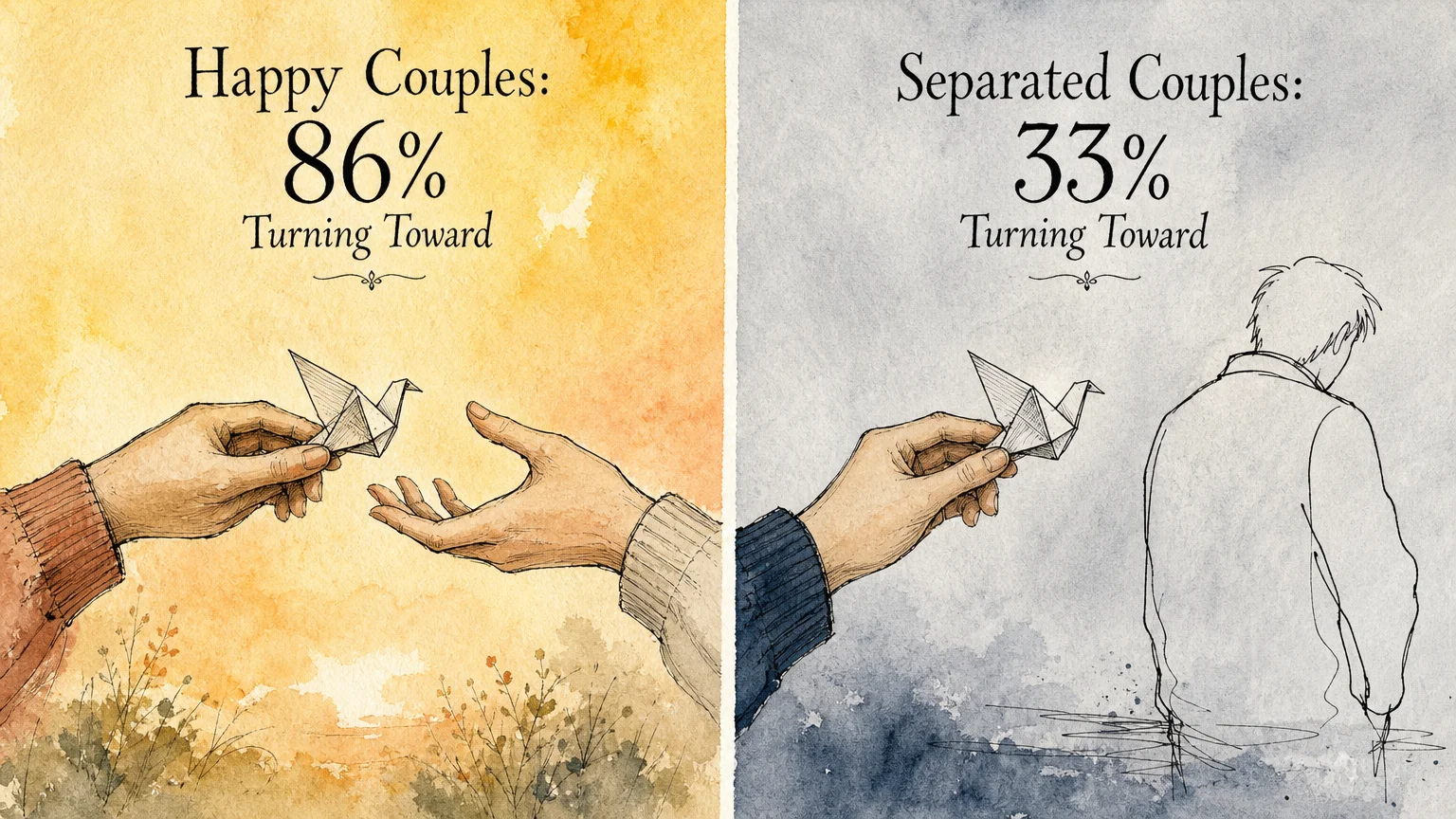
Every relationship is built on tiny, seemingly insignificant moments of interaction. Relationship researchers refer to these moments as “bids for connection.” A bid can be as simple as your partner pointing out a beautiful bird outside the window, sighing heavily after looking at an email, or asking for your opinion on a news article. They are asking for your attention, affirmation, and engagement.
When you feel emotionally disconnected, these bids are often met with silence, a grunted acknowledgment, or outright irritation. Research by Dr. John Gottman reveals a striking reality: happy couples turn toward each other’s bids for connection about 86% of the time, whereas couples headed for separation respond positively only 33% of the time. When you consistently ignore or reject these subtle invitations, you signal to your partner that their internal world no longer matters to you, eroding the foundation of trust and intimacy.

2. “Phubbing” Replaces Genuine Presence
Technology offers endless ways to escape the present moment, and one of the clearest signs of relational distance is the preference for a screen over your partner’s face. “Phubbing”—the act of snubbing your partner in favor of your phone—creates a subtle but pervasive barrier to emotional intimacy.
It feels deeply dismissive when you try to share a thought, only to see your partner scrolling aimlessly through social media. A comprehensive 2025 meta-analysis examining 52 studies and over 19,000 individuals confirmed that partner phubbing significantly decreases relationship satisfaction, emotional closeness, and mutual responsiveness. The persistent presence of a device communicates that whoever or whatever is on the screen holds more value than the living, breathing person sitting right next to you. If your screen time spikes whenever you are alone together, it often serves as an unconscious coping mechanism to avoid the awkwardness of a fading emotional connection.

3. You Hesitate to Share Good News
We often measure relationship strength by how a partner responds during a crisis. However, psychological research suggests that how you handle each other’s triumphs is just as critical. Psychologist Shelly Gable introduced the concept of “capitalization,” demonstrating that sharing positive events and receiving an active, constructive response builds deep interpersonal bonds.
When your emotional connection frays, you might stop sharing your wins. You hesitate to mention the praise you received at work or the personal goal you finally achieved because you anticipate a lukewarm or dismissive reaction. If your partner responds to your good news with a passive nod or immediately changes the subject, the emotional reward of sharing evaporates. Over time, you learn to keep your joy to yourself, which rapidly accelerates feelings of isolation within the partnership.
4. The “Roommate Phase” Becomes Permanent
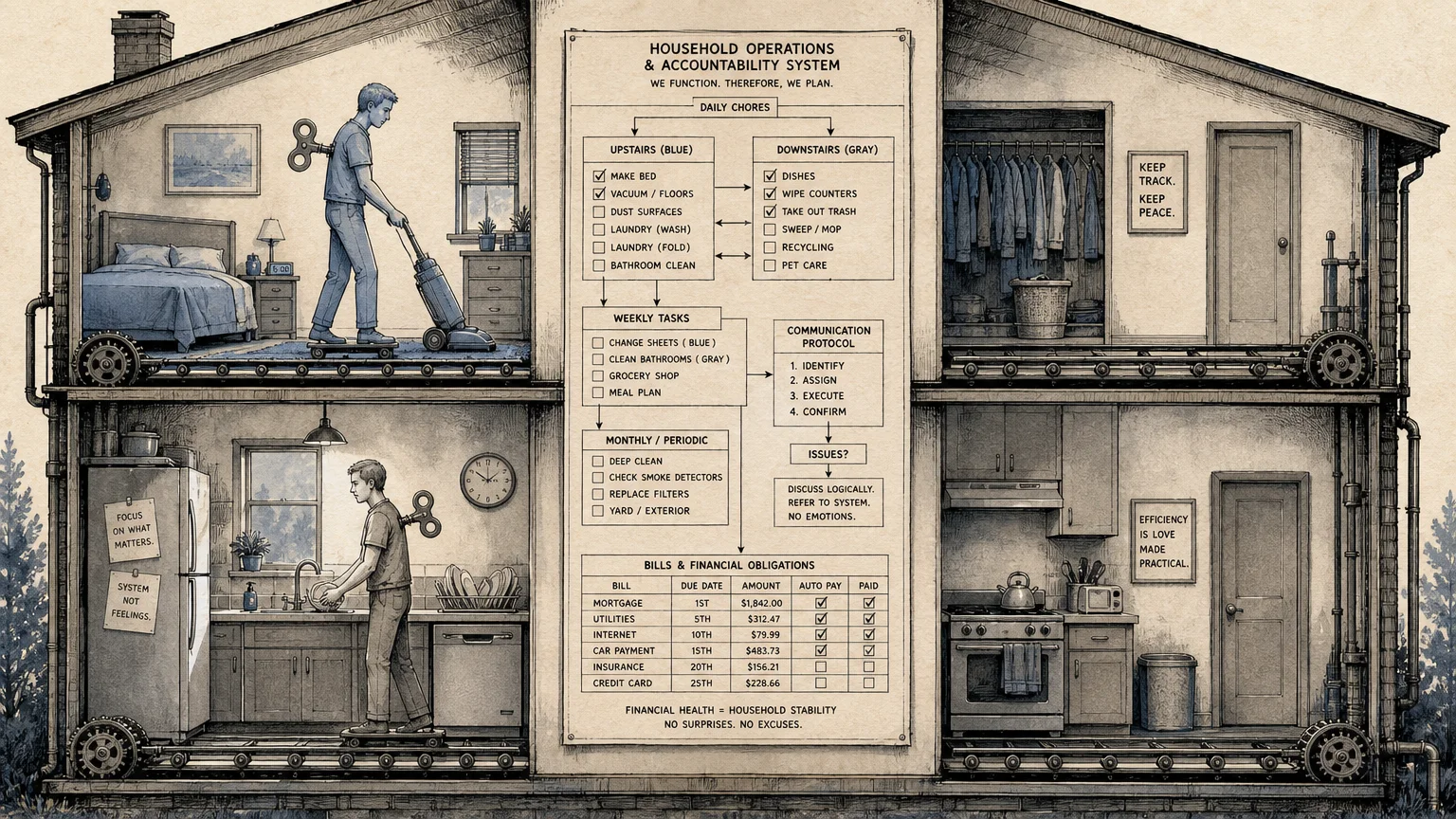
Long-term relationships naturally ebb and flow, but persistent emotional distance often manifests as the dreaded roommate phase. In this dynamic, your interactions become entirely transactional. You flawlessly execute the logistics of daily living—managing finances, coordinating childcare, maintaining the household—but you strip away all emotional depth.
Dr. John Gottman identified a crucial metric for relationship stability: the 5:1 ratio. Stable and satisfied couples experience at least five positive interactions for every negative one. In the roommate phase, interactions are rarely intensely negative, but they are devoid of warmth, plummeting the ratio of positive engagement. You might inhabit the same physical space, but you exist in entirely separate emotional universes.
Consider the differences between surviving as roommates and thriving as partners:
| Roommate Dynamic | Partner Dynamic |
|---|---|
| Conversations are strictly transactional (schedules, chores, and logistics). | Conversations include internal experiences, fears, and future dreams. |
| You navigate around each other in the house without physical acknowledgment. | You intentionally make physical contact (a hand on the waist, a quick hug, or a greeting kiss). |
| You spend most evenings in separate rooms or absorbed in personal devices. | You carve out dedicated time to connect face-to-face, even if just for ten uninterrupted minutes. |
| You feel emotionally guarded or hesitant to ask for deep emotional support. | You view your partner as your primary emotional safe haven. |

5. You Feel Lonelier Together Than Apart
There is a unique and agonizing type of loneliness that only occurs when you are sitting right next to the person who is supposed to know you best. Physical proximity does not guarantee emotional closeness. In fact, lying in the same bed with someone who feels lightyears away amplifies the ache of isolation.
Current data indicates that about 1 in 6 married adults experience moderate or intense feelings of loneliness within their intimate relationships. This subjective feeling of emotional isolation rarely stems from a lack of physical time together; it arises from a deficit of mutual understanding and vulnerability. You realize you are carrying the weight of your internal world entirely on your own shoulders.
“The quality of our relationships determines the quality of our lives. But loneliness does not mean being alone; it means feeling unseen, unheard, and emotionally disconnected from those around us.” — Esther Perel, Psychotherapist

6. Conflict Morphs Into Apathy
Many people mistakenly believe that arguing is the ultimate sign of a failing relationship. In reality, constructive conflict requires energy, investment, and a fundamental desire to be understood. When you are still fighting, you are still trying to bridge the gap. The true danger sign is apathy.
When the connection breaks down completely, you simply stop caring enough to argue. If your partner does something that used to deeply upset you, and you merely shrug it off and retreat inward, the relationship is in peril. This silent resignation indicates that you no longer believe repair is possible. You swallow your grievances to avoid the exhaustion of a fight, choosing quiet detachment over the vulnerability of expressing your needs.

7. Physical Affection Disappears Outside the Bedroom
While sexual intimacy naturally fluctuates due to stress, health, and life stages, the absence of non-sexual physical touch is a glaring red flag. Warm, affectionate touch—a hand on the shoulder, leaning against each other on the couch, holding hands while walking—acts as an emotional tether between partners.
When you lose your emotional connection, physical touch often feels forced, unnatural, or completely absent. You might flinch or instinctively pull away when your partner brushes against you. This physical avoidance mirrors the emotional walls you have erected. Without the grounding presence of affectionate touch, the biochemical bonds fostered by oxytocin begin to weaken, leaving both partners feeling touch-starved and detached.

8. Your “Love Maps” Are Outdated
When you first fell in love, you likely possessed a detailed understanding of your partner’s inner world. You knew their biggest fears, their current stresses, their favorite obscure bands, and their deepest aspirations. Relationship experts refer to this deep, working knowledge of your partner as a “Love Map”.
Over time, people evolve. If you are disconnected, you stop updating your Love Map. You might realize you have no idea what your partner is currently worried about at work, or what their current life goals are. You rely on an outdated version of who they were five years ago, rather than engaging with the person they are today. When curiosity dies, emotional connection quickly follows.

9. Inside Jokes and Shared Humor Fade
Shared humor is a powerful barometer for the emotional climate of a relationship. Inside jokes, playful banter, and the ability to laugh at yourselves create an exclusive bond that belongs only to the two of you. This shared positive affect acts as a shock absorber during difficult times.
When emotional detachment sets in, the environment becomes too tense or sterile for humor to survive. Your interactions become rigidly polite or heavily laden with unspoken resentment. If you cannot remember the last time you and your partner shared a genuine, belly-aching laugh over something trivial, it is a strong indicator that the joyful, spontaneous elements of your connection have withered.

10. You Live Parallel Lives Instead of Intertwined Ones
Autonomy is essential in any healthy relationship; enmeshment is not the goal. However, there is a profound difference between maintaining your individuality and living completely parallel lives. When you lose your connection, your life trajectories stop intersecting.
You might find yourself making major financial, career, or lifestyle decisions without consulting your partner. You prioritize your independent social circles, separate hobbies, and individual routines, actively avoiding the integration of your lives. The partnership devolves into a mere logistical arrangement, where you operate as two independent contractors sharing a living space rather than a unified team navigating the world together.

What Can Go Wrong: Misconceptions About Reconnecting
When couples realize they are disconnected, they often panic and resort to strategies that accidentally widen the gap. One of the most common misconceptions is the belief in the “grand gesture.” You might assume that booking an expensive, two-week vacation to a tropical island will magically repair years of emotional neglect. While a change of scenery is pleasant, emotional connection is built in the mundane, everyday moments. A grand gesture cannot replace the daily habit of turning toward your partner’s bids for connection.
Another frequent trap is assuming that giving each other complete space will automatically resolve tension. While a brief pause during an argument is healthy for emotional regulation, chronic withdrawal breeds deeper isolation. Silence does not heal unspoken resentments; it merely preserves them.
“Vulnerability is not winning or losing; it’s having the courage to show up and be seen when we have no control over the outcome.” — Brené Brown, Ph.D.
Rebuilding connection requires the courage to gently lean in, to ask open-ended questions, and to tolerate the awkwardness of vulnerability after a long period of distance.

When to Seek Professional Support
Recognizing the signs of disconnection is painful, but you do not have to navigate the repair process alone. Seeking the guidance of a licensed couples therapist or psychologist can provide the structured environment necessary to rebuild trust. Consider seeking professional support if you experience the following scenarios:
- Chronic stonewalling: If one or both partners completely shut down, refuse to engage, and physically or emotionally withdraw during every difficult conversation.
- Contempt has become the default: If sarcasm, eye-rolling, name-calling, and mockery have replaced mutual respect, immediate intervention is necessary to halt emotional damage.
- You feel entirely hopeless: If you are genuinely motivated to save the relationship but feel profound apathy and cannot visualize a path forward together.
- Infidelity or betrayal has occurred: Emotional or physical affairs shatter the foundation of trust, and rebuilding requires specialized therapeutic frameworks to ensure both partners heal safely.
Frequently Asked Questions
Can a relationship survive the roommate phase?
Yes. The roommate phase is a common season in long-term relationships, especially when couples are managing high-stress periods like raising young children or demanding careers. It becomes dangerous only when couples accept it as their permanent reality. With intentional effort to increase physical affection and non-transactional conversation, you can rekindle the romance.
How do I bring up feeling disconnected without starting a fight?
Use “I” statements that focus on your internal experience rather than blaming your partner. For example, instead of saying, “You never talk to me anymore,” try, “I have been feeling really lonely lately, and I miss the long conversations we used to have. Can we carve out some time to catch up tonight?” This minimizes defensiveness and opens the door for vulnerability.
Is it normal to occasionally feel lonely in a marriage?
Occasional loneliness is a normal human experience and can happen even in the healthiest marriages. No partner can fulfill every single emotional need at all times. However, if the loneliness is chronic, pervasive, and directly tied to your partner’s emotional unavailability, it is a sign that the relational dynamic needs immediate attention.
How long does it take to rebuild emotional intimacy?
There is no universal timeline, as it depends on the depth of the detachment and the willingness of both partners to engage. Rebuilding intimacy is a gradual process of accumulating small, positive interactions over time. Consistency is far more important than speed; focusing on small daily changes will yield the most sustainable results.
Reconnecting with a partner after a prolonged period of emotional distance requires patience, humility, and a willingness to be vulnerable. The silence that has grown between you did not appear overnight, and it will not dissolve with a single conversation. Start small. Put your phone away during dinner. Ask a genuinely curious question about their day. Reach out and hold their hand. These micro-moments of bravery are the exact building blocks required to bridge the gap and rediscover the person sitting beside you.
This is educational content based on psychological research and general principles. Individual experiences vary significantly. For personalized guidance, consult a licensed therapist, psychologist, or counselor.
Last updated: June 2026. Psychology research evolves continuously—verify current findings with professional sources.






Leave a Reply