
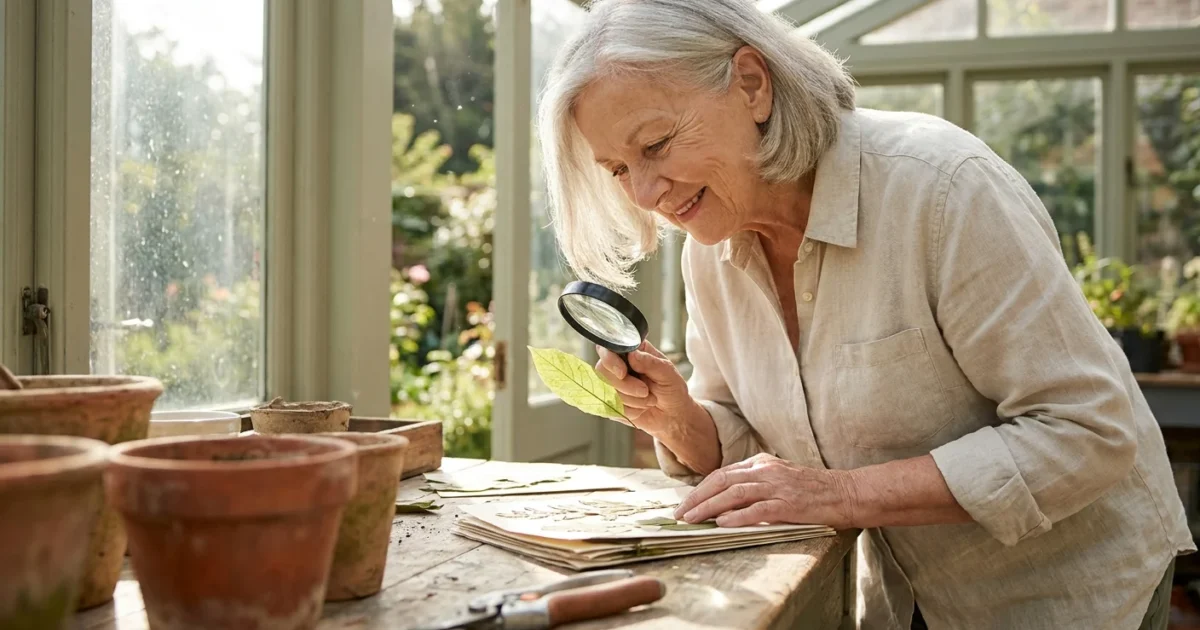
The secret to a longer, healthier life is not just found in physical exercise, but in your willingness to ask questions. Research shows that older adults who maintain high levels of curiosity experience slower cognitive decline, retain stronger memory function, and actually live longer than those who lose their sense of wonder. When you actively seek out new information, your brain releases dopamine, reinforcing neural pathways that protect against dementia and cognitive stagnation. Aging often brings a societal expectation to stick to what you know, but protecting your mental longevity requires the opposite approach. Cultivating an inquisitive mind transforms your later years from a period of passive decline into an era of vibrant engagement.

The Lifesaving Science of an Inquisitive Mind
We often associate curiosity with childhood—a time of relentless “why” questions and boundless exploration. However, psychological research demonstrates that maintaining this drive to learn is a literal lifesaver for older adults. A landmark five-year survival study tracking older populations revealed that individuals with the highest curiosity levels had a significantly greater survival rate than their less-curious peers, even after adjusting for other medical risk factors.
How does a psychological trait impact biological longevity? The answer lies in the brain’s reward and stress-response systems. According to the American Psychological Association, engaging in cognitively complex activities and pursuing new knowledge stimulates neuroplasticity. When you follow your curiosity, your brain activates dopaminergic and noradrenergic pathways. These chemical messengers do more than make you feel good; they actively strengthen the neural networks responsible for memory retention and attention.
Conversely, apathy and a withdrawal from learning are not merely benign signs of “slowing down.” A 2025 study from UCLA published in PLOS ONE found that individuals who exhibit muted curiosity are at a noticeably higher risk for developing dementia. A lack of interest in the surrounding world is increasingly recognized as a potential early indicator of cognitive decline.
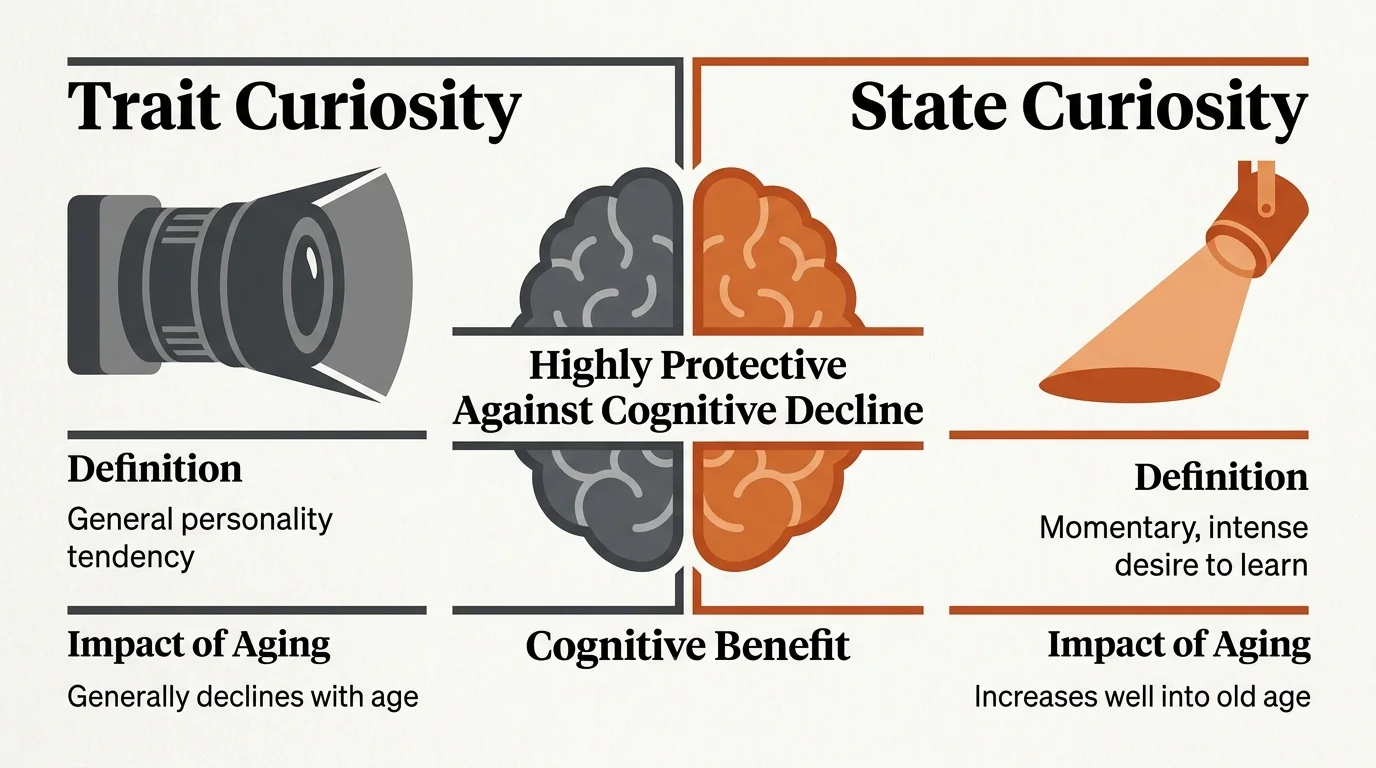
Trait vs. State Curiosity: Understanding the Difference
If you feel less naturally inquisitive today than you did in your twenties, you might worry that your brain is already losing its edge. Fortunately, neuroscientists distinguish between two distinct types of curiosity. Understanding this difference is crucial for setting realistic, healthy expectations for your aging brain.
| Feature | Trait Curiosity | State Curiosity |
|---|---|---|
| Definition | Your general, baseline personality tendency to be inquisitive about a wide variety of topics. | A momentary, intense desire to learn something specific based on a current situation or deep personal interest. |
| Impact of Aging | Generally declines as you age; you may become less interested in absorbing random, generalized information. | Actually increases well into old age; you become highly motivated to learn about subjects relevant to your life. |
| Cognitive Benefit | Encourages broad exploration but requires more energy to sustain. | Highly protective against cognitive decline; focuses brain resources on meaningful, retainable knowledge. |
The encouraging news from modern cognitive research is that while your general trait curiosity may decrease, your state curiosity grows. You do not need to be fascinated by everything to reap the health benefits of curiosity; you simply need to remain deeply engaged with the specific topics that matter to you.
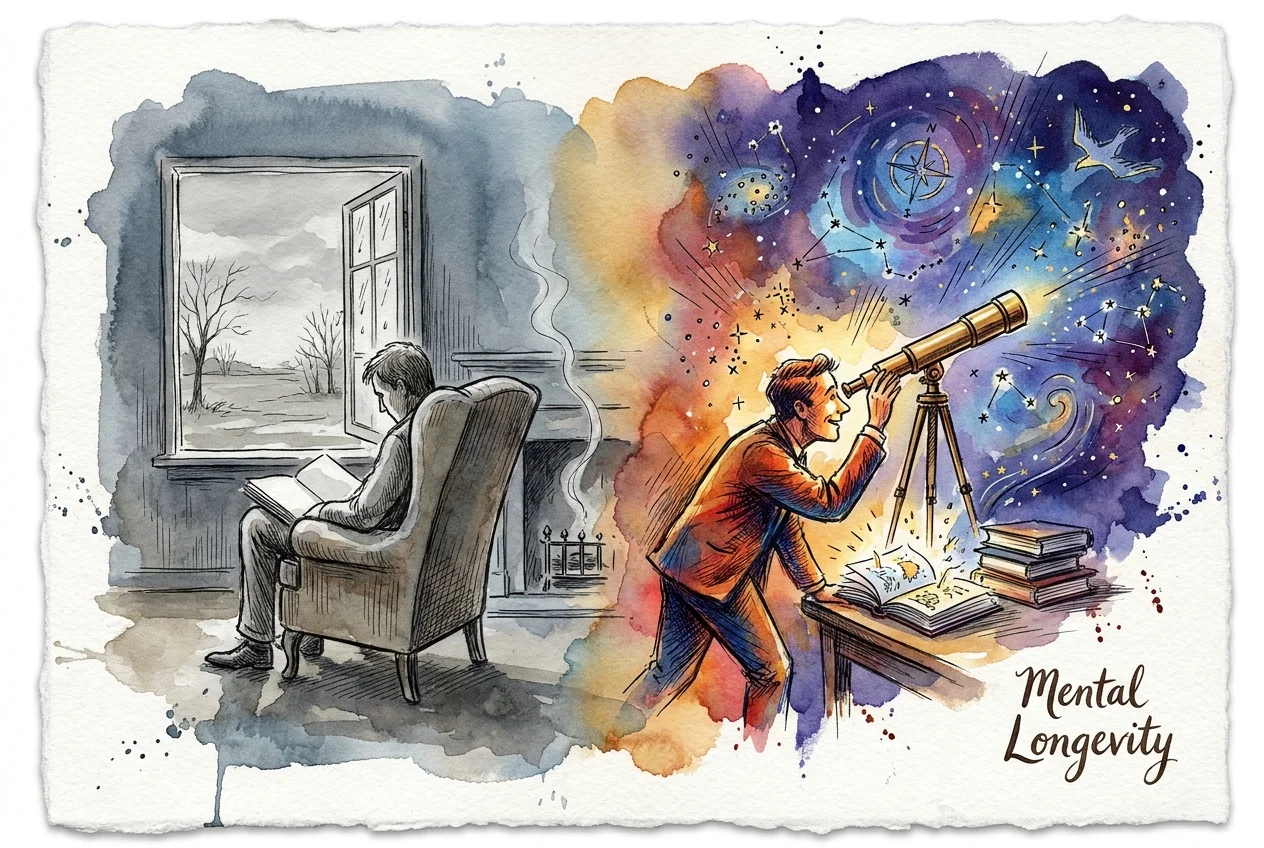
Patterns to Watch For
When examining mental health and aging, it helps to identify the psychological traps that prematurely shut down curiosity. Watch out for these common patterns and misconceptions:
- The “Too Late” Fallacy: Believing that neuroplasticity ends in middle age. Research confirms that the brain can form new neural connections at any stage of life, provided it receives the right stimulation.
- Confusing Apathy with Peace: Society often paints an idyllic picture of aging as a time of passive rest. While relaxation is necessary, profound disinterest in the outside world is not a sign of peace—it is often a symptom of isolation or depression.
- The Fear of Incompetence: Many seniors stop trying new things—such as learning a new technology or picking up an unfamiliar hobby—because they fear looking foolish. Avoiding this discomfort robs you of the very cognitive challenges that keep your mind sharp.
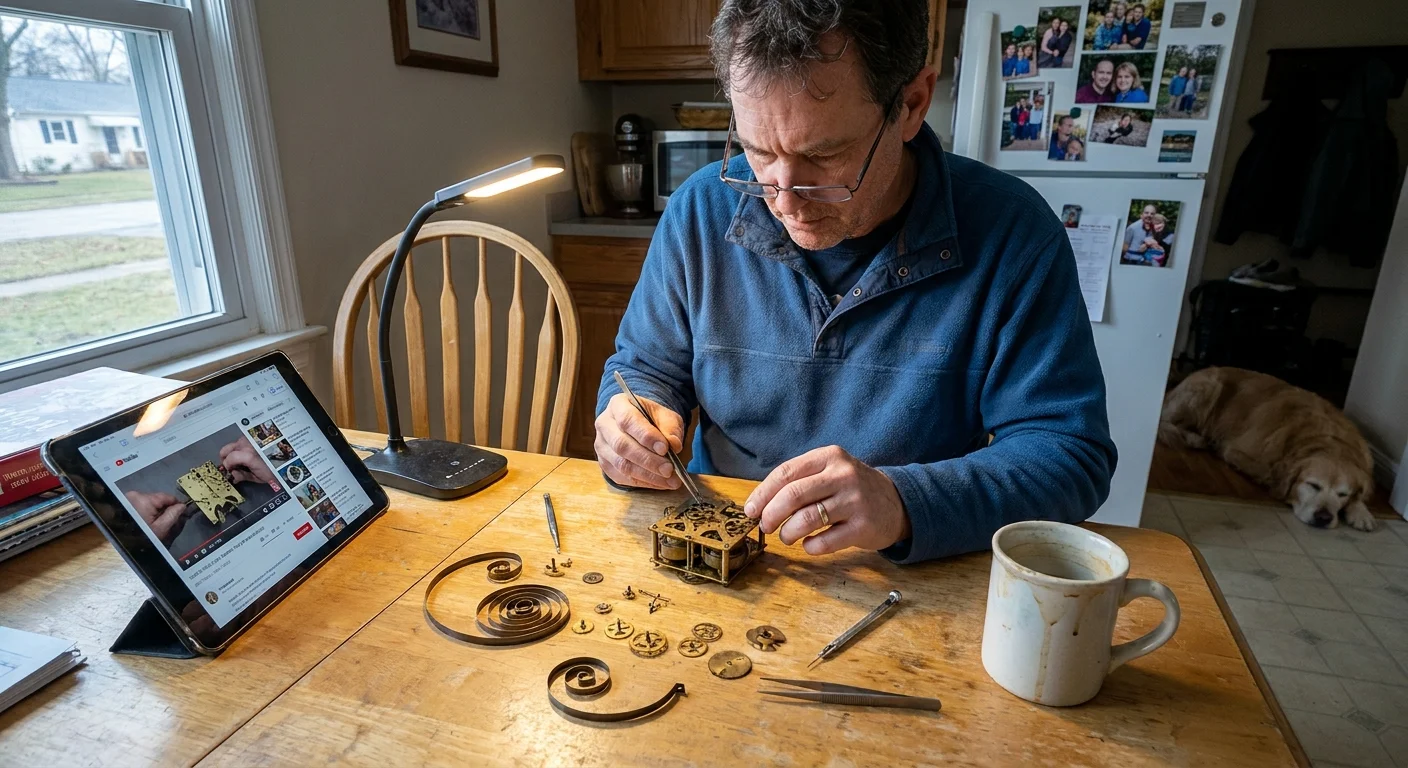
How to Cultivate a Curious Brain at Any Age
You can train your brain to become more inquisitive. Like any habit, curiosity thrives on intentional practice. Here are practical ways to reignite your desire to learn and explore.
Embrace the Vulnerability of Being a Beginner
Learning something new requires you to admit what you do not know, which can feel deeply uncomfortable after a lifetime of professional or personal mastery. Reframe this discomfort as a sign of growth. Give yourself permission to be bad at a new hobby. The cognitive benefits come from the struggle of learning, not just the mastery of the skill.
“Vulnerability is not about winning or losing. It’s having the courage to show up even when you can’t control the outcome.” — Brené Brown, Ph.D.
Follow Your Specific Interests Deeply
Because state curiosity increases with age, lean into it. Do not force yourself to read up on trending topics if they bore you. If you love gardening, dive into the soil chemistry or the history of specific heirloom plants. If you enjoy history, research your genealogy. The National Institutes of Health (NIH) highlights that intellectually stimulating activities must be personally meaningful to offer the highest cognitive protection.
Connect Learning to a Sense of Purpose
Curiosity thrives when it is attached to a “why.” Are you learning to use a new video-calling application? The underlying purpose is connecting with your grandchildren. Are you studying a new language? Perhaps it is to prepare for a dream trip or volunteer in your community. When learning serves a larger meaning, your motivation naturally sustains itself.
“Life is never made unbearable by circumstances, but only by lack of meaning and purpose.” — Viktor Frankl, M.D., Ph.D.
Vary Your Routine
The brain operates on autopilot when it encounters the same stimuli every day. Introduce small, manageable novelties into your week. Take a different route on your morning walk, try cooking a recipe from an unfamiliar cuisine, or listen to a podcast on a subject you know nothing about. These minor disruptions force your brain out of its comfort zone and trigger a mild dopamine release.
When Self-Help Isn’t Enough
While maintaining an inquisitive mind is a powerful tool for healthy aging, a sudden or severe loss of interest is not something you should try to fix with willpower alone. According to the National Institute of Mental Health (NIMH), a persistent lack of engagement can be an indicator of underlying health issues. Seek professional guidance if you or a loved one experience the following:
- Anhedonia: A complete inability to find pleasure in activities or hobbies that you previously loved.
- Severe Social Withdrawal: Avoiding friends, family, and community events for weeks at a time, leading to profound isolation.
- Cognitive Frustration: Experiencing memory lapses or confusion so severe that the frustration completely overrides any desire to learn or explore.
- Persistent Fatigue and Hopelessness: When a lack of curiosity is paired with chronic sadness, changes in sleep patterns, or feelings of worthlessness, it may signal clinical depression rather than natural aging.
Do not hesitate to reach out to a healthcare provider or a mental health professional. Therapy approaches, such as Cognitive Behavioral Therapy (CBT), have proven highly effective for older adults navigating life transitions and depressive symptoms.
Cultivating curiosity is ultimately about deciding to remain an active participant in your own life. You do not need to uncover the secrets of the universe; you simply need to remain open to the quiet wonders of your daily world. Ask the question. Try the new hobby. Read the unfamiliar book. Your brain—and your lifespan—will thank you for it.
This is educational content based on psychological research and general principles. Individual experiences vary significantly. For personalized guidance, consult a licensed therapist, psychologist, or counselor.
Last updated: May 2026. Psychology research evolves continuously—verify current findings with professional sources.









Leave a Reply