
Psychology Diary

The First Step Toward Change Is Awareness

  • Home
  • Relationships
  • Mental Health
  • Expert Tips
  • Life
  • Family
  • Marriage

The Power of Forgiveness: How Letting Go Can Improve Your Mental Health

August 31, 2025 · Mental Health

Smiling older friends enjoy a meal together outdoors, symbolizing reconciliation.

The Psychological Benefits of Forgiving Someone

The decision to forgive is more than just an emotional or philosophical choice; it has profound and measurable effects on your mental and physical health. Decades of research have shown that learning how to practice forgiveness is strongly linked to greater mental wellness. When you release chronic anger and resentment, you free up psychological resources that can be used to build a more fulfilling life.

Chronic anger acts like a low-grade stress response, keeping your body in a constant state of “fight or flight.” This state is characterized by the release of stress hormones like cortisol. Over time, elevated cortisol can contribute to a host of health problems, including anxiety, depression, sleep disturbances, and even heart issues. Forgiveness helps to turn down this internal alarm system.

Studies highlighted by organizations like the American Psychological Association (APA) show a clear connection between forgiveness and well-being. People who have a higher disposition toward forgiveness tend to report fewer symptoms of depression and anxiety. They experience less stress and hostility, which contributes to a more stable and positive mood. Letting go of old hurts can reduce feelings of helplessness and victimhood, replacing them with a sense of personal agency and control.

The benefits extend to your social world as well. While forgiveness doesn’t require reconciliation, it does improve your capacity for healthy relationships in general. When you’re not weighed down by past grievances, you are more open to connection, empathy, and trust with others. It can mend relationships that are important to you and allow you to enter new ones with a more open heart.

Furthermore, the mental energy once consumed by replaying past hurts and planning imaginary confrontations is liberated. This newfound energy can be redirected toward positive, life-affirming activities. You may find you have more motivation for hobbies, more patience with loved ones, and a greater overall sense of hope for the future. Even sleep can improve, as ruminating on resentments is a common cause of late-night tossing and turning.

Pages: 1 2 3 4 5 6 7 8 9 10

Share this article

Facebook Twitter Pinterest LinkedIn Email

Leave a Reply Cancel reply

Your email address will not be published. Required fields are marked *

Search

Latest Posts

  • A conceptual illustration showing a father and daughter separated by a deep chasm in the floor of their dining room. 10 Habits That Push People Away (Your Children Too)
  • A conceptual collage of a head silhouette filled with shattered mirrors and warped photos, symbolizing reality distortion. 8 Ways People Distort Reality
  • An elderly woman sits alone at a dining table in soft afternoon light, looking down at a tea cup in a quiet, nostalgic home setting. 9 Emotional Wounds Adult Children Simply Don’t Realize They’re Inflicting On Their Parents
  • A mixed-media collage of a fragmented silhouette head with an anchor being cut, symbolizing the loss of one's grip on reality. 10 Signs Someone Is Trying to Distort Your Reality
  • A mixed media collage of a beautiful white flower with hidden barbed wire roots and thorny stems on a textured vintage paper background. 8 Behaviors That Reveal Hidden Toxicity
  • A candid photo of a couple in a dim living room, showing a sense of emotional distance and unspoken tension. 10 Traits That May Reveal Covert Narcissism
  • A couple sits on a sofa in a dimly lit room, one person looking at a phone while the other looks away, capturing a moment of secrecy. 8 Signs Someone May Be Hiding More Than They Admit
  • An ink and watercolor illustration of a human head cracking like stone, with golden light leaking through the fissures. 11 Small Clues That Can Expose a Lie
  • An abstract editorial illustration of a silhouette with a tangled nest of lines inside its head, symbolizing mental confusion. 8 Warning Signs Someone May Be Playing Mind Games
  • A mixed media collage of a silhouette filled with torn paper and translucent layers, symbolizing the invisible nature of emotional neglect. 10 Traits of People Emotionally Neglected as Kids

Newsletter

Get the latest posts delivered to your inbox.

Related Articles

Two hands clasped together, showing support.

How to Support a Partner or Friend Experiencing a Mental Health Crisis

Immediate Steps: Safety First, Always When a crisis is severe, your immediate priority is to…

Read More →
Conceptual paper-craft illustration of a brain with glowing neural pathways and botanical growth representing cognitive health.

The Link Between Physical Activity and Mental Sharpness After 60

Discover how combining aerobic and resistance training can actively rewire your brain, increase BDNF levels,…

Read More →
how to stop catastrophizing

5 Tips to Help You Stop Catastrophizing

Do you want to know how to stop catastrophizing? This can be a really helpful…

Read More →
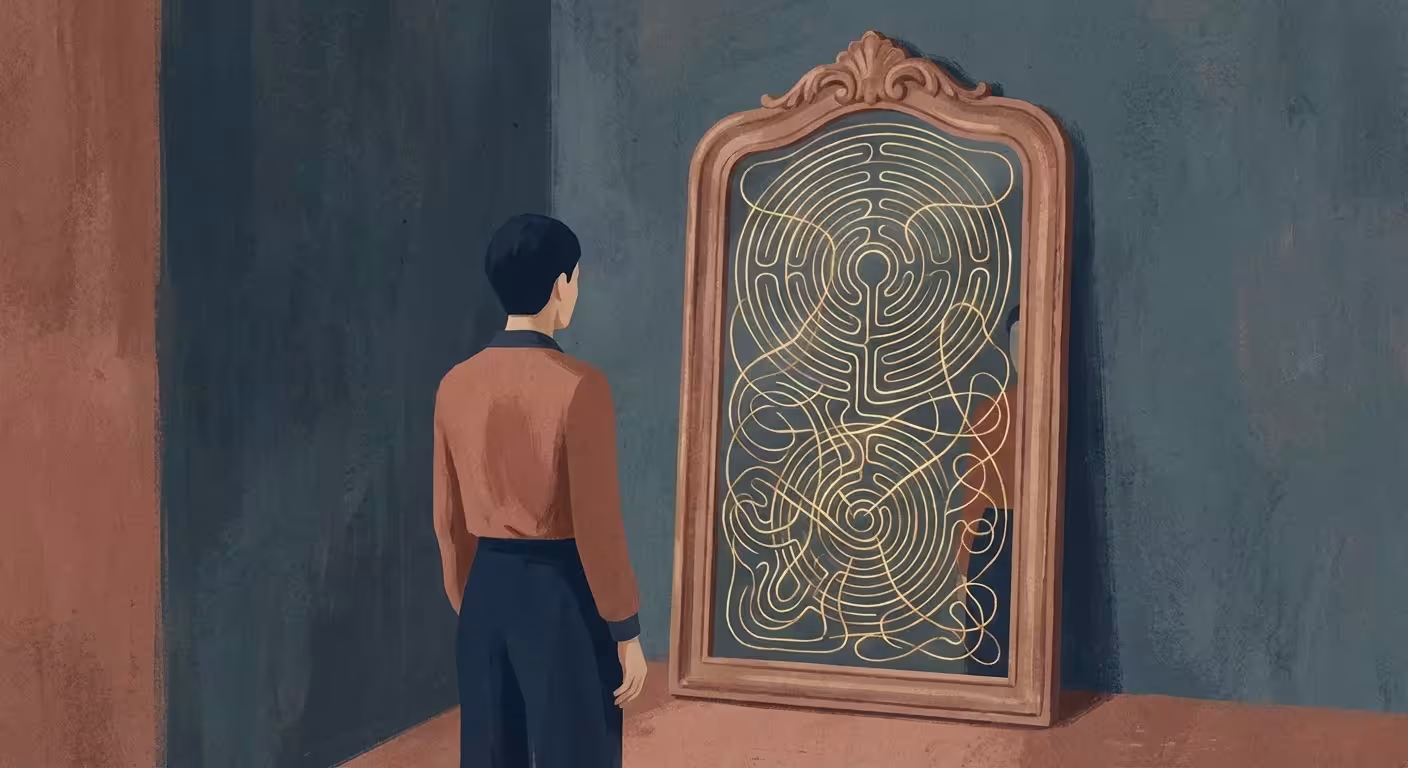
Surreal illustration of a person looking into a mirror that reflects a golden labyrinth, symbolizing internal complexity.

The 6 Most Dangerous Lies We Tell Ourselves Every Day

Uncover the 6 most dangerous lies we tell ourselves daily, from perfectionism to control fallacies,…

Read More →

10 Times You Should NOT Forgive Anyone

Have you ever wondered if it’s okay not to forgive someone? Is it acceptable to…

Read More →
memory, alzheimer's

Alzheimer’s Disease: 8 Early Signs You Shouldn’t Overlook

2. Losing Items Anyone can misplace a wallet or keys. However, a person living with…

Read More →
midlife crisis

7 Alarming Signs You’re Going Through a Midlife Crisis

What is a midlife crisis, and how can you manage it?  You get to “that…

Read More →
dementia

7 Subtle Signs Your Spouse Has Dementia

2. Compulsive and ritualistic behaviors This is the classic symptom of obsessive-compulsive disorder (OCD), but…

Read More →
Older adults listening in a support group.

Understanding Common Mental Health Challenges in Older Adults

Recognizing Depression in Older Adults (Geriatric Depression) When we think of depression, we often picture…

Read More →

Psychology Diary

The First Step Toward Change Is Awareness

Inedit Agency S.R.L.
Bucharest, Romania

contact@psychologydiary.com

Explore

  • About Us
  • Advertiser Disclosure
  • Contact Us
  • Disclaimer
  • Do not sell my personal information
  • Editorial Policy
  • Frequently Asked Questions
  • Privacy Policy
  • Terms and Conditions
  • Subscribe
  • Unsubscribe

Categories

  • Expert Tips
  • Family
  • Life
  • Marriage
  • Mental Health

© 2026 Psychology Diary. All rights reserved.