
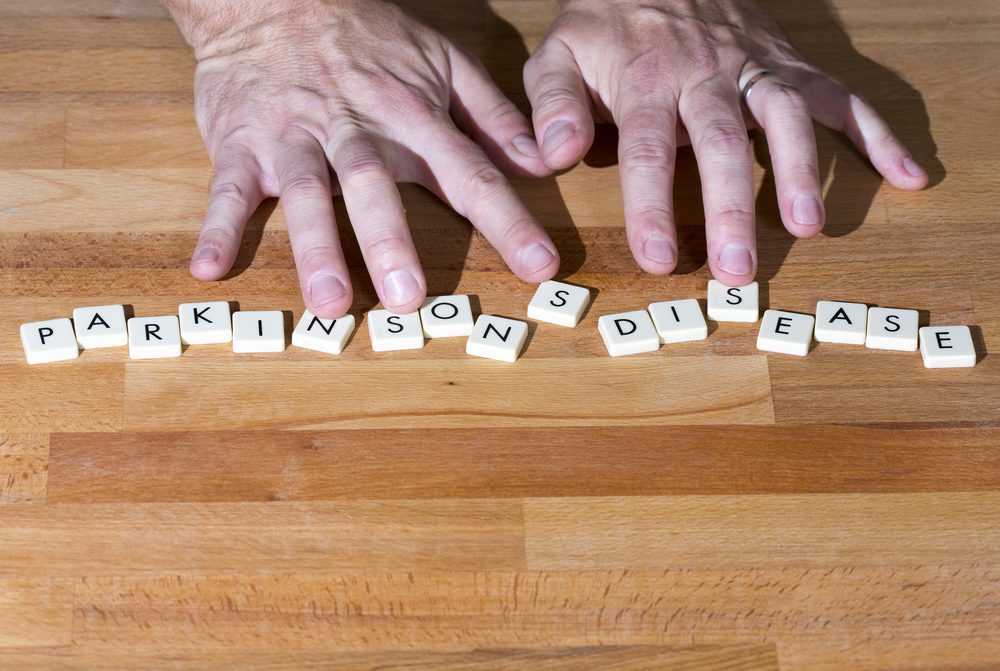
Knowing the early signs of Parkinson’s disease is beneficial, so you know what to look out for.
Parkinson’s disease is a disorder of the nervous system that, according to the National Institute On Aging, affects about 1% of individuals that are aged 65 years and older. Symptoms tend to develop gradually over a few years.
They might even be subtle initially, so all those early signs are easy to ignore. Parkinson’s starts off in the brain cells, specifically the neurons, which control movement.
They produce a substance called dopamine, which begins to fall apart when one has Parkinson’s disease, and the dopamine levels in the brain begin to drop. The lack of dopamine is believed to result in symptoms that influence the way you move.
When caught early on, there are treatments that can improve the condition’s long-term development. So it might be time to see your doctor if you’re noticing any of these 8 symptoms that keep appearing.
Loss Of Smell
Hyposmia happens when a person loses their ability to smell. It’s also known as olfactory dysfunction. Losing your smell is a somewhat common symptom that’s not related to movement, which affects 70–90% of persons with Parkinson’s disease.
It can materialize a few years before the disease affects one’s movement. Having hyposmia doesn’t always mean that someone necessarily has Parkinson’s disease.
An individual’s sense of smell can change for various reasons, including smoking, age, or exposure to severe chemicals. And hyposmia can also be a symptom of some other medical conditions, such as Alzheimer’s and Huntington’s disease.
People who experience hyposmia as a symptom of Parkinson’s disease may experience:
- Difficulty identifying odors
- A dulled sense of smell
- Difficulty telling the difference between odors
- Difficulty detecting odors
Note: Doctors can use smell identification tests to be able to diagnose hyposmia. But unfortunately, the accuracy of these tests varies widely.
Tremor
Have you noticed a subtle shaking or tremor in your finger, hand, or chin? Trembling can be typical after lots of exercises, if you’re over-stressed or if you’ve been recently injured. Shaking could also be caused by a specific medicine you’re taking.
But if you experience a tremor while doing nothing, it’s a standard early sign of Parkinson’s disease. Tremors are possibly the most recognizable sign of this disease. A small twitching or shaking of a hand, finger or foot is also common.
The one who experiences the tremor is probably the only person who notices them in the early stages of Parkinson’s. This tremor will worsen with time and become more noticeable to others as the condition advances.
Stiffness And Slow Movement
Parkinson’s mainly affects adults that are older than 60 years old. You might be feeling stiff and a little slow to get moving in the mornings at this phase of your life. It’s a completely normal evolution in many healthy people.
But the difference with Parkinson’s is that the stiffness and slowness that occurs don’t go away when you get up to begin your day. The rigidity of the limbs and slow movement, also known as bradykinesia, begins to appear early on with Parkinson’s disease.
The manifestation is due to the impairment of the neurons that controls your movement. A person that has Parkinson’s will begin to notice irregular motions and move in a more awkward way than they did before.
Eventually, the person will develop a trait of the “shuffling gait.”

Poor Balance
You might begin to notice that your posture has become a bit more stooped. You might even fall or have issues with your balance as a result of Parkinson’s disease.
Parkinson’s will specifically target nerve cells known as basal ganglia, which live deep within a person’s brain. These nerves control your flexibility and balance. So any damage to these nerves might degrade a person’s balance.
Medical professionals use a test known as the pull test to evaluate a person’s balance. The test involves a doctor gently tugging a person’s shoulders back until they lose their balance, and they record how long it takes them to recover from it.
Healthy people generally recover after a step or two, while people who suffer from Parkinson’s disease can take a higher number of shorter steps to be able to fully balance themselves again.
Cramped Or Small Handwriting
Micrographia is a condition that implicates abnormally small or even cramped handwriting. Experts associate this with specific medical conditions that impact the nervous system or neurodegenerative disorders, like Parkinson’s disease.
People with Parkinson’s have a difficult time controlling their movements because of the changes they’re experiencing in the brain, and they often have handwriting that looks cramped. This can make those motor skills like writing more challenging.
Micrographia is the medical term for having “small handwriting.” Individual letters have a tendency to be smaller than average, and words are spaced a bit too closely.
A person who is suffering from Parkinson’s disease might even begin writing a letter in their normal handwriting but slowly start writing in smaller fonts.
Difficulty Walking
Have your arms or legs been feeling a bit stiff lately? Are others beginning to notice that your arms don’t really swing as they used to when you walk? Sometimes if you’re feeling sour or stiff, it goes away when you start to move again.
If it keeps happening, it can be an early tell-tale sign of Parkinson’s disease. A tell-tale sign might also be a feeling of stiffness or pain in your shoulders or hips. People have occasionally said that their feet seem like they’re “stuck to the floor.”
So if you begin to see some subtle changes in someone’s walking pattern, it could mean that they have Parkinson’s disease. This also applies to people who might begin to walk slowly or drag their feet as they walk. Many refer to this happening as a “shuffling gait.”
You might notice the person walking at an erratic pace, suddenly walking faster or slower, or even changing the length of their stride.
Issues Sleeping
Do you have a tendency to thrash around in bed at night or act out dreams when you’re profoundly asleep? At times, you’ll notice that your spouse will detect this and will want to maybe move to another bed.
Rash movements while sleeping might be a sign of Parkinson’s disease. Everyone has trouble sleeping every once in a while, and tossing and turning take on a new meaning when you’re dealing with this disease.
Early warning signs might include many uncontrollable movements. And not just occasionally but regularly. Kicking, thrashing, flailing your arms, and falling out of bed can indicate a severe problem.
This disease can severely affect a person’s ability to get a full night’s rest. Individuals who suffer from it might experience a wide range of sleep-related symptoms. This includes:
- Sleep apnea
- Insomnia
- Nightmares
- Extreme daytime fatigue
- Narcolepsy
- Uncontrolled movements while sleeping

Changes In Your Voice
Have other people been telling you lately that your voice is very soft or that you sound out of breath and hoarse? If there’s been any kind of change in your voice, you should see a medical professional about whether it could be Parkinson’s.
Sometimes you might think other people are losing their hearing when in actuality, you’re just speaking more softly. Changes in volume and the quality of a person’s voice are other early warning signs of Parkinson’s disease.
It affects movement in different ways, including how we talk. You may be familiar with the slurred speech of advanced patients. Less dramatic voice changes can also occur in the early stages. Changes in your voice might involve speaking in a softer tone, as we mentioned.
But it can also mean starting to speak at a usual volume, and then your voice becomes softer or even fades away altogether. In other cases, someone might lose the regular variation in the volume and/or tone of their voice so that it appears monotonous all of a sudden.
We hope you found this article on Parkinson’s helpful. We also recommend you read a related article as well. Check out: Subtle Signs of Dementia: 6 Important Things You Need to Know








Leave a Reply