
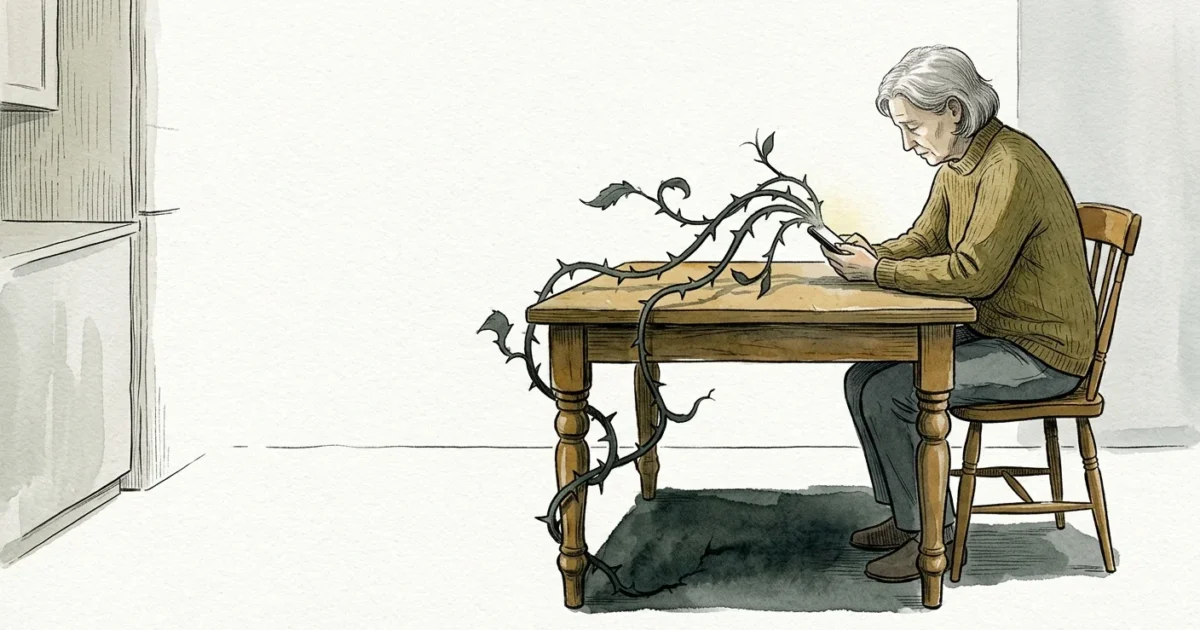
When the child you raised grows into an adult who brings chronic manipulation, contempt, or emotional volatility into your life, the psychological whiplash is devastating. Admitting your adult child exhibits toxic behavior does not erase your love for them, nor does it mean you failed as a parent. These unhealthy dynamics often operate beneath the surface, masked by lifelong habits or parental guilt. Identifying the precise mechanisms of this toxicity is the crucial first step toward protecting your mental health and establishing firm boundaries. By recognizing the subtle patterns of emotional exploitation, weaponized affection, and perpetual victimhood, you can finally transition from a state of anxious compliance to one of grounded resilience and clear expectations.
The Difference Between Difficult and Toxic Dynamics
Every family experiences friction. Generational divides, differing values, and normal life stressors often spark disagreements between parents and adult children. A healthy family system absorbs these conflicts, processes them, and ultimately repairs the connection. Toxic dynamics, however, operate on a fundamentally different frequency. Toxicity in a parent-child relationship involves a rigid pattern of emotional control, profound disrespect, and an inability to take accountability.
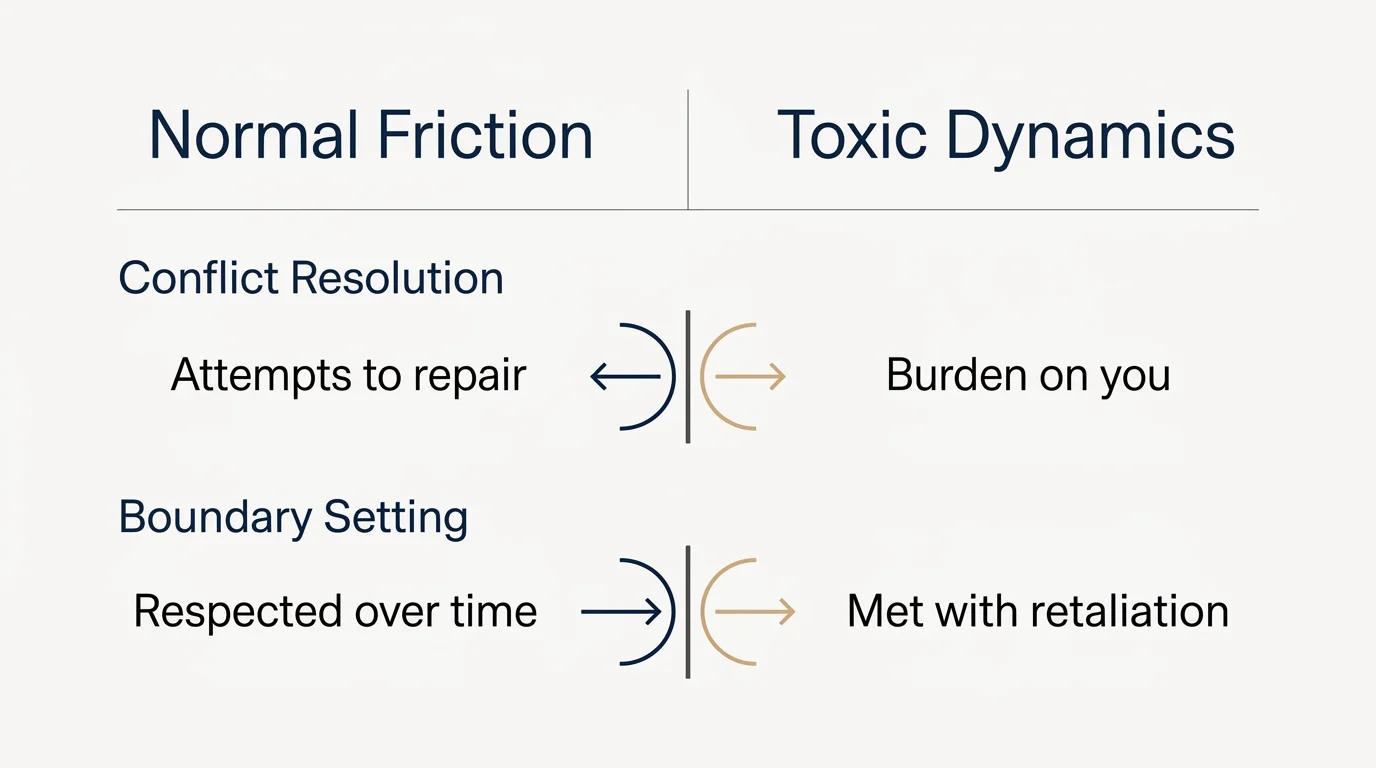
Understanding this distinction prevents you from taking on undue guilt. Many parents endure emotional abuse because they mistakenly label it as a normal family disagreement. Look closely at how conflict is handled in your home; normal friction seeks a resolution, whereas toxic behavior seeks dominance. The table below outlines the core differences between standard family challenges and deeply ingrained toxic behaviors.
| Relationship Aspect | Normal Family Friction | Toxic Family Dynamics |
|---|---|---|
| Conflict Resolution | Both parties make attempts to repair the relationship after an argument cools down. | The burden of repair falls entirely on you; they refuse to apologize or acknowledge fault. |
| Boundary Setting | Boundaries may cause temporary annoyance but are generally respected over time. | Boundaries are treated as personal attacks and are met with retaliation or explosive anger. |
| Emotional Baseline | The relationship feels mostly supportive, despite occasional misunderstandings. | You constantly walk on eggshells, fearing their next mood swing or outburst. |
| Responsibility | Your child takes ownership of their adult choices, including their mistakes. | Every failure, financial setback, or relationship issue in their life is blamed on you. |

10 Hidden Signs Your Adult Child Is Toxic
Identifying toxic behavior requires looking past isolated incidents to see the broader behavioral loops. Toxic adult children rarely exhibit every sign on this list, but a consistent pattern involving several of these behaviors indicates a highly destructive dynamic.
1. They Weaponize Access to Themselves or Grandchildren
A distinctly cruel form of manipulation involves using connection as a bargaining chip. When your adult child does not get their way—whether they are demanding money, free childcare, or unearned apologies—they punish you by severing contact. This becomes especially agonizing when they withhold access to your grandchildren. By using your love for your grandchildren as leverage, they maintain absolute control over the family ecosystem. You learn to silence your own needs and tolerate their abuse simply to maintain a relationship with the youngest members of your family.
2. The Relationship Is Purely Transactional
If your phone only rings when your child needs a financial bailout, a favor, or a place to stay, the relationship has degraded into a transaction. Toxic adult children view their parents not as individual human beings with their own needs, but as unlimited resources. They show immense charm and affection when asking for a loan, but turn cold, irritable, or entirely absent the moment they receive what they want. If you decline a request, they immediately resort to guilt trips, questioning your love and dedication as a parent.
3. They Rewrite Family History to Fit a Victim Narrative
Psychological manipulation often involves memory distortion. Your adult child may completely rewrite their childhood to frame themselves as the perpetual victim of your supposed negligence or malice. While no parent is perfect and acknowledging past mistakes is vital for healing, a toxic adult child will magnify minor errors and completely erase decades of your sacrifice, support, and love. They utilize a tactic known in psychology as DARVO—Deny, Attack, and Reverse Victim and Offender. When you confront them about their current harmful behavior, they instantly pivot the conversation to something you allegedly did wrong twenty years ago, forcing you onto the defensive.
4. They Communicate Exclusively Through the “Four Horsemen”
Renowned relationship expert Dr. John Gottman identified four communication styles that predict the destruction of a relationship: criticism, defensiveness, stonewalling, and contempt. In toxic family dynamics, contempt is the most pervasive. It manifests through eye-rolling, mocking, sarcasm, and cruel name-calling.
“Contempt is sulfuric acid for love.” — John Gottman, PhD
When your adult child speaks to you with dripping disdain, they are signaling that they view you as fundamentally beneath them. This level of disrespect shatters psychological safety and makes productive communication impossible.
5. They Demand Rescues but Refuse Advice
Toxic adult children frequently trap parents in a continuous crisis loop. They demand that you rescue them from the consequences of their poor decisions—such as paying off their credit card debt or dealing with their legal troubles. However, if you dare to offer advice or set stipulations tied to your help, they become enraged. They demand your resources but violently reject your wisdom. This creates a deeply frustrating dynamic where you are forced to fund their self-destructive lifestyle while remaining completely voiceless.
6. They Isolate You From Other Support Systems
Control requires isolation. A toxic adult child may attempt to drive a wedge between you and your spouse, your friends, or your other children. They achieve this by spreading rumors, creating unnecessary drama at family gatherings, or demanding that you take their side in sibling conflicts. By alienating you from your broader support network, they ensure you remain entirely dependent on them for family connection, making you much easier to manipulate.
7. They Exhibit “Rules for Thee, Not for Me” Boundaries
Hypocrisy is a hallmark of toxic relationships. Your adult child may enforce incredibly rigid boundaries regarding their own life—refusing to answer questions about their career or banning you from stopping by their home unannounced. Yet, they routinely bulldoze your boundaries. They feel entitled to call you late at night to vent, demand immediate responses to their text messages, or rummage through your personal finances. They demand absolute respect for their autonomy while treating you as an extension of themselves.
8. They Blame You for Their Adult Failures
Transitioning into adulthood requires taking radical responsibility for one’s own life trajectory. A toxic adult child refuses to make this transition. Instead, they attribute their career failures, failed marriages, or emotional instability entirely to their upbringing. By holding you perpetually responsible for their current unhappiness, they excuse themselves from doing the hard work of personal growth. You become the permanent scapegoat for their failure to launch.
9. They Create Constant Manufactured Crises
Peace and stability are threatening to a toxic individual because those states require self-reflection. To avoid looking inward, they generate a constant swirl of external drama. There is always a feud with a neighbor, an unfair boss, a betrayal by a friend, or a sudden emergency that requires your immediate emotional intervention. They draw you into the Drama Triangle, forcing you to play the role of the Rescuer while they play the Victim. The moment you step out of the game, they label you the Persecutor.
10. They Show Zero Empathy for Your Aging or Health Realities
As you age, your physical energy, cognitive bandwidth, and financial realities shift. A healthy adult child recognizes these changes and naturally steps into a more supportive role, or at least adjusts their expectations. A toxic adult child ignores your aging entirely. They expect you to provide the same level of exhaustive support you provided when you were forty. If you mention your declining health or a fixed retirement income, they dismiss your concerns or somehow make your illness about how it inconveniences them.
Patterns to Watch For
When you are entangled with a toxic adult child, your own cognitive biases can keep you trapped in the cycle. Identifying the common misconceptions that fuel enabling behavior is essential for breaking free.
- The “One Last Time” Fallacy: You convince yourself that if you just bail them out this one last time, they will finally get back on their feet. In reality, the rescue reinforces their helplessness and guarantees they will ask for another bailout.
- The Martyrdom Misconception: Society heavily conditions parents to believe that unconditional love requires unconditional tolerance of abuse. You may believe that setting a firm boundary makes you a bad parent. Love is a feeling, but a relationship requires mutual respect. You can love your child fiercely while refusing to be treated poorly.
- The Over-Explanation Trap: You believe that if you just find the perfect words to explain your feelings, your child will suddenly develop empathy and change their behavior. Toxic behavior is rarely a communication issue; it is a lack of willingness to care about your feelings. Over-explaining simply gives them more ammunition to argue with you.

The Psychological Toll on Parents
The cultural narrative insists that parent-child relationships are inherently protective and lifelong. When this relationship breaks down, the resulting grief is profoundly isolating. You are not just mourning the relationship you currently have; you are mourning the dream of the relationship you thought you would share in your golden years.
Recent research underscores how common these family fractures have become. A massive 2020 national survey executed by the Cornell Family Estrangement and Reconciliation Project revealed that over 27 percent of Americans—roughly 67 million people—report being estranged from a family member. Furthermore, approximately 10 percent are actively estranged from a parent or child. The destigmatization of family cutoffs, driven in part by a cultural shift toward prioritizing individual mental health, has led many adult children to sever ties rather than resolve conflicts.
For parents enduring the toxicity prior to—or instead of—estrangement, the chronic stress takes a severe physiological toll. According to resources from the American Psychological Association, chronic interpersonal stress keeps the nervous system trapped in a state of hyperarousal. This persistent fight-or-flight response contributes to insomnia, hypertension, weakened immune function, and severe depression. The pain you feel is not just emotional; it is deeply embedded in your body’s stress response.
Practical Steps to Protect Your Peace
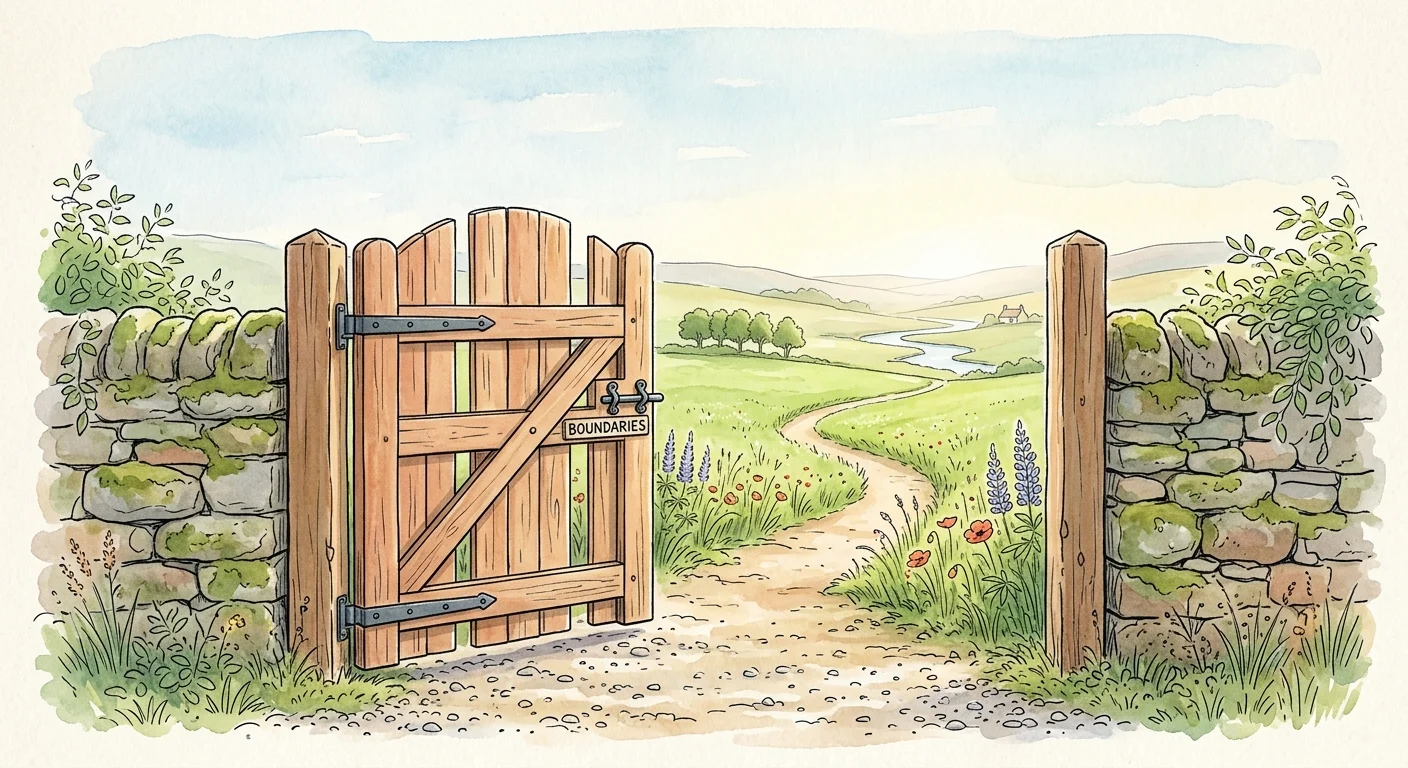
Reclaiming your life from a toxic family dynamic requires deliberate, consistent action. You cannot control your adult child’s behavior, but you possess total control over your responses.
- Stop the JADE Cycle: When setting a boundary, never Justify, Argue, Defend, or Explain. State your boundary clearly and concisely. For example: “I will not discuss this topic when you are shouting.” If they continue to shout, hang up the phone or leave the room. Every explanation you offer is viewed as an opening for negotiation.
- Implement the BIFF Communication Method: When dealing with hostile text messages or emails, keep your responses Brief, Informative, Friendly, and Firm. Strip all emotional reactivity from your replies. This starves the toxic dynamic of the dramatic fuel it requires to burn.
- Establish Hard Financial Boundaries: If your child is financially exploiting you, you must close the bank. Consult with a financial planner if necessary to structure your assets securely. Communicate the change clearly: “I love you, but I will no longer be providing financial assistance.” Anticipate an explosive reaction, and hold your ground.
- Reinvest in Your Own Identity: Many parents lose themselves entirely in the role of caregiver. Dilute the emotional intensity of the toxic relationship by filling your life with other sources of meaning. Reconnect with hobbies, volunteer, travel, and foster friendships that bring you joy.
“Daring to set boundaries is about having the courage to love ourselves, even when we risk disappointing others.” — Brené Brown, PhD

When Self-Help Isn’t Enough
While establishing boundaries is highly effective for moderate family dysfunction, certain toxic behaviors cross the line into dangerous territory. Self-help strategies have limits. You must seek professional and potentially legal support if you experience any of the following scenarios:
- Financial Abuse and Coercion: If your adult child is forging your signature, stealing money, coercing you into changing your will, or refusing to leave your home after a formal eviction notice, you are experiencing elder abuse. You need legal counsel and support from adult protective services.
- Threats of Violence or Property Damage: Emotional manipulation is one thing; physical intimidation is another. If your child breaks objects in your home, blocks your physical exit during an argument, or threatens to harm you, prioritize your physical safety above all else.
- Severe Substance Abuse or Untreated Psychosis: If your child’s toxic behavior is driven by active, severe addiction or a profound untreated mental health crisis (such as delusions or paranoia), standard boundary-setting will fail. You require guidance from professionals specializing in addiction and crisis intervention, which can be accessed through organizations like SAMHSA.
- Weaponized Threats of Self-Harm: If your child threatens suicide to force your compliance (e.g., “If you don’t pay my rent, I’m going to kill myself”), you must hand the situation over to professionals. Call emergency services or a crisis team. You are not equipped to manage a psychiatric emergency, and yielding to the threat only reinforces the manipulation.
Frequently Asked Questions
Is it normal to feel relief when my toxic adult child stops talking to me?
Yes, profound relief is a highly common—and completely valid—response. When you have spent years walking on eggshells and enduring emotional abuse, the silence of estrangement often brings immense peace. It is normal to feel a complex mixture of deep grief for the relationship you wanted, alongside relief that the daily chaos has ended.
How do I handle family gatherings if my toxic child is present?
Preparation is vital. Arrive at the gathering in your own vehicle so you retain the power to leave at any time. Decline invitations to engage in private conversations or arguments. Keep your interactions brief, polite, and strictly focused on surface-level topics. If they begin to escalate, calmly excuse yourself and leave the event.
What is the difference between enabling and supporting an adult child?
Supporting an adult child helps them achieve independence and competence (for instance, helping them review their resume or offering emotional encouragement during a tough transition). Enabling protects them from the natural consequences of their own choices (such as paying their rent because they quit a job out of anger). Support empowers; enabling disables.
Should I keep reaching out if they have stonewalled me?
If your child has explicitly asked for no contact, honor their boundary. Continuing to reach out violates their request and often prolongs the conflict. If they have simply stonewalled you without a clear boundary, you might choose to send a periodic, low-pressure message (like a birthday card) to keep the door open, but you must detach from expecting a response.
Reclaiming your autonomy from a toxic adult child is a painful but deeply necessary process. It requires confronting harsh realities and dismantling decades of ingrained parental habits. However, stepping off the rollercoaster of emotional manipulation allows you to build a life defined by peace rather than perpetual crisis. You deserve respect, safety, and tranquility in your own home. Prioritize your mental health, lean on your external support systems, and find the courage to enforce the boundaries that will protect your peace.
The information in this article is meant for educational purposes and general guidance. It does not replace individual therapy, counseling, or medical treatment. If you or someone you know is in crisis, contact the 988 Suicide & Crisis Lifeline by calling or texting 988.
Last updated: July 2026. Psychology research evolves continuously—verify current findings with professional sources.









Leave a Reply