Psychology Diary

The First Step Toward Change Is Awareness

  • Home
  • Relationships
  • Mental Health
  • Expert Tips
  • Life
  • Family
  • Marriage

Understanding Seasonal Affective Disorder (SAD) in Older Adults

August 31, 2025 · Mental Health

Woman journaling by a sunny window.

Your Next Steps: Building a Winter Wellness Plan

Understanding SAD is the first step, but taking action is what creates change. You don’t have to tackle everything at once. Small, consistent efforts can build momentum and make a meaningful difference over time. Here is a simple plan to get you started.

For the Next 7 Days

Pick ONE small strategy to try. Review the self-care strategies mentioned earlier and choose just one that feels manageable for you right now. It could be a 10-minute morning walk, opening all your blinds first thing in the morning, or scheduling one phone call with a friend. Commit to trying it every day for one week.

Keep a one-line journal. Each evening, write down one sentence about your day. It could be about your energy level, your mood, or the one strategy you tried. For example: “Energy was a 2/10 today. Sat by the window for 15 minutes in the morning.” This simple record can provide valuable insight over time.

This Month

Schedule a check-up with your primary care doctor. This is the most important step you can take. Make an appointment to discuss how you’ve been feeling. Use your mood journal and symptom list to help guide the conversation. Be open and honest. Your doctor is your partner in health and can help you create a safe and effective treatment plan.

Remember that progress is not always a straight line. There will be good days and bad days. The goal is not perfection, but persistence. Be patient and compassionate with yourself through the process. Every small step you take is a testament to your resilience and your commitment to your well-being.

Disclaimer: This article is for informational purposes only and does not constitute medical, psychological, or legal advice. It is not intended to be a substitute for professional consultation, diagnosis, or treatment. Always seek the advice of your physician or other qualified health provider with any questions you may have regarding a medical condition.

If you or someone you know is in immediate danger or considering self-harm, please call your local emergency services (like 911) right away. In the United States, you can also contact the 988 Suicide & Crisis Lifeline by calling or texting 988. Support is available 24/7, it’s free, and it’s confidential.

For further reading and evidence-based information on mental health, you can visit reputable sources such as the American Psychological Association (APA) and the National Institute of Mental Health (NIMH).


Pages: 1 2 3 4 5 6 7 8 9

Share this article

Facebook Twitter Pinterest LinkedIn Email

Leave a Reply Cancel reply

Your email address will not be published. Required fields are marked *

Search

Latest Posts

  • A mixed media collage of a silhouette filled with torn paper and translucent layers, symbolizing the invisible nature of emotional neglect. 10 Traits of People Emotionally Neglected as Kids
  • A mixed-media collage showing a rigid, golden silhouette with cracks revealing a soft, watercolor interior, representing performative armor. 7 Behaviors People Mistake For Confidence But Aren’t
  • A woman sits alone at a kitchen table in dim evening light while her partner stands in the background, illustrating emotional distance. 9 Psychological Reasons Why People Stay in Unhappy Relationships
  • An illustration of a person using a prism to turn a chaotic blue wave into a clear spectrum of distinct colors. 10 Signs You Have Exceptionally High Emotional Intelligence
  • A mixed-media collage of an older person's profile filled with childhood drawings and school reports, representing deep-seated habits. 8 Childhood Habits That Still Secretly Shape Your Personality After 60
  • An abstract mixed-media piece showing bright yellow and orange splashes like a laugh, covering a dark, dense gray background. 7 Signs Someone Uses Humor To Avoid Serious Conversations
  • Two friends sitting at a kitchen table, unconsciously mirroring each other's posture by resting their chins on their hands. 7 Signs Someone Mirrors Your Personality Without Realizing It
  • A woman laughs at her phone while her friend sits beside her on a sofa with a forced, thin smile and envious eyes. 7 Friendship Behaviors That Reveal Hidden Jealousy
  • A mixed media collage showing a glowing smartphone screen inside a mirror frame, casting a shadow of a staged performance on a curtain. 7 Signs Someone Is Performing Kindness For Attention
  • A mixed media collage of a person in a theatrical spotlight while their partner sits in the shadows of a theater audience. 7 Signs Someone Loves Attention More Than They Love You

Newsletter

Get the latest posts delivered to your inbox.

Related Articles

True Crime

9 Reasons Why We Like True Crime

Isn’t it crazy that we love true crime? Why do life-threatening situations entertain us? We…

Read More →
ptsd

These 6 Conditions Are Related to PTSD

Anyone who has been through or witnessed a shocking event, such as a vehicle accident,…

Read More →
narcissistic

9 Alarming Signs You Have Narcissistic Abuse Syndrome

8. Anxiety and depression Being in a relationship with a narcissistic partner might have serious…

Read More →
dementia myth

7 Worst Types of Dementia and How to Identify Yours

…Are you scared of dementia? According to research, dementia is one of the most prevalent…

Read More →
burnout

7 Signs of Burnout (and What To Do About It)

Even the greatest jobs can lead to burnout. The more you work and the more…

Read More →
antidepressants

6 Natural Antidepressants That Might Help With Depression

Did you know that there are a lot of natural antidepressants that could improve your…

Read More →
borderline personality disorder

10 Ways to Cope With Borderline Personality Disorder

Here’s how To Cope with Borderline Personality Disorder! If you suffer from borderline personality disorder…

Read More →
tips for de-stressing

8 Tips for De-Stressing After a Conflict

7. Distance yourself from the situation We all feel more emotional immediately after a disagreement,…

Read More →
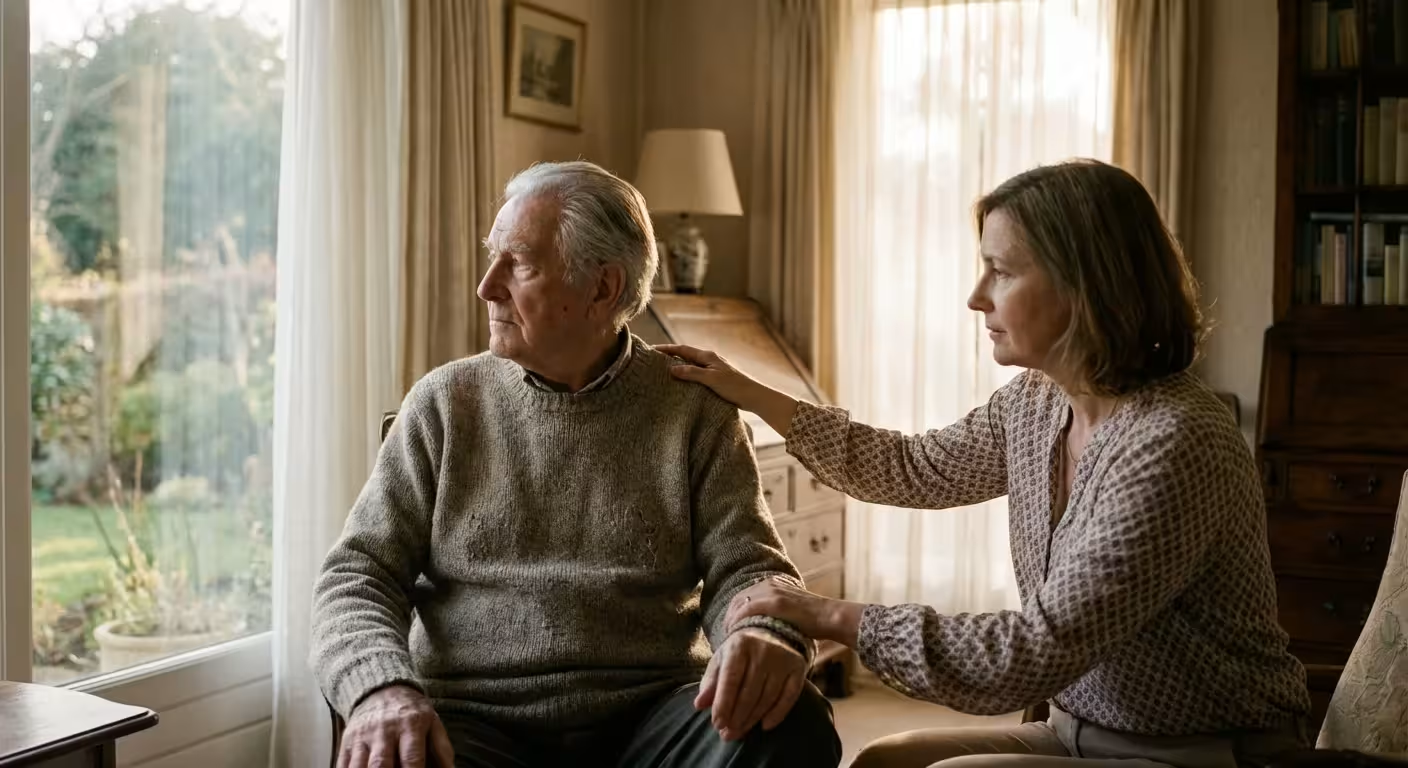
An adult daughter comforting her elderly father by a sunlit window.

5 Early Warning Signs of Alzheimer’s Most People Ignore

Discover the 5 subtle early warning signs of Alzheimer's most people ignore, including apathy, visual-spatial…

Read More →

Psychology Diary

The First Step Toward Change Is Awareness

Inedit Agency S.R.L.
Bucharest, Romania

contact@psychologydiary.com

Explore

  • About Us
  • Advertiser Disclosure
  • Contact Us
  • Disclaimer
  • Do not sell my personal information
  • Editorial Policy
  • Frequently Asked Questions
  • Privacy Policy
  • Terms and Conditions
  • Subscribe
  • Unsubscribe

Categories

  • Expert Tips
  • Family
  • Life
  • Marriage
  • Mental Health

© 2026 Psychology Diary. All rights reserved.