
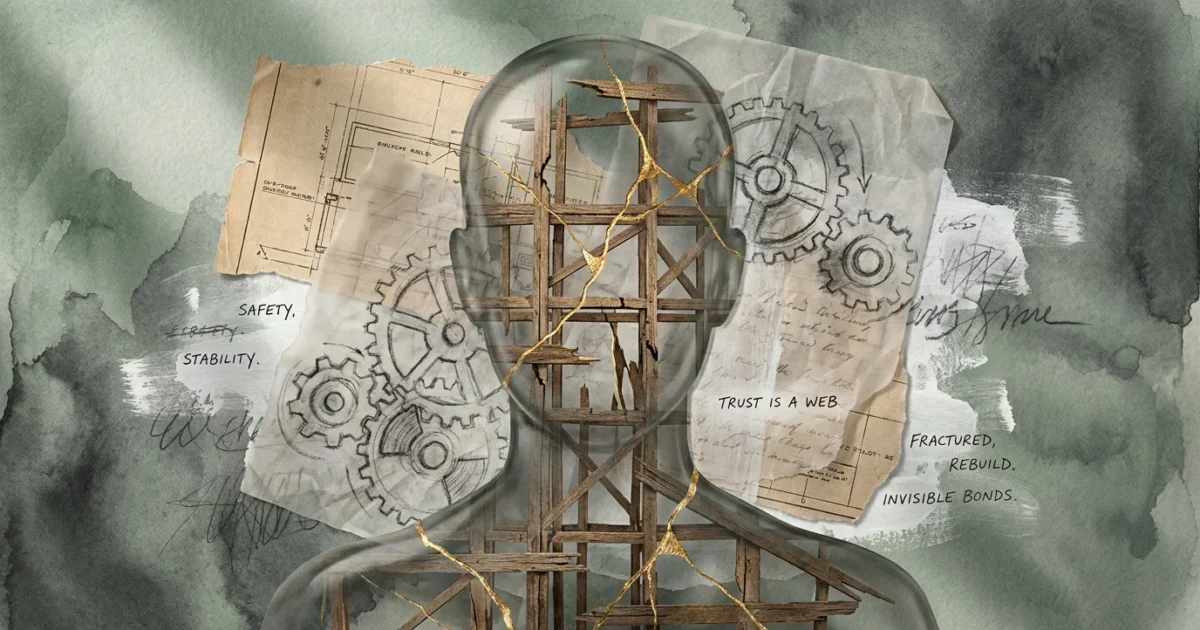
Trust is the invisible architecture that holds human connections together, yet for those who have experienced deep betrayal, this foundation is fractured. When someone harbors profound trust issues, their pain doesn’t always look like overt jealousy or dramatic accusations. Instead, it manifests in quiet, self-protective behaviors—subtle emotional walls built to prevent future hurt. Recognizing these patterns isn’t about assigning blame; it is about understanding the intense vulnerability operating beneath the surface. Whether you are trying to understand a partner’s distancing behaviors or recognizing your own defensive reflexes, identifying these hidden mechanisms is the first step toward genuine emotional safety.
1. Chronic Anticipation of Betrayal (Hypervigilance)
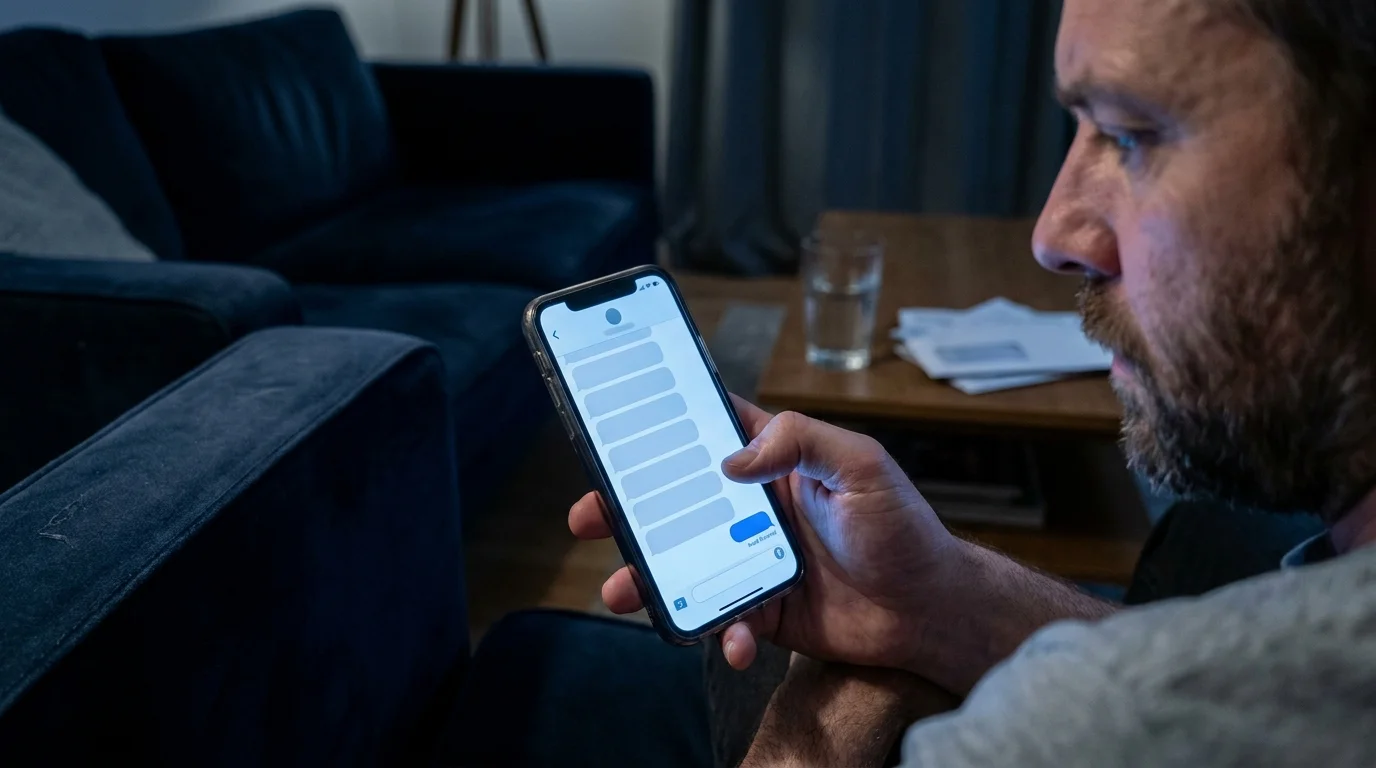
When you have been profoundly let down, your nervous system adapts to protect you. Hypervigilance is a biological adaptation—a way your brain attempts to keep you safe by constantly scanning your environment for threats. In relationships, this looks like a chronic anticipation of betrayal. You might analyze a partner’s micro-expressions, dissect their tone over a text message, or read heavily into harmless changes in routine. If a friend takes an hour longer to reply than usual, your mind skips past rational explanations and lands directly on rejection or deceit.
According to psychological frameworks regarding trauma, this constant threat-monitoring keeps the nervous system locked in a sympathetic state. You are perpetually waiting for the other shoe to drop because, in your past, it always did. The Gottman Institute highlights that betrayal is not always a massive event; it can be subtle and ongoing, eroding safety over time. When someone has experienced this erosion, they assume betrayal is the default setting of human interaction. They expend massive amounts of cognitive energy bracing for impact, leaving them physically and emotionally exhausted.
2. Extreme Emotional Withholding and Self-Reliance
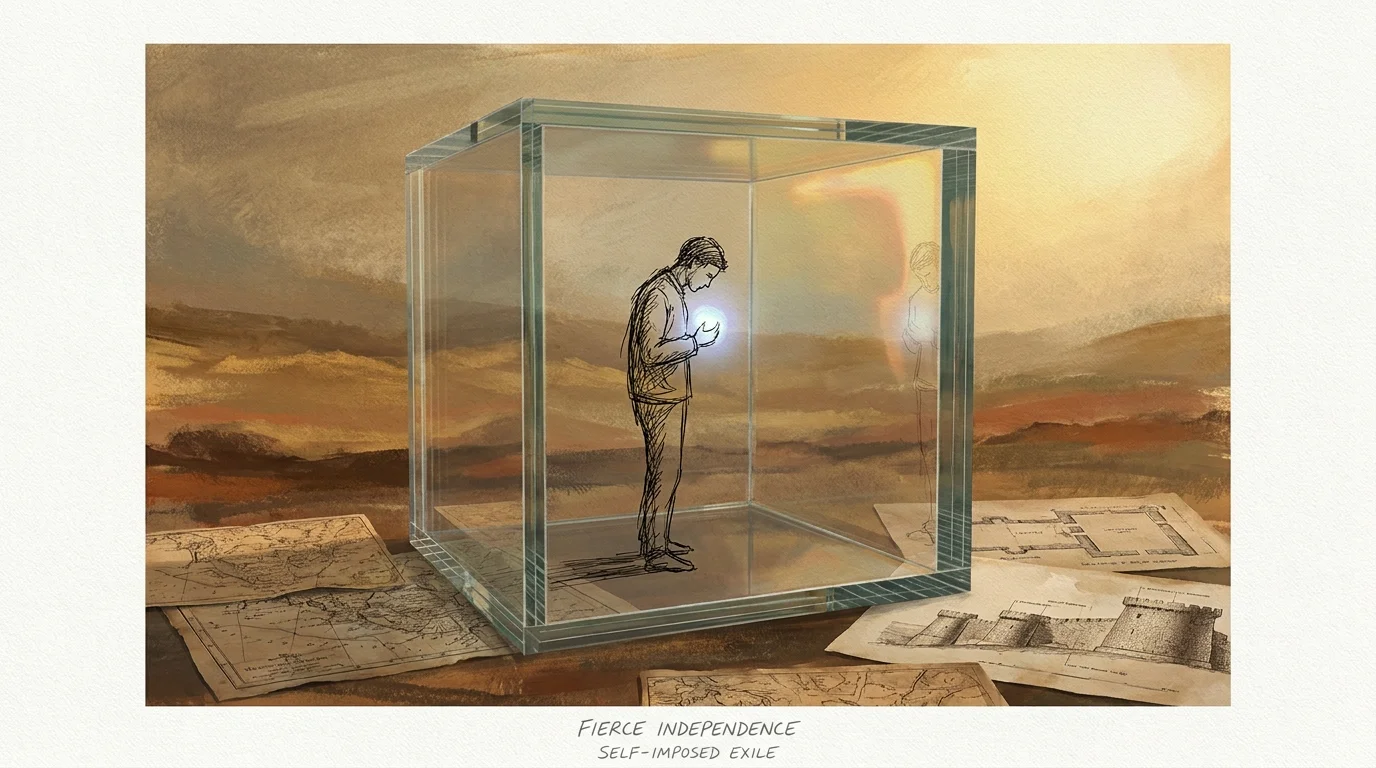
You likely know people who pride themselves on never needing a single favor from anyone. While cultural narratives often praise fierce independence, extreme self-reliance is frequently a trauma response masquerading as strength. When someone harbors deep trust issues, they equate relying on others with placing themselves in immediate, existential danger.
This behavior manifests as emotional withholding. You might share superficial details about your day but completely guard your inner fears, insecurities, or moments of grief. If you are struggling at work or navigating a health scare, you will handle it entirely alone rather than asking a partner for support. The subconscious logic is simple: if you do not give anyone the opportunity to let you down, you cannot be disappointed. However, this protective strategy ensures profound loneliness. You build a fortress so strong that while it keeps out potential betrayers, it also starves you of the genuine connection you actually crave.
3. Constant Testing of Loyalty and Boundaries
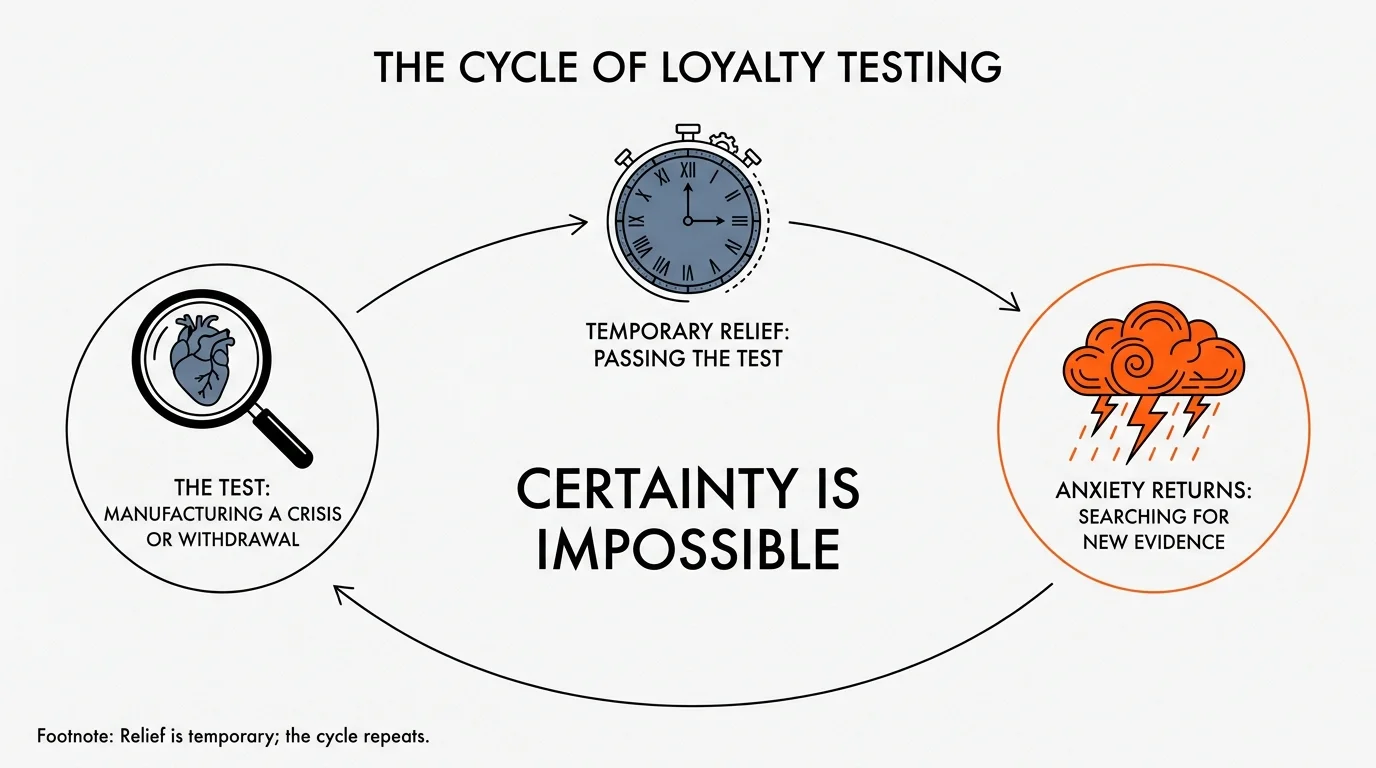
Trust requires a leap of faith; someone with trust issues wants absolute, mathematical certainty before they jump. Because genuine certainty is impossible in human relationships, they resort to testing their partners and friends. These tests are usually invisible to the person taking them, creating a confusing and turbulent dynamic.
You might intentionally withdraw affection just to see if your partner will pursue you. You might manufacture a minor crisis to gauge someone’s dependability, or set a subtle trap regarding a boundary to see if it gets crossed. These loyalty tests are deeply unfair to the people on the receiving end, who often feel like they are walking on eggshells. The tragedy of this behavior is that passing the test rarely provides lasting comfort. The relief is temporary. Soon enough, the anxiety returns, and a new test must be devised to prove the loyalty all over again.

4. The Preemptive Strike (Abandoning Before Being Abandoned)
There is a distinct psychological phenomenon where individuals destroy something beautiful simply because they fear losing it. If you have deep-seated trust issues, the vulnerability of being in a healthy, loving relationship can feel absolutely terrifying. The closer you get to someone, the more leverage they have to destroy you emotionally.
To regain control over this terrifying dynamic, you might initiate a preemptive strike. You pick unnecessary fights, highlight trivial flaws in your partner, or abruptly end the relationship just as things are getting serious. By being the one to walk away, you control the narrative. You ensure that you are the heartbreaker rather than the heartbroken. While this provides a fleeting sense of power, it ultimately fulfills your deepest fear of abandonment, reinforcing the false belief that relationships never work out anyway.
5. Over-Explaining and Defensiveness in Conflict
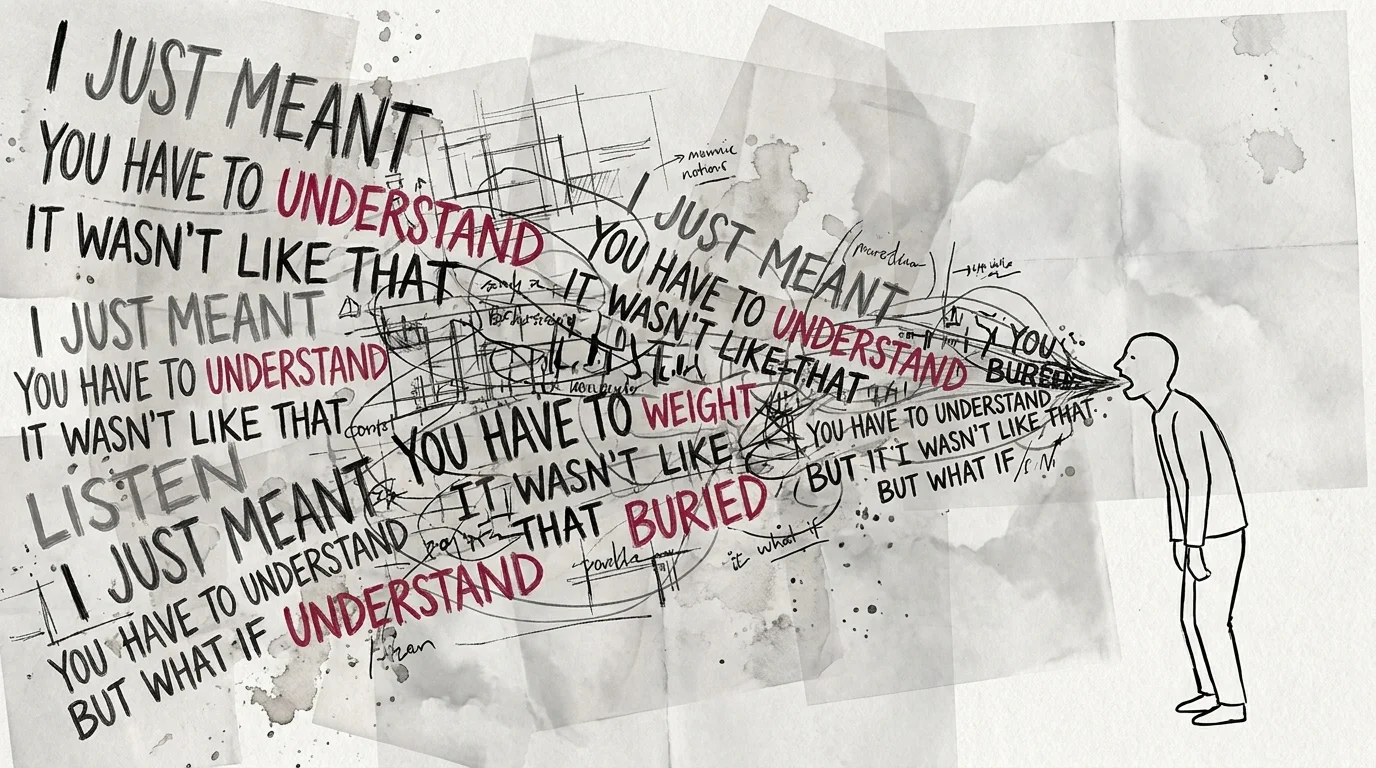
When you inherently expect to be misunderstood, judged, or disbelieved, you learn to over-prepare your defense. People with deep trust issues often struggle to engage in casual conflict resolution. Instead of stating their perspective simply, they bring a metaphorical courtroom defense to a minor disagreement.
You might find yourself over-explaining your motives, providing unnecessary evidence for your actions, or becoming intensely defensive over gentle feedback. This stems from a history where your reality was denied, perhaps through gaslighting or chronic invalidation. You do not trust that your partner will give you the benefit of the doubt. This defensiveness can escalate minor misunderstandings into massive arguments, as your partner feels overwhelmed by your intense reaction to what they perceived as a passing comment.

6. Difficulty Accepting Genuine Compliments or Kindness
To a securely attached individual, a compliment is a gift to be accepted gracefully. To someone navigating trust issues, a compliment is a potential trap. If a partner praises your appearance, your intellect, or your character, your immediate internal reflex might be deep suspicion.
You search for the hidden agenda. You wonder what they want from you, or if they are softening you up to deliver bad news. This inability to absorb kindness extends to acts of service. If a friend pays for dinner or a colleague offers to help with a project, you immediately calculate the debt you now owe them. You view relationships as transactional ledgers rather than spaces of mutual care. Accepting kindness requires lowering your shield, which your survival instincts adamantly oppose.

7. Micromanaging and Controlling Tendencies
Control is often the most accessible, desperate substitute for trust. When you cannot trust the people around you to behave in ways that keep you safe, you attempt to dictate their behavior entirely.
In a relationship, this might look like dictating how a partner completes household chores, managing their social calendar, or constantly tracking their whereabouts. While this is often labeled as a personality quirk, at its core, it is rooted in profound anxiety. You believe that if you can just control every variable, you can prevent disaster. Unfortunately, trying to micromanage another human being suffocates the relationship. It builds resentment and strips your partner of their autonomy, pushing away the very connection you are terrified of losing.

8. Keeping Scores and Archiving Past Mistakes
A hallmark of relational trust is the ability to forgive, repair, and move forward. For someone with trust issues, past mistakes are never truly resolved; they are meticulously archived for future use.
Dr. John Gottman refers to a psychological state in failing relationships as negative sentiment override, where even neutral or positive actions are interpreted negatively due to a backlog of unresolved pain. If you are keeping score, you maintain a mental ledger of every time a partner was late, every careless word they spoke, and every promise they delayed. You use this historical data as a shield during current conflicts. Instead of addressing the issue at hand, you pull out the archives to prove a broader pattern of unreliability. This behavior prevents true repair, as the person you are with feels they can never wipe the slate clean or earn back your good graces.
“Trust is built in very small moments…because in any interaction there is a possibility of connection with our partner or turning away from our partner.” — Dr. John Gottman, Psychological Researcher
Myths Worth Debunking
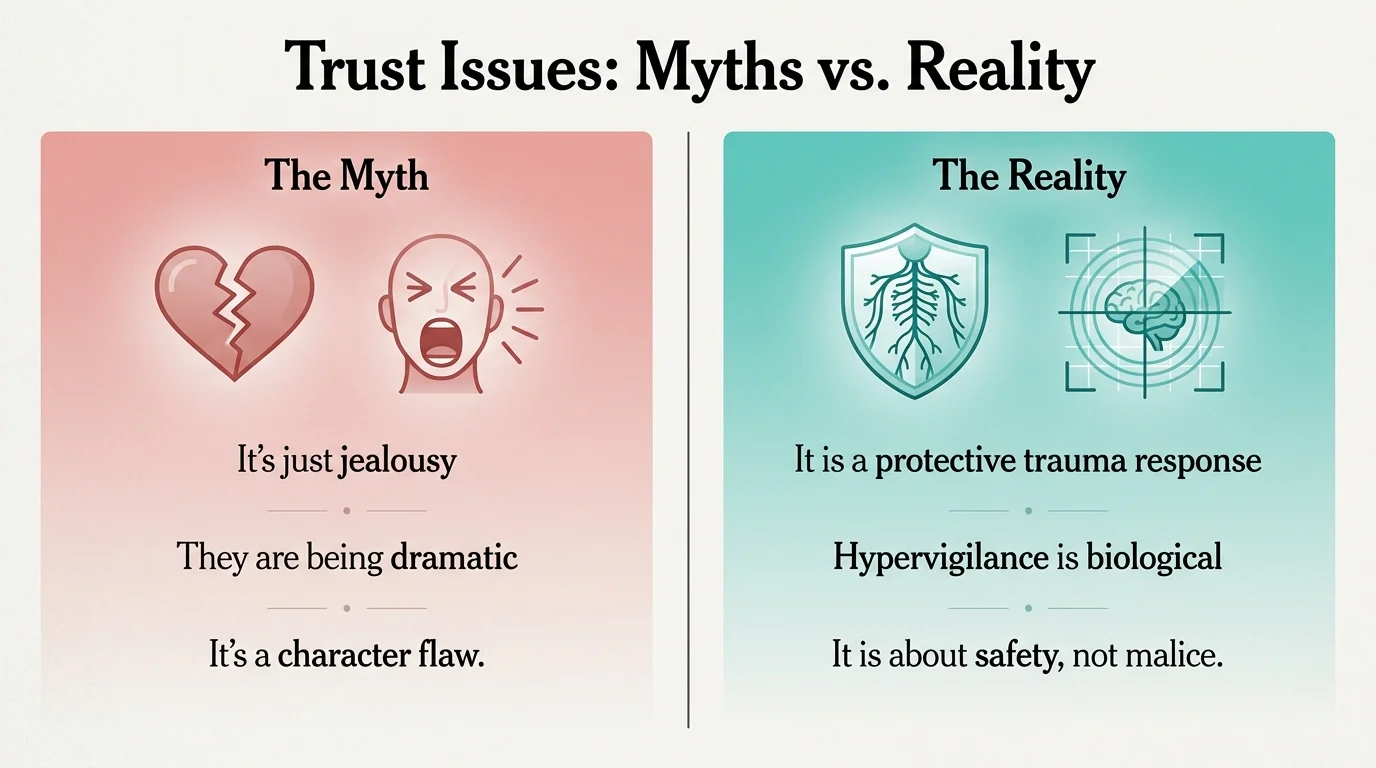
When addressing trust, society often relies on oversimplified tropes. Clearing up these misconceptions is vital for genuine healing.
- Myth: Trust issues just mean you are jealous.
Fact: Jealousy is primarily about possession and fear of replacement. Trust issues are fundamentally about psychological safety, nervous system regulation, and emotional self-preservation. - Myth: You can just “decide” to trust someone.
Fact: Trust is a neurological process. The amygdala needs consistent, safe experiences to rewire. You cannot simply logic your way out of a physiological trauma response. - Myth: Time heals trust issues.
Fact: Time passing does nothing if the underlying patterns are not actively addressed. Untreated trust issues often compound and harden over time, rather than naturally dissipating.
Comparing Healthy Trust vs. Trauma-Informed Trust Issues
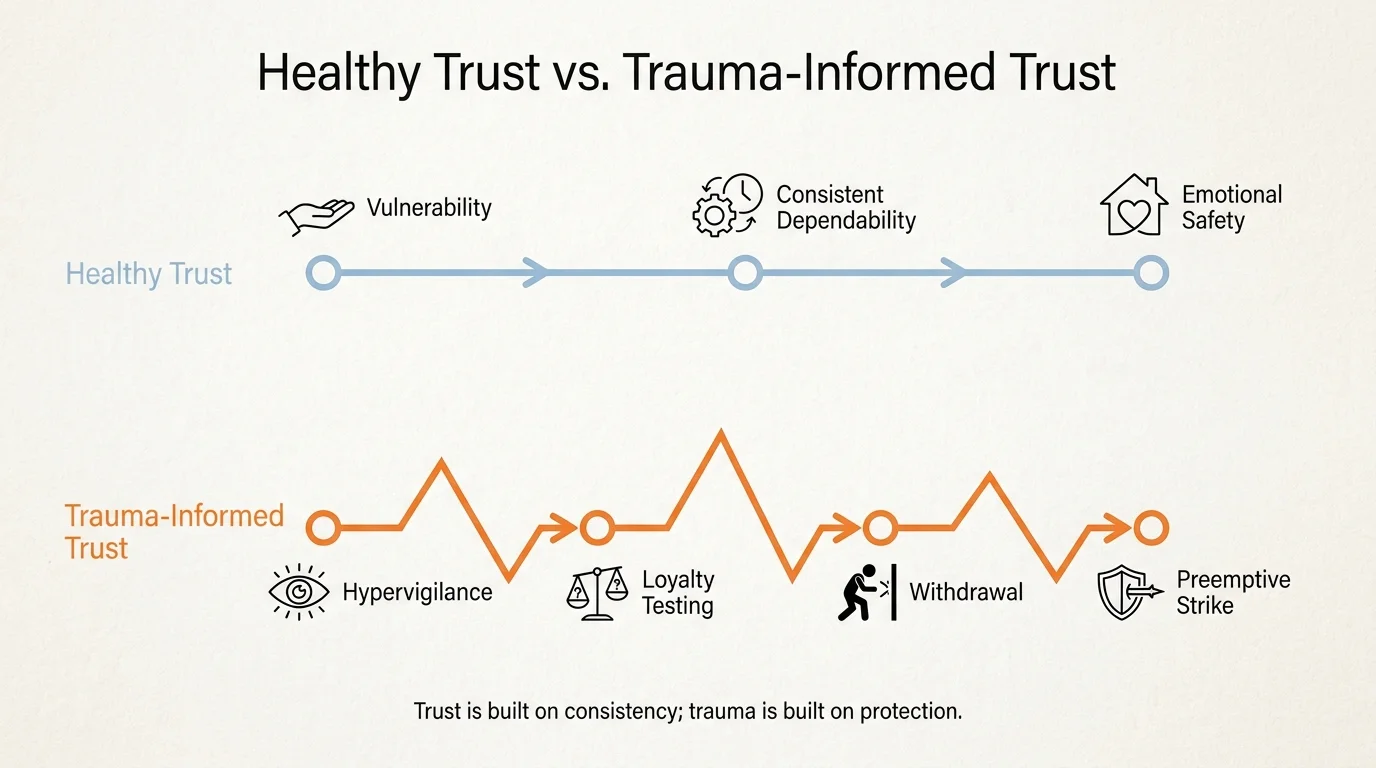
Understanding the difference between a secure response and a trauma-informed response can help you identify where your healing needs to focus.
| Behavior Pattern | Healthy Trust Response | Trust Issue Response |
|---|---|---|
| When a partner makes a mistake | Assumes good intentions; discusses the impact openly and seeks repair. | Views the mistake as intentional or undeniable proof of impending betrayal. |
| During conflict or disagreement | Stays emotionally present and works toward a mutual resolution. | Pulls away emotionally, stonewalls, or lashes out preemptively. |
| Handling vulnerability | Shares fears and insecurities directly, trusting they will be handled with care. | Masks vulnerability with anger, sarcasm, or extreme hyper-independence. |
| When receiving compliments | Accepts praise gracefully and internalizes the positive feedback. | Searches for the “catch,” ulterior motive, or hidden agenda. |

Signs It’s Time to Talk to a Therapist
If your protective mechanisms are causing you more pain than safety, professional support is invaluable. The American Psychological Association emphasizes that therapeutic intervention can effectively help individuals rewire deep-seated trauma responses. Consider reaching out to a licensed professional if you experience:
- Complete Emotional Isolation: Your protective walls have become a prison, leaving you feeling entirely disconnected from the people around you, even those who have proven themselves reliable.
- Chronic Self-Sabotage: You notice a distinct, recurring pattern of destroying healthy, loving relationships the exact moment you begin to feel close to someone.
- Physical Symptoms of Anxiety: Your hypervigilance manifests as insomnia, chronic muscle tension, digestive issues, or panic attacks when navigating interpersonal dynamics. Trust impacts the body directly; in a longitudinal study, Dr. John Gottman found that 58% of men in marriages scoring low on trust died over the 20-year period of the study, highlighting the immense physical toll of chronic relational stress.
- Inability to Move Past Infidelity: If you are trying to reconcile after a betrayal (which surveys estimate affects roughly 20 to 25% of marriages), but find yourself entirely unable to stop punishing your partner long after a genuine, structured repair process has begun.
“We cultivate love when we allow our most vulnerable and powerful selves to be deeply seen and known, and when we honor the spiritual connection that grows from that offering with trust, respect, kindness and affection.” — Dr. Brené Brown, Research Professor
Frequently Asked Questions
How do you build trust with someone who has deep trust issues?
Consistency is your most powerful tool. People with profound trust issues do not need grand, sweeping romantic gestures; they need predictable, reliable behavior over a sustained period. Show up when you say you will. Communicate openly about changes in plans. Validate their fears without absorbing their anxiety. It requires patience and a clear understanding that their defensive reactions are about their past trauma, not your current inadequacies.
Can a relationship survive severe trust issues?
Yes, but it requires active, conscious work from both partners. The partner with trust issues must take accountability for their triggers and actively work on emotional regulation, often with the help of resources from organizations like the National Alliance on Mental Illness (NAMI) or a licensed counselor. The supporting partner must practice profound empathy and transparency. When both individuals commit to creating a secure attachment, relationships can emerge stronger and far more resilient.
What causes deep trust issues in adults?
While relational infidelity is a common trigger, trust issues frequently stem from childhood dynamics. Growing up with caregivers who were emotionally inconsistent, highly critical, or completely unavailable teaches a developing brain that human connection is inherently unsafe. Later in life, toxic friendships, workplace betrayals, or romantic manipulation further solidify these neurological pathways. Trust issues are essentially the brain’s learned strategy for surviving an unpredictable world.
Rebuilding trust—whether within yourself or with another person—is not a linear journey. It requires stepping out from behind the heavy armor you have carried for years and allowing yourself to be seen. While these eight behaviors served a powerful purpose by keeping you safe in the past, you get to decide if they are still serving you today. By recognizing these patterns, you take the crucial first step toward dismantling the walls that keep genuine connection at bay. Take this process slowly, celebrate the small victories of vulnerability, and remember that desiring emotional safety is a fundamentally human need.
This is educational content based on psychological research and general principles. Individual experiences vary significantly. For personalized guidance, consult a licensed therapist, psychologist, or counselor.
Last updated: May 2026. Psychology research evolves continuously—verify current findings with professional sources.









Leave a Reply