

Getting older doesn’t mean inevitably losing your mental edge. Recent research flips the script on aging and cognition, showing that physical activity does more than protect your joints—it actively rewires your brain. When you elevate your heart rate or challenge your muscles, your body releases proteins that act like fertilizer for neural connections. Whether you walk briskly, lift weights, or swim, moving your body is one of the most effective ways to preserve memory, quicken your processing speed, and sharpen your focus after 60. By making movement a consistent part of your routine, you take control of your cognitive health and build a highly resilient mind for the years ahead.

The Biological Magic of Movement
To understand why physical activity is so potent for your brain, it helps to look closely at what happens internally when you break a sweat. Historically, many scientists believed that the human brain stopped developing and generating new cells in early adulthood. Today, we know that the brain remains highly adaptable throughout your life—a concept known as neuroplasticity. Physical activity acts as the primary catalyst for this ongoing brain remodeling.
When you engage in sustained movement, your heart pumps oxygen-rich blood directly to your brain, nourishing cells and sweeping away metabolic waste. But the real magic lies in a specific protein known as brain-derived neurotrophic factor, or BDNF. Often referred to as “Miracle-Gro for the brain,” BDNF promotes the survival of existing neurons and encourages the growth of entirely new ones, particularly in the hippocampus; this is the brain region responsible for learning and memory.
A fascinating 2026 study conducted by researchers at University College London revealed that the brain’s response to exercise actually compounds over time. The researchers found that as sedentary adults became physically fitter, their bodies released significantly larger surges of BDNF after every subsequent workout. This means your brain becomes more efficient at healing and strengthening itself the more consistently you move. Your effort today pays off by making your brain far more receptive to the cognitive benefits of tomorrow’s walk or swim.
Cardio Versus Resistance Training: Finding Your Balance
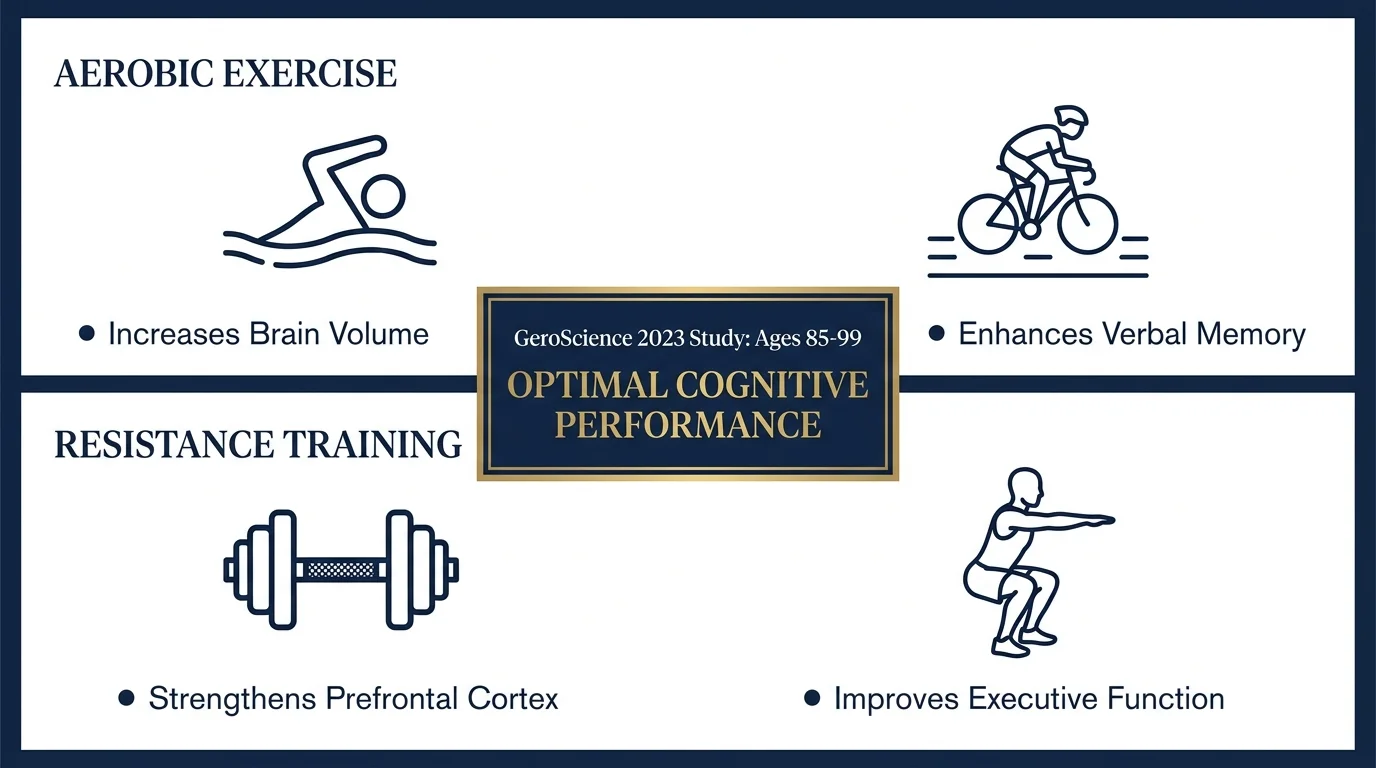
For decades, aerobic exercise—like jogging, cycling, or swimming—was the undisputed champion of brain health recommendations. We now understand that while aerobic exercise is exceptional for increasing brain volume and enhancing verbal memory, it represents only half of the equation. Resistance training, which involves lifting weights, using resistance bands, or doing bodyweight exercises, targets cognitive decline in an entirely different, yet equally vital, way.
Recent data underscores the profound power of combining these two modalities. A 2023 study published in the journal GeroScience evaluated adults ranging from 85 to 99 years old. The researchers discovered that the participants who engaged in both aerobic activities and strength training performed significantly better on cognitive tests than those who only did cardio or remained sedentary. The combined group demonstrated sharper mental agility, quicker thinking, and a greater capacity to shift and adapt their cognitive focus.
Strength training places a unique demand on the central nervous system. When you execute a complex movement like a squat or a targeted dumbbell lift, your brain must intensely focus on motor control, balance, and spatial awareness. This process strengthens the prefrontal cortex, heavily engaging your executive function—the mental skillset you rely on for planning, multitasking, and problem-solving.
To visualize how these two forms of exercise support your mind, consider this breakdown:
| Exercise Modality | Primary Cognitive Benefits | Real-World Application |
|---|---|---|
| Aerobic Training (Walking, Swimming, Cycling) | Increases hippocampal volume; improves verbal memory; elevates resting BDNF levels. | Recalling names; sustaining focus during long conversations; processing new information clearly. |
| Resistance Training (Weightlifting, Bands) | Sharpens executive function; enhances working memory; improves central nervous system efficiency. | Multi-tasking safely; making quick decisions; organizing and planning your daily schedule. |
| Combined Training (Aerobic + Resistance) | Provides synergistic neuroplasticity; enhances cognitive flexibility and overall mental agility. | Adapting to sudden changes in plans; learning complex new skills; maintaining cognitive independence. |

The Psychological Boost: Beyond Just Memory
While memory preservation often dominates conversations about aging, your emotional and psychological well-being are equally crucial to your overall cognitive sharpness. Mental health challenges such as depression, anxiety, and chronic loneliness can severely impair your cognitive processing speed and memory recall. If you are struggling with a low mood, it is profoundly difficult to concentrate or remember details, mimicking the symptoms of cognitive decline.
Regular physical activity serves as a powerful, natural mood stabilizer. Exercise stimulates the release of endorphins, serotonin, and dopamine—neurotransmitters that alleviate depressive symptoms and lower baseline anxiety. Furthermore, participating in group fitness classes, walking clubs, or community center programs provides built-in socialization. This human connection combats isolation, offering a dual benefit: you receive the biological advantages of movement alongside the psychological stimulation of conversation and camaraderie.
Aging inevitably introduces changes to your physical capabilities, which can sometimes feel discouraging. You might not be able to run the distances you once did, or lift the weights you handled in your forties. Acknowledging these changes requires profound emotional resilience.
“When we are no longer able to change a situation, we are challenged to change ourselves.” — Viktor Frankl, Psychiatrist and Holocaust Survivor
Frankl’s insight perfectly encapsulates the mindset needed for healthy aging. You may not be able to change the fact that your knees are more sensitive or your stamina has shifted, but you can choose to adapt. You can pivot to low-impact swimming, embrace the support of resistance bands, and redefine what a successful workout looks like for your body today.

Overcoming the Intimidation Factor
If you have been inactive for a long time, the idea of stepping into a gym or starting a new fitness regimen can be incredibly daunting. Gym anxiety is a very real phenomenon. You might worry about sustaining an injury, feeling out of place among younger crowds, or simply not knowing how to use the equipment.
“Courage starts with showing up and letting ourselves be seen.” — Brené Brown, Research Professor and Author
Allow yourself the grace to be a beginner. Showing up is a radical act of self-care. Start by exploring environments specifically designed for older adults. Many local YMCAs, community centers, and programs like SilverSneakers offer classes tailored to aging bodies, led by instructors trained to modify exercises for joint health and balance limitations. You do not need to push yourself to exhaustion to reap the brain-boosting rewards; you simply need to begin.

Actionable Steps: Moving More to Think Better
Transitioning from knowing you should exercise to actually doing it requires practical, sustainable strategies. You do not need an extreme overhaul of your lifestyle. Instead, focus on incremental, manageable adjustments to your daily routine.
- Embrace the 15-Minute Rule: You do not need an hour of gruelling exercise to trigger positive brain changes. Current research indicates that even 15 to 20 minutes of moderate activity begins to elevate BDNF levels. If a full workout feels overwhelming, commit to just a 15-minute brisk walk after breakfast.
- Aim for the Sweet Spot: A 2024 meta-analysis found that older adults achieved the largest spikes in cognitive-boosting proteins when they exercised three to four times a week for at least 12 weeks. Consistency over time matters far more than the intensity of any single session.
- Pair Movement with Enjoyment: Exercise shouldn’t feel like a punishment. Listen to your favorite psychology podcast, an audiobook, or uplifting music while you walk. If you enjoy nature, opt for trail walking over a treadmill to gain the added mental health benefits of green spaces.
- Integrate Dual-Tasking: Challenge your brain and body simultaneously. While walking, try counting backward from 100 by sevens, or name a city for every letter of the alphabet. This “dual-tasking” forces your brain’s executive function into high gear while your body handles the motor task of movement.
- Start Resistance Training Safely: If you are new to strength training, begin with bodyweight exercises like wall push-ups, chair squats (standing up and sitting back down slowly), or use light resistance bands. Consult a physical therapist or a certified senior fitness instructor to ensure proper form and prevent injury.

Patterns to Watch For
When exploring the relationship between exercise and aging, it is easy to fall into limiting beliefs. Pay attention to these common misconceptions that might be holding you back:
The “It’s Too Late” Fallacy: You might believe that if you haven’t been active throughout your life, starting at 65 or 75 won’t make a difference. The evidence strongly contradicts this. Brain imaging shows that previously sedentary older adults who begin an exercise routine can successfully enlarge their hippocampus and improve memory within just a few months. Your brain retains its neuroplasticity until the very end of life.
The “No Pain, No Gain” Myth: You do not need to endure high-intensity interval training or heavy sweating to protect your mind. A 2025 systematic review confirmed that walking at a low-to-moderate intensity demonstrates highly favorable efficacy for improving circulating BDNF levels and cognitive function in older adults. Gentle, consistent movement is incredibly powerful.
Accepting Decline as Inevitable: While minor memory lapses—like forgetting where you put your keys—are normal, significant cognitive decline is not an absolute certainty of aging. Assuming that you will inevitably lose your sharpness can lead to apathy, causing you to stop engaging in the very lifestyle habits (like exercise, reading, and socializing) that keep your mind vibrant.

When Self-Help Isn’t Enough
While physical activity is a profound tool for maintaining cognitive health, it is not a cure-all for underlying medical or neurological conditions. It is crucial to recognize when self-guided lifestyle changes are insufficient and professional medical evaluation is necessary. Consult a healthcare provider if you experience any of the following:
- Noticeable Memory Gaps: If you are frequently forgetting important appointments, losing your way in familiar neighborhoods, or struggling to complete routine daily tasks (like paying bills or following a recipe), seek an evaluation from a neurologist.
- Unexplained Physical Pain: If movement causes sharp, shooting pain, joint swelling, or severe shortness of breath that does not resolve with rest, stop exercising and consult your physician to rule out cardiovascular issues or acute musculoskeletal injuries.
- Sudden Mood or Personality Changes: Extreme apathy, sudden aggression, or severe depressive episodes that make it impossible to get out of bed require professional support. These can sometimes be early indicators of neurological shifts or clinical depression, which necessitate targeted treatment from a mental health professional.
- Frequent Falls or Balance Issues: If you are experiencing unexplained dizziness, vertigo, or have fallen more than once in the past six months, a physical therapist and doctor should evaluate your vestibular system and motor control before you begin a new exercise regimen.
Frequently Asked Questions
What is the best exercise for mental health in older adults?
The most effective approach combines moderate-intensity aerobic exercise, such as brisk walking, cycling, or swimming, with resistance training two to three days a week. Engaging in both modalities provides the greatest overall cognitive, executive function, and emotional benefits.
How long does it take to see cognitive improvements from exercise?
While you may notice an immediate, acute boost in mood, focus, and mental clarity right after a workout, structural changes in the brain—such as measurable improvements in memory and increased hippocampal volume—typically require consistent exercise over a period of 12 to 16 weeks.
Is walking enough to improve memory after 60?
Yes. Consistent, brisk walking significantly increases blood flow to the brain and elevates levels of brain-derived neurotrophic factor (BDNF). Research consistently shows that a daily brisk walk is highly effective at protecting the hippocampus and preserving memory function in older adults.
If you are ready to prioritize your cognitive longevity, remember that the most important step you can take is the first one. You do not need to become an athlete overnight. Start where you are, use the mobility you have, and gently challenge yourself to move a little more each week. Your brain will eagerly respond to the effort.
The information in this article is meant for educational purposes and general guidance. It does not replace individual therapy, counseling, or medical treatment. If you or someone you know is in crisis, contact the 988 Suicide & Crisis Lifeline by calling or texting 988. For specific guidance on age-related mental health, visit the National Institute of Mental Health.
Last updated: May 2026. Psychology research evolves continuously—verify current findings with professional sources.









Leave a Reply