Psychology Diary

The First Step Toward Change Is Awareness

  • Home
  • Relationships
  • Mental Health
  • Expert Tips
  • Life
  • Family
  • Marriage

An Introduction to Mindfulness and Meditation for Seniors

August 31, 2025 · Expert Tips

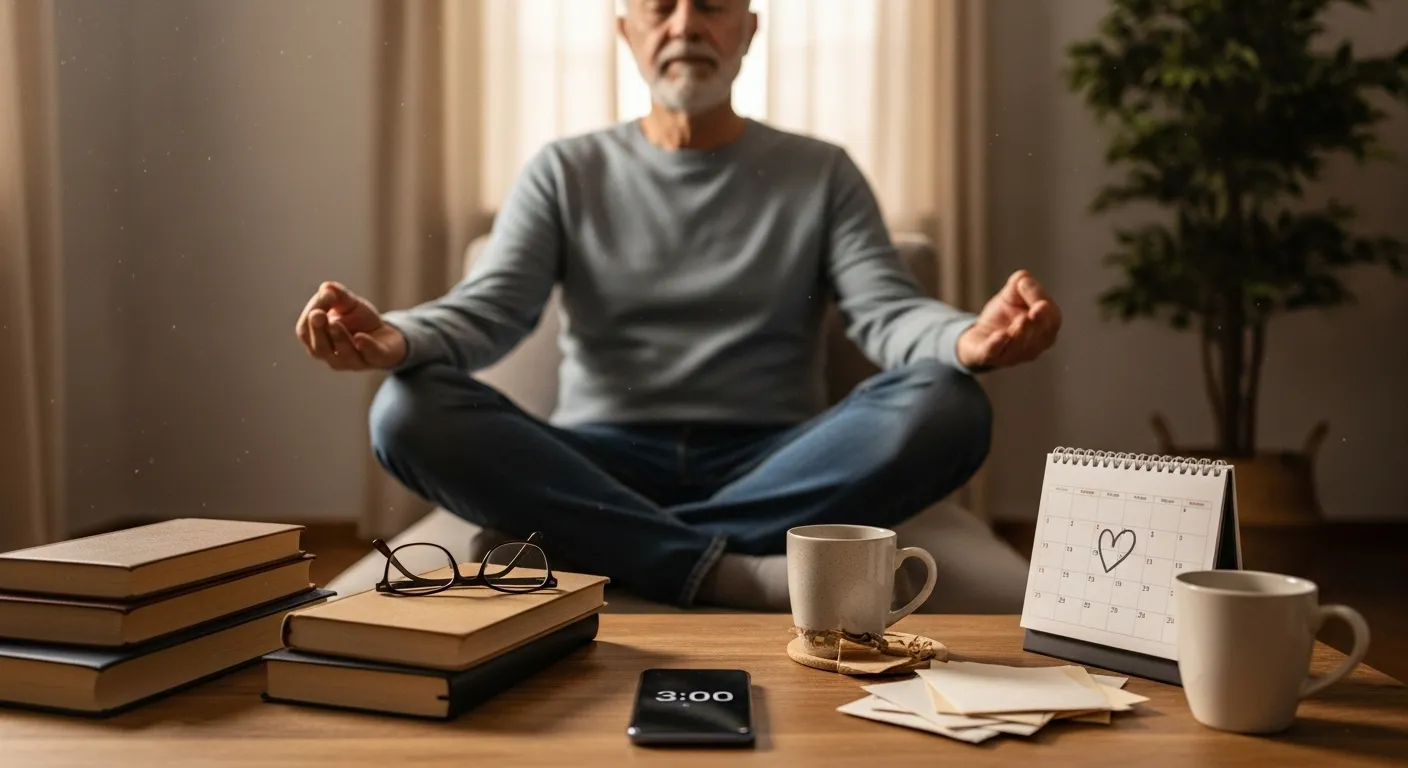
Senior man meditating with timer on phone in living room.

Frequently Asked Questions (FAQs)

How long should a senior meditate each day?

The most important factor is consistency, not duration. It is much better to start with a short, manageable session that you can do every day. We recommend beginning with just 3 to 5 minutes daily. Once that feels like a comfortable and established habit, you can gradually increase the time to 10, 15, or even 20 minutes if you wish. But even a consistent 5-minute practice can yield significant benefits.

Do I need any special equipment?

No, you do not need any special equipment to begin. One of the greatest advantages of mindfulness meditation is its accessibility. All you truly need is a quiet place where you won’t be disturbed for a few minutes and a comfortable place to sit. A simple, straight-backed chair is ideal for most people. There is no need to buy special cushions, clothing, or apps to get started.

Is it okay to use a guided meditation app?

Yes, guided meditation apps or online recordings can be an excellent resource, especially for beginners. They provide structure and can make the practice feel more approachable. When exploring these resources, try to find instructors with credible qualifications in mindfulness or mental health. Be cautious of any app or program that makes unrealistic promises or guarantees specific health outcomes. A good guided meditation should feel like a gentle invitation, not a demanding command.

What if I have mobility issues and can’t sit on the floor?

This is a very common and important question. It is a myth that you must sit on the floor in a cross-legged position to meditate. For most adults, and particularly for seniors with mobility challenges, sitting upright in a supportive chair is the recommended and most effective posture. You can also practice meditation while lying down, though you should be mindful of the tendency to fall asleep. The key is to find a posture that allows you to be both alert and comfortable.


Pages: 1 2 3 4 5 6 7 8 9 10 11

Share this article

Facebook Twitter Pinterest LinkedIn Email

Leave a Reply Cancel reply

Your email address will not be published. Required fields are marked *

Search

Latest Posts

  • An adult in a knit sweater sits on a window sill on a gray day, looking out over a misty city with a steaming mug. 10 Subtle Signs You're Just Existing, Not Truly Living
  • Editorial illustration of a person surrounded by a protective warm watercolor aura, deflecting dark droplets on textured paper. 10 Common Psychological Defense Mechanisms - Which One Do You Use?
  • A mixed-media collage silhouette of a person made from torn paper, charcoal sketches, and ink washes, representing fragmented self-trust. 9 Signs of an Emotionally Abusive Relationship
  • A mixed media collage of a human silhouette with layered torn paper in indigo and gold, symbolizing trapped physical energy and healing. 10 Signs Your Body is Holding Trauma
  • An illustration of an adult walking forward, casting a shadow that reveals a towering parental figure behind them. 10 Signs You Were Raised by a Narcissist
  • An editorial gouache illustration of a woman's profile transitioning from concrete architecture to elegant fashion lines. Who Was Melania Before She Met Donald Trump? (A Psychological Portrait)
  • An ink and watercolor illustration of a person holding a large ceramic vase with glowing gold cracks, symbolizing hidden internal pressure. The Psychology of the Person Who Is Always Fine Until They Absolutely Aren't
  • A woman sits in a sunlit home library, looking thoughtfully out a window with an open book on her lap. 12 Signs of a High IQ
  • A candid photograph of a tense moment between a couple in a sunlit kitchen, one partner looking exhausted while the other looks away. 8 Traits of Someone Who Always Has to Be Right
  • A conceptual paper collage portrait made of torn fragments representing a fragmented digital identity with blue screen patterns. 10 Clues Someone Has a False Online Identity

Newsletter

Get the latest posts delivered to your inbox.

Related Articles

gaslighting, emotionally abusive relationship

6 Warning Signs of Gaslighting in Relationships

Have you ever heard of gaslighting? It’s one of the worst things that could happen…

Read More →
Adapting To Change, dating

Adapting to Change: 5 Fearless Ways to Do It

Adapting To Change Is Never Easy…But It’s Not Impossible! The only inevitable thing in life…

Read More →

How to Make New Friends As an Adult

The quality of a person’s life depends on the friendships one has because a healthy…

Read More →

6 Signs You Have a Narcissistic Mother

6. They gaslight you The manipulative tactic of gaslighting is a common weapon used by…

Read More →
A conceptual watercolor illustration of a senior's silhouette in soft blue, with a glowing gold ink pathway symbolizing an awakening virus.

6 Early Signs of Shingles Seniors Should Never Ignore

Learn to identify the 6 crucial early signs of shingles before the rash appears, understand…

Read More →

10 Personality Traits ALL Liars Have in Common

Liars have a very good memory Good liars have an excellent memory, and they can…

Read More →
boost dopamine and serotonin

10 Proven Ways to Boost Dopamine and Serotonin Levels Naturally

How to boost dopamine and serotonin? Understanding how neurotransmitters function in our brains can help…

Read More →
resolutions

4 Psychology-Based Reasons New Year’s Resolutions Fail

Are these resolutions a bad thing? New Year’s resolutions have always been a big thing,…

Read More →
anxiety, relationship, stress

These Are the 6 Types of Anxiety Disorders

#6 Substance or Medication-Induced Anxiety Disorder The medical term for anxiety or panic attacks brought…

Read More →

Psychology Diary

The First Step Toward Change Is Awareness

Inedit Agency S.R.L.
Bucharest, Romania

contact@psychologydiary.com

Explore

  • About Us
  • Advertiser Disclosure
  • Contact Us
  • Disclaimer
  • Do not sell my personal information
  • Editorial Policy
  • Frequently Asked Questions
  • Privacy Policy
  • Terms and Conditions
  • Subscribe
  • Unsubscribe

Categories

  • Expert Tips
  • Family
  • Life
  • Marriage
  • Mental Health

© 2026 Psychology Diary. All rights reserved.