Psychology Diary

The First Step Toward Change Is Awareness

  • Home
  • Relationships
  • Mental Health
  • Expert Tips
  • Life
  • Family
  • Marriage

An Introduction to Mindfulness and Meditation for Seniors

August 31, 2025 · Expert Tips

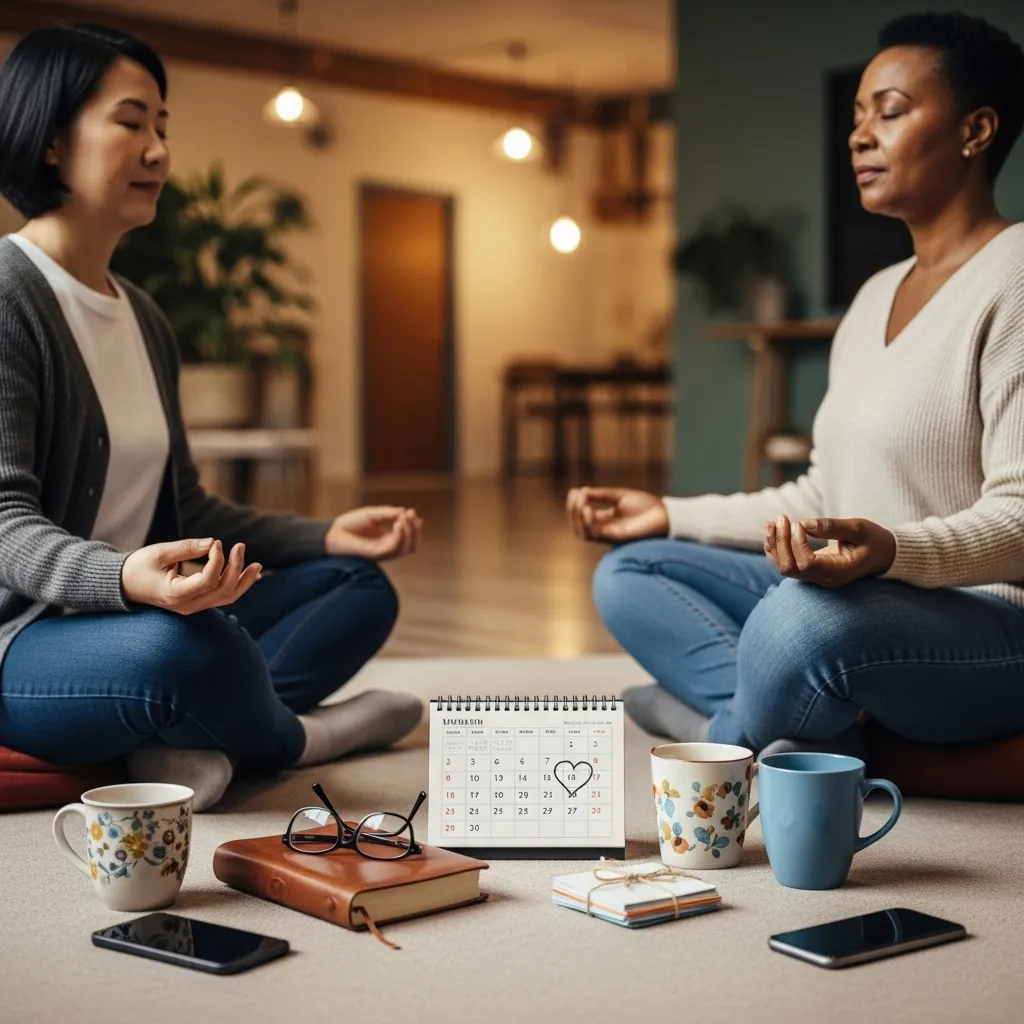
Friends meditating together.

How to Start a Mindfulness Practice: A Gentle, Step-by-Step Guide

Starting a new routine can feel daunting, but the beauty of mindfulness meditation is its simplicity. You don’t need special equipment, expensive classes, or a lot of time. The most important ingredients are a willingness to try and a dose of self-compassion. Here is how to start a mindfulness practice with just a few minutes a day.

Step 1: Choose Your Time and Place

The key to building any new habit is consistency. It is far more effective to practice for 5 minutes every day than for 30 minutes once a week. Look at your daily schedule and find a small pocket of time where you are unlikely to be interrupted. For many, this is first thing in the morning before the day’s demands begin, or in the evening as a way to wind down. Choose a location where you can be relatively quiet and undisturbed. This doesn’t need to be a special room; a comfortable chair in a quiet corner of your bedroom or living room is perfect.

Step 2: Find a Comfortable Posture

Forget the images you may have seen of people sitting cross-legged on the floor for hours. For most seniors, the best and most sustainable posture is sitting in a chair. Choose a sturdy chair that allows your feet to rest flat on the floor. Sit away from the back of the chair so that your spine can be upright but not rigid—imagine a string gently pulling the crown of your head toward the ceiling. This posture promotes alertness. Let your hands rest comfortably in your lap. You can gently close your eyes or, if that feels uncomfortable, simply lower your gaze to a spot on the floor a few feet in front of you.

Step 3: The Foundational Practice: Mindful Breathing

The breath is the most common anchor in mindfulness meditation because it is always with you. Once you are settled in your posture, begin by taking a few deeper, more intentional breaths to signal to your body that it’s time to relax. Inhale through your nose, and exhale slowly through your mouth.

Then, let your breath return to its natural rhythm. Your only job for the next few minutes is to rest your attention on the physical sensations of your breath. You might notice the feeling of the cool air entering your nostrils, the gentle rise and fall of your chest or belly, or the warmth of the air as you exhale. Choose one of these spots to focus on.

Inevitably, your mind will wander. It will drift to your to-do list, a conversation from yesterday, or a sound outside. This is not a mistake or a failure. It is simply what minds do. The moment you notice your mind has wandered is a moment of mindfulness! Acknowledge where your mind went with a gentle mental note, like “thinking” or “worrying.” Then, without any self-criticism, gently guide your attention back to the sensation of your breath. This process of wandering, noticing, and returning is the entire practice. You will do it over and over again. Each time you do, you are strengthening your attention and mindfulness.

Mini-Example of Inner Dialogue: “Okay, I’m focusing on my breath… in… out… My chest is rising… I wonder if I need to pick up milk today. Whoops, that’s a thought about the grocery store. That’s okay. Now, back to my breath. Feeling it in my belly this time… rise… fall…”

Step 4: Start Small and Build Slowly

The goal is to create a sustainable habit, not to achieve a perfect meditation session. Begin with a very manageable duration, such as 3 to 5 minutes. You can set a quiet timer so you don’t have to worry about the time. After a week of consistent 5-minute sessions, you might consider increasing to 7 minutes, then 10 minutes. The duration is less important than the regularity of the practice. Be patient and kind to yourself. Some days your mind will feel calm and focused; other days it will feel like a storm of thoughts. Both are completely normal. Just showing up for your practice is the success.


Pages: 1 2 3 4 5 6 7 8 9 10 11

Share this article

Facebook Twitter Pinterest LinkedIn Email

Leave a Reply Cancel reply

Your email address will not be published. Required fields are marked *

Search

Latest Posts

  • A person sits alone on a sofa at dusk, looking exhausted and leaning their head on their hand in a dimly lit, lived-in living room. 8 Signs You’re Emotionally Drained By Someone Close To You
  • Illustration of a person looking into a mirror, oblivious to the people around them who are fading into the background. 8 Keys to Recognizing the Faces of Egocentric Behavior
  • A mixed media collage of an anatomical heart being slowly stained by dark ink, symbolizing the corrosive nature of unspoken resentment. 7 Signs Someone Is Secretly Resentful Toward You
  • A mixed-media collage showing a human silhouette with a fractured internal wooden frame, representing the delicate architecture of trust. 8 Behaviors That Reveal Someone Has Deep Trust Issues
  • An elderly man sits alone at a kitchen table in soft afternoon light while his adult daughter watches from the doorway with concern. Why Some People Become More Difficult With Age—According to Psychologists
  • Conceptual paper-craft illustration of a brain with glowing neural pathways and botanical growth representing cognitive health. The Link Between Physical Activity and Mental Sharpness After 60
  • A senior woman in a sunlit room excitedly examines a green leaf through a magnifying glass, surrounded by plants and gardening tools. Why Seniors Who Stay Curious Live Longer—And How to Cultivate It
  • A man in his 60s working with clay in a pottery studio, symbolizing the transition from a career to a new personal purpose. How to Rebuild Your Identity and Purpose After You Stop Working
  • A single coffee mug on a wooden table next to an empty chair in a sunlit kitchen, representing the quiet of loss. How to Cope with Grief After Losing a Spouse in Retirement
  • An older woman in a knit sweater sits on a porch at dawn, holding a steaming mug and looking thoughtfully at a misty garden. The Power of Gratitude: How Seniors Can Use It to Live Happier Lives

Newsletter

Get the latest posts delivered to your inbox.

Related Articles

temperaments

4 Types of Temperaments: Curious About Yours?

Were you ever curious about what temperaments are all about? When it comes to temperament,…

Read More →

8 Common Reasons Why Couples Fight

Fighting is normal. Friends argue, relatives argue and partners argue too. In every human relationship,…

Read More →
confident or a narcissist

How to Tell if Someone Is Confident or a Narcissist

Confident or a narcissist? This is the real question! It’s not uncommon to mistake confidence…

Read More →
resilient2

6 Easy Ways to Be More Resilient and Manage Stress

Resilience is typically associated with one’s capacity to overcome obstacles and difficult circumstances. In actuality,…

Read More →
seniors

5 Important Things Seniors Wished They Knew Before They Aged

These are all the lessons you can learn from seniors and apply them at any…

Read More →
married life ready

Big Life Lessons: 10 Red Flags You’re Not Ready to Get Married Just Yet

Are you ready to make this important step in your life and be married or…

Read More →
work

5 Ways to Work From Home and Stop Kids From Interrupting You

Have you ever wondered if there’s a way to do work more efficiently? One of…

Read More →
nightmares

Tired of Nightmares? 4 Strategies for Restful Sleep

Are you struggling with nightmares? Scary dreams, also known as nightmares, are anxiety-inducing, and most…

Read More →

Your In-Laws Might Cause You These 9 Common Troubles

You have to consider your in-laws too when you are getting married! When you decide…

Read More →

Psychology Diary

The First Step Toward Change Is Awareness

Inedit Agency S.R.L.
Bucharest, Romania

contact@psychologydiary.com

Explore

  • About Us
  • Advertiser Disclosure
  • Contact Us
  • Disclaimer
  • Do not sell my personal information
  • Editorial Policy
  • Frequently Asked Questions
  • Privacy Policy
  • Terms and Conditions
  • Subscribe
  • Unsubscribe

Categories

  • Expert Tips
  • Family
  • Life
  • Marriage
  • Mental Health

© 2026 Psychology Diary. All rights reserved.