
Growing up in the United States definitely comes with a lot of fun, but we tend to assume that just because we were raised a certain way, everyone else had the same childhood experiences. However, the way we raise our children in America is very different from the way Europeans raise their children. But did you know that people around the world are looking at some of the common American parenting habits and cannot believe this is the way we do things around here? Apparently, we have a unique way of parenting here in America, even though we’ve been like this for generations upon generations.
Read on to discover the 30 things American parents usually do compared to the rest of the world! But are we weird? Maybe we are, maybe we aren’t, we’ll never know.
1. We prioritize early bedtimes
As an American parent, you probably insist that your children go to sleep early every night because you want them to sleep as many hours as they need, but also because you need some alone time where you can relax.
However, things are a little different in other European countries, where parents are not so strict when it comes to their children’s bedtimes. In fact, in Spain, parents prioritize social and interpersonal development, so they allow their kids to stay up late every night, until 10 p.m. or so. During this time, children and socialize and interact with the other family members and they’re also allowed to participate in evening activities.
2. We use baby walkers
You probably know what baby walkers are even though you’re not a parent. In fact, you can find one in almost every household where there’s a baby until they’ll learn how to stand and walk on their own.
However, the idea of baby walkers might come as a shock to some nations. Canada, for instance, banned walkers in 2004, when the Consumer Products Safety Commission discovered the fact that they’re responsible for causing a lot of injuries among children. Additionally, they found out that walkers might affect and delay children’s mental development and movement. They could end up in jail just for owning a baby walker or having one in their home.

3. We buy disposable diapers
As a parent in the United States, you’re used to going through a lot of disposable diapers on a daily basis. The problem with this is that diapers not only end up costing you a fortune every year, but they also create 3.5 million tons of landfill waste in one year.
And even though this is considered normality for us, this is not how things work in other parts of the globe. In fact, in some places, parents do not use diapers at all for their babies. Instead, they pay close attention and know the signs when their babies must go to the bathroom, and then they hold them over the toilet. Even though it might be a little more effort, as you have to keep an eye on your child at all times, this technique potty-trains your babies from a very early age, which is great.
4. We get back to work after we give birth
Here in the United States, we’re used to giving birth and then going back to work soon after. However, in other European countries, such as France and Sweden, there’s paid parental leave for both mothers and fathers.
However, here in America, employers do not provide paid leave for new parents. If you want to understand how other countries handle this situation, well, in Belgium each parent has 4 months paid leave with their newborn.
Moreover, in Austria, Romania and other European countries, there’s a two-year paid leave, where one of the parents can raise their child until it turns two, and if they want to get back to work sooner, they’ll receive a bonus.
5. We give huge portions to our children
Yes, it’s true, we, Americans, love to eat. We love to eat good food, in huge portions if possible. In fact, the United States has the highest per capita calorie consumption in the world, so numbers are definitely not lying.
However, when we’re exposing our kids to huge portions from an early age, we put them at a very high risk of obesity. In other parts of the world, children are allowed to eat only small portion sizes, that’s why the obesity rates are much lower than in the United States.
6. We allow our kids to talk back
In the United States, we’ve gotten used to the idea that children often have temper tantrums, so we allow them to talk back and speak their minds every time they feel like it, even when they’re not being very nice.
We allow bad behavior from our children, but parents from other parts of the world would never accept it. In Asia, for instance, Korean children are taught early on that their parents are the boss, and it’s not the other way around, so they respect their parents very much.
7. We take our children’s side no matter what
In the United States, we’re used to taking out children’s side no matter what, so we often believe them over any other adult, especially when they report their inappropriate behavior. However, things are a lot different in other countries. In China and Greece, for instance, teachers are very respected by students and parents, compared to the United States.
8. We definitely buy a lot of Happy Meals
As previously mentioned, we love to eat, and no one can beat us in this chapter. Additionally, we’re also known for consuming a lot of fast foods. In fact, 1 in every 4 Americans eat fast food every day, and these statistics aren’t going to change very soon.
A 2017 report has shown that the fast-food industry is gaining even more power and grows more than the economy of the United States as a whole.
Make sure to also check: What Your Daughter-in-Law Wants You to Know.
9. We serve foods with additives
Since we’re so busy and live hectic lives, we often buy pre-packed meals in an attempt to save some time. However, they often come with a price. The most commonly used additives in the United States are brominated vegetable oil (BVO), food colorings, butylated hydroxyanisole (BHA), and butylated hydroxytoluene (BHT).
All these additives are known to be carcinogens and are banned in other parts of the world.
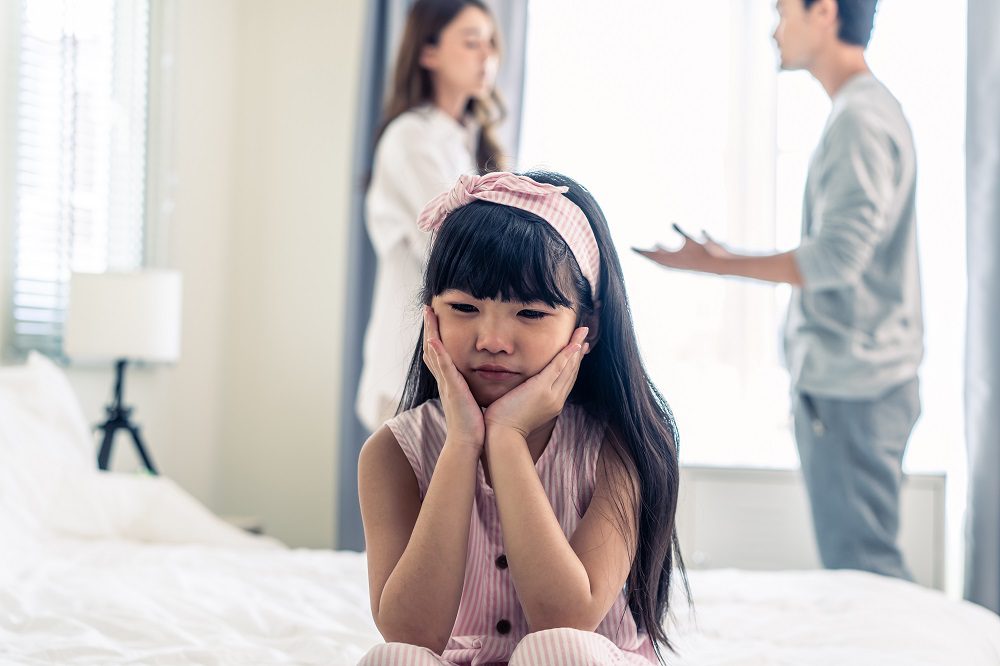
10. We shield our kids from sex, yet we do not care about violence
A survey made by the Motion Picture Association of America has discovered that more than 80 percent of American parents try to shield their children from seeing sex movies, yet, they allow them to see graphic violence.
11. We host baby showers
Outside America, baby showers are not very common, and very few people host them. Here in the United States, we want to celebrate our babies before they’re even born, even though this is considered bad luck in other countries, such as Japan and Russia.
12. We host amazing parties
Yes, we make every party epic, especially when it comes to our children’s birthday party. According to MSN.com, “Americans tend to go overboard for their kids’ parties and can spend hundreds, or even thousands, of dollars on a single event. Traditions elsewhere are a lot less elaborate and revolve more around family and food than fancy décor and gifts.”
Therefore, other countries such as Denmark and New Zealand like to keep things simple, instead of throwing over-the-top parties for their kids.
13. We baby our children for a long long time
We like to baby our children long after infancy, however, things are much different in other parts of the world. In Iceland and Denmark, parents often leave their kids outside in stroller, while they do all the shopping. In Japan, very young children are allowed to walk alone to school, they ride public transportation alone and also run errands at a very early age.
14. We drive SUVs
For us, Americans, it’s important to have a lot of space for whole the family to fit properly. This is even more important for big families with a lot of kids. In other parts of the world, however, people opt for more compact sedans, rather than very big cars.
15. We give a lot of medication to our children
In America, children to show signs of Attention Deficit Disorder or Attention Deficit Hyperactivity Disorder are prescribed medication early on. In fact, we prescribe medication much faster than in other countries. A recent survey has shown that Americans are 10 times more likely to be prescribed meds for children’s diseases than in the U.K.
16. We keep dogs as pets
The most popular pets in the United States are by far dogs and cats, however, things look a little bit different in other parts of the world. In China, for instance, the most popular pets are goldfish, in Japan are bunnies, and in Taiwan are tortoises.
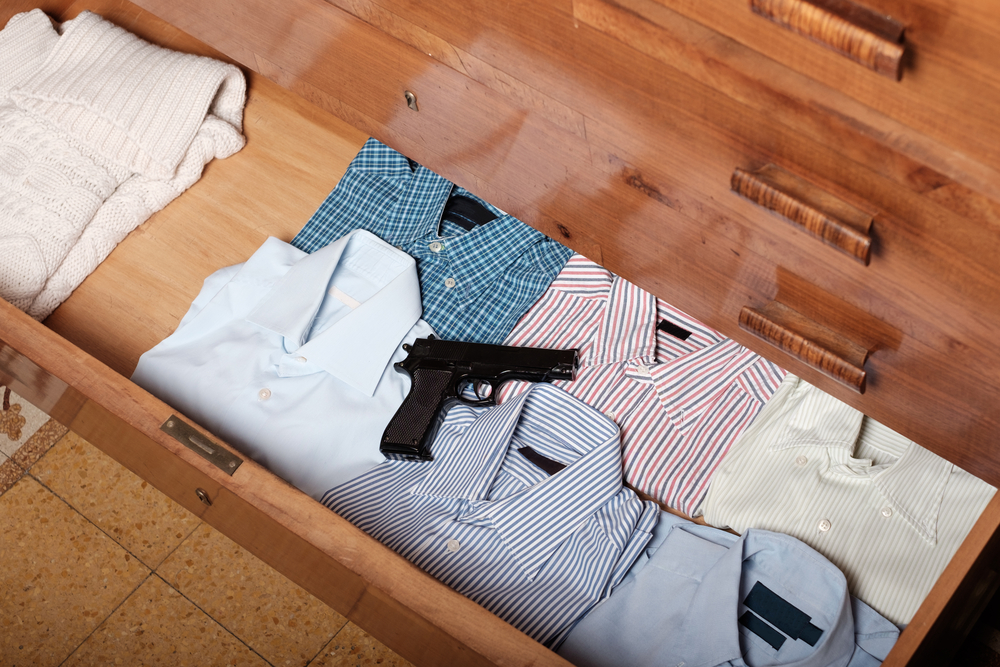
17. We keep guns around the house
As creepy as it might sound, a 2017 survey published in the journal Pediatrics has shown that more than 1,300 children die each year due to gun-related wounds. Additionally, gun-related injuries are the third-leading cause of death in children in the United States.
18. We buy a lot of toys for our kids to play
Yes, we’re guilty of spoiling our kids way too much in the United States. A 2015 report has shown that parents spent an average of $500 for just toys, per kid. In other countries such as India, Brazil, and China, parents spent $9, $50, and respectively $52.
19. We spank our kids
As MSN.com has explained, “There’s a good chance you were spanked growing up, and today your parents’ attitude around corporal punishment prevails.” In fact, a 2012 survey conducted by Brookings Institute has shown that more than 70 percent of American parents believe spanking is acceptable as a method of punishment.
But even though it is a common tactic here in America, used by many parents, corporal punishment has been banned in more than 52 countries over the world, including France, Greece, and Sweden.
20. We trick-or-treat
Trick-or-treating exists only in the United States, so as parents, we go with our kids door-to-door to get some candy for Halloween. While this tradition is great for kids, other countries celebrate Halloween in a whole different way.
In Finland, children exchange crafts for treats, in order to keep the evil away, while German kids carry lanterns door-to-door while singing gongs in order to receive candy from their neighbors.
21. We wear shoes inside the house as well
According to MSN.com, “In Japan, it’s considered disrespectful to wear outdoor shoes inside the home. In America, though, it’s pretty common. It’s also super germy, so maybe have your kids leave their sneakers at the door even if you don’t technically have a problem with it.”
22. We want our kids to have a great, bright smile
We prioritize a healthy smile, that’s for sure, that’s why we make sure our kids are properly and frequently washing their teeth from an early age. In fact, Americans shell out thousands for orthodontia for their children, sometimes even before they have teeth.
In other parts of the world, however, people are not so focused on taking care of their teeth. In the U.K., for instance, free braces are given to children under 18 who are in need by the National Health Service. Even so, very few children end up getting them.
23. We make our kids move out when they turn 18
Most parents in the United States wish to see their kids moving out by the time they turn 18, and not because they don’t love them very much, but rather because they want t see them succeed. At least, this is what a productive member of society does.
“Around the world, though, kids leave home when they’re much older. One study showed the average move-out age was 25 in Spain, 24 in Poland, and 22 in France.”






Leave a Reply