Psychology Diary

The First Step Toward Change Is Awareness

  • Home
  • Relationships
  • Mental Health
  • Expert Tips
  • Life
  • Family
  • Marriage

8 Things Narcissists Say to Keep You Under Control

February 8, 2026 · Relationships

You know the feeling. The conversation starts normally, but suddenly the ground shifts. You find yourself apologizing for things you didn’t do, questioning your own memory, or feeling a heavy knot of guilt in your stomach. This isn’t just a “bad argument.” It is often a calculated psychological maneuver.

Research indicates that emotional abuse is alarmingly common, with the Centers for Disease Control and Prevention (CDC) reporting that approximately 48% of women and men have experienced psychological aggression by an intimate partner. For those in relationships with individuals exhibiting narcissistic traits or Narcissistic Personality Disorder (NPD), language is more than communication—it is a tool for control.

Narcissistic manipulation operates on a cycle of idealization, devaluation, and control. By decoding the specific phrases used during these stages, you can stop blaming yourself and start seeing the dynamic for what it is.

Here are eight common things narcissists say to maintain power, along with the psychology behind why they work.
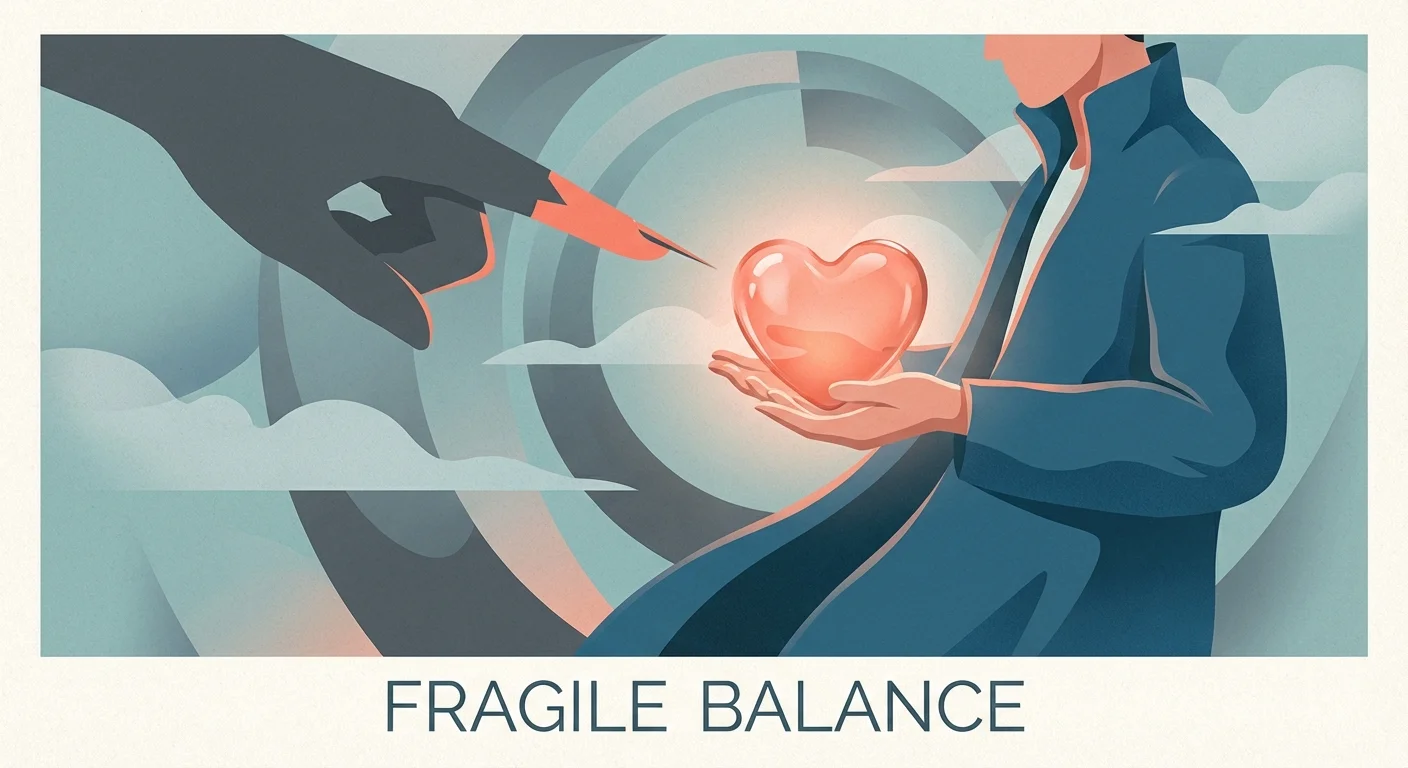
A delicate glass heart being threatened by a sharp needle in a conceptual art style.
A sharp finger points at a glowing heart held in open hands, symbolizing the delicate balance of emotional vulnerability.

1. “You’re Just Too Sensitive”

The Tactic: Invalidation

This is perhaps the most ubiquitous phrase in the narcissist’s arsenal. When you express hurt, disappointment, or anger regarding their behavior, they don’t address your concern. Instead, they attack your reaction to it.

Why It Works: Psychologically, this is a form of minimization. By labeling your emotions as “too much” or “irrational,” they successfully shift the focus from their actions to your psychological state. Over time, this leads to self-doubt, where you begin to suppress your own intuition.

The Reality: Your feelings are a biological signal that a boundary has been crossed.

Actionable Insight: Do not defend your sensitivity. Instead, re-center the conversation on the event. Try saying: “My feelings are not up for debate. We are discussing what you said/did.”


Pages: 1 2 3 4 5 6 7 8 9 10

Share this article

Facebook Twitter Pinterest LinkedIn Email

Leave a Reply Cancel reply

Your email address will not be published. Required fields are marked *

Search

Latest Posts

  • Ink and watercolor illustration of a person wrapped in a blanket, looking out a window at a rainy garden. 6 Signs You're Comfortable Being Alone
  • A retired woman happily misting seedlings in a sunlit greenhouse, representing meaningful part-time work in retirement. The Part-Time Jobs Retirees Say Feel Most Meaningful
  • An editorial watercolor illustration of a person looking at a small glowing key in their chest, symbolizing inner emotional intelligence. 9 Signs of Emotional Intelligence You Might Not Notice in Yourself
  • An illustration of a woman looking at a mug while her giant shadow holds a massive magnifying glass over it. 6 Signs You're Being Too Hard on Yourself
  • Two friends laughing together on a wooden porch in warm afternoon light, demonstrating a supportive, genuine relationship. 6 Signs Someone Is a Genuinely Good Influence in Your Life
  • Ink and watercolor illustration of a person walking from a dark, stormy landscape into a bright, sunny field. 9 Traits Psychologists Say Highly Resilient People Share
  • A New Yorker style illustration of a resting person whose shadow carries a heavy, tangled ball of dark thread. 7 Signs You're Emotionally Exhausted, Not Just Tired
  • Ink and watercolor illustration of two people seated in chairs with a golden thread connecting their hands, symbolizing respect. 6 Signs Someone Truly Respects You
  • A warm ink and watercolor illustration of an older woman looking at a gallery wall of framed memories, with one frame left naturally empty. 7 Signs of Normal Forgetfulness vs Something More Serious
  • An editorial ink and watercolor illustration of two profiles, showing speech bouncing off a supportive line like a trampoline. 9 Signs You're a Good Listener, According to Psychologists

Newsletter

Get the latest posts delivered to your inbox.

Related Articles

A watercolor illustration of two people on an uneven seesaw, symbolizing a lopsided, selfish relationship dynamic.

10 Signs Someone May Be More Selfish Than They Realize

Learn to identify the subtle signs of selfish behavior in relationships, from conversational narcissism to…

Read More →
set healthy boundaries. things you should stop after 60,

7 Ways to Set Healthy Boundaries With Your Family

Do you know how to set healthy boundaries with your family? When you think about…

Read More →

18 Obvious Signs That Indicate a Good First Date

When a first date goes well, you’ll definitely know. You talked and talked and the…

Read More →
red flag

6 Partner Red Flags You Should Never Overlook

Have you ever noticed any partner red flags in your relationship? When it comes to…

Read More →
A woman sits alone on a sofa in a dimly lit room, looking thoughtfully toward a window, evoking emotional exhaustion.

7 Phrases Manipulative People Use In Arguments

Discover the seven common phrases manipulative people use in arguments and learn research-backed strategies to…

Read More →
Two friends sitting at a kitchen table, unconsciously mirroring each other's posture by resting their chins on their hands.

7 Signs Someone Mirrors Your Personality Without Realizing It

Discover the psychology behind the chameleon effect and learn the 7 subtle signs someone is…

Read More →

10 Telltale Signs Your Partner Sees You As a Fling

Dating can be very challenging these days. You meet someone, you fall in love and…

Read More →
types of trauma emotional unavailable

13 Actions that Point to Emotional Unavailability in Someone

When someone is emotionally unavailable, it implies that he or she has a certain inability…

Read More →
An editorial watercolor illustration of two people sitting at an impossibly long dining table, symbolizing emotional distance.

10 Behaviors That Can Push People Away

Learn the 10 subtle behaviors that push people away and discover research-backed strategies to replace…

Read More →

Psychology Diary

The First Step Toward Change Is Awareness

Inedit Agency S.R.L.
Bucharest, Romania

contact@psychologydiary.com

Explore

  • About Us
  • Advertiser Disclosure
  • Contact Us
  • Disclaimer
  • Do not sell my personal information
  • Editorial Policy
  • Frequently Asked Questions
  • Privacy Policy
  • Terms and Conditions
  • Subscribe
  • Unsubscribe

Categories

  • Expert Tips
  • Family
  • Life
  • Marriage
  • Mental Health

© 2026 Psychology Diary. All rights reserved.