
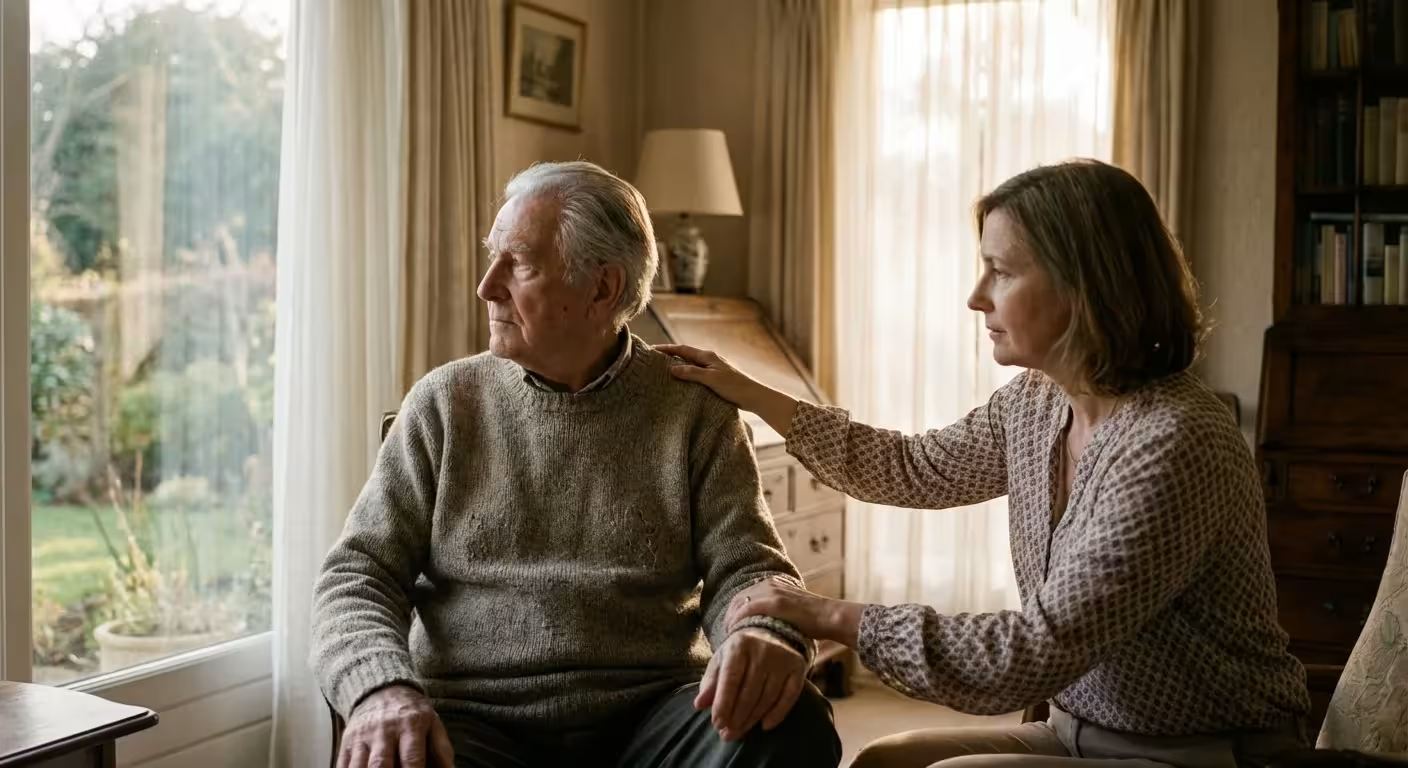
It starts quietly. Perhaps your usually sharp father forgets the route to his favorite grocery store, or your spouse, who once balanced the family budget down to the penny, suddenly misses three utility payments in a row. It’s easy to brush these moments off as “senior moments” or the natural fog of aging. After all, we all forget where we put our keys sometimes.
But there is a distinct line between normal age-related changes and the early indicators of Alzheimer’s disease. According to recent data from the Alzheimer’s Association, an estimated 6.9 million Americans are living with Alzheimer’s as of 2024, yet a significant number remain undiagnosed until symptoms become severe. Research suggests that up to 75% of people with symptoms of dementia have not yet received a formal diagnosis.
Ignoring early red flags doesn’t protect you or your loved ones; it only delays access to treatments and lifestyle interventions that can preserve quality of life. While memory loss is the most famous symptom, it is rarely the only one—and often not the first one family members notice.
Below, we explore five subtle early warning signs that are frequently overlooked, backed by the latest psychological and neurological research.

Normal Aging vs. Early Alzheimer’s: What’s the Difference?
Before diving into the specific signs, it is helpful to understand the baseline. The brain changes as we age; processing speed slows, and multitasking becomes harder. However, normal aging does not interfere with your ability to function independently.
| Area of Change | Typical Age-Related Change | Potential Early Alzheimer’s Sign |
|---|---|---|
| Memory | Forgetting a name or appointment but remembering it later. | Forgetting recently learned information and asking the same questions repeatedly. |
| Problem Solving | Making an occasional error when balancing a checkbook. | Inability to follow a familiar recipe or keep track of monthly bills completely. |
| Time Orientation | Getting confused about the day of the week but figuring it out later. | Losing track of dates, seasons, or the passage of time entirely. |
| Visual Awareness | Vision changes related to cataracts or prescription needs. | Difficulty judging distance, determining color, or tripping over clear obstacles. |
| Conversation | Sometimes having trouble finding the right word. | Stopping in the middle of a conversation and having no idea how to continue. |

1. The “Apathy Trap”: Withdrawal Mistaken for Depression
One of the most misinterpreted early signs of Alzheimer’s is a profound shift in mood—specifically, apathy. You might notice a loved one losing interest in hobbies they once loved, withdrawing from social gatherings, or sitting in front of the television for hours without really watching.
Family members often rush to diagnose this as depression. While depression and Alzheimer’s can coexist, recent research highlights a key distinction. A study published in 2023 (and supported by findings from Cambridge University) suggests that apathy—defined as a lack of motivation and goal-directed behavior—is a distinct early marker of dementia, often appearing before significant memory loss.
- What to look for: It’s not necessarily sadness or crying spells (classic depression). It’s a “flatness.” They stop initiating conversations. They quit their bridge club not because they are sad, but because the effort to follow the game has become exhausting.
- Why it happens: This withdrawal is often a defense mechanism. Socializing requires complex cognitive processing—following threads of conversation, reading facial cues, and retrieving names. When these neural pathways begin to erode, social interaction becomes overwhelming.
“We cannot selectively numb emotions. When we numb the painful emotions, we also numb the positive emotions.” — Brené Brown
2. Visual-Spatial “Glitches” (It’s Not Just Eyesight)
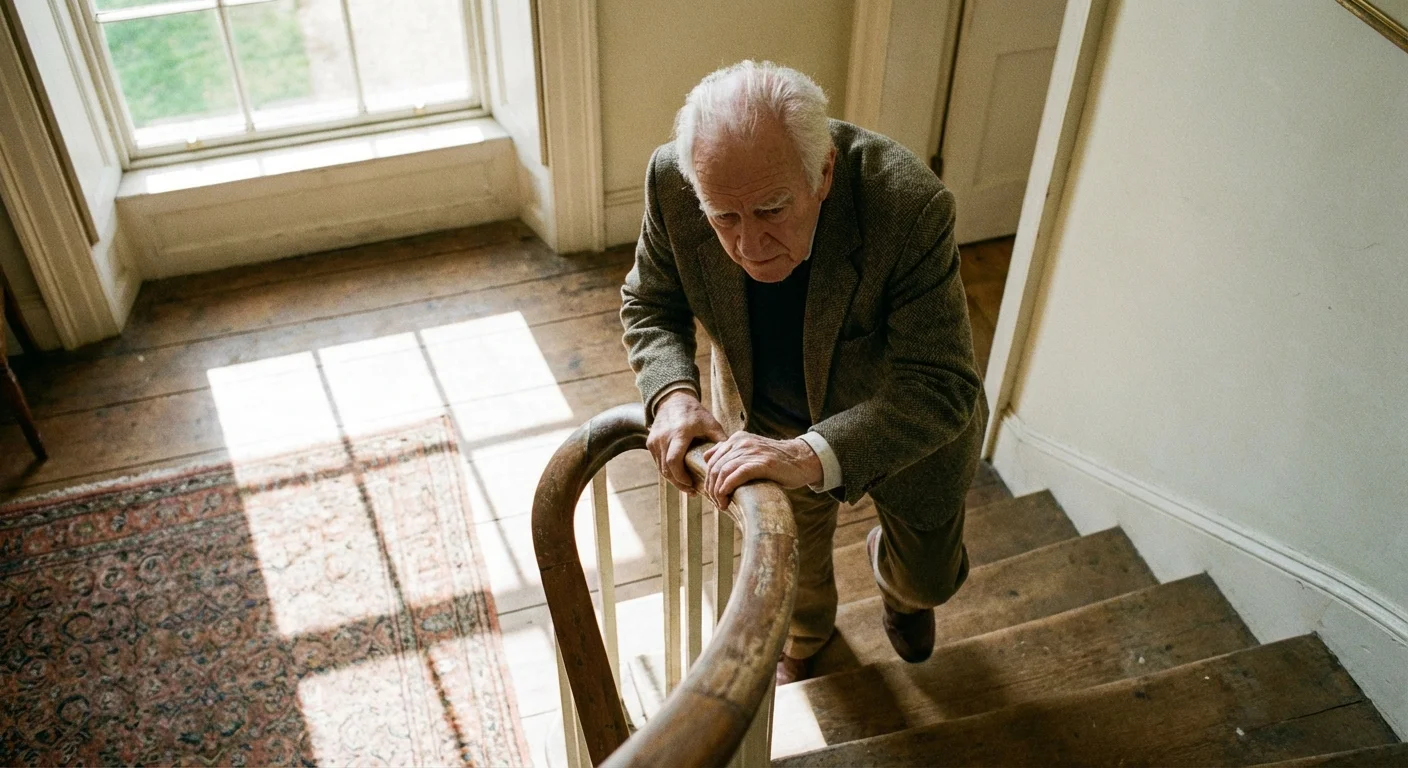
If your loved one starts tripping more often, denting the car while parking, or struggling to read despite having new glasses, pay attention. We tend to think of Alzheimer’s as a memory disease, but for many, the earliest signs are visual-spatial.
This isn’t an issue with the eyes; it’s an issue with how the brain processes what the eyes see. The brain struggles to interpret depth, contrast, and spatial relationships. A 2024 study from UCSF highlighted Posterior Cortical Atrophy (PCA), a variant of Alzheimer’s where visual processing issues are the very first symptom, often years before memory declines.
Common manifestations include:
- The “Checkerboard” Floor: Walking hesitantly over patterned floors because the brain interprets the dark tiles as holes.
- Missing the Cup: Pouring water and missing the glass because they cannot accurately judge the distance.
- Driving Issues: sudden difficulty staying in a lane or judging the speed of oncoming traffic.

3. Financial Fumbles and Lapses in Judgment
Money management requires a high level of “executive function”—the ability to plan, organize, and execute complex steps. According to the National Institute on Aging (NIA), financial difficulties are often one of the first reliable signs of cognitive decline.
You might notice a parent who was historically frugal suddenly making impulsive purchases or falling victim to obvious phone scams. Unlike a simple calculation error, these are lapses in judgment.
- The Red Flag: Stacks of unopened mail, utility shut-off notices, or giving away large sums of money to “charities” they’ve never heard of.
- Why it’s ignored: Money is a taboo topic in many families. Adult children often hesitate to step in, fearing they will offend their parents or strip them of independence. However, protecting their financial health is often a necessary early intervention.

4. Difficulty with Familiar, Multi-Step Tasks
Everyone burns toast occasionally. But early Alzheimer’s impacts the ability to sequence tasks—to know that step A must happen before step B. This is most obvious in activities that used to be second nature.
Examples of sequencing failure:
- The Family Recipe: A grandmother who has made the same lasagna for 30 years suddenly can’t remember the order of ingredients or leaves out a critical step like boiling the noodles.
- Technology Struggles: A sudden inability to operate the microwave, the TV remote, or a coffee maker they have owned for years.
- Getting Lost in Familiar Places: Driving to a local grocery store and suddenly not recognizing the intersection to turn at.
This is distinct from trying to learn a new gadget, which is hard for many adults. This is the loss of ability to use familiar tools.

5. Linguistic “Workarounds” and Aphasia
Language changes in early Alzheimer’s are often subtle. The person may not go mute, but they will start using “workarounds” to hide that they cannot retrieve a specific word. This is a form of aphasia.
Instead of saying “pass the remote,” they might say, “pass the… thing… the clicker… the thing for the TV.” While we all lose words occasionally, look for:
- Circumlocution: Talking “around” the word (e.g., describing a watch as “the hand-clock”).
- Losing the Thread: Stopping mid-sentence and being unable to regain the train of thought.
- Repetitive Phrasing: Relying on stock phrases or clichés (“Oh, you know how it is,” “It is what it is”) to mask their inability to contribute substantially to the conversation.

The “Anosognosia” Factor: Why Signs Are Ignored
One of the most heartbreaking aspects of early Alzheimer’s is that the person experiencing symptoms often insists nothing is wrong. Family members frequently get frustrated, labeling this as stubbornness or denial.
However, psychology and neurology offer a different explanation: Anosognosia.
Anosognosia is a neurological condition—not a psychological defense mechanism—where damage to the frontal lobes robs the person of the self-awareness necessary to recognize their own illness. They aren’t lying to you; their brain is simply not telling them that they are forgetting. Research estimates that up to 81% of Alzheimer’s patients exhibit some degree of anosognosia as the disease progresses, but it can appear in early stages (MCI) as well.
Understanding this can shift your perspective from frustration to empathy. They aren’t being difficult; they are navigating a reality where they truly believe they are fine.

Actionable Steps: How to Approach a Loved One
If you recognize these signs, the next step is a conversation. This is delicate territory. Using a “soft startup”—a concept popularized by relationship expert Dr. John Gottman—can be effective here, even though his work focuses on marriage. The goal is to express care without criticism.
- Use “I” Statements: Instead of “You are repeating yourself,” try “I’ve noticed I’m having to repeat things lately, and I’m worried about how we’re communicating. Have you noticed that too?”
- Focus on Reversible Causes: Frame the doctor’s visit as a check-up for overall health. “Mom, I noticed you’ve been tired and withdrawing from your bridge club. Let’s get your vitamin levels and thyroid checked to make sure you’re feeling your best.” (Note: Vitamin B12 deficiency and thyroid issues can mimic dementia).
- Advocate for a “Memory Screen”: Medicare and many insurance providers cover cognitive screenings during annual wellness visits. Ask the doctor privately beforehand to include this.

Finding the Right Professional Help
If you suspect early Alzheimer’s, a general practitioner is a good starting point, but you may need a specialist. Consider seeking help if:
- Sudden Onset: Symptoms appear suddenly rather than gradually (this could indicate a stroke or infection).
- Safety Risks: The person is getting lost while driving or leaving the stove on.
- Behavioral Changes: You notice aggression, paranoia, or hallucinations.
Specialists to consult:
- Neurologist: Specializes in brain and nervous system disorders.
- Geriatric Psychiatrist: specialized in the mental health of older adults and can help distinguish between depression and dementia.
- Geriatrician: A primary care doctor specially trained in the complex needs of aging adults.

Common Misconceptions
Myth: “It’s just old age.”
Fact: Dementia is not a normal part of aging. Significant cognitive decline that interferes with daily life is a medical condition that requires attention.
Myth: “There’s no point in knowing; there’s no cure.”
Fact: While there is no cure yet, early diagnosis allows for lifestyle changes (diet, exercise, cognitive engagement) that can slow progression. Furthermore, new treatments (like anti-amyloid therapies) are most effective in the very early stages of the disease.
Frequently Asked Questions
- Is Alzheimer’s hereditary?
- While genetics play a role (especially the APOE-e4 gene), having a parent with Alzheimer’s does not guarantee you will get it. Lifestyle factors like heart health, diet, and exercise are significant predictors of risk.
- Can stress cause memory loss that looks like Alzheimer’s?
- Yes. High levels of cortisol (the stress hormone) can impact the hippocampus, the brain’s memory center. Depression, anxiety, and sleep deprivation can all mimic dementia symptoms. This is why a professional diagnosis is crucial.
- What is the difference between Dementia and Alzheimer’s?
- Dementia is the “umbrella” term for a decline in mental ability severe enough to interfere with daily life. Alzheimer’s is a specific disease and the most common cause of dementia (accounting for 60-80% of cases).
Moving Forward with Compassion
Noticing these signs in a loved one is frightening. It forces us to confront the vulnerability of the people we look up to. However, spotting these early warning signs—apathy, visual issues, judgment lapses—gives you the power to act.
Early intervention can provide months or even years of higher-quality living. It allows families to plan, connect, and access support before a crisis hits. If you see these signs, take a deep breath, reach out to a professional, and remember: you are doing the brave work of caring.
This is educational content based on psychological research and general principles. Individual experiences vary significantly. For personalized guidance, consult a licensed therapist, psychologist, or counselor.
Last updated: February 2026. Psychology research evolves continuously—verify current findings with professional sources.









Leave a Reply