
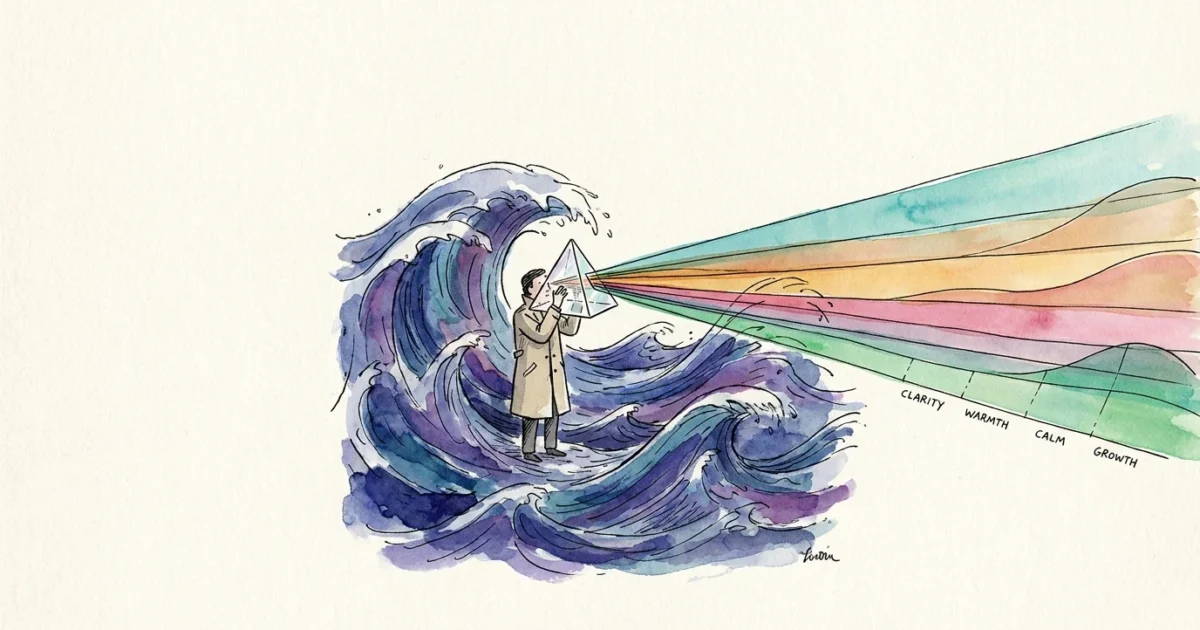
Emotional intelligence dictates how you navigate conflict, handle stress, and build lasting relationships. While cognitive intelligence helps you solve technical problems, emotional intelligence (EQ) determines how you manage yourself and others when pressure mounts. It is not merely about being pleasant; it is the tactical ability to read unspoken cues, regulate your nervous system, and communicate clearly during high-tension moments. Research published by the American Psychological Association (2019) links high EQ to superior performance across life domains, while relationship experts consistently identify it as a primary predictor of marital success. If you can accurately interpret the emotional data in your environment without becoming overwhelmed by it, you possess a profound psychological advantage.

1. You Possess High Emotional Granularity
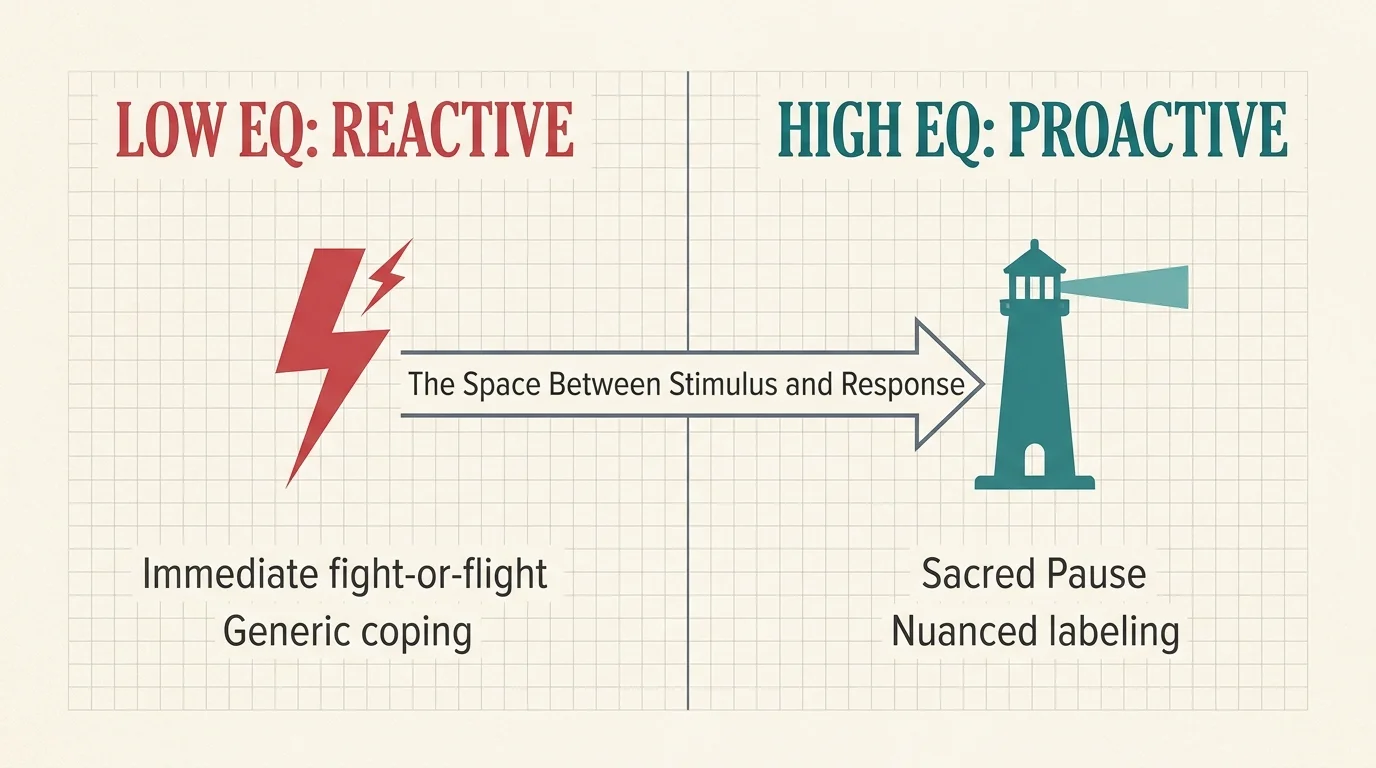
Most people rely on a limited vocabulary to describe their internal state, categorizing their feelings into broad buckets like happy, sad, or angry. If you have exceptionally high emotional intelligence, you possess high emotional granularity—the ability to pinpoint precise, nuanced emotions. Instead of simply stating you feel bad, you can identify whether you feel marginalized, disappointed, lethargic, or apprehensive. This psychological precision serves a distinct biological purpose; when you accurately label an emotion, your brain can construct a highly specific coping mechanism to address it.
Research indicates that individuals with high emotional granularity recover from stress much faster because they do not apply generic solutions to complex problems. If you know you are feeling alienated rather than just generally sad, you know that seeking connection will resolve the feeling much faster than simply taking a nap.
Actionable Insight: To build this skill, reference a feeling wheel during moments of distress. Challenge yourself to move past the primary emotion at the center of the wheel and identify the exact secondary or tertiary emotion you are experiencing.

2. You Practice the Sacred Pause Before Reacting
When faced with an immediate stressor—a passive-aggressive email, a sudden critique, or a reckless driver—your sympathetic nervous system initiates a fight-or-flight response. For individuals with low emotional intelligence, this physiological surge bypasses rational thought and translates immediately into a reactionary behavior. If you have high emotional intelligence, you have cultivated the ability to insert a wedge of time between the stimulus and your response.
“Between stimulus and response there is a space. In that space is our power to choose our response. In our response lies our growth and our freedom.” — Viktor Frankl, Psychiatrist and Holocaust Survivor
This pause is not about suppressing your initial emotion; it is about evaluating whether your initial urge serves your ultimate goal. You might feel the intense heat of anger flush your face, but you use that physical sensation as an alarm bell to slow down rather than a starting gun to attack.
Actionable Insight: Implement a mandatory 24-hour waiting period before responding to any communication that triggers your nervous system. Draft your heated response in a separate document, sleep on it, and rewrite it the next day with a regulated mind.
3. You Can Identify the Emotion Behind the Emotion
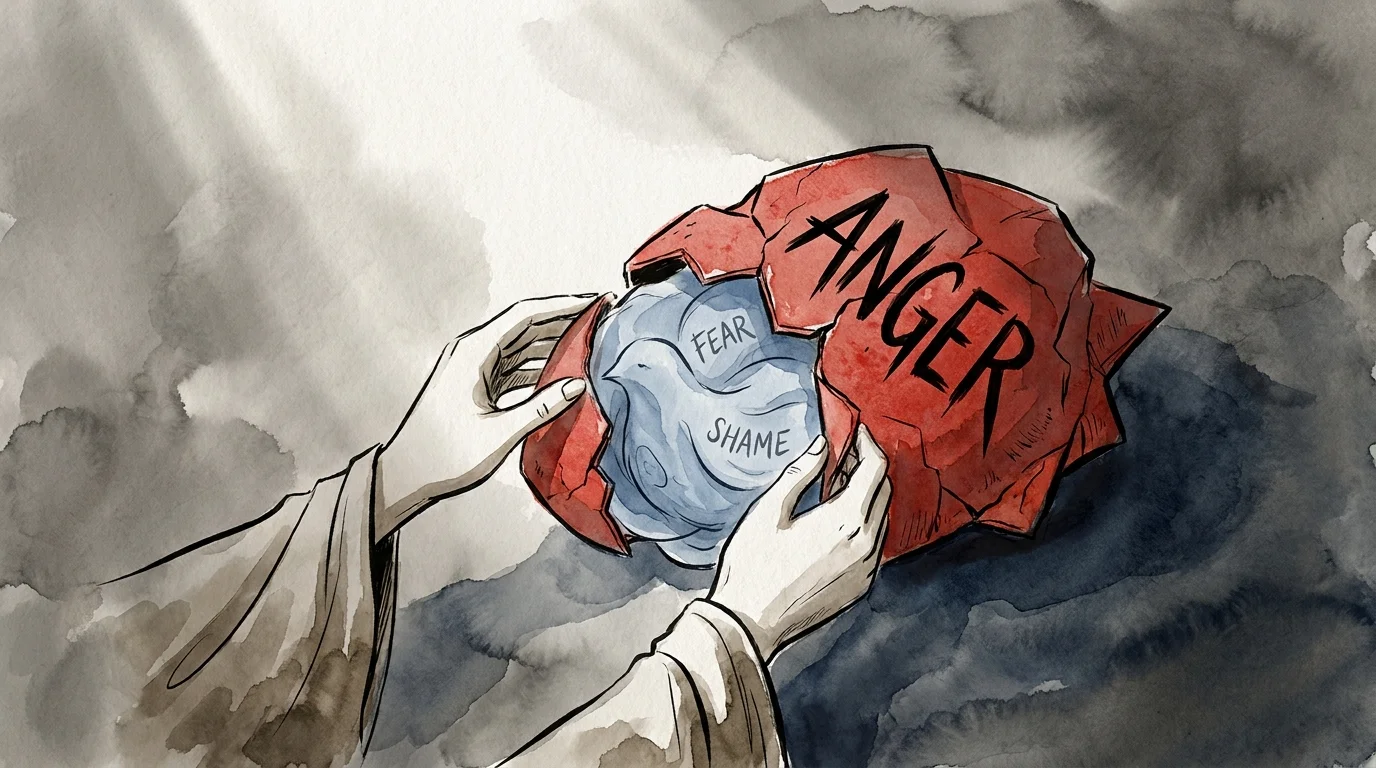
Emotions rarely travel alone. They often stack on top of one another, forming complex psychological layers. Emotionally intelligent people understand the concept of primary and secondary emotions. Anger, for instance, is almost always a secondary emotion—a highly visible, protective shield that covers more vulnerable primary feelings like fear, rejection, sadness, or shame.
When someone lashes out at you, your high EQ allows you to see past their aggressive posturing to the underlying pain or insecurity driving the behavior. Similarly, when you feel yourself becoming irritable or defensive, you possess the self-awareness to look inward and identify the actual source of your distress. You recognize that your sudden frustration over unwashed dishes might actually stem from feeling unsupported and overwhelmed in your career.
Actionable Insight: The next time you feel a sudden surge of anger, ask yourself what vulnerable emotion this anger is trying to protect. Identifying the root cause shifts your communication from blame to vulnerability.

4. You Allow Your Partner to Influence You
Emotional intelligence plays an outsized role in the longevity and satisfaction of intimate relationships. One of the strongest indicators of high EQ within a partnership is the genuine willingness to share power and accept influence. When a conflict arises, you do not view your partner’s perspective as a threat to your autonomy; instead, you treat their feedback as valid data worth considering.
According to decades of observational research by The Gottman Institute, individuals—particularly men—who actively allow their partners to influence their decision-making experience significantly happier marriages and are drastically less likely to divorce. Accepting influence does not mean abandoning your own core values or conceding every argument. It means you approach disagreements with a fundamental respect for your partner’s internal world.
Actionable Insight: During a disagreement, intentionally find one piece of your partner’s argument that you agree with. State clearly, “You make a fair point about that,” before presenting your own perspective. This simple validation de-escalates conflict instantly.

5. You Do Not Rush to Fix Other People’s Pain
When someone you care about experiences deep emotional pain, the natural human instinct is to alleviate their suffering as quickly as possible. We offer silver linings, unprompted advice, and optimistic platitudes. Exceptionally emotionally intelligent individuals resist this urge. They understand that trying to fix someone’s pain is often a selfish endeavor designed to relieve the listener’s discomfort rather than the speaker’s grief.
High EQ requires the capacity to sit in the dark with someone without immediately reaching for a flashlight. You know how to hold space for uncomfortable emotions, offering empathetic presence rather than unsolicited solutions. You understand that validation is profoundly more healing than toxic positivity.
“Rarely can a response make something better. What makes something better is connection.” — Brené Brown, Research Professor and Author
Actionable Insight: When a friend or partner vents to you, pause and ask a clarifying question regarding their current needs. Ask them if they are looking for solutions right now, or if they just need someone to listen. Respect their answer completely.

6. You Set and Maintain Compassionate Boundaries
A persistent misconception suggests that highly emotionally intelligent people are endlessly accommodating. In reality, exceptional emotional intelligence requires the rigorous enforcement of personal boundaries. Without boundaries, empathy quickly devolves into resentment and emotional exhaustion.
If you have high EQ, you know how to say “no” with clarity and warmth. You do not over-apologize or invent elaborate excuses to justify your limitations. You recognize that establishing clear expectations preserves the integrity of your relationships. By communicating what you can and cannot tolerate, you eliminate the passive-aggressive communication patterns that destroy trust over time.
Actionable Insight: Practice setting boundaries by focusing on your internal capacity rather than the other person’s behavior. Instead of telling someone they are demanding too much of your time, inform them that you simply do not have the bandwidth to give their request the attention it deserves right now.

7. You Take Accountability and Repair Effectively
Emotional intelligence is not the absence of mistakes; it is the presence of effective repair. Even the most regulated individuals lose their temper, misread cues, or say hurtful things. The distinguishing factor of high EQ is the speed and sincerity with which you take accountability after a rupture occurs.
You do not let your ego prevent you from apologizing. Furthermore, you know how to apologize without attaching conditions or shifting the blame. You avoid phrases like “I am sorry you felt that way” because you understand that true accountability requires owning your behavior, not just managing the other person’s reaction to it. You actively initiate repair attempts to restore connection after a tense exchange.
Actionable Insight: Structure your apologies using three essential components: explicitly state what you did wrong, acknowledge the impact it had on the other person, and explain the steps you will take to prevent it from happening again. Never follow a sincere apology with the word “but.”
8. You Can Read the Room Without Absorbing the Room
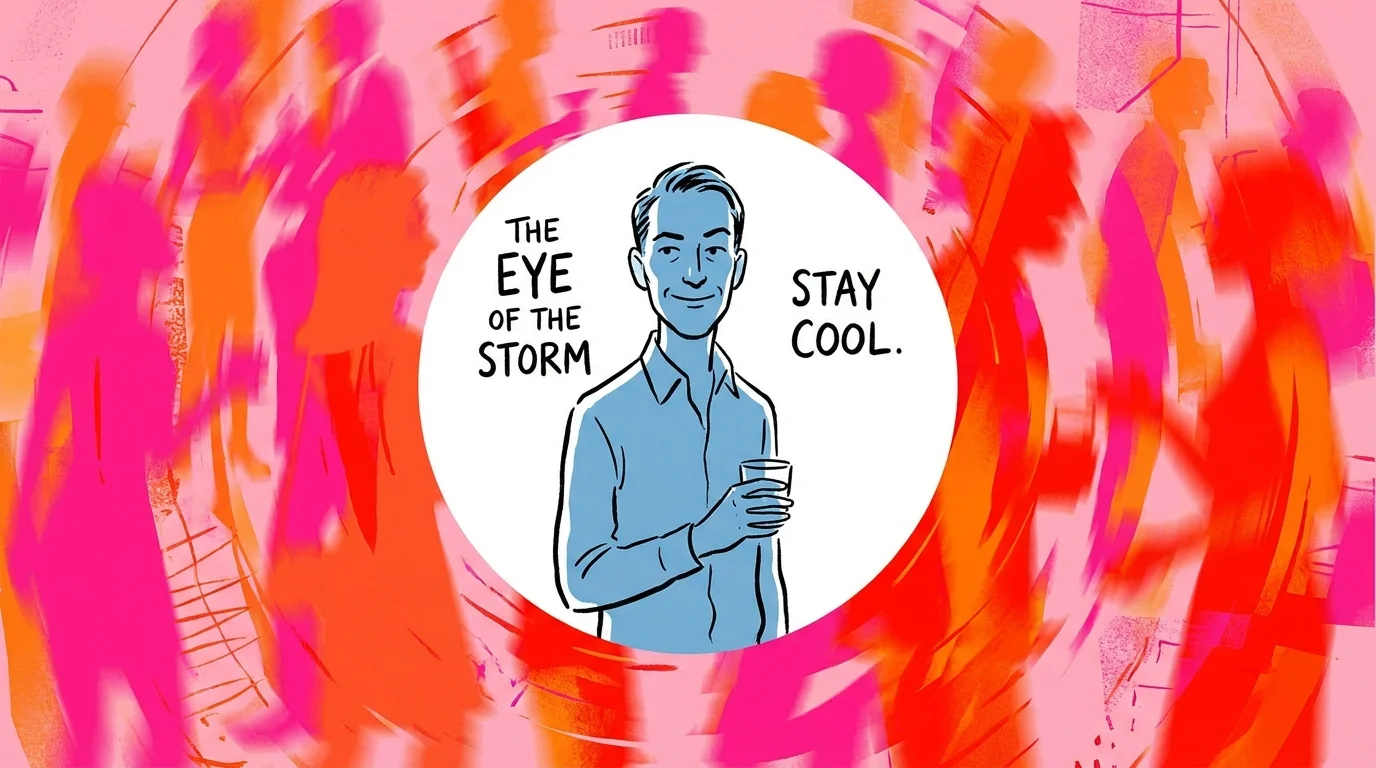
Empathy is a core component of emotional intelligence, but an overactive empathetic response can lead to emotional enmeshment. If you possess exceptional EQ, you demonstrate strong cognitive and affective empathy without losing your psychological boundaries. You can walk into a tense meeting or a grieving household, accurately assess the emotional temperature of the room, and respond appropriately—all without absorbing the anxiety or sorrow as your own.
This skill requires highly developed self-awareness. You understand where your emotions end and someone else’s begin. This separation allows you to remain grounded and offer steady, reliable support to those who are dysregulated, rather than joining them in their emotional chaos.
Actionable Insight: Before entering a high-stress environment, take a moment to perform a mental check-in. Establish your emotional baseline so you can easily recognize if the tension you feel later in the day belongs to you or if you unintentionally absorbed it from your surroundings.

9. You View Feedback as Actionable Data
Receiving criticism activates the same neural pathways in the brain as physical pain. It is entirely natural to feel a defensive spike when your work, behavior, or communication style is critiqued. However, emotionally intelligent individuals do not let that initial discomfort dictate their behavior. You possess the capacity to separate your inherent self-worth from the feedback you receive.
Research gathered by the American Psychological Association indicates that emotional intelligence strongly correlates with both academic and workplace success, largely because high-EQ individuals leverage critical feedback for continuous growth. Instead of wasting energy defending your ego, you get curious. You ask clarifying questions and look for the valuable data hidden within the critique.
Actionable Insight: When receiving difficult feedback, practice the technique of non-defensive listening. Focus entirely on understanding the other person’s perspective rather than formulating your rebuttal in your head. Thank them for sharing their thoughts and request time to process the information.

10. You Recognize Your Own Emotional Limits
The ultimate sign of emotional intelligence is recognizing your own vulnerability to stress and burnout. You do not treat your emotional battery as an infinite resource. You understand that prolonged stress degrades your ability to be patient, empathetic, and rational, so you proactively monitor your mental energy.
According to 2024 global data from the Six Seconds Emotional Intelligence Assessment, researchers tracked a significant worldwide decline in emotional intelligence scores, largely driven by chronic pandemic-era burnout and workplace stress. Exceptionally emotionally intelligent people guard against this emotional recession by taking their need for rest seriously. You do not view self-care as a luxury; you treat it as the foundational maintenance required to show up effectively for your life and relationships.
Actionable Insight: Identify your personal warning lights—the early behavioral signs that indicate you are nearing burnout. Whether it is a sudden spike in cynicism, a disrupted sleep schedule, or a tendency to isolate, recognizing these early signs allows you to pivot before you crash entirely.
High EQ vs. Low EQ: A Conflict Comparison
Conflict is the ultimate testing ground for emotional intelligence. The following comparison illustrates how different levels of EQ manifest during common relationship and workplace disputes.
| Scenario | Low Emotional Intelligence Response | Exceptionally High Emotional Intelligence Response |
|---|---|---|
| Receiving unexpected criticism | Immediately denies the feedback, attacks the character of the messenger, or deflects blame onto external circumstances. | Regulates the initial spike of defensiveness, asks clarifying questions to understand the perspective, and extracts actionable data. |
| A partner is intensely upset | Becomes visibly uncomfortable, minimizes the problem, and attempts to force a quick, logical solution to stop the negative emotion. | Offers undivided attention, validates the emotional experience without judgment, and asks how to best support them. |
| Experiencing severe frustration | Lashes out verbally, employs passive-aggressive tactics, or utilizes the silent treatment to punish the other person. | Clearly articulates the source of the frustration, requests a temporary pause if too activated, and returns to discuss the issue calmly. |
| Making a significant mistake | Offers conditional apologies (“I am sorry if you were offended”) or attempts to conceal the error out of deep-seated shame. | Takes immediate, unequivocal accountability, explicitly acknowledges the impact on others, and outlines a plan to repair the damage. |
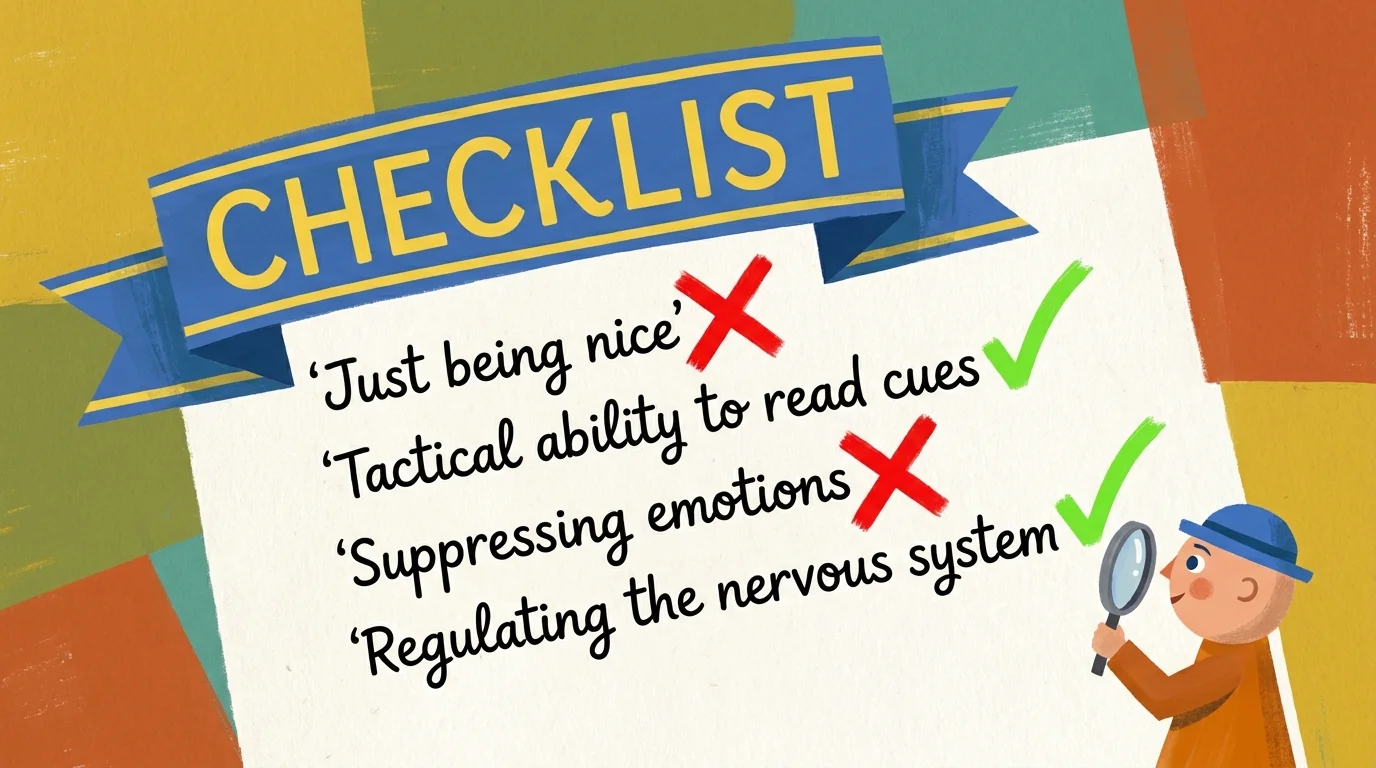
Patterns to Watch For: Common Misconceptions About EQ
Because emotional intelligence has become a popular buzzword in corporate and self-help spaces, it is frequently misunderstood. If you are working to develop your EQ, watch out for these common psychological misconceptions:
- The “Always Nice” Myth: High emotional intelligence does not equate to constant agreeableness. In fact, people with high EQ are often the ones willing to have uncomfortable, necessary conversations. They prioritize long-term clarity and respect over short-term politeness.
- The Logic vs. Emotion Fallacy: Emotional intelligence is not the opposite of rational thought. True EQ involves integrating emotional data with cognitive logic to make well-rounded, highly informed decisions.
- The Manipulation Trap: Understanding how to read people can occasionally be weaponized. Charisma and the ability to mimic empathy are sometimes used by manipulative individuals. Authentic emotional intelligence is always grounded in genuine empathy and a desire for mutual understanding, not control or personal gain.

When Self-Help Isn’t Enough
While developing emotional intelligence is a lifelong personal pursuit, certain psychological barriers require professional intervention. Consider seeking support from a licensed therapist or mental health professional if you experience the following scenarios:
- Chronic emotional blunting: If you feel detached, numb, or unable to access your emotions regardless of the situation, you may be dealing with clinical depression or a trauma response that requires clinical care, as outlined by resources from the National Institute of Mental Health.
- Severe nervous system dysregulation: If your emotional reactions frequently escalate into severe panic attacks, uncontrollable rage, or complete physical shutdown, self-taught regulation techniques may not suffice.
- Trauma-altered social perception: Past complex trauma can severely distort your ability to accurately read social cues, making neutral faces appear hostile or safe environments feel threatening. A trauma-informed therapist can help rewire these deep-seated neurological pathways.
Frequently Asked Questions
Can emotional intelligence be learned or is it an innate trait?
Unlike cognitive intelligence, which remains relatively fixed throughout adulthood, emotional intelligence is a highly malleable skill. Through intentional practices like mindfulness, non-defensive listening, and cognitive restructuring, often recommended by institutions like Harvard Health, you can significantly increase your EQ over time.
How does emotional intelligence differ from being highly sensitive?
High sensitivity refers to how deeply your nervous system processes sensory and emotional information. Emotional intelligence refers to your ability to manage and utilize that information effectively. You can be highly sensitive without having high EQ, and you can have high EQ without being inherently highly sensitive.
Does having high emotional intelligence mean you never experience anger?
Not at all. Emotionally intelligent people experience the full spectrum of human emotions, including profound anger, grief, and frustration. The difference lies in expression; high EQ allows you to feel anger without resorting to destructive behavior, using the emotion as fuel to set boundaries or address injustices constructively.
Continuing Your Emotional Growth
Developing emotional intelligence is not a destination you arrive at; it is a continuous, lifelong practice. Even the most emotionally intelligent individuals will have days where they lose their temper, misunderstand a partner, or fall back into defensive habits. The goal is not psychological perfection. The goal is a steady increase in awareness, a shorter recovery time after ruptures, and a deeper, more authentic connection to yourself and the people around you.
If you recognized many of these signs in yourself, take a moment to appreciate the hard work you have invested in your personal growth. If you feel you have significant room for improvement, treat this realization as a powerful starting line rather than a judgment. The information in this article is meant for educational purposes and general guidance. It does not replace individual therapy, counseling, or medical treatment. If you or someone you know is in crisis, contact the 988 Suicide & Crisis Lifeline by calling or texting 988.
Last updated: May 2026. Psychology research evolves continuously—verify current findings with professional sources.








Leave a Reply