

Childhood emotional neglect happens when caregivers fail to respond adequately to a child’s emotional needs, leaving invisible scars that shape adult relationships and self-perception. Unlike active abuse, neglect is defined by what didn’t happen—the missing validation, absent comfort, and unspoken support. Because these experiences lack visible evidence, you might struggle to understand why you feel a persistent sense of emptiness or difficulty connecting with others today. Research indicates that this subtle developmental trauma fundamentally alters how adults process emotions, set boundaries, and attach to partners. By recognizing the ten core traits associated with early emotional absence, you can stop blaming yourself for these psychological adaptations and begin rewiring your nervous system for healthier, more authentic connections.

The Invisible Nature of Emotional Absence
To understand emotional neglect, you first need to understand what standard emotional care looks like. In 1953, pediatrician and psychoanalyst D.W. Winnicott introduced the concept of the “good enough” parent, a theory validated by modern research showing that a parent only needs to attune to their child successfully about 50 percent of the time to foster secure development. You do not need a perfect childhood to grow into a well-adjusted adult.
However, when parents consistently fail to notice, validate, or respond to your emotions, that success rate plummets. A profound psychological void forms in the space where emotional mirroring should have occurred. Global meta-analyses reveal that childhood emotional neglect affects approximately 18% of the population, making it one of the most common, yet least discussed, forms of early adversity. Because it is characterized by omission rather than commission, you might have grown up in a physically safe, financially stable home while quietly starving for emotional connection. This silent deprivation forces your developing brain to adapt, creating distinct psychological traits that follow you into adulthood.

10 Psychological Traits of Childhood Emotional Neglect
1. Alexithymia (Difficulty Identifying Emotions)
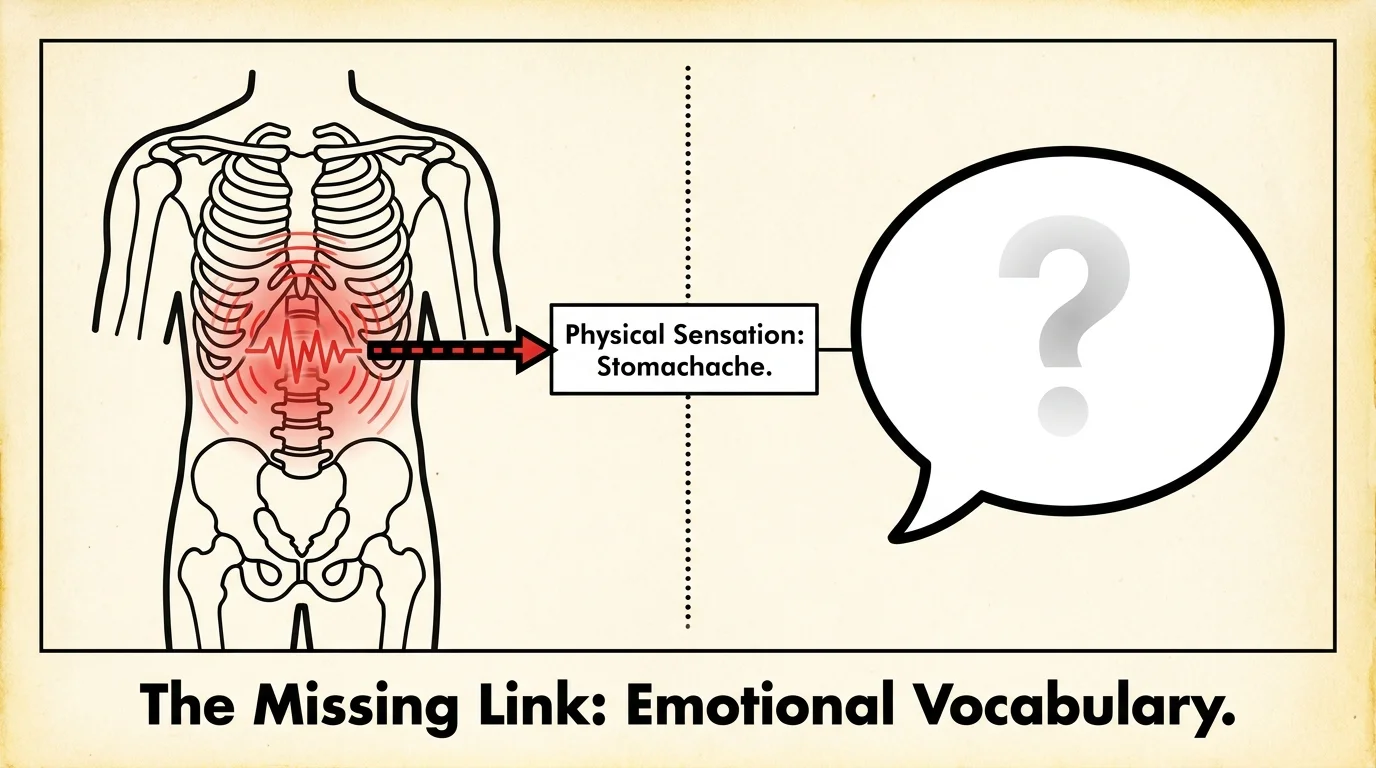
When you were a child, you relied on caregivers to help you interpret your physical sensations. A crying toddler doesn’t know they are “frustrated”; they only know their chest feels tight. If a parent never stepped in to say, “You look frustrated,” you missed out on developing an emotional vocabulary. This leads to alexithymia—the inability to identify and describe feelings. A massive meta-analytic review involving over 36,000 participants identified childhood emotional neglect as one of the strongest predictors of adult alexithymia. Today, you might experience anxiety purely as a stomachache, or you might respond to the question “How do you feel?” with genuine, blank confusion.

2. Severe Identity Diffusion
Your sense of self is heavily shaped by how others respond to you during your formative years. When caregivers act as engaged emotional mirrors, you learn who you are, what you like, and what you value. Without those mirrors, your identity fails to solidify. A 2025 psychological study found that psychological neglect is one of the strongest predictors of identity diffusion in adulthood. You might feel like a chameleon, shifting your personality, opinions, and desires to match whoever is currently in the room. Answering simple questions about your long-term goals or core beliefs often induces anxiety because you genuinely do not know the answers.

3. Trauma-Driven Hyper-Independence
Society frequently praises extreme self-reliance, masking it as a positive trait. However, if you were emotionally neglected, your independence is likely a trauma response. When reaching out for comfort consistently resulted in silence or dismissal, your nervous system learned that depending on others is fundamentally unsafe. You refuse to ask for help, even when you are drowning in responsibilities; delegating tasks feels vulnerable, and relying on a partner feels entirely out of your control.
“Vulnerability is not winning or losing; it’s having the courage to show up and be seen when we have no control over the outcome.” — Brené Brown, Ph.D., LMSW

4. The Persistent Feeling of Emptiness
Unlike clinical depression, which often carries a heavy weight, the emptiness of emotional neglect feels hollow. You might describe it as a physical sensation in your chest or stomach—a chronic numbness or a feeling that something essential is missing from your life. This void is the literal absence of the emotional foundation that your caregivers failed to build. You might try to fill this emptiness with external achievements, relationships, or substances, only to find the hollow feeling inevitably returns.

5. The “Fatal Flaw” Assumption
Because emotional neglect is invisible, you lacked a tangible villain to blame for your unhappiness. Instead of thinking, “My parents are failing to meet my needs,” a child’s brain rationalizes the neglect by thinking, “I must not be worth paying attention to.” This metastasizes into the “fatal flaw” assumption. You navigate adulthood with a lingering conviction that there is something intrinsically wrong, broken, or unlovable about you. If someone gets too close, you fear they will discover this hidden flaw and abandon you.
6. Insecure Adult Attachment Patterns
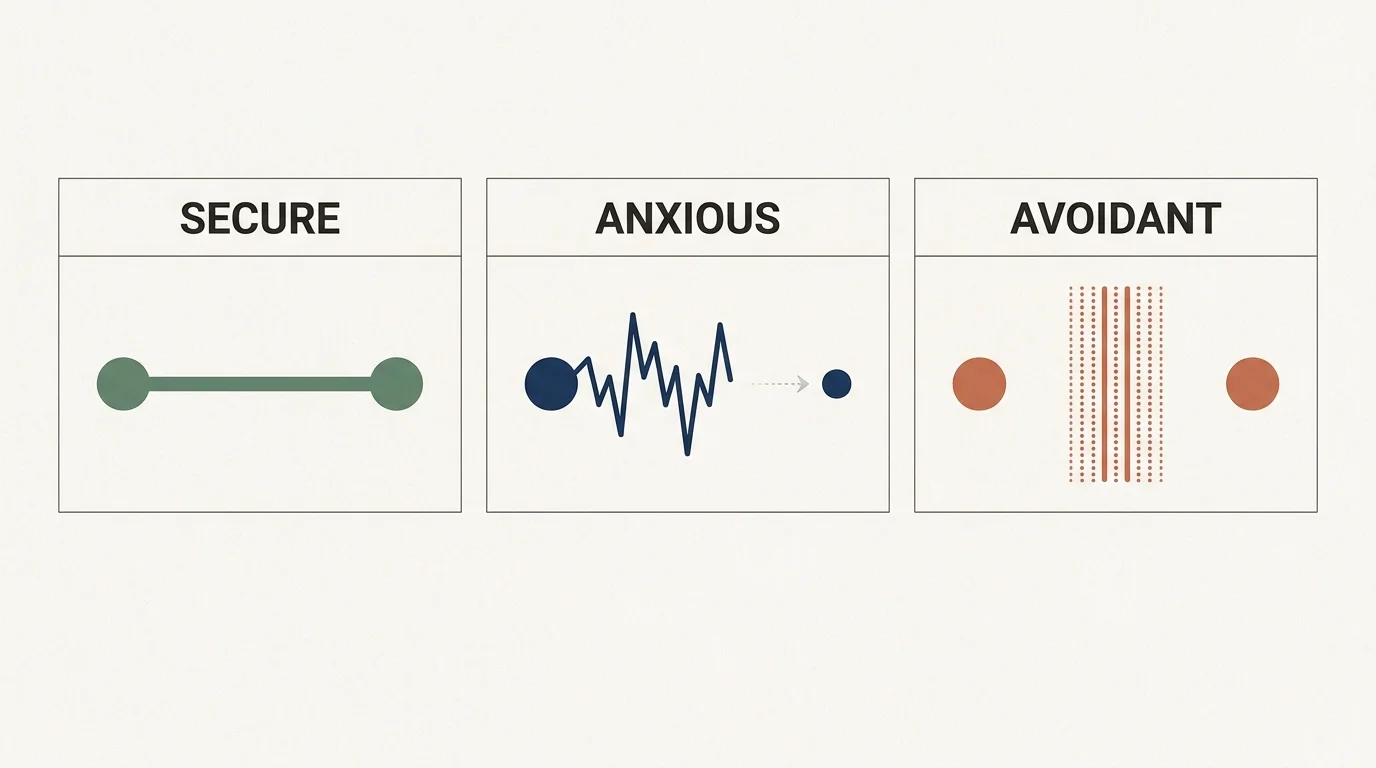
Early emotional neglect actively rewires your expectations of human connection. If your caregivers were emotionally distant, you likely developed an insecure attachment style. You might display an avoidant attachment pattern, pushing partners away and shutting down when emotional intimacy increases. Conversely, you might develop an anxious attachment style, remaining hyper-vigilant for any signs of a partner pulling away and clinging to them out of a deep-seated fear of abandonment.

7. Extreme Discomfort with Compassion
If you spent your childhood surviving on emotional crumbs, a sudden feast of unconditional love feels highly suspicious to your nervous system. When someone offers you genuine compassion, empathy, or unprompted care, you might instinctively cringe, deflect the attention, or assume they have a hidden agenda. Accepting care requires lowering your defenses, which your brain interprets as a dangerous threat to your survival.

8. Misplaced Guilt and Chronic Self-Blame
People who were emotionally neglected are notorious for apologizing constantly. You feel guilty for taking up space, for having needs, and for feeling upset. Because you likely had a roof over your head and food on the table, you invalidate your own pain. You might frequently tell yourself, “Other people had it much worse,” using comparative suffering to deny yourself the right to grieve the emotional support you never received.

9. Rejection Sensitive Dysphoria (RSD)
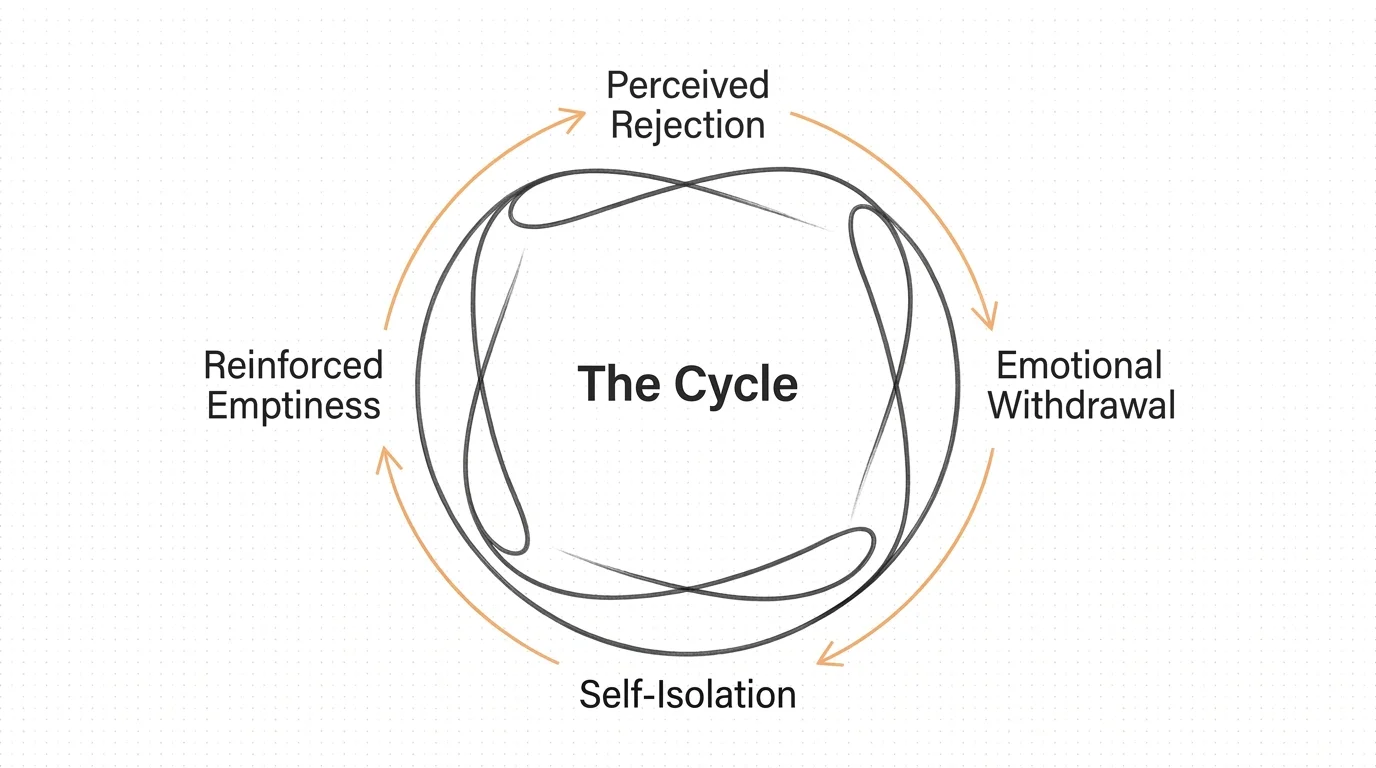
When you grow up in an environment where emotional safety is scarce, you become hyper-vigilant to the moods of others. You learn to read micro-expressions, subtle shifts in tone, and body language to predict if you are about to be dismissed. In adulthood, this manifests as extreme sensitivity to perceived rejection. A slightly delayed text message or a partner’s sigh can trigger a cascade of anxiety, convincing you that the relationship is effectively over.

10. Emotional Numbing and Conflict Avoidance
Healthy conflict resolution requires emotional regulation—a skill you were never taught. When disagreements arise in your adult relationships, your brain quickly becomes overwhelmed. Rather than staying present to navigate the turbulence, you dissociate or shut down completely. This emotional numbing protects you from the intense discomfort of conflict, but it simultaneously prevents you from building deep, authentic connections.
Patterns to Watch For
Recognizing the invisible wounds of your past requires you to confront several common misconceptions. Emotional neglect frequently hides behind cognitive blind spots. Watch for these persistent internal narratives that might be keeping you stuck in self-blame:
- “But I had a great childhood.” You might feel intensely loyal to your parents because they provided for you physically and financially. It is entirely possible to have parents who loved you deeply, took you on vacations, and paid for your education, but who were entirely unequipped to handle your emotional world.
- “I am just a low-maintenance person.” You might pride yourself on not having many needs or never asking for favors. While adaptability is a strength, requiring absolutely nothing from the people who love you is often a sign of suppressed emotional needs, not biological temperament.
- “I don’t have trauma because nothing ‘bad’ happened.” Psychological trauma is not restricted to explicit acts of violence or abuse. The American Psychological Association recognizes that chronic emotional unavailability fundamentally disrupts a child’s developmental trajectory, qualifying as a form of complex relational trauma.
How Emotional Neglect Compares to Active Abuse
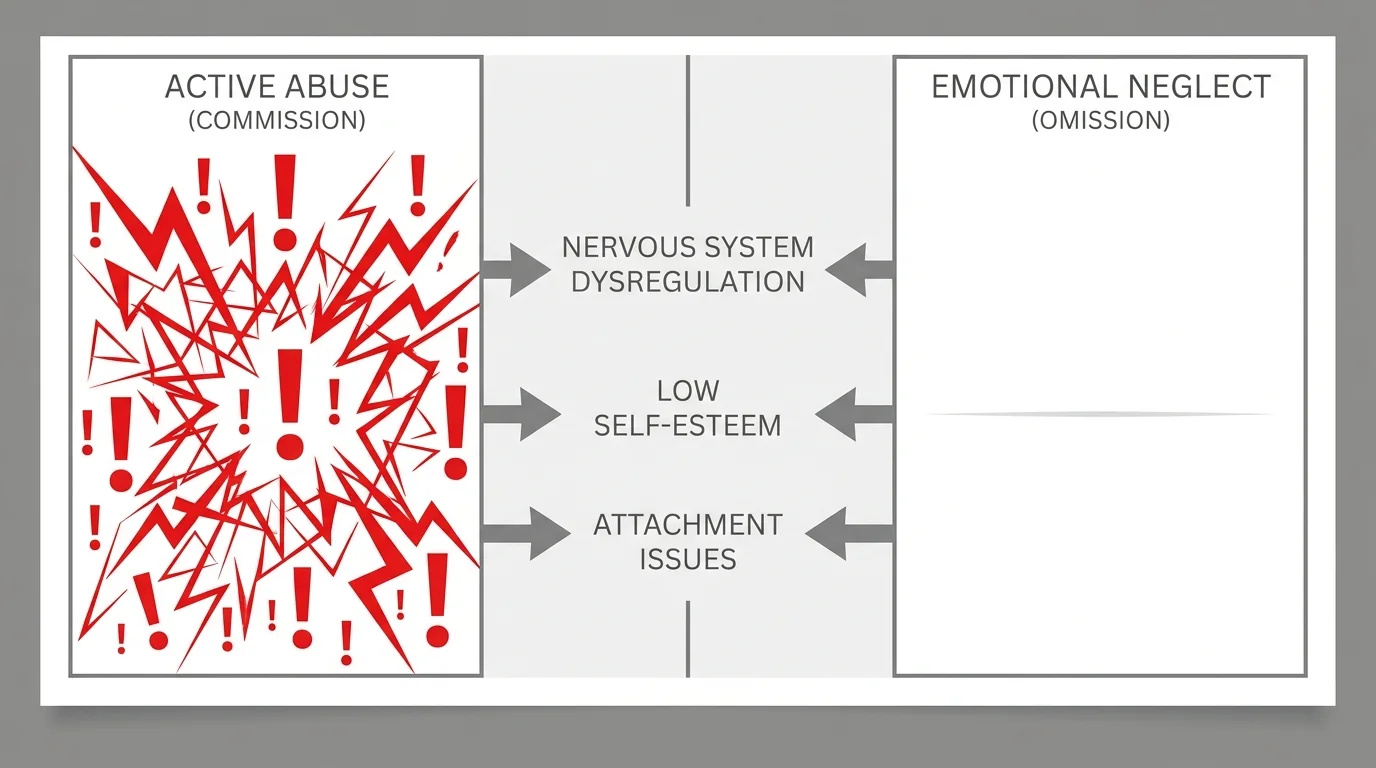
To fully grasp your psychological traits, it helps to distinguish between active emotional abuse and passive emotional neglect. Both cause significant harm, but they imprint on the nervous system differently.
| Factor | Childhood Emotional Neglect | Childhood Emotional Abuse |
|---|---|---|
| Core Mechanism | Acts of omission; the failure to act or intervene. | Acts of commission; active, deliberate actions. |
| Visibility | Invisible, silent, unmemorable, and easily rationalized. | Explicit, highly memorable, and clearly destructive. |
| Parental Behavior | Ignoring boundaries, failing to comfort, emotional absence. | Name-calling, belittling, intentional manipulation, and control. |
| Internal Result | “I don’t matter. I am invisible and fundamentally flawed.” | “I am bad. The world is actively hostile and dangerous.” |

The Generational Ripple Effect
Left unaddressed, the trauma of emotional absence rarely stops with one generation. Because you did not receive a blueprint for emotional attunement, you risk passing this invisible void to your own children. A 2025 psychological study from Queen’s University Belfast revealed that adults who experienced emotional neglect as children are more prone to developing narcissistic distrust; consequently, they may unintentionally adopt hostile, cold, or controlling parenting styles if their trauma remains unexamined. Healing is not just about improving your own quality of life—it is a critical intervention to break a generational cycle of silent suffering.
“The curious paradox is that when I accept myself just as I am, then I can change.” — Carl Rogers, Ph.D.

When Self-Help Isn’t Enough
While self-reflection and educational resources are excellent starting points, complex developmental trauma often requires professional intervention. The nervous system adaptations you formed in childhood are stubborn and deeply entrenched. You should consider seeking the guidance of a trauma-informed therapist if you experience any of the following:
- Severe chronic emptiness: If the void you feel leads to passive or active suicidal ideation, immediate professional support is necessary. You can reach out to the 988 Suicide & Crisis Lifeline for confidential help.
- Destructive relationship cycles: If you repeatedly find yourself in abusive or highly volatile romantic relationships, a therapist can help you identify how you might be subconsciously replicating the emotional distance of your childhood.
- Debilitating emotional numbness: If your alexithymia prevents you from feeling joy, connecting with your children, or maintaining basic friendships, therapeutic modalities like Somatic Experiencing or Emotionally Focused Therapy (EFT) can help safely thaw your emotional responses.
- Relying on substances to cope: If you use alcohol, drugs, or compulsive behaviors to temporarily fill the emotional void or numb the discomfort of intimacy, professional dual-diagnosis support through resources like SAMHSA is critical.

Next Steps on Your Healing Journey
Healing from childhood emotional neglect begins with the radical act of paying attention to yourself. Start small. Set an alarm on your phone for twice a day, pause whatever you are doing, and ask yourself, “What am I feeling in my body right now, and what do I need?” You will likely struggle to answer these questions at first, and that is completely normal. The goal is not immediate clarity; the goal is simply showing your inner child that someone is finally willing to listen. Practice naming your emotions without judgment, challenge your hyper-independence by asking a friend for a small favor, and slowly allow yourself to take up space in your own life.
You survived your childhood by shutting down your needs, but you no longer live in that emotional desert. By actively practicing self-compassion and emotional awareness, you can reparent yourself, build secure attachments, and finally fill the void with genuine connection. This is educational content based on psychological research and general principles. Individual experiences vary significantly. For personalized guidance, consult a licensed therapist, psychologist, or counselor.
Last updated: May 2026. Psychology research evolves continuously—verify current findings with professional sources.









Very informative. Thank you