

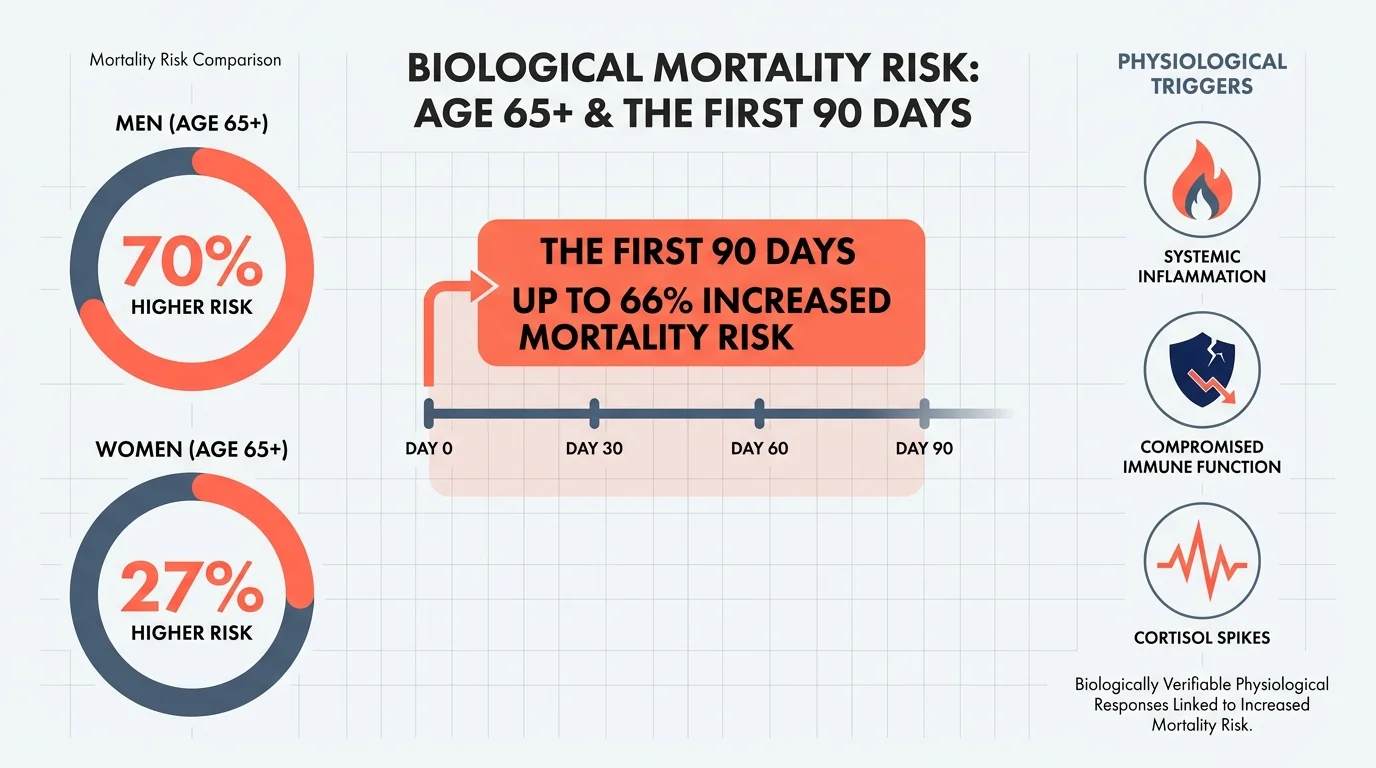
Losing your life partner during the years you planned to spend enjoying retirement together is a profound emotional earthquake. The impact of this loss is not solely emotional; it registers deeply within your physical body. A comprehensive 2023 analysis of nearly one million older adults found that those who lose a spouse at age 65 or older face a significantly increased risk of mortality within the first year of bereavement. Specifically, men in this scenario faced a 70% higher risk of dying, while women faced a 27% higher risk compared to peers whose spouses were still living.
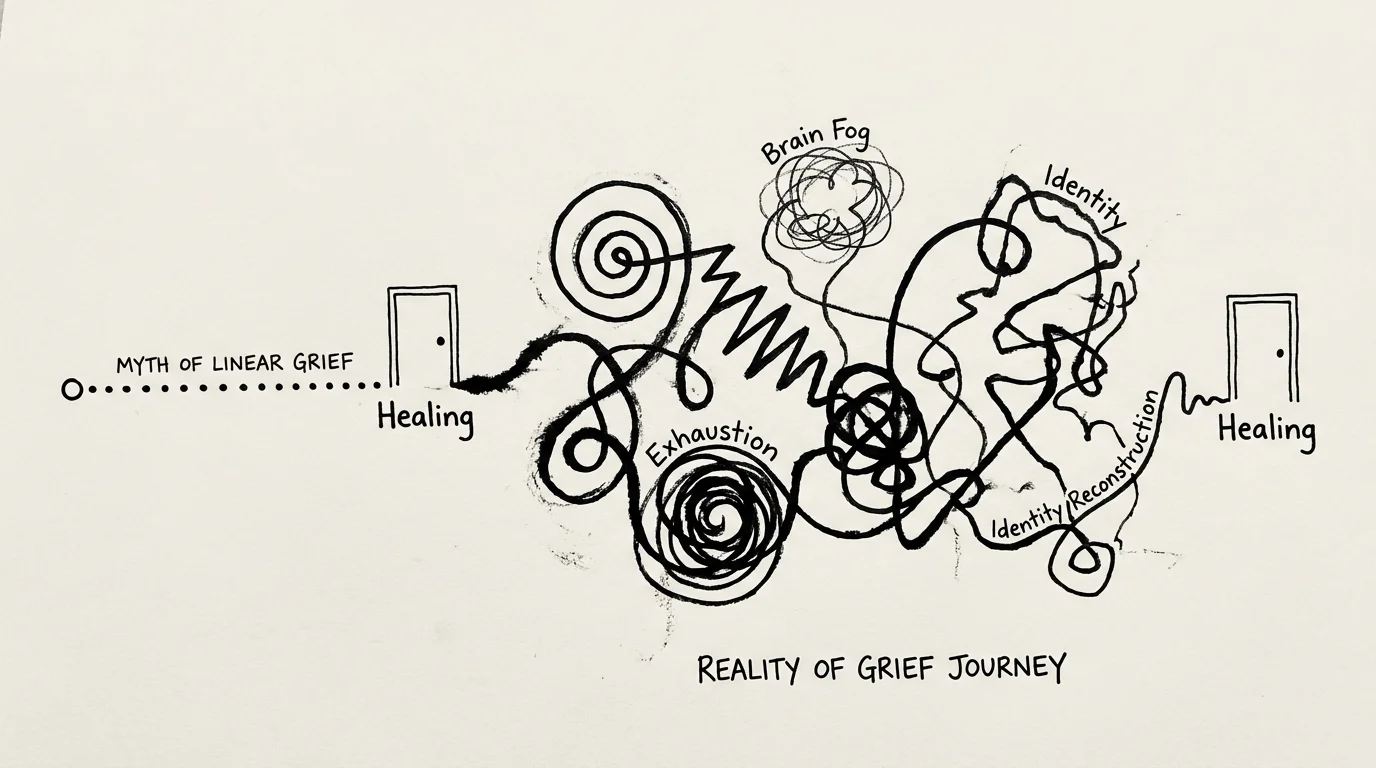
This phenomenon highlights a critical, often unspoken truth: grief is a whole-body experience that demands active care, support, and profound self-compassion. If you are a grief widowed senior trying to navigate the silence of an empty house, understanding the physiological and psychological weight of what you are carrying is the first step toward healing. Your exhaustion, brain fog, and heartache are not signs of weakness; they are biologically verifiable responses to a monumental life transition.
The Unique Landscape of Spousal Loss in Retirement
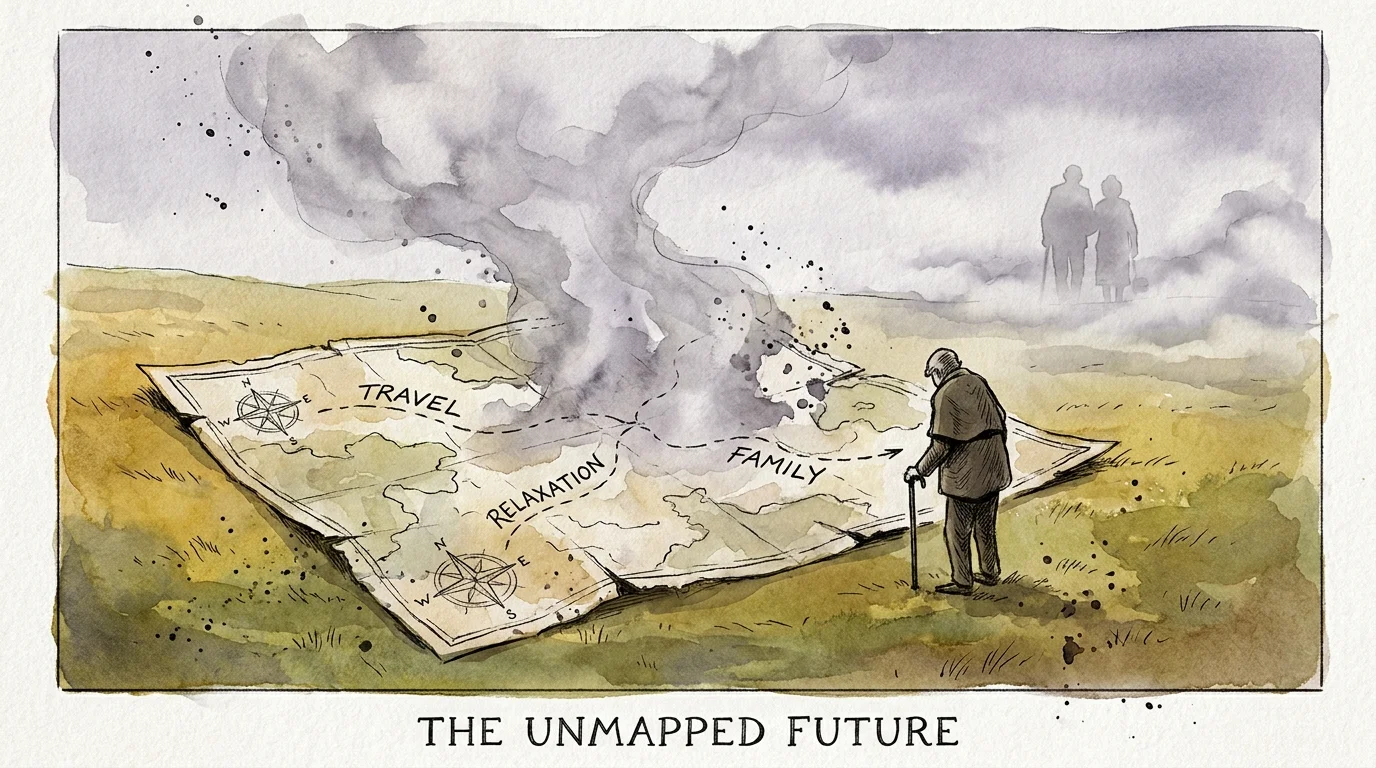
Retirement is culturally framed as the “golden years”—a time to travel, relax, and finally reap the rewards of decades of hard work. When your spouse dies during this phase, you are not just mourning the person; you are mourning the future you painstakingly planned together. The daily routines you shared, from morning coffee rituals to evening television habits, are suddenly dismantled.
Demographically, this is a transition millions navigate, though it often feels incredibly isolating. According to 2024 demographic data, approximately 21% of adults over the age of 65 in the United States are widowed. This shift heavily impacts women, with nearly 30% of women over 65 experiencing widowhood compared to roughly 10% of men. Yet, knowing the statistics rarely softens the immediate blow of the loss.
“An experience of collective pain does not deliver us from grief or sadness; it is a ministry of presence. These moments remind us that we are not alone in our darkness and that our broken heart is connected to every heart that has known pain since the beginning of time.” — Brené Brown, PhD
The path toward emotional healing for a retiree involves recognizing that your identity is undergoing a massive reconstruction. For decades, you may have operated as a unit. Decisions were made jointly. Social invitations were addressed to a couple. Now, you are tasked with discovering who you are as an individual in a phase of life where you expected to be part of a pair.
Recognizing the Physical Toll: The “Widowhood Effect”
To effectively cope with the loss of a spouse, you must first address your physical health. The “widowhood effect”—the documented increase in mortality and health complications following the death of a spouse—is driven by a complex mix of physiological and behavioral factors. Grief triggers a massive stress response in the body, flooding your system with cortisol and adrenaline.
Research indicates that the first 90 days following a spouse’s death are the most critical for the surviving partner’s health, with some studies showing up to a 66% increased mortality risk during this immediate window. This risk often stems from systemic inflammation, compromised immune function, and disruptions to essential self-care routines.
To protect your body while you grieve, consider these foundational steps:
- Maintain your medication schedule: Grief causes severe memory disruptions. Use pill organizers and set phone alarms to ensure you do not miss critical medications for heart health, blood pressure, or diabetes.
- Hydrate and eat functionally: You may have zero appetite. Cooking for one can feel demoralizing. Rely on nutrient-dense, easy-to-prepare foods like protein shakes, pre-cut vegetables, and hearty soups to keep your physical strength intact.
- Honor your need for rest: Sleep architecture is frequently destroyed by grief. If nighttime sleep eludes you, permit yourself to nap during the day. Rest without the pressure of achieving eight unbroken hours.
Myths Worth Debunking
Navigating mental health after a loss in your 60+ years is heavily complicated by societal expectations and well-meaning but misguided advice. Clearing away these misconceptions can give you the emotional breathing room you need to heal.
Myth: You should be “used to” loss by this age.
There is a pervasive assumption that because older adults experience more frequent bereavement, they become numb or highly resilient to it. A 2022 finding by the National Ageing Research Institute debunked this completely, showing that repeated exposure to loss does not inherently build resilience; rather, the accumulation of losses can severely compound physical and mental health challenges. Your pain is valid, regardless of how many times you have attended a funeral.
Myth: Time heals all wounds automatically.
Time does not heal grief; what you do with that time dictates your healing. Passive waiting often leads to prolonged suffering. Active mourning—which involves feeling the pain, adjusting to the new environment, and intentionally seeking support—is what gradually transforms raw anguish into a manageable ache.
Myth: Moving on means leaving them behind.
Healthy widowhood coping does not require you to sever your bond with your spouse. Modern grief psychology emphasizes “continuing bonds.” You are encouraged to talk to them, keep their pictures up, and honor their memory. Healing means integrating the loss into your life, not erasing the love you shared.

Rebuilding Social Connections When Friends Were “Ours”
One of the most disorienting aspects of losing a spouse is the sudden shift in your social circle. A fascinating 2023 study from Cornell University revealed that the negative health impacts of widowhood are significantly accelerated when spouses did not know each other’s friends well. Researchers found that the probability of death was five times greater over a decade for widows whose social networks were tightly guarded by their deceased partner.
When a spouse acts as the primary social coordinator or the “bridge” to the outside world, their passing represents a double loss: the loss of the partner and the loss of the social network. To rebuild your support system, you must actively cultivate individual connections.
Start small. Reach out to one acquaintance or neighbor for a brief coffee. Look into local community centers, libraries, or religious organizations that host groups for retirees. You do not need to explain your grief to new people unless you want to; sometimes, the relief of socializing without the heavy context of your loss can be a therapeutic break for your mind. If you feel up to it, joining a bereavement group specifically for older adults can introduce you to peers who deeply understand the specific pain of losing a retirement partner.

Practical Strategies for Navigating Daily Life Alone
The empty spaces in your home often shout the loudest. The chair they sat in, the side of the bed they slept on, and the quiet hour before dinner can trigger intense waves of sorrow. Modifying your environment and daily rhythms can help you regain a sense of equilibrium.
- Reclaim the physical space: You do not need to clear out their closet immediately. Take your time. However, moving a piece of furniture, buying a new bedspread, or changing the seating arrangement at the dining table can signal to your brain that this is a new chapter, subtly reducing the visual trigger of their absence.
- Create new morning and evening anchors: If you used to watch a specific news program together every morning, the silence will feel deafening. Replace that routine with a new anchor: listen to a podcast, read a different newspaper, or sit on the porch with your coffee.
- Delay major decisions: Grief severely impacts the brain’s executive functioning. Financial advisors and psychologists universally recommend adhering to the “Year of Firsts” rule: avoid making irreversible decisions—like selling your home, moving to a new state, or giving away significant assets—for at least the first six to twelve months.
- Plan for “grief ambushes”: Certain days will be harder than others. Anniversaries, birthdays, and holidays are predictable triggers. Plan exactly how you will spend these days, who you will be with, and give yourself an escape route if the event becomes too overwhelming.
Finding Meaning After Profound Loss
When the person who gave your daily life its shape is gone, it is natural to question your own purpose. Why get up? Why keep going? Existential psychology offers a framework for navigating this dark space.
“Suffering in and of itself is meaningless; we give our suffering meaning by the way in which we respond to it.” — Viktor E. Frankl, MD, PhD
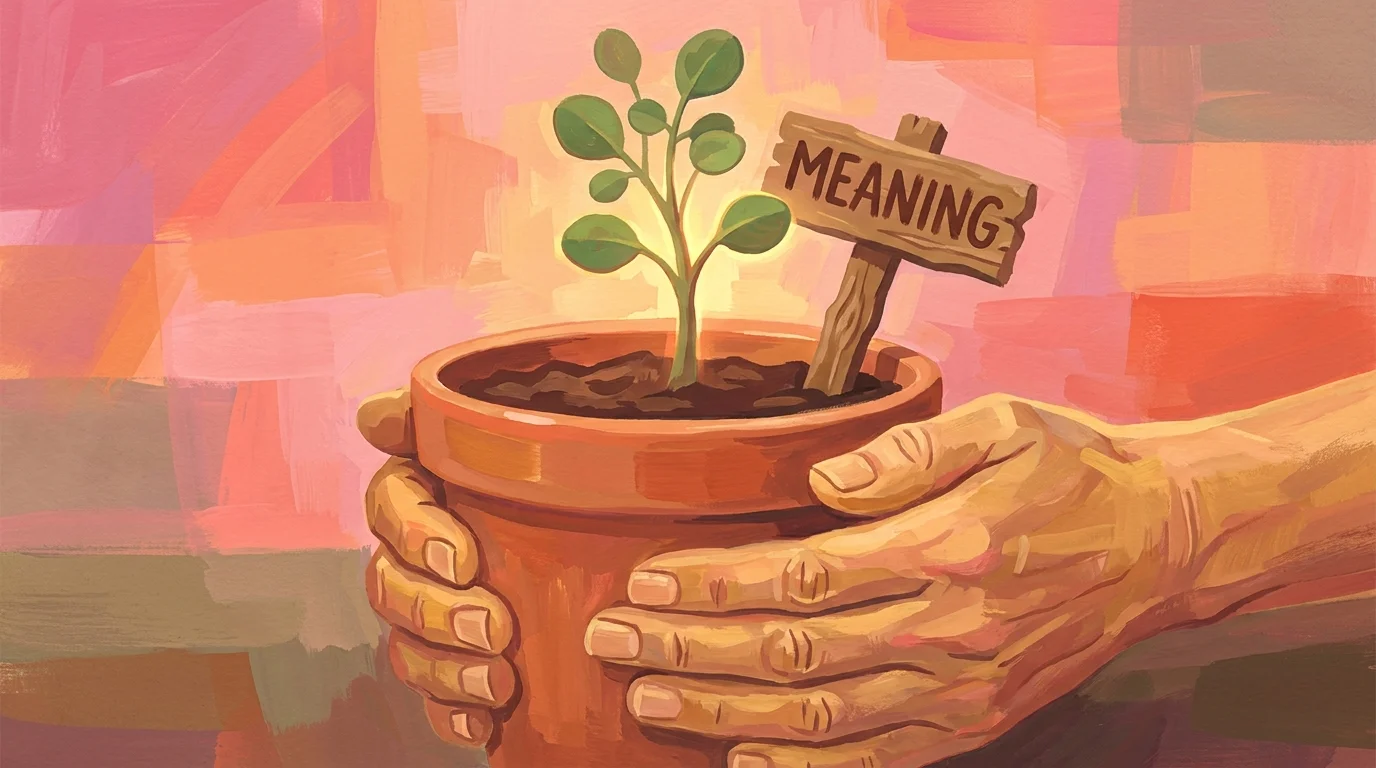
Finding meaning does not mean being glad the loss happened. It means taking the love you still have for your spouse and channeling it into the world. Many widowed individuals find healing by volunteering for causes their spouse cared about, documenting family history for their grandchildren, or simply dedicating themselves to living fully as a testament to the life their partner was denied.
Allow your purpose to evolve. Your purpose in your fifties may have been your career; in your sixties, it may have been planning retirement with your spouse. In this new chapter, your purpose might simply be to heal, to offer kindness to others, or to learn a new skill.

Signs It’s Time to Talk to a Therapist
While grief is a natural human experience, it can sometimes become complicated, effectively trapping you in a state of acute mourning. Prolonged Grief Disorder (PGD) is a recognized mental health condition where the intense pain of bereavement remains debilitatingly persistent long after a loss, severely impairing daily life.
Research shows that up to 10% to 20% of older adults may experience PGD, largely due to their frequent exposure to loss and the deep dependency that often develops in long-term marriages. Fortunately, targeted treatments exist. A 2024 clinical trial published in JAMA Psychiatry demonstrated that grief-specific Cognitive Behavioral Therapy (CBT) is highly effective at reducing PGD symptoms, with patients maintaining significant improvements in their mental health and daily functioning well over a year post-treatment.
If you are experiencing any of the following, it is crucial to seek professional support from a licensed mental health provider:
- Inability to function: Struggling to maintain basic hygiene, pay bills, or eat adequately more than six months after the loss.
- Intense, persistent yearning: Feeling a longing so severe that it entirely blocks your ability to engage with the present moment or imagine any future for yourself.
- Severe isolation: Actively avoiding all friends, family, and social contact because reminders of your spouse are too painful to bear.
- Meaninglessness or despair: Experiencing persistent thoughts that life is completely empty, or having recurrent thoughts of wanting to die to join your spouse. (If you are experiencing suicidal thoughts, please contact the 988 Suicide & Crisis Lifeline immediately for support).
You can find qualified professionals through directories provided by the American Psychological Association or by consulting with your primary care physician.
Frequently Asked Questions
How long does the intense grief usually last?
There is no standard timeline for grief. For most people, the most acute, raw anguish begins to soften in its intensity after the first six to twelve months, often referred to as the “Year of Firsts.” However, grief does not disappear; it changes shape. You will likely experience waves of sadness for the rest of your life, but they will become further apart and easier to navigate as you build a new life around the loss.
Is it normal to feel angry at my late spouse?
Absolutely. Anger is a very common, yet rarely discussed, facet of grief. You might feel angry that they left you alone to manage the house, angry at the medical system, or angry that your retirement plans were ruined. Feeling anger does not diminish the love you had for them. Acknowledge the anger without judgment—it is simply another expression of your pain.
When should I sort through their clothing and belongings?
Only when you feel truly ready. Some people find comfort in sorting through items within a few weeks, while others leave a closet untouched for years. If the presence of their items brings you comfort, leave them. If seeing their shoes by the door brings you daily agony, consider packing them into a box to store out of sight until you are ready to make a final decision.
How do I handle the intense loneliness at night?
Evenings are notoriously difficult for widows and widowers. The distractions of the day fade, and the absence in the house becomes amplified. Create a comforting nighttime routine to ease the transition into sleep. Listen to audiobooks or guided meditations, keep a soft light on, or sleep with a body pillow. Some people find immense comfort in adopting a senior pet, as the physical presence of an animal can significantly reduce the feeling of total isolation.
Healing from the loss of a spouse in retirement is not about “getting over” your partner. It is about learning how to carry your love for them in a new way while slowly coaxing yourself back into the world. Be gentle with yourself. Drink a glass of water, step outside for five minutes of fresh air, and take this journey one hour at a time. The fact that you are reading this and seeking guidance shows that beneath your grief, there is a profound resilience trying to guide you forward.
This article provides general educational information about psychology and relationships. It is not a substitute for professional therapy or medical advice. Everyone’s situation is unique—if you’re struggling, please reach out to a licensed mental health professional. For evidence-based resources on mental health and aging, visit the National Institute of Mental Health or Harvard Health.
Last updated: April 2026. Psychology research evolves continuously—verify current findings with professional sources.








Leave a Reply