Psychology Diary

The First Step Toward Change Is Awareness

  • Home
  • Relationships
  • Mental Health
  • Expert Tips
  • Life
  • Family
  • Marriage

Grandparenting from a Psychologist’s Perspective: How to Build a Strong Bond

August 31, 2025 · Family

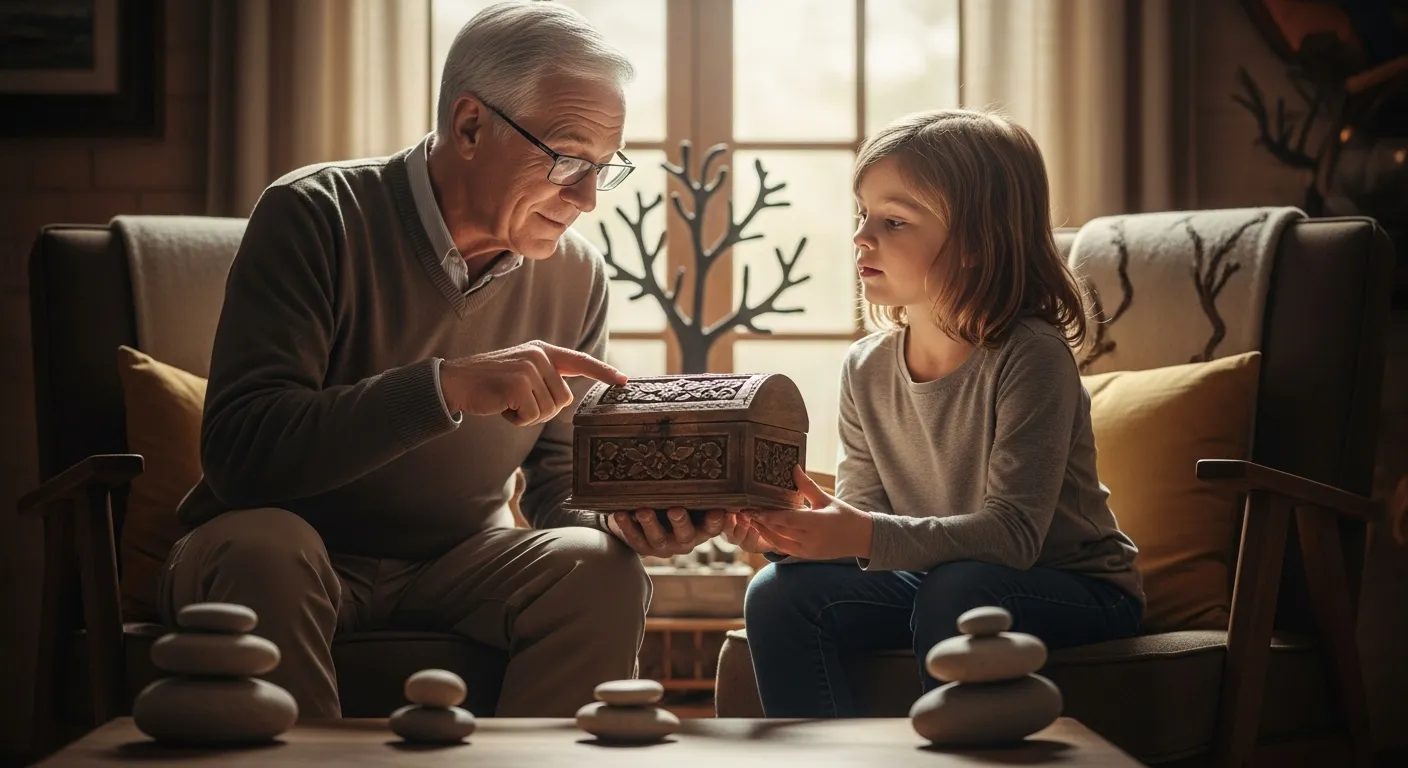
Grandfather showing grandchild a family heirloom.

Fostering a Lasting Legacy: The Grandparent’s Unique Contribution

Beyond the daily interactions, you have a singular and powerful role to play in your grandchild’s life: you are the keeper of the family’s story. You connect them to their roots, their heritage, and a world that existed before they did. This contribution is a profound gift that no one else can give in quite the same way.

Sharing your family’s history helps a child build a strong sense of identity. It answers the fundamental question, “Where do I come from?” This doesn’t need to be a formal history lesson. It happens organically through storytelling. Share anecdotes about their parents as children, about your own upbringing, or about great-grandparents they never had the chance to meet. Pull out old photo albums and tell the stories behind the pictures. These narratives weave a rich tapestry of belonging.

This is also your opportunity to pass on core family values without lecturing. Instead of saying, “It’s important to be resilient,” you can tell a story about a time you faced a challenge and overcame it. Instead of saying, “Family is everything,” you can create traditions that bring everyone together. Rituals are the glue that holds families together across generations. These can be simple things that become sacred over time:

  • A special “Grandma’s recipe” for birthday cakes.
  • An annual apple-picking trip in the fall.
  • A weekly video call where you read a story.
  • A silly handshake that only you and your grandchild share.

It’s also vital to acknowledge that families are beautifully diverse. Your family’s traditions may be shaped by culture, faith, geography, or unique circumstances. The key is to co-create traditions that feel meaningful and inclusive for everyone. Have a conversation with your adult children: “I’d love to start a new tradition with the grandkids. What are some things you think they’d enjoy that would also honor our family’s heritage?” This collaborative spirit ensures that the legacy you build is one that will be cherished and carried forward.

Pages: 1 2 3 4 5 6 7 8 9

Share this article

Facebook Twitter Pinterest LinkedIn Email

Leave a Reply Cancel reply

Your email address will not be published. Required fields are marked *

Search

Latest Posts

  • A person sits alone on a sofa at dusk, looking exhausted and leaning their head on their hand in a dimly lit, lived-in living room. 8 Signs You’re Emotionally Drained By Someone Close To You
  • Illustration of a person looking into a mirror, oblivious to the people around them who are fading into the background. 8 Keys to Recognizing the Faces of Egocentric Behavior
  • A mixed media collage of an anatomical heart being slowly stained by dark ink, symbolizing the corrosive nature of unspoken resentment. 7 Signs Someone Is Secretly Resentful Toward You
  • A mixed-media collage showing a human silhouette with a fractured internal wooden frame, representing the delicate architecture of trust. 8 Behaviors That Reveal Someone Has Deep Trust Issues
  • An elderly man sits alone at a kitchen table in soft afternoon light while his adult daughter watches from the doorway with concern. Why Some People Become More Difficult With Age—According to Psychologists
  • Conceptual paper-craft illustration of a brain with glowing neural pathways and botanical growth representing cognitive health. The Link Between Physical Activity and Mental Sharpness After 60
  • A senior woman in a sunlit room excitedly examines a green leaf through a magnifying glass, surrounded by plants and gardening tools. Why Seniors Who Stay Curious Live Longer—And How to Cultivate It
  • A man in his 60s working with clay in a pottery studio, symbolizing the transition from a career to a new personal purpose. How to Rebuild Your Identity and Purpose After You Stop Working
  • A single coffee mug on a wooden table next to an empty chair in a sunlit kitchen, representing the quiet of loss. How to Cope with Grief After Losing a Spouse in Retirement
  • An older woman in a knit sweater sits on a porch at dawn, holding a steaming mug and looking thoughtfully at a misty garden. The Power of Gratitude: How Seniors Can Use It to Live Happier Lives

Newsletter

Get the latest posts delivered to your inbox.

Related Articles

child

10 Signs Your Child Is a Brat and How to Deal With It

As parents, we tend to neglect our children’s bratty behavior because they can be so…

Read More →
Divorce

Headed Towards a Divorce? Here Are 14 Surprising Factors That Increase Your Risk

Could you be heading toward a divorce? Let’s look at the signs! The reasons people…

Read More →
Grandparenting Tip

8 Smart Grandparenting Tips to Build Better Bonds

Having a rough time bonding? These smart grandparenting tips can help! Are you a grandparent…

Read More →
toxic family

12 Signs You’re Dealing With a Toxic Family Member

They are always blaming you If a family member is constantly criticizing or even blaming…

Read More →
grandparents

Top 9 Worst Mistakes Grandparents Make Without Realizing

4. Try not to make promises that you cannot keep This is a general rule…

Read More →
stay connected with your grandkids

The 6 Best Activities to Stay Connected with Your Grandkids

4. Try visiting children’s museums If you want an educational and, at the same time,…

Read More →
Overcoming Parent-Child Conflict

Overcoming Parent-Child Conflict: 5 Easy Steps to Navigate

Psychology Diary Presents: Overcoming parent-child conflict In the complex world of family dynamics, the delicate…

Read More →
Emotionally Immature

5 Signs Your Parents Were Emotionally Immature

Emotionally Immature parents can leave deep scars Go back in time and try to think…

Read More →
Mother and daughter holding hands, talking on park bench.

How to Set Healthy Boundaries with Your Adult Children

Common Boundary Scenarios and How to Handle Them Theory is helpful, but the real test…

Read More →

Psychology Diary

The First Step Toward Change Is Awareness

Inedit Agency S.R.L.
Bucharest, Romania

contact@psychologydiary.com

Explore

  • About Us
  • Advertiser Disclosure
  • Contact Us
  • Disclaimer
  • Do not sell my personal information
  • Editorial Policy
  • Frequently Asked Questions
  • Privacy Policy
  • Terms and Conditions
  • Subscribe
  • Unsubscribe

Categories

  • Expert Tips
  • Family
  • Life
  • Marriage
  • Mental Health

© 2026 Psychology Diary. All rights reserved.