

Popular culture convinces you that successful relationships run on effortless romance, telepathic communication, and constant agreement. In reality, romanticized scripts often set couples up for unnecessary disillusionment, resentment, and premature despair.
Clinical research tells a remarkably different story about how long-term partnerships survive and flourish. Understanding the boundary between cultural folklore and evidence-based relationship dynamics can fundamentally transform your partnership.
Psychologists have studied thousands of couples across decades to separate romantic fiction from marital reality. Here is what modern research reveals about eleven widespread marriage myths—and the healthy truths that replace them.
1. The Myth That Half of All Marriages End in Divorce
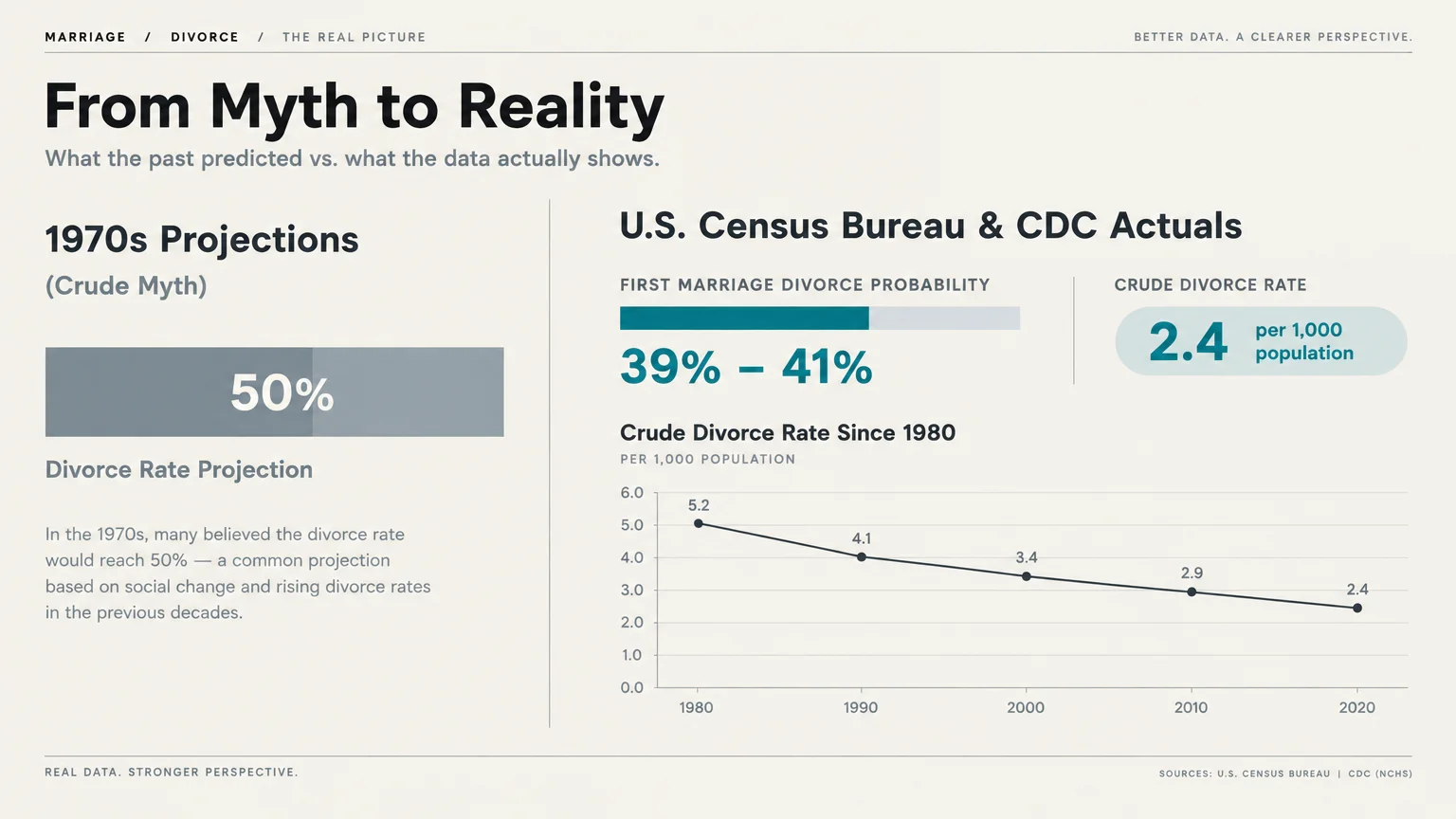
You have likely heard the persistent claim that 50% of all marriages end in divorce. While widely repeated in media, this figure is an outdated statistical myth.
The 50% projection originated from 1970s forecasting models that misinterpreted annual crude marriage-to-divorce ratios. Current data from the U.S. Census Bureau and the CDC shows that divorce rates have steadily declined since 1980.
Today, the actual probability of a first marriage ending in divorce sits between 39% and 41%. Furthermore, recent CDC reporting places the crude divorce rate at just 2.4 per 1,000 population.
Believing that divorce is a coin flip creates unnecessary dread and preemptive resignation. When you realize the odds favor long-term stability, you can invest in your relationship with greater confidence.
Cultural pessimism can subtly erode commitment before marital challenges even emerge. Remind yourself that contemporary marriages are statistically more durable than public perceptions suggest.
2. The Myth That Happy Couples Solve All Their Disagreements
Many partners believe that healthy couples eventually resolve every dispute. When an argument resurfaces, they assume their connection is fundamentally broken.
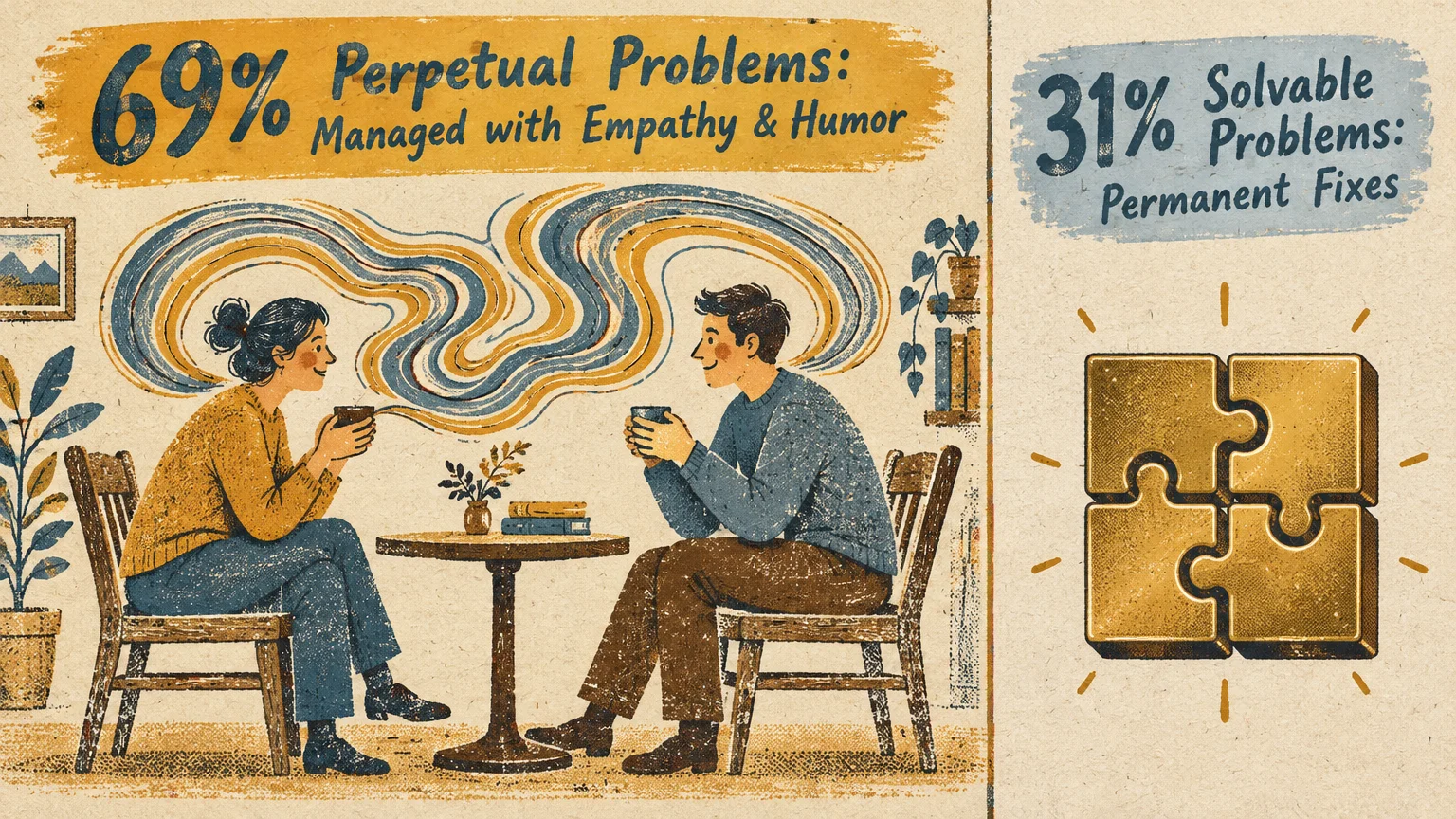
Groundbreaking longitudinal research from The Gottman Institute reveals the exact opposite. Their studies demonstrate that 69% of relationship conflicts are perpetual problems that never truly disappear.
Perpetual conflicts stem from enduring personality traits, core values, and lifestyle preferences. Only 31% of relationship issues represent solvable problems with concrete, permanent fixes.
Successful couples do not eliminate recurring differences; they change how they discuss them. You can manage perpetual disagreements by using humor, empathy, and mutual accommodation rather than demanding total surrender.
When gridlock occurs, shift your goal from winning an argument to mutual understanding. Exploring the underlying meaning behind your partner’s stance builds lasting emotional safety.
3. The Myth That Healthy Marriages Are Completely Free of Conflict
Silence during a disagreement does not necessarily mean your marriage is thriving. In fact, total conflict avoidance often signals emotional disengagement rather than genuine marital harmony.
Psychologists emphasize that healthy couples argue regularly. What matters is the emotional tone you maintain while working through friction.
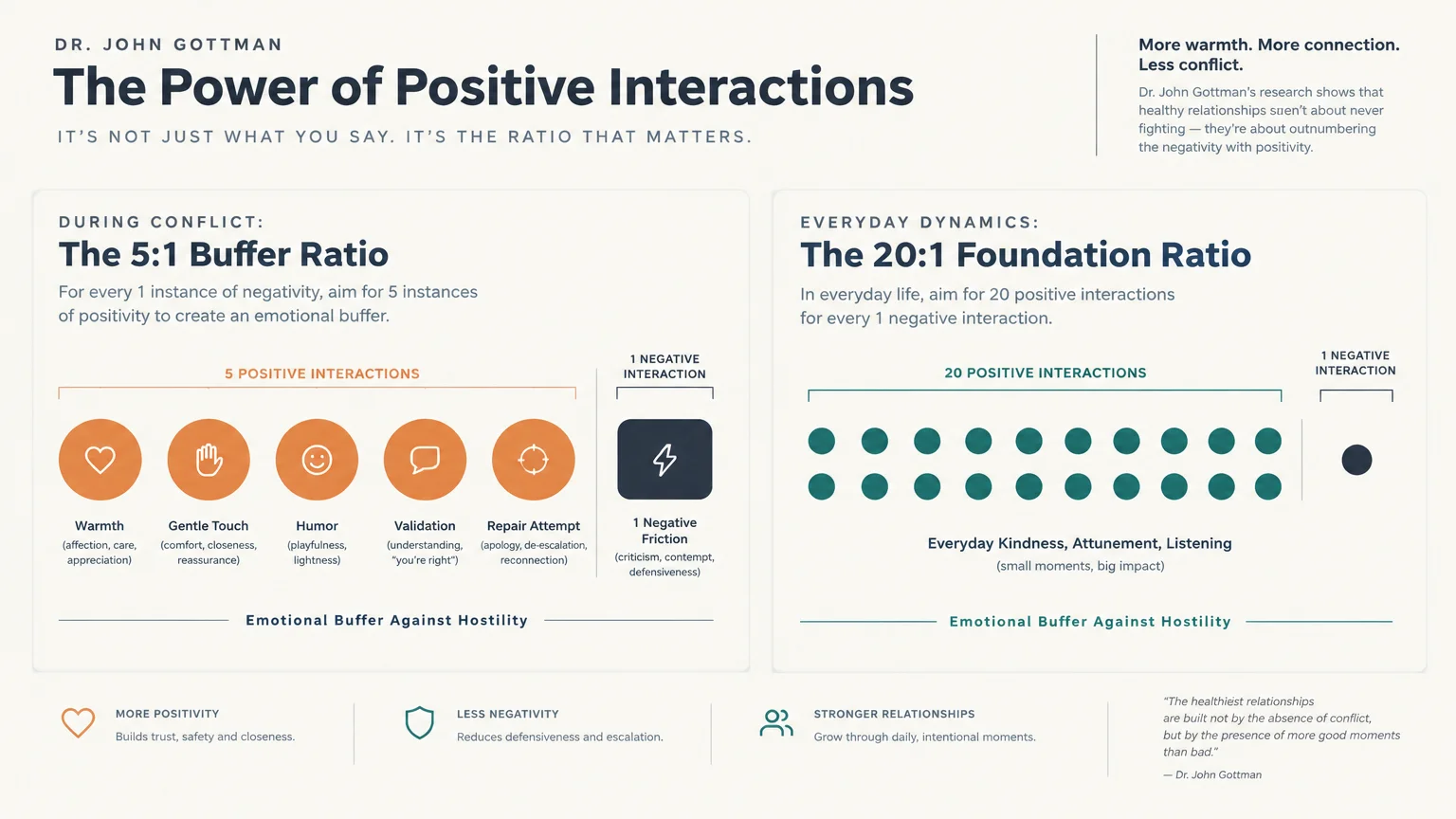
Dr. John Gottman discovered that stable marriages maintain a ratio of at least 5 positive interactions for every 1 negative interaction during conflict. A gentle touch or a validating remark buffers against destructive hostility.
Outside of active disputes, thriving couples maintain an everyday ratio of 20:1 positive-to-negative moments. You do not need an argument-free home; you need reliable warmth and repair attempts.
Corrosive conflict habits—such as contempt, criticism, defensiveness, and stonewalling—erode attachment security. Replacing these destructive behaviors with gentle complaints and active listening transforms necessary disputes into opportunities for growth.
4. The Myth That Opposites Attract and Create Lasting Stability
Pop culture often claims that magnetic attraction occurs between polar opposites. While contrasting habits can feel exciting initially, severe personality divides frequently erode long-term intimacy.
A landmark 2023 study in Nature Human Behaviour analyzed more than 130 traits across millions of couples. The researchers found that partners were actually similar across 82% to 89% of examined characteristics.
Long-term marital stability relies heavily on homogamy, which describes similarity in core values, political views, and lifestyle habits. Deep alignment on fundamental beliefs creates a predictable and secure emotional foundation.
While complementary hobbies can add novelty, shared values reduce chronic relational friction. Look for someone who shares your life trajectory, financial philosophies, and basic worldview.
If you and your spouse hold contrasting habits, establish collaborative agreements rather than attempting personality overhauls. Celebrate complementary functional skills while staying anchored in shared values.

5. The Myth That Having Children Automatically Brings Couples Closer
Many struggling spouses view pregnancy as a magic remedy for marital disconnect. They hope that welcoming a baby will unite their divided priorities and rekindle mutual warmth.
Research cited by the American Psychological Association contradicts this romantic assumption. Roughly 67% of couples experience a significant drop in relationship satisfaction during the first three years of their first child’s life.
Newborn care introduces severe sleep deprivation, unequal chore distribution, and acute financial pressure. If your foundation feels shaky beforehand, parenting strain amplifies existing fractures.
Protecting your bond requires deliberate teamwork before and after childbirth. You must actively carve out intentional moments for connection, mutual appreciation, and emotional check-ins amidst infant care.
Prioritizing your marriage directly serves your children by providing them with a secure domestic environment. Guard your couple time with the same dedication you give to family obligations.

6. The Myth That Couples Therapy Is Only for Marriages on the Brink
Too many partners treat couples counseling as an emergency room visit right before signing divorce papers. Waiting until contempt sets in makes clinical intervention far more difficult.
Landmark research by Dr. John Gottman showed that couples traditionally waited an average of 6 years after problems began before seeking therapy. By that time, toxic patterns have often solidified.
More recent findings by Doherty and colleagues (2021) suggest modern couples now seek help sooner, averaging a median wait time of 2 to 3 years.
Therapy works best as preventive maintenance rather than marital hospice care. Seeking guidance early provides you with de-escalation tools, boundary-setting strategies, and communication frameworks before emotional detachment takes over.
Proactive counseling helps you identify hidden communication landmines before they trigger resentment. Viewing therapy as relationship education reframes counseling into an empowering investment.

7. The Myth That Your Spouse Should Fulfill Every Emotional Need
Western culture encourages you to expect your spouse to serve as your best friend, passionate lover, co-parent, and sole confidant. This expectation places an unsustainable burden on one human being.
“Today, we turn to one person to provide what an entire community once provided. That places an enormous burden on modern marriage.” — Esther Perel, Psychotherapist and Author
Clinical experts note that expecting one partner to replace an entire community leads to chronic disappointment. No single individual can fulfill every psychological need you experience.
Healthy marriages flourish through differentiation, where both partners maintain distinct identities, outside friendships, and autonomous pursuits. Cultivating rich social circles outside your marriage relieves immense pressure from your romantic partnership.
When you enrich your life through external friendships and interests, you bring renewed energy back into your marriage. Interdependence thrives when individual autonomy remains intact.

8. The Myth That Love Means Never Having to Ask for What You Need
Believing that true love equates to telepathic mind-reading is a dangerous cognitive distortion. You might think that if your partner genuinely loved you, they would anticipate your emotional needs without prompting.
Clinical psychologists emphasize that silent expectations almost always transform into bitter resentment. Your spouse cannot read your mind, regardless of how deeply they love you.
Mature intimacy requires direct, vulnerable self-disclosure. Clearly articulating what you need removes guesswork and gives your partner an honest chance to support you.
Frame your requests using gentle start-ups and actionable suggestions. Asking for affection or assistance directly is an act of trust, not a sign of failure.
Dropping the mind-reading expectation eliminates an unnecessary source of relationship friction. Open dialogue fosters authentic intimacy far more effectively than passive hope.

9. The Myth That Passion Naturally Dies and Cannot Be Rebuilt
Early romantic relationships benefit from intoxicating surges of neurochemicals. When that initial biological excitement subsides, many people mistakenly assume that passion has permanently vanished.
Relationship experts at Psychology Today explain that erotic desire requires intentional cultivation rather than passive hope. Long-term desire rarely thrives on autopilot; it demands conscious effort and emotional risk.
Passion requires both comfort and novelty. When you establish secure attachment while leaving room for mystery and individual autonomy, romantic chemistry can re-emerge throughout various stages of life.
Schedule intentional dates, try novel activities together, and nurture your sensual life as an ongoing priority. Intimacy is a dynamic practice, not an expired novelty.
Choosing to prioritize physical closeness and emotional flirtation keeps attraction alive across decades. Passion changes shape over time, deepening into enduring sensual connection.

10. The Myth That Forgiveness Means Forgetting and Instant Trust
Many people conflate forgiveness with immediate reconciliation, believing that letting go of anger requires forgetting an offense. In reality, forgiveness and rebuilding trust operate on completely separate psychological tracks.
Forgiveness is an internal decision to release bitterness and vengeance. In contrast, trust is an earned commodity established through consistent, observable actions over months or years.
True healing after a betrayal requires clear boundaries and accountable behavior. Forgiving someone does not mean you must forfeit your self-respect or tolerate recurring mistreatment.
You can genuinely forgive your spouse while still requiring total transparency and emotional restitution. Sustainable trust grows from demonstrated reliability, not enforced amnesia.
Reconciliation requires the injured partner to feel validated and emotionally safe. Establishing transparent boundaries allows trust to rebuild organically over time.

11. The Myth That If Marriage Requires Hard Work, You Picked Wrong
Romantic fairy tales suggest that when you meet your soulmate, partnership feels effortless. Consequently, when difficult relationship seasons arise, people frequently wonder if they married the wrong person.
Psychologists view this as a rigid destiny mindset rather than a flexible growth mindset. Believing love should be effortless makes normal developmental challenges feel like catastrophic incompatibility.
Every enduring marriage requires conscious labor, emotional regulation, and frequent repair attempts. Negotiating domestic responsibilities, personal changes, and financial stressors demands deliberate problem-solving.
Working hard on your marriage does not signal incompatibility. Instead, active emotional work demonstrates mutual dedication to building a resilient, long-lasting partnership.
Distinguish between normal interpersonal effort and toxic distress that compromises your mental health. Healthy marital work feels collaborative and constructive rather than depleting.
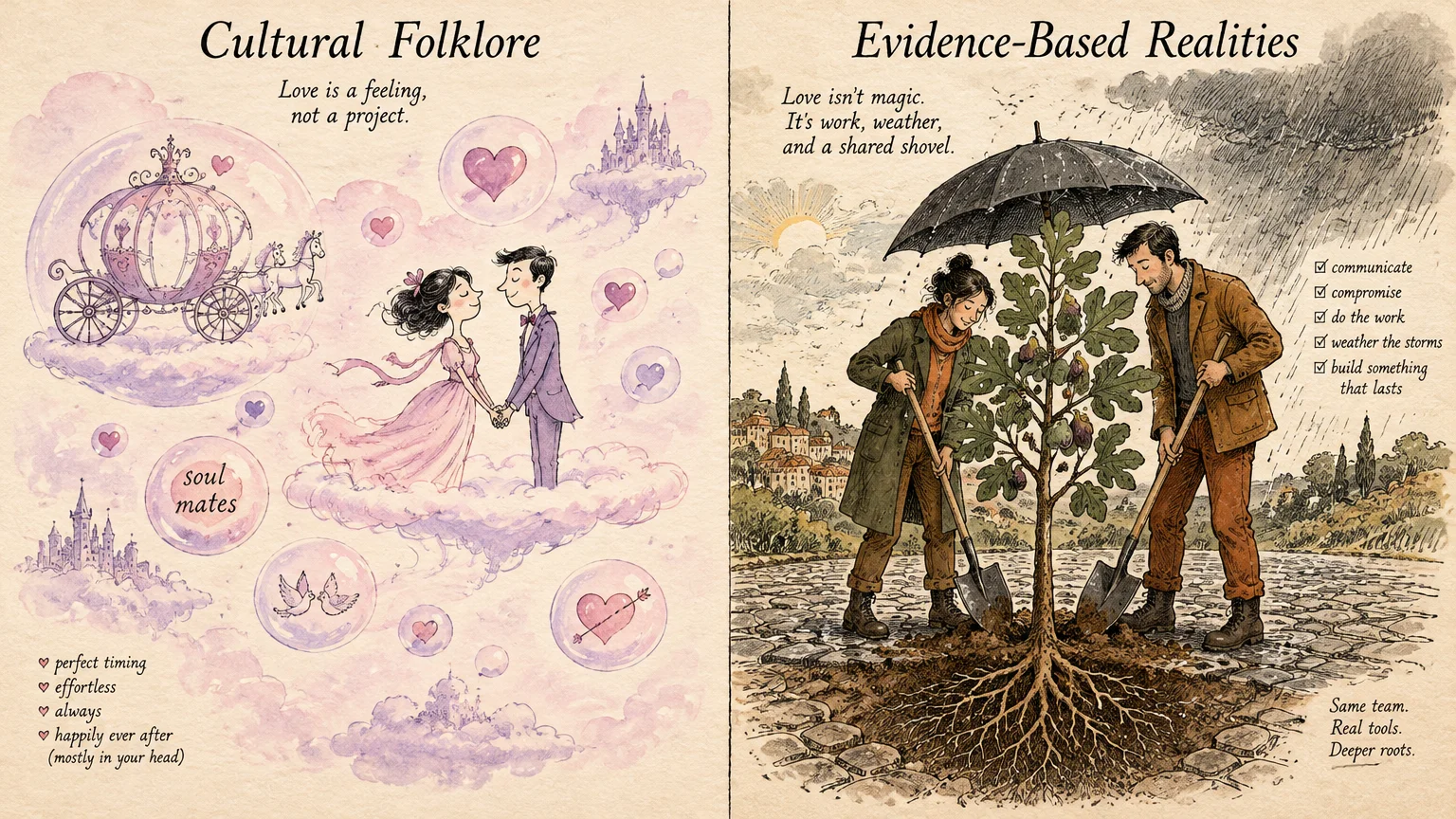
Evidence-Based Realities vs. Cultural Folklore
Examining the contrast between cultural expectations and clinical data clarifies what truly sustains a long-term bond. The following comparison highlights key shifts you can make today.
| Common Marriage Myth | Psychological Reality | Healthy Action Step |
|---|---|---|
| Half of all marriages end in divorce. | Divorce rates have declined; first marriage divorce probability sits between 39% and 41%. | Invest deeply in your union without statistical fatalism. |
| Happy couples solve all their conflicts. | 69% of marital conflicts are perpetual and rooted in personality or lifestyle differences. | Practice dialogue and humor instead of demanding total agreement. |
| Healthy marriages avoid fighting entirely. | Conflict is normal; stable couples maintain a 5:1 positive-to-negative ratio during disputes. | Use repair attempts and de-escalate arguments early. |
| Opposites attract and balance each other out. | Couples share 82% to 89% of traits; similarity predicts marital durability. | Align on foundational values and long-term life visions. |
| Having a baby brings distant spouses closer. | 67% of couples experience a significant drop in relationship satisfaction after baby arrives. | Establish proactive parenting teamwork and guard couple intimacy. |
| Couples therapy is only for failing marriages. | Couples traditionally wait 6 years (or 2-3 years recently) to seek counseling. | Attend therapy proactively to learn communication tools early. |

5 Daily Micro-Habits for a Stronger Marriage
Transforming these research insights into daily habits does not require dramatic overhauls. Small, consistent behavioral adjustments often produce the greatest clinical improvements in marital satisfaction.
Integrate these evidence-based micro-habits into your daily interactions to protect your marital bond against chronic distress:
- Initiate gentle start-ups: Begin sensitive conversations without blame, contempt, or accusations. Express your subjective feelings directly and state an actionable positive need.
- Practice daily emotional bids: Respond warmly when your partner reaches out for attention, humor, or conversation. Turning toward your spouse builds lasting emotional capital.
- Establish a twenty-minute de-escalation pause: Step away when physiological flooding occurs during intense arguments. Taking time to self-soothe prevents damaging, impulsive outbursts.
- Schedule weekly state-of-the-union check-ins: Dedicate thirty uninterrupted minutes each week to discuss what went well and resolve lingering friction collaboratively.
- Express explicit gratitude every day: Acknowledge small domestic contributions and loving gestures regularly. Vocalizing appreciation reinforces positive behaviors and fosters mutual goodwill.
Practicing these micro-habits consistently insulates your relationship against emotional erosion. Over time, these small behaviors accumulate into deep emotional security.
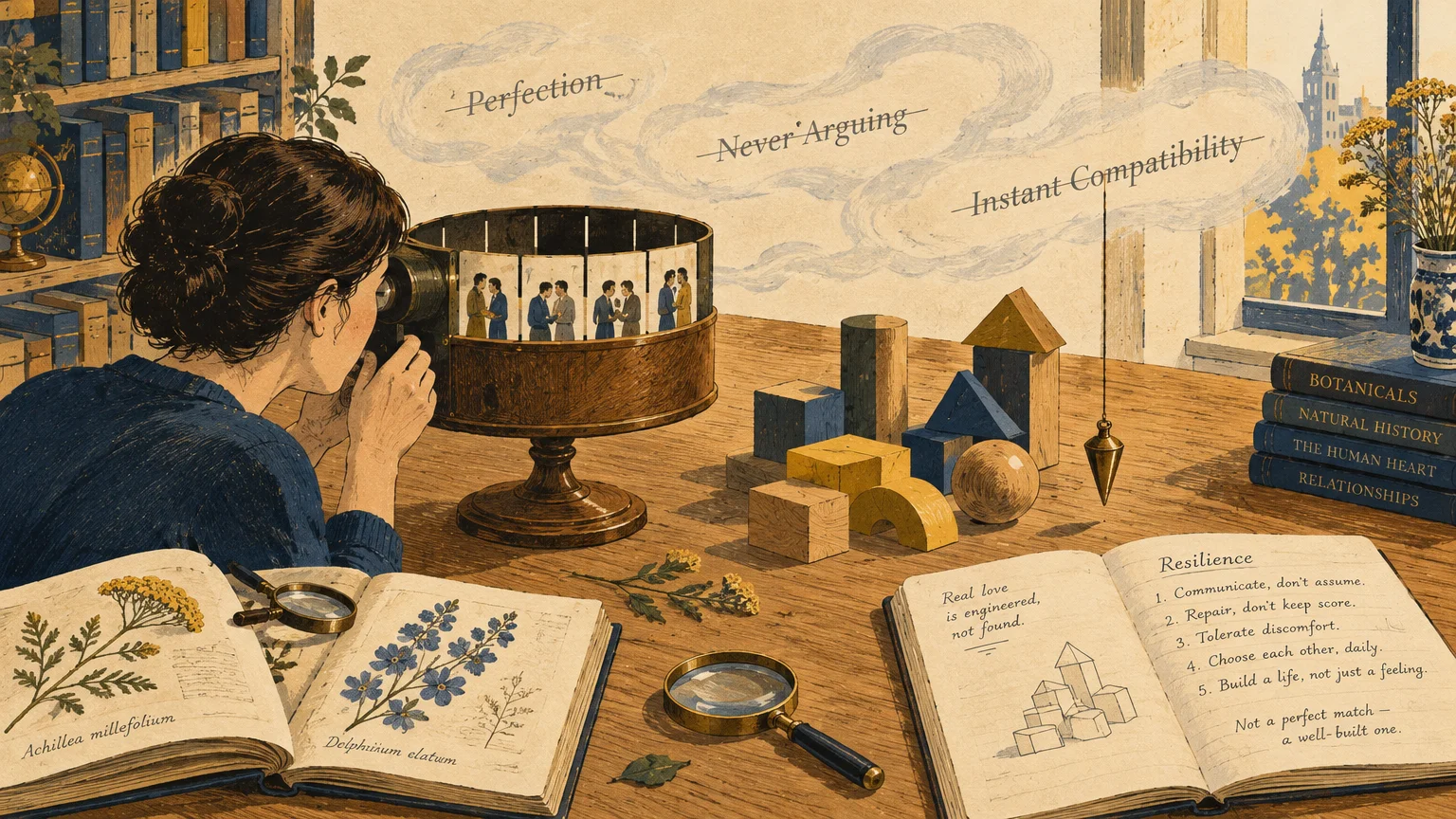
Common Misconceptions About Marital Success
Beyond specific relational myths, several broad misunderstandings confuse couples about what marital health entails. Untangling these misconceptions protects you from unrealistic benchmarks.
One widespread misconception is that unconditional love requires unconditional tolerance of poor behavior. While emotional love can be boundless, healthy relationships require firm interpersonal boundaries and mutual respect.
Another common belief assumes that relational compatibility remains permanent once established. In truth, individuals continuously evolve over time, requiring ongoing renegotiation of agreements and shared life goals.
Couples also frequently assume that high emotional intimacy eliminates the need for personal privacy. Healthy interdependence preserves psychological boundaries, allowing each partner to maintain a distinct, dignified inner life.
Finally, many people believe that marital longevity automatically equals relationship quality. A decades-long union marked by emotional neglect is far less healthy than an active, communicative partnership.

Finding the Right Professional Help
Even deeply dedicated partners encounter complex relational impasses that require clinical guidance. Knowing when to consult a licensed marriage and family therapist preserves your emotional well-being.
Consider seeking professional guidance if you recognize any of the following clinical indicators in your marriage:
- Chronic presence of the Four Horsemen: Criticism, contempt, defensiveness, and stonewalling have become your default communication styles during disagreements.
- Unresolved breaches of trust: Extramarital affairs, hidden debt, or compulsive dishonesty have fractured emotional safety, making self-guided repair impossible.
- Severe transition distress: Major life disruptions—such as welcoming a child, navigating chronic illness, or managing grief—have overwhelmed your collaborative coping resources.
- Pervasive emotional detachment: You live like disengaged roommates who avoid meaningful conversations, physical affection, and collaborative decision-making.
Experienced therapists utilize evidence-based frameworks, such as Emotionally Focused Therapy (EFT) or Gottman Method Couples Therapy, to help partners re-establish attachment security.
You can locate qualified clinicians through reputable professional directories, such as the Cleveland Clinic behavioral health network or regional psychotherapy associations.
Frequently Asked Questions
Can an unhappy marriage become happy again?
Yes, clinical research demonstrates that most unhappy couples who commit to learning healthy communication and repair patterns significantly improve their relationship satisfaction over time.
What is the single biggest predictor of divorce?
Psychologists identify contempt as the single most corrosive behavior in relationships. Contempt conveys disgust and moral superiority, systematically eroding both emotional attachment and physical immune health.
How often should married couples be intimate?
Clinical studies suggest that couples experience optimal happiness with regular weekly physical intimacy. However, mutual agreement on frequency and emotional satisfaction matter far more than reaching a rigid numeric target.
How long does it take to repair a damaged marriage?
Rebuilding emotional security after severe distress or infidelity typically requires one to two years of consistent, accountable behavior. Healing is a non-linear process that demands patience and professional guidance.
Building a resilient marriage does not depend on effortless luck or finding an idealized soulmate. It requires releasing unrealistic folklore and embracing evidence-based relational habits that foster mutual safety.
When you replace cultural myths with psychological realities, you give your partnership room to breathe, heal, and grow over time.
This article provides general educational information about psychology and relationships. It is not a substitute for professional therapy or medical advice.
Everyone’s situation is unique—if you’re struggling, please reach out to a licensed mental health professional.
Last updated: October 2026. Psychology research evolves continuously—verify current findings with professional sources.









Leave a Reply