

You sit on the same couch, yet your partner feels thousands of miles away. Emotional distance in marriage rarely happens overnight; it creeps in through silent retreats, routine exchanges, and missed emotional bids.
Recognizing this growing gap early allows you to address marriage communication problems before defensive habits harden into indifference. You can shift this dynamic starting today.
Discovering why your partner pulled back gives you practical, research-backed tools to bridge the divide. Reconnecting with your spouse begins with understanding these quiet warning signs.

10 Clear Signs of a Distant Spouse
Emotional detachment manifests subtly before it becomes an overt marital crisis. Identifying these behavioral shifts helps you understand your partner’s internal state without rushing into premature panic.
1. Surface-Level Conversations Replace Deep Sharing
Your daily talks now revolve strictly around logistics, calendars, and household chores. Your partner rarely discusses their inner thoughts, personal aspirations, or private anxieties with you.
When daily communication stays transactional, emotional intimacy rapidly deteriorates. You may notice your spouse giving polite, one-word answers whenever you attempt to explore meaningful topics.
Notice whether your partner diverts questions about their feelings back to safe, factual subjects. This conversational deflective tactic protects them from experiencing emotional exposure.
2. Diminished Physical and Non-Sexual Affection
Physical touch frequently drops off long before verbal dialogue collapses. You may observe fewer casual hugs, brief handholds, or spontaneous kisses throughout your normal daily routine.
Affectionate, non-sexual touch releases oxytocin, a neurochemical that calms fear centers in the brain. Without physical warmth, your home begins to feel emotionally chilly and detached.
Your spouse might stiffen slightly when you reach out, or they may avoid physical proximity entirely. This tactile retreat serves as a physical mirror of their internal emotional withdrawal.
3. Reluctance to Share Daily Stressors or Victories
Spouses naturally function as mutual sounding boards for life’s challenges. When your partner stops recounting their workday or celebrations, they close an essential door to their life.
They might process significant achievements or heavy workplace frustrations in complete isolation. In some cases, they begin confiding in coworkers or friends rather than opening up to you.
This shift leaves you feeling excluded from their inner narrative. You find out about major updates indirectly or long after they occurred.
4. Defensiveness When You Ask About Their Well-Being
A simple, caring question like “How are you doing today?” might provoke irritation or sharp replies. Defensiveness suggests your spouse interprets vulnerability as an emotional threat or an interrogation.
According to clinical observations from The Gottman Institute, defensiveness serves as a psychological shield against perceived criticism or perceived blame.
When partners feel inadequate or misunderstood, they raise their defenses preemptively. This defensive barrier prevents genuine communication before it even starts.
5. The “Roommate Dynamic” Dominates Daily Life
You co-manage your household like efficient business colleagues running an enterprise. You pay bills, clean rooms, and transport children reliably, yet romantic passion remains entirely absent.
While logistical cooperation keeps your house functioning, functional competence cannot substitute for emotional attunement. Couples trapped in this dynamic frequently describe feeling like polite strangers who share rent.
You stop flirting, playful teasing disappears, and your evening hours lapse into quiet parallel routines.
6. Disengagement from Joint Decision-Making
Your spouse may express persistent apathy regarding future plans, home improvements, or social calendars. Phrases like “Whatever you want” or “It makes no difference to me” replace enthusiastic participation.
Apathy often conceals deep exhaustion or a historical feeling of powerlessness within the marriage. When partners believe their preferences carry no real influence, they quietly stop investing effort.
This emotional check-out allows them to avoid conflict, but it simultaneously starves the relationship of shared vision.
7. Escaping into Screens and Solitary Hobbies
Your spouse might spend excessive hours playing video games, scrolling social feeds, or binge-watching television alone. Digital entertainment provides an effortless refuge from emotionally complicated relational dynamics.
While personal downtime remains vital for mental health, using electronics as a physical boundary avoids connection. This habit creates a virtual wall between you during prime evening hours.
If your attempts to initiate conversation feel like unwanted interruptions to their screen time, emotional detachment has taken root.
8. Disagreements Dissolve into Stonewalling
Instead of resolving marital disputes constructively, conflicts end in prolonged, icy silences. Your partner may abruptly leave the room, ignore your questions, or refuse to acknowledge your presence.
Mental health professionals classify this pattern as stonewalling. Stonewalling occurs when an individual’s nervous system becomes completely overwhelmed by relational tension.
While stonewalling temporarily protects the withdrawn spouse from emotional flooding, it leaves the other partner feeling abandoned and isolated.
9. Marked Loss of Curiosity About Your World
Healthy romantic relationships rely on ongoing, mutual curiosity. An emotionally detached spouse stops inquiring about your passions, your daily frustrations, or your emotional state.
This indifference feels deeply painful because genuine love requires continuous engagement. When your spouse stops asking curious questions, they stop mapping your evolving internal world.
You may realize they have no idea what you are reading, contemplating, or worrying about during your personal time.
10. Avoidant Eye Contact and Closed Body Language
Your partner might look away when speaking with you or physically turn their torso toward exits. Crossed arms, averted gazes, and angled postures indicate an unconscious desire for psychological separation.
Nonverbal signals communicate emotional availability long before spoken words register. Direct, relaxed eye contact stimulates relational bonding, whereas constant avoidance preserves protective emotional distance.
Notice how your spouse positions themselves in shared spaces. Physical orientation reveals significant clues about emotional receptivity.
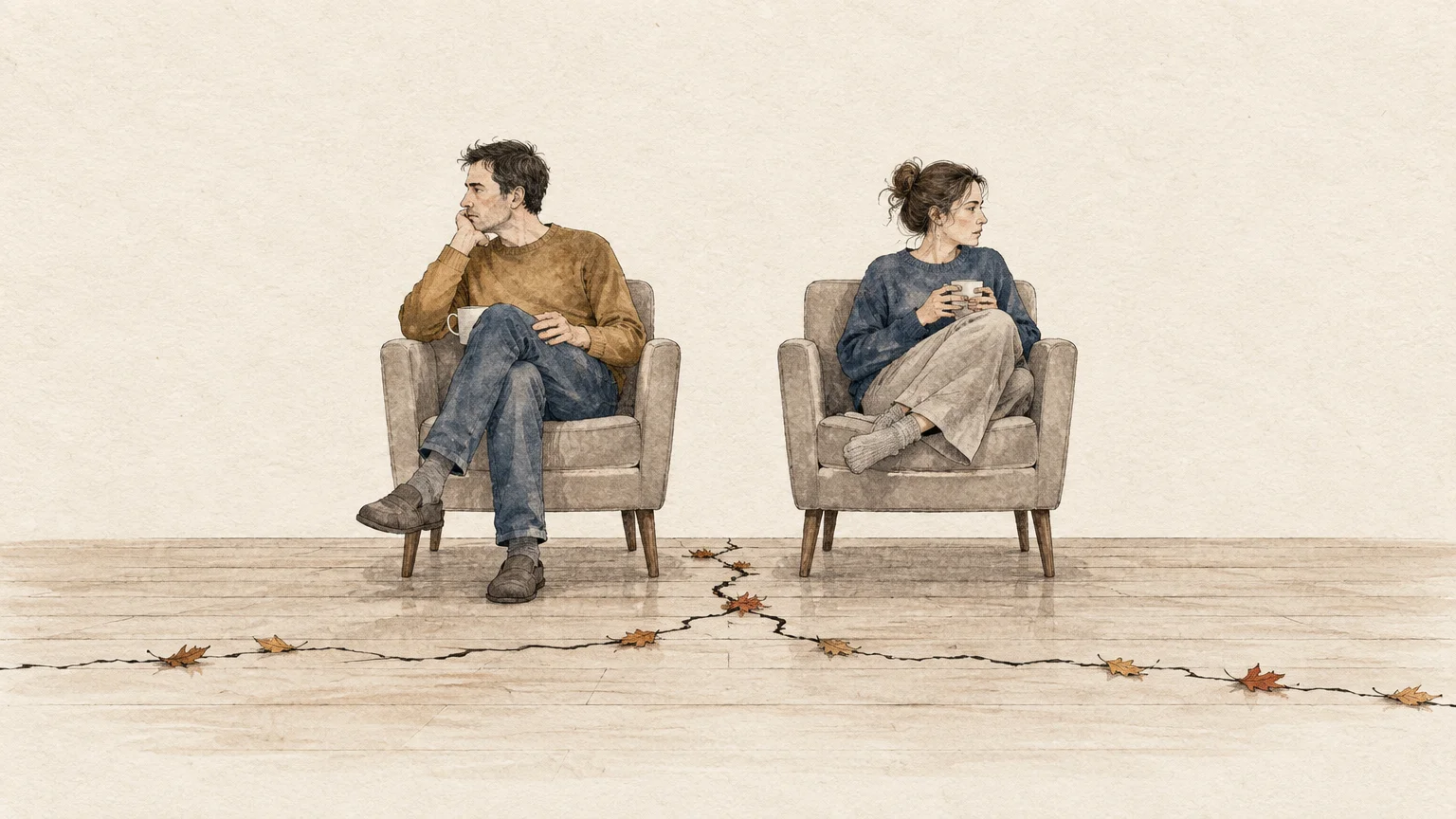
Why Emotional Distance Develops in Marriage
Relationship emotional distance rarely stems from a sudden evaporation of romantic care. Instead, emotional withdrawal develops gradually through identifiable psychological stressors and recurring interpersonal habits.
Chronic professional stress and parental exhaustion rapidly exhaust emotional reserves. When internal energy runs low, individuals instinctively retreat into self-preservation to prevent complete burnout.
Unresolved micro-resentments also build stubborn emotional barriers. Minor grievances left unaddressed accumulate over years, eventually convincing a partner that speaking up produces no positive change.
Additionally, underlying psychiatric conditions can mimic marital dissatisfaction. Research summarized by the American Psychological Association emphasizes that depressive disorders frequently cause social withdrawal and emotional numbness.
Attachment insecurity further drives emotional retreats. Adults with avoidant attachment tendencies pull away instinctively whenever intimacy feels suffocating or demands heightened vulnerability.
The Pursuer-Distancer Cycle: How Couples Get Trapped
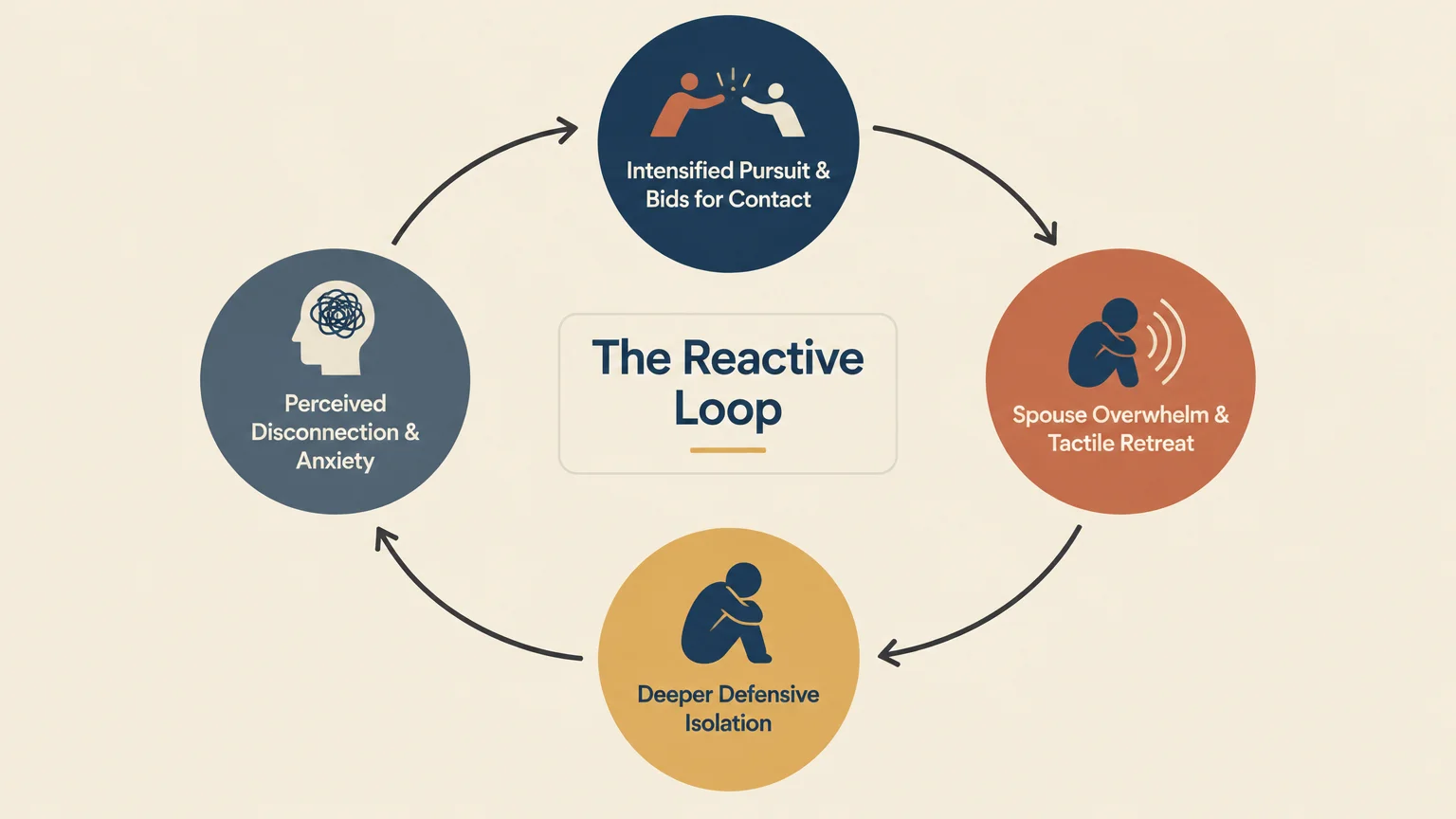
Many struggling marriages fall into the classic pursuer-distancer interaction loop. One spouse senses emotional distance and pursues connection through urgent questioning, while the other retreats to regain emotional equilibrium.
The more the pursuer pushes for immediate reassurance, the more overwhelmed the distancer feels. In response, the distancer pulls further away, which amplifies the pursuer’s underlying panic.
Breaking this debilitating cycle requires identifying your reactive patterns without assigning blame. Neither role indicates malice; both behaviors stem from unmanaged relational fear.
Understanding your complementary roles allows you to de-escalate tension and communicate from a place of mutual empathy.
The comparison table below details how these opposite coping mechanisms fuel marital disconnection:
| Relational Role | Primary Behavioral Pattern | Underlying Vulnerability | Constructive Shift |
|---|---|---|---|
| The Pursuer | Demands communication, interrogates, expresses urgency, and raises emotional stakes. | Deep fear of abandonment, rejection, and emotional invisibility. | Practice emotional self-soothing, slow down communication, and use soft invitations. |
| The Distancer | Withdraws into silence, leaves rooms, minimizes conflict, and seeks solitary tasks. | Intense fear of inadequacy, criticism, and emotional engulfment. | Acknowledge the need for a short break, validate the partner, and commit to returning. |

Expert Perspectives on Marital Disconnection
Emotional intimacy requires continuous mutual investments rather than dramatic, occasional gestures. Sustainable relationships survive through mundane daily connections.
“Small moments of connection are the building blocks of enduring love. Turning toward your partner’s bids for connection determines marital stability.” — Dr. John Gottman, Relationship Researcher
Every time your partner shares an observation or seeks your attention, they extend an emotional bid. Turning toward these bids cultivates trust, while ignoring them breeds emotional distance in marriage.
Couples who deliberately acknowledge these tiny moments create a resilient cushion against life stress.

Actionable Steps for Reconnecting with Your Spouse
Overcoming marital detachment requires patience, emotional discipline, and gentle persistence. Implement these evidence-based techniques to re-establish trust and intimacy.
1. Adopt a Softened Startup
Begin conversations regarding your relationship without criticism, sarcasm, or accusatory language. Research indicates that marital discussions almost always conclude on the precise emotional tone in which they began.
Focus exclusively on expressing your own feelings and personal needs rather than dissecting your spouse’s shortcomings. Say, “I miss our relaxed conversations together,” instead of, “You never talk to me anymore.”
This subtle linguistic adjustment removes defensive triggers and encourages your spouse to remain receptive.
2. Design Low-Pressure Connection Rituals
Do not force heavy emotional interrogations over formal dinners. Instead, establish gentle, low-stakes routines where you can enjoy each other’s presence without demanding emotional exposure.
Take an evening walk, listen to a podcast together, or prepare breakfast side by side. Shared parallel activities stimulate natural neurochemical bonding without triggering defensive anxiety.
Over time, these pleasant, low-demand shared moments restore basic comfort in each other’s physical company.
3. Validate Their Emotional World First
When your partner speaks, listen intently without preparing counterarguments or offering unsolicited solutions. Emotional validation means acknowledging your spouse’s subjective experience as understandable.
Clinical insights from Psychology Today indicate that feeling validated calms the nervous system and lowers interpersonal defenses.
Try saying, “It makes complete sense that you felt overwhelmed by that situation.” This simple validation fosters mutual safety.
4. Ask Open-Ended, Non-Threatening Questions
Shift away from interrogation-style questions that demand justifications or evoke guilt. Replace “Why have you been so distant?” with curious inquiries that invite reflection.
Ask questions like, “What part of your day felt most rewarding?” or “What has felt heaviest on your mind lately?”
These thoughtful prompts allow your partner to share at their own pace without feeling trapped.
5. Regulate Your Own Relationship Anxiety
Anxious demands for immediate closeness almost always push an avoidant partner further into isolation. When you anchor your emotional stability in friendships, exercise, and hobbies, you reduce needy pressure.
Practicing self-soothing keeps you grounded during periods of temporary spousal silence. Your calm demeanor provides a steady, welcoming environment for your partner to re-engage voluntarily.
What Can Go Wrong: Common Pitfalls to Avoid
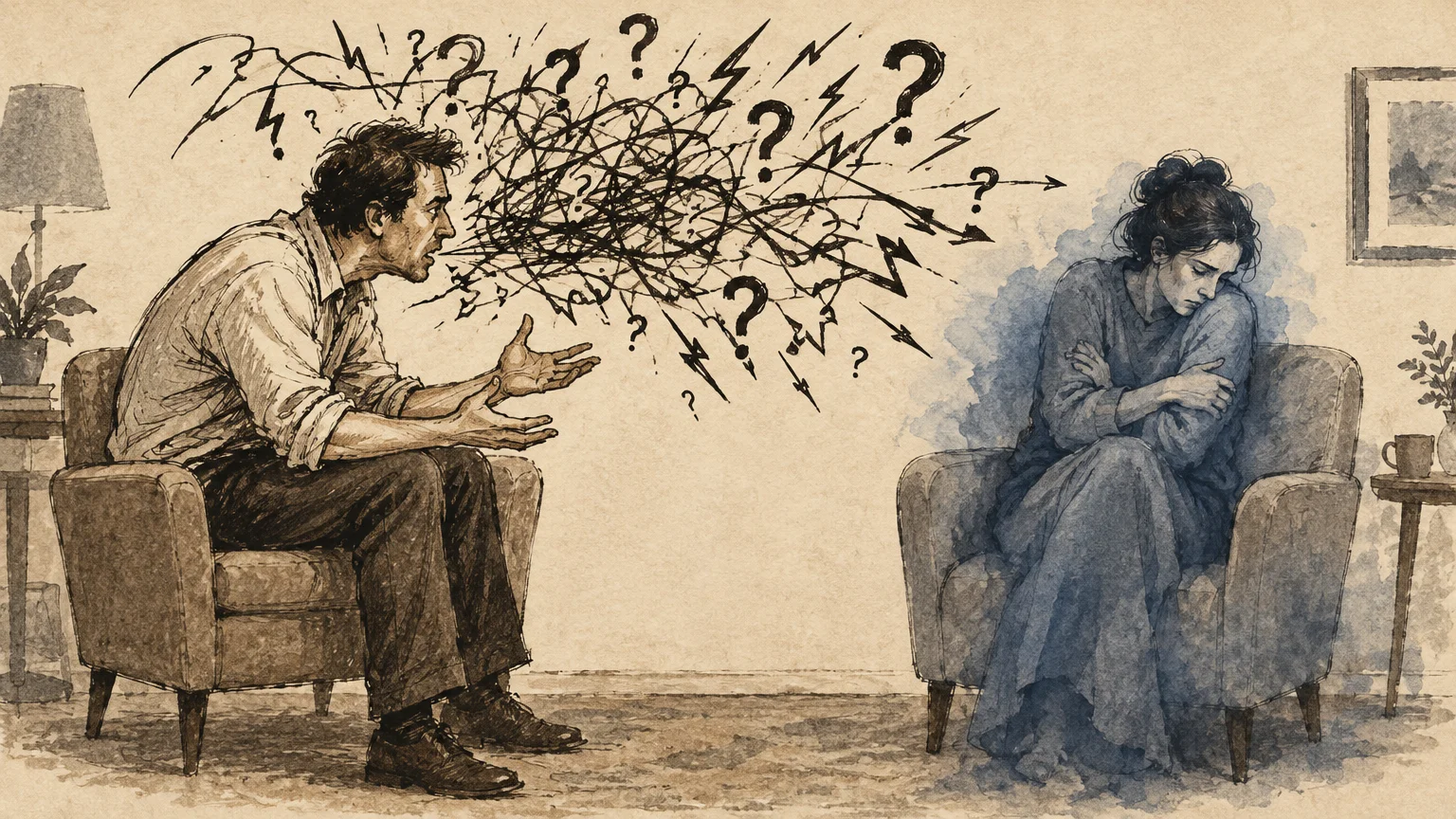
Well-meaning attempts to fix marriage communication problems can inadvertently deepen emotional rifts. Avoid these widespread mistakes when working toward reconnection.
- Assuming an affair immediately: While infidelity does cause sudden distance, making unsubstantiated accusations destroys foundational trust and triggers immense hostility.
- Sending exhaustive text essays: Sending paragraphs of emotional analysis during your spouse’s workday overwhelms an already stressed nervous system.
- Triangulating friends and relatives: Venting to in-laws or mutual acquaintances violates marital privacy and creates lasting resentment.
- Relying on extravagant gestures: Booking expensive surprise vacations cannot replace the quiet, daily emotional attunement required for marital repair.
Sidestepping these behavioral traps prevents unnecessary conflict. True emotional healing requires steady, patient consistency rather than erratic interventions.

When to Seek Professional Support
Certain relational crises require professional clinical guidance to untangle safely. Recognizing when self-help strategies reach their limits protects both partners from protracted suffering.
Seek guidance from a licensed marriage and family therapist if you encounter these situations:
- Chronic, unyielding stonewalling: Complete communicative shutdown that persists for weeks prevents any organic relational healing.
- Emerging symptoms of depression: If emotional withdrawal accompanies persistent hopelessness, insomnia, or profound apathy, review resources from the National Institute of Mental Health.
- Unresolved betrayal trauma: Rebuilding relational trust after infidelity, severe financial deception, or addiction requires structured clinical intervention.
- Contempt and verbal hostility: When daily exchanges devolve into mocking sarcasm, eye-rolling, or verbal insults, professional boundaries are necessary.
Evidence-based modalities like the Gottman Method and Emotionally Focused Therapy (EFT) offer clear, proven pathways for healing relational wounds.
A skilled clinician helps both partners express underlying attachment needs without triggering defensive reactions.
Frequently Asked Questions
Can an emotionally distant marriage survive?
Yes, marriages experiencing severe emotional distance frequently recover when both partners commit to change. Distance is a symptom of disconnection, not proof that love has vanished.
How long does it take to repair relationship emotional distance?
Rebuilding emotional intimacy typically takes several months of patient, steady effort. Emotional security returns incrementally as partners consistently demonstrate non-defensive behavior and mutual attunement.
What is the difference between emotional distance and burnout?
Burnout represents global exhaustion caused by chronic work or life stress, whereas emotional distance reflects relational withdrawal. However, severe burnout frequently causes an individual to pull away emotionally from their spouse.
Should I give my spouse space when they withdraw?
Yes, offering respectful space prevents pursuer-distancer escalation and nervous system flooding. Always pair that space with warm reassurance that you remain available whenever they feel ready to talk.
Moving Forward Together
Rebuilding emotional intimacy does not require perfection; it requires persistent, gentle presence. Start by offering one small gesture of warmth today without demanding an immediate emotional payback.
Observe how your spouse responds to softened conversations and reduced pressure over the coming weeks. With steady patience, active listening, and mutual respect, you can rekindle genuine marital connection.
This is educational content based on psychological research and general principles. Individual experiences vary significantly.
For personalized guidance, consult a licensed therapist, psychologist, or counselor.
Last updated: February 2026. Psychology research evolves continuously—verify current findings with professional sources.









Leave a Reply